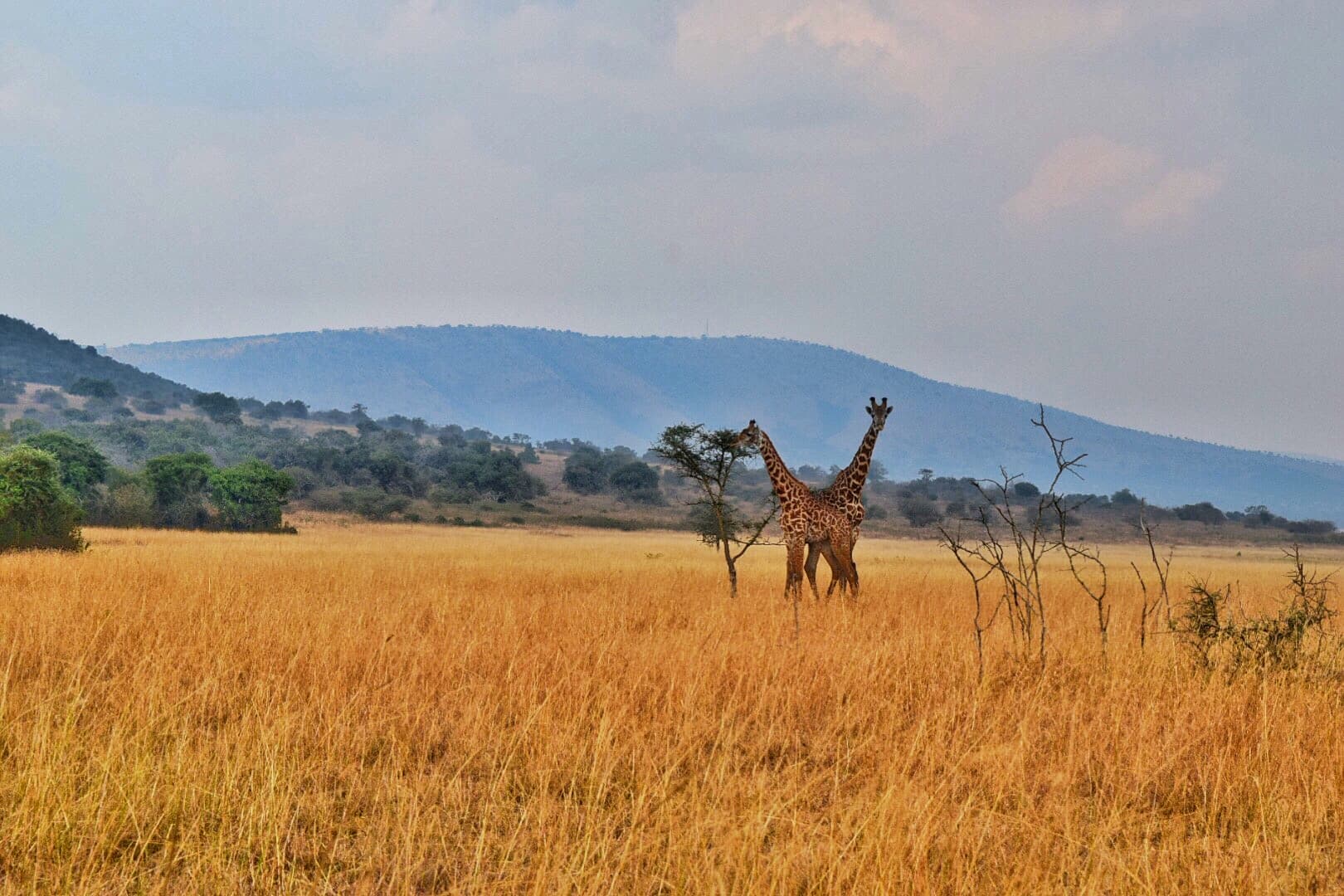
Giraffe on the golden savanna hills of Akagera National Park

Destination guide

Akagera National Park: Rwanda’s Big Five Savanna

Rwanda’s savanna park: lakes, papyrus and rolling grassland on the Tanzanian border, where lions and rhinos have been brought home and the Big Five roam again.

SizeAbout 1,122 km² (roughly 433 sq mi)
Best timeJune–September for concentrated game; the park itself recommends November–April
Recommended stay2 nights, so you can join a night drive
Getting thereAbout 110 km and 2 hours by road from Kigali; helicopter by schedule or charter
Known forRhino and lion reintroductions, Lake Ihema boat trips and night drives
Managed byAfrican Parks with the Rwanda Development Board, since 2010

Akagera National Park

Why Visit

Akagera National Park is where a Rwanda trip opens out. After the forests and volcanoes of the west, the country’s eastern edge drops to warm, rolling grassland, acacia woodland and a chain of lakes and papyrus swamps along the Kagera River and the Tanzanian border. At about 1,122 km², it protects what the park calls Central Africa’s largest protected wetland, and Lake Ihema, roughly 100 km², is the largest lake lying entirely inside Rwanda.

Its story is one of recovery. The park lost more than half its original area after 1994, when land was reallocated to returning refugees, and wildlife collapsed. Since 2010 African Parks has managed it with the Rwanda Development Board: lions returned in 2015, eastern black rhinos in 2017 and 2019, 30 southern white rhinos in 2021 and 70 more in 2025. The park reports wildlife numbers rising from under 5,000 to almost 12,000, poaching reduced to near zero and more than half of its visitors now Rwandan.

Set your expectations accordingly. Akagera holds the Big Five, but densities are lower than in the great parks of Kenya and Tanzania, lion and leopard are never assured, and a morning may be about giraffe, zebra and hippo rather than predators. What you gain is quiet — few other vehicles and a real sense of a park coming back. It complements the gorillas rather than rivalling the Serengeti, which is exactly how the 7-Day Rwanda Gorillas & Akagera Big Five Private Safari uses it.

Best for

  • Adding a Big Five savanna chapter to a gorilla trip
  • Families with children under 15, who cannot trek gorillas
  • Boat safaris and night drives
  • Travelers interested in conservation comebacks

Akagera National Park

Wildlife & Highlights

  • Lions, back since 2015
  • Eastern black rhinos and southern white rhinos
  • Elephant and buffalo
  • Giraffe and zebra on the northern plains
  • Antelope such as topi, impala and eland
  • Leopard, shy and most active around dusk
  • Hippos and large Nile crocodiles on Lake Ihema
  • Several hundred bird species, with waterbirds along the lakes and papyrus

Season

Best Time to Visit

  1. January
  2. February
  3. March
  4. April
  5. May
  6. June
  7. July
  8. August
  9. September
  10. October
  11. November
  12. December
June–SeptemberThe long dry season. Grass thins, water retreats to the lakes and permanent pools, and animals gather where they are easier to find — the classic safari pattern. Days are warm to hot and the tracks dusty.
December–FebruaryA short dry spell with green grass and generally good viewing; a natural fit for trips pairing Akagera with gorillas over the holidays.
March–May and October–NovemberThe rains. Akagera’s own website names November–April as its best time to visit, when the park is green and lush; game is more spread out in long grass and a 4×4 is recommended on muddy tracks. Both views are fair — the best time to visit Rwanda page weighs them up.

Akagera National Park

Areas to Know

The southern lakes & Lake Ihema

The south is lake country: Lake Ihema and its neighbours, papyrus fringes, hippo pools and woodland running down to the water. This is where visitors enter the park, where most lodges sit and where the boat trips run, so it is the natural first afternoon. The Akagera boat safari page covers the Ihema departures in detail.

Best for: Boat trips, hippos and a short first afternoon

The northern plains

North of the lakes, the park opens into rolling grassland dotted with acacia — the best country for giraffe, zebra, rhino and lion, and the most photogenic landscapes in the park. The drive up from the south is long, which is why a full-day guided drive with a picnic lunch beats a half day. A private tented camp on a remote northern lakeshore puts you close to these plains.

Best for: Searching for the Big Five and photography

After dark and behind the scenes

Night drives run from 5:30 to 8:30 pm for overnight guests only, with a spotlight picking out nocturnal animals — reason enough to stay rather than day-trip. Behind-the-scenes visits to park operations, the guided Walk the Line (about 7 km, around two hours) and community experiences built around dairy, banana beer and honey round out a stay, and a hot-air balloon flight has recently been introduced; ask us about seasons and availability.

Best for: Overnight guests and curious minds

Akagera National Park

Getting There

Akagera is about 110 km from Kigali, roughly two hours by road, and visitors enter at the southern gate. The park is open to vehicles from 6 am to 6 pm, and a 4×4 is recommended in the wet season. Scheduled and charter helicopter services link it with Kigali and the other parks. Coming from gorilla country is the long leg: Volcanoes to Akagera is about 4.5–5 hours via Kigali, so many travelers fly it or break the drive with lunch in the capital. The getting to Rwanda guide has the full transfer table.

Drive or fly?

Kigali to Akagera is an easy drive, and there is little to gain from flying it except on a very short trip. The helicopter makes more sense between Akagera and Volcanoes, where it turns most of a day on the road into a short flight and buys an extra afternoon on the lake. Inside the park you explore by road, with your own private guide and vehicle, or in a park vehicle with a park guide — US$200 for a half day or US$350 for a full day per vehicle of up to seven, on the 2026–27 price list at the time of writing (September 2026).

Airstrips & airports

  • Kigali International Airport (KGL), about 2 hours by road
  • Helicopter landing at the park, by scheduled service or charter

Typical travel times

Kigali to the southern gate (110 km)
About 2 hours
Southern lakes to the northern plains
Most of a morning, with game viewing
Akagera to Kinigi (Volcanoes), via Kigali
About 4.5–5 hours
Akagera to Kigali International Airport
About 2–2.5 hours

Stays

Where to Stay

Akagera’s stays are split between the southern lakes and the quieter north. In the south, choose a comfortable hotel-style lodge with a pool on the hills above the lakes — easy with children — or a tented lodge on the Lake Ihema shore, where hippos call through the night. In the north, a private luxury tented camp on a remote lakeshore suits photographers and couples. Two nights in any of them lets you join a night drive, which day visitors cannot do.

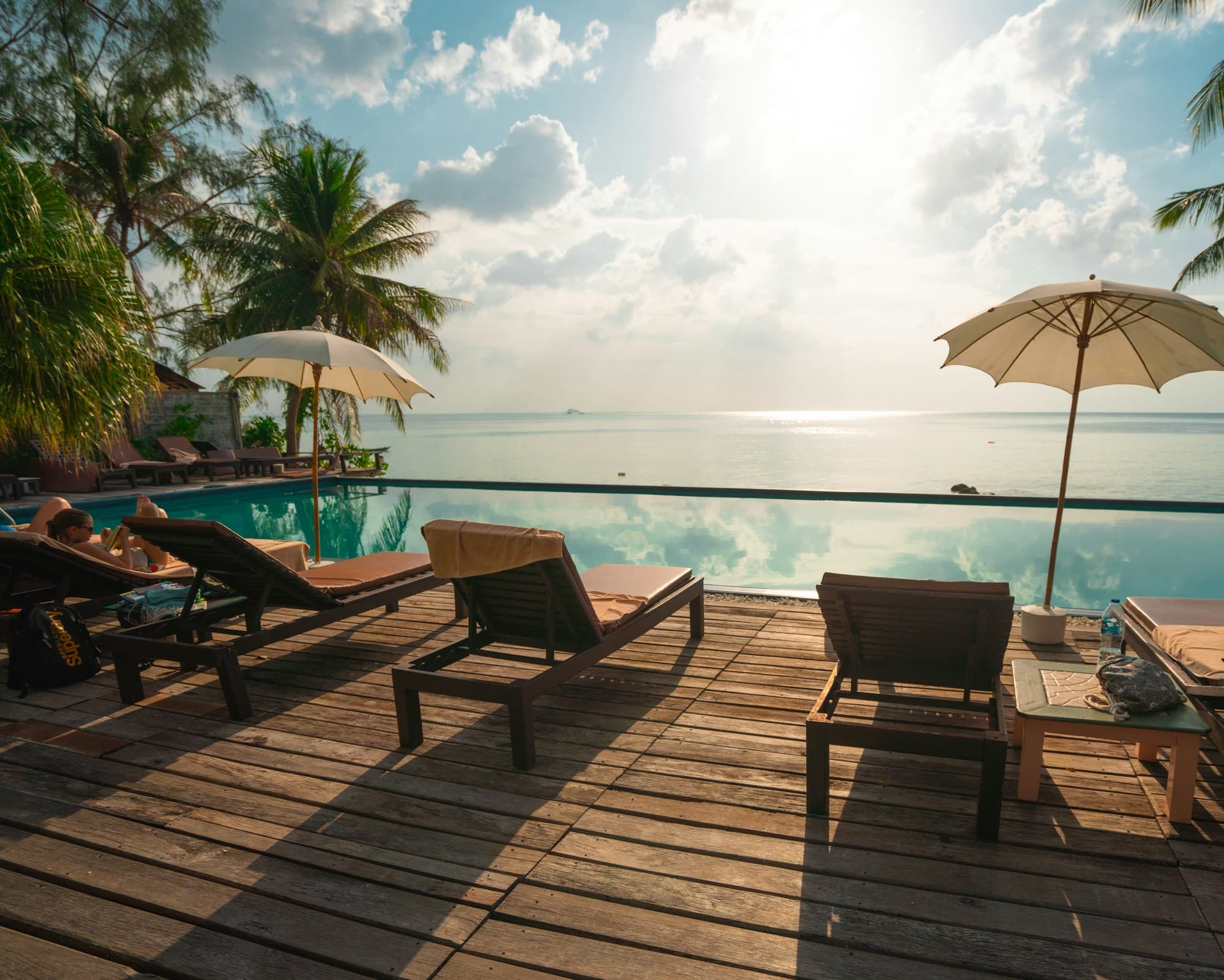
Luxury lodge deck with loungers and umbrellas at golden hourComfort

Akagera · southern lakes

Lake-View Lodge · Southern Akagera

Lodge

Near the park’s southern entrance, lodges of this kind sit on a slope above the lakes, with rooms looking out over water and savanna. A pool and a relaxed, family-friendly atmosphere make them a sound base for boat trips on Lake Ihema, though reaching the northern plains takes a full day out.

  • Lake and savanna views from the rooms
  • Swimming pool
  • Family rooms
  • Short drive to the Lake Ihema boat jetty

Ideal for: Families and first-time visitors who want an easygoing, comfortable base in Akagera
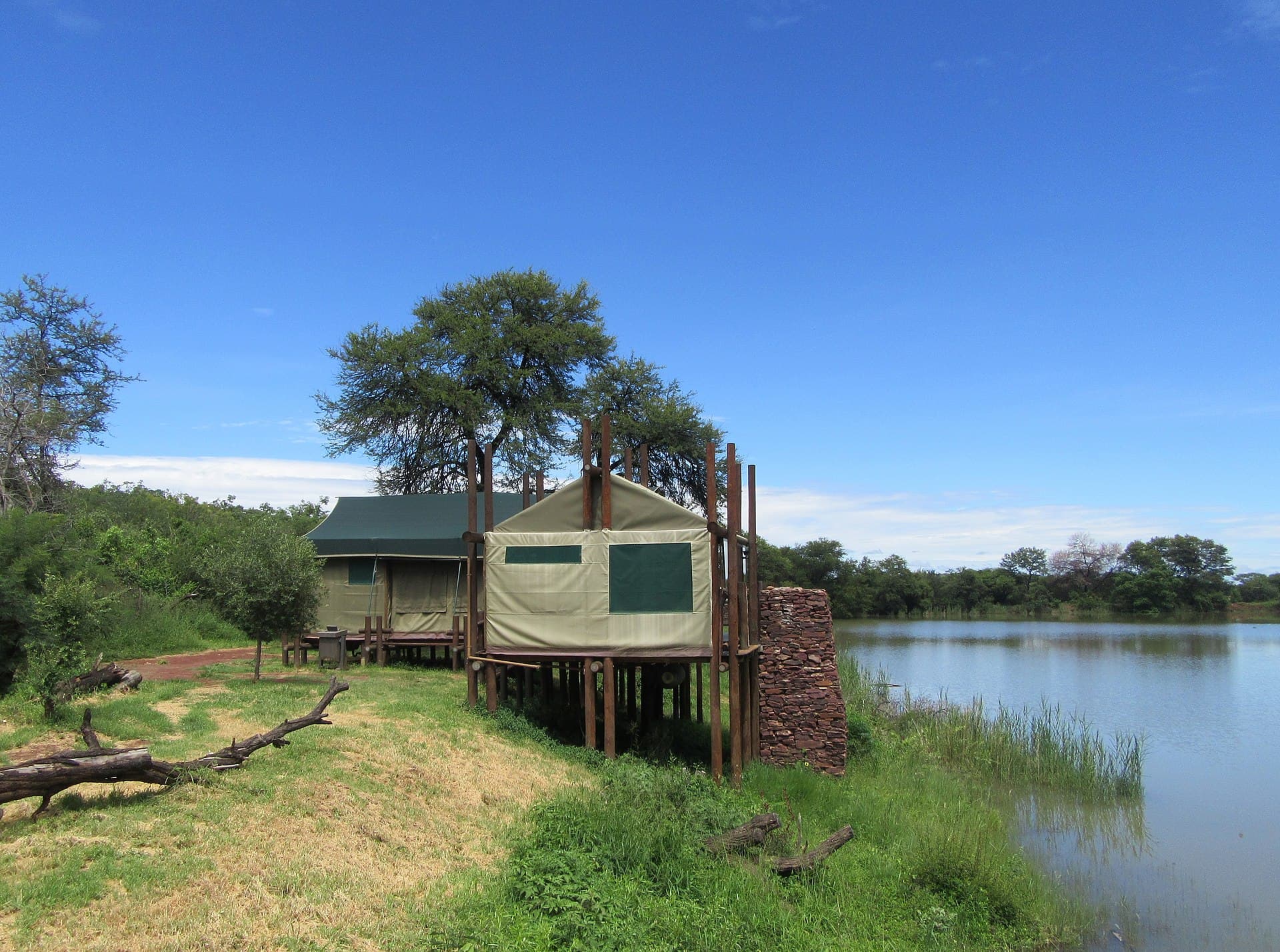
A canvas safari tent set among trees at a private tented campPremium

Akagera · Lake Ihema shore

Lake Ihema Shore Tented Lodge

Tented camp

Tents on raised platforms line the shore of Lake Ihema, so you may fall asleep to hippos grunting in the shallows, and the boat jetty is a short hop away. It is a small, informal style of stay, closer to the water and the wildlife than the hillside lodges, with meals taken under the trees.

  • Lakeshore tents with private decks
  • Hippos often heard at night
  • Close to the boat departures
  • Easy access from the southern gate

Ideal for: Families and couples who want to sleep right beside the water

A canvas safari tent set among trees at a private tented campLuxury

Akagera · private northern lakeshore

Private Lakeshore Camp · Northern Akagera

Tented camp

In the park’s remote north, on the shore of Lake Rwanyakazinga, a handful of luxury tents sit in an area set aside for the camp’s guests, close to the plains where rhino, lion and giraffe roam. With private boat trips, night drives and very few other vehicles, it feels like a far wilder Akagera than the busier south.

  • A few tents on a private stretch of lakeshore
  • Boat trips on Lake Rwanyakazinga
  • Night drives from camp
  • The closest style of stay to the northern plains

Ideal for: Photographers, honeymooners and returning safari-goers who want Akagera at its most private

Experiences

Experiences

Giraffe on the golden savanna hills of Akagera National Park

On the water

Akagera Boat Safari on Lake Ihema

Glide along Lake Ihema’s papyrus shores past hippos and big crocodiles, ideally as the sun goes down over the water.

Safaris

Safaris That Go Here

Giraffe on the golden savanna hills of Akagera National Park
7 daysBest first Rwanda trip

Gorillas & Big Five

Kigali · Akagera National Park · Volcanoes National Park · Kigali International Airport

First-time visitors to Rwanda who want gorillas and a classic game drive in a single week

Best months
Dry months: June–September, December–February
Comfort levels
Comfort · Premium · Luxury
Individually quoted
Forested ridgelines of Nyungwe at dusk
12 daysAll three parks

Complete Rwanda

Kigali · Huye · Nyungwe National Park · Karongi (Kibuye) · Volcanoes National Park · Akagera National Park · Kigali International Airport

Primate enthusiasts, photographers and returning safari-goers who want the whole country rather than one park

Best months
Mid-June–September & mid-December–February
Comfort levels
Premium · Luxury
Individually quoted

Good to know

Frequently asked questions

How much are Akagera National Park fees?

At the time of writing (September 2026), African Parks’ 2026–27 price list sets international entry at US$100 for one night, US$150 for two and US$200 for three, free from the fourth night up to a week; children aged 6–12 pay US$50, US$75 and US$100. Boat trips are US$35 (US$45 at sunset) and night drives US$40. All payments are cashless.

Can you see the Big Five in Akagera?

All five live here — lion, leopard, elephant, buffalo and both black and white rhino — making Akagera Rwanda’s only Big Five park. Densities are lower than in the Serengeti or the Masai Mara and leopard is especially elusive, so two nights with a full-day drive give you a far better chance than a day visit.

Is Akagera worth visiting if I have been on safari in Kenya or Tanzania?

It will feel quieter and less packed with game than the Serengeti or the Mara. It still offers things those parks rarely do: boat trips on a big lake, night drives and an uncrowded restoration story. Travelers who already know East Africa’s classic plains sometimes spend those nights in Nyungwe instead.

Is Akagera good for children?

It is Rwanda’s most family-friendly park. Children of any age can join game drives with your private guide, those aged 6–12 pay reduced entry and boat fees, and some southern lodges have pools. It is the natural counterweight on a trip where younger children cannot join the gorilla trek.

Can you do a day trip to Akagera from Kigali?

Yes: it is about two hours each way and the gates open at 6 am, so a long day with a boat trip and a southern game drive is possible. You miss the northern plains, the night drive and the best light, which is why we recommend at least one night and ideally two.

Forested ridgelines of Nyungwe at dusk

Tell Us When You’d Like to Trek

Share your dates, who is traveling and what you hope to see. We check permit availability first, then design a private Rwanda journey around it, and nothing is booked until you approve it.

Plan my safari here