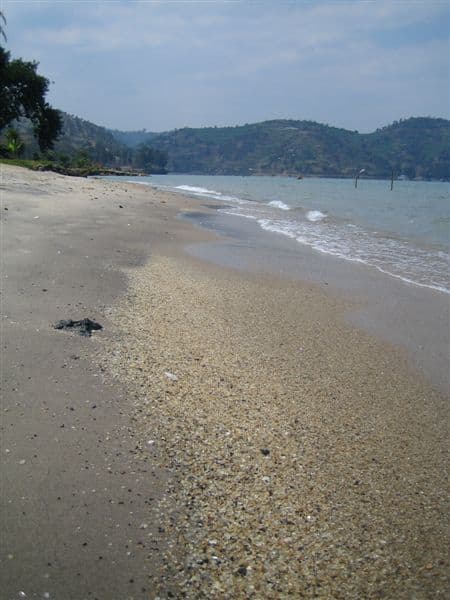
Quiet shoreline of Lake Kivu

Destination guide

Lake Kivu, Rwanda: A Lakeside Pause Between Parks

A deep Great Lake on Rwanda’s western border, where terraced hills drop to quiet bays and a day of doing very little is the whole point.

SizeAbout 2,700 km², shared with the DRC; up to about 480 m deep
AltitudeLake surface at roughly 1,460 m
Best timeJune–September for the driest, clearest days; pleasant year-round
Recommended stay2 nights at Karongi on a longer loop
Getting thereAbout 3 hours by road to Karongi from Kigali or from Nyungwe
Where we planKarongi (Kibuye), away from the border towns, while current advisories stand

Lake Kivu

Why Visit

Lake Kivu fills a stretch of the Albertine Rift on Rwanda’s border with the DRC: about 2,700 km² of deep water at around 1,460 m, reaching depths of about 480 m. On the Rwandan side, steep terraced hills, fishing villages and small peninsulas line the shore, and in the evening the lake takes on colors that make even a short stay feel like a proper break.

It is best thought of as a pause rather than a destination. Between the early starts of Nyungwe and the volcanoes, a lakeshore day — a paddle, a coffee farm, a long lunch, a sunset — resets a long itinerary, and it suits couples who want a slower chapter. It is not a beach holiday; if white sand is what you are after, pair Rwanda with Zanzibar instead.

Where you stay on the lake matters at present. At the time of writing (September 2026), parts of the shore close to the DRC border — including Rubavu (Gisenyi), beside the Congolese city of Goma, and Rusizi at the lake’s southern end — fall under current US and UK government travel advisories. For that reason we plan lake stays at Karongi (Kibuye), midway along the Rwandan shore, and route around the border towns. Advice changes, so check travel.state.gov and is Rwanda safe to visit before you travel.

Best for

  • Breaking up the long drive between Nyungwe and Volcanoes
  • Couples and slow travelers
  • Kayaking and gentle lakeshore walks
  • Coffee lovers

Lake Kivu

Wildlife & Highlights

  • Kayaking in sheltered bays close to the Karongi shore
  • Coffee-washing stations in the hills above the lake
  • Fishing boats heading out at dusk, crews often singing as they row
  • Lunches of grilled lake fish and isambaza, the lake’s small sardines
  • Sunsets over the water towards Idjwi, the DRC island in mid-lake
  • Walks along the Karongi peninsulas and terraced hillsides
  • A calm science story: gas dissolved in the deep water, some of it tapped for power

Season

Best Time to Visit

  1. January
  2. February
  3. March
  4. April
  5. May
  6. June
  7. July
  8. August
  9. September
  10. October
  11. November
  12. December
June–SeptemberDry, sunny and clear, with the best views across the lake and calm mornings for kayaking.
December–FebruaryWarm, with occasional showers and green hills; a pleasant shoulder period for a lakeside break.
March–May and October–NovemberRainier and often hazy, with dramatic afternoon storms rolling across the water. Lakeshore stays remain comfortable, but the views come and go.

Lake Kivu

Areas to Know

Karongi (Kibuye)

The small town of Karongi curls around a series of bays and peninsulas in the middle of the Rwandan shore. This is where we plan lake nights at present: quiet lodges on the hillsides and at the water’s edge, kayaking close to shore, walks along the peninsulas and visits to coffee-washing stations in the surrounding hills. It sits between Nyungwe and the volcanoes, which is why it slots naturally into a longer loop.

Best for: A rest stop between Nyungwe and Volcanoes

Rubavu (Gisenyi)

Rubavu, at the lake’s northern tip, was long the most popular lakeside town, with a palm-lined waterfront and easy access from the volcanoes. It lies right beside the border with Goma in the DRC, inside the area covered by current US government travel advice, so we do not plan overnights in or transfers through it while that advice stands.

Best for: Not currently in our plans, because of the advisory

Rusizi & the southern shore

At the southern end, Rusizi (Cyangugu) and its airport at Kamembe face the DRC city of Bukavu across the Rusizi River. UK and US travel advice currently covers this area, and UK advice also names the Rwandan islands in Lake Kivu, so we do not plan island boat trips and we route to Nyungwe by road from Kigali or by helicopter instead.

Best for: Not currently in our plans, because of the advisory

The Congo Nile Trail & Gishwati–Mukura

The Congo Nile Trail follows the hills above the lake for hikers and cyclists over a distance commonly given as about 227 km, but much of it runs close to the border, so we would plan only short sections well away from it, after checking current advice. Inland, Gishwati–Mukura National Park is a young park where forest cleared after 1994 is being restored, and a small chimpanzee population survives — a quiet detour for keen naturalists.

Best for: Active travelers and naturalists with extra time

Lake Kivu

Getting There

Karongi is about three hours by road from Kigali, and about the same from Nyungwe, on winding roads through tea and coffee country. To continue to Volcanoes National Park we use the inland route rather than the lakeshore road through Rubavu; allow about 4–5 hours. The getting to Rwanda guide covers flights into Kigali and the wider transfer picture.

Drive or fly?

Lake Kivu is a driving destination. The roads down to Karongi are part of the appeal, climbing over ridges of tea and dropping to the water in a string of switchbacks, so treat those days as sightseeing with stops for coffee and views rather than transfers to rush. That is exactly how the 12-Day Complete Rwanda Private Safari uses them.

Airstrips & airports

  • Kigali International Airport (KGL), about 3 hours by road

Typical travel times

Kigali to Karongi
About 3 hours
Nyungwe (Gisakura) to Karongi
About 3 hours
Karongi to Volcanoes, by the inland road
About 4–5 hours
Karongi to Kigali International Airport
About 3–3.5 hours

Stays

Where to Stay

Stays at Karongi are relaxed and small in scale: a comfortable lakeside hotel with gardens running down to the water, or a boutique hillside lodge with wide lake views and a more intimate feel. Few properties on the lake match the luxury lodges of the national parks, so expect charm and setting rather than polish — which, for one or two slow days, is often exactly right.

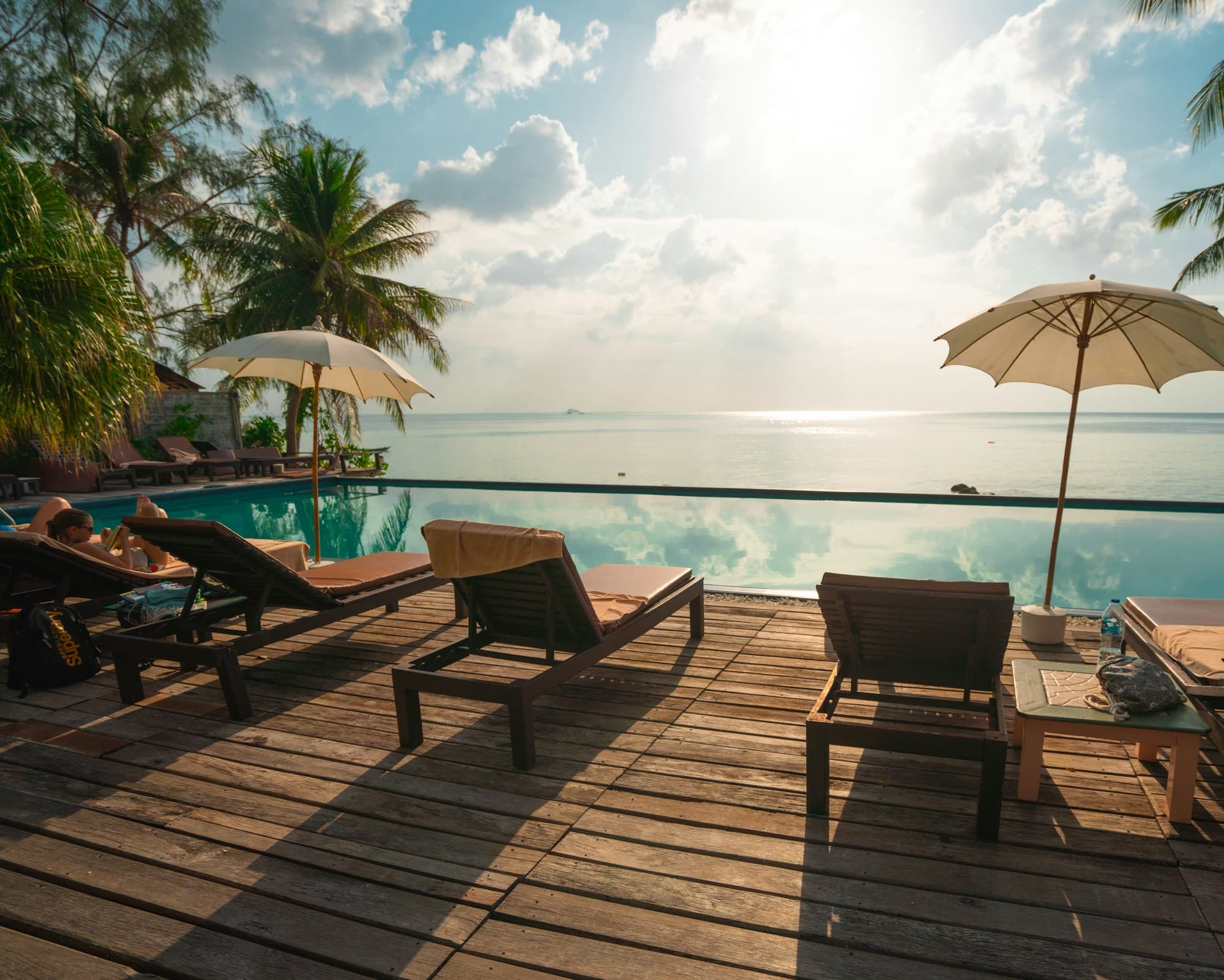
Luxury lodge deck with loungers and umbrellas at golden hourComfort

Lake Kivu · Karongi shore

Lakeshore Hotel · Karongi

Lodge

Relaxed hotels on Karongi’s waterfront put you steps from Lake Kivu, with terraces for long lunches, lawns running down to the water and the bays turning gold at sunset. They are simple and friendly rather than luxurious, a place to rest your legs between forest and volcano.

  • Waterfront terraces and lawns
  • Kayaking from the shore can be arranged
  • Fresh lake fish on the menu
  • Sunset views over the bays

Ideal for: Travelers who want an easy, unpretentious lake stop on a long Rwanda loop
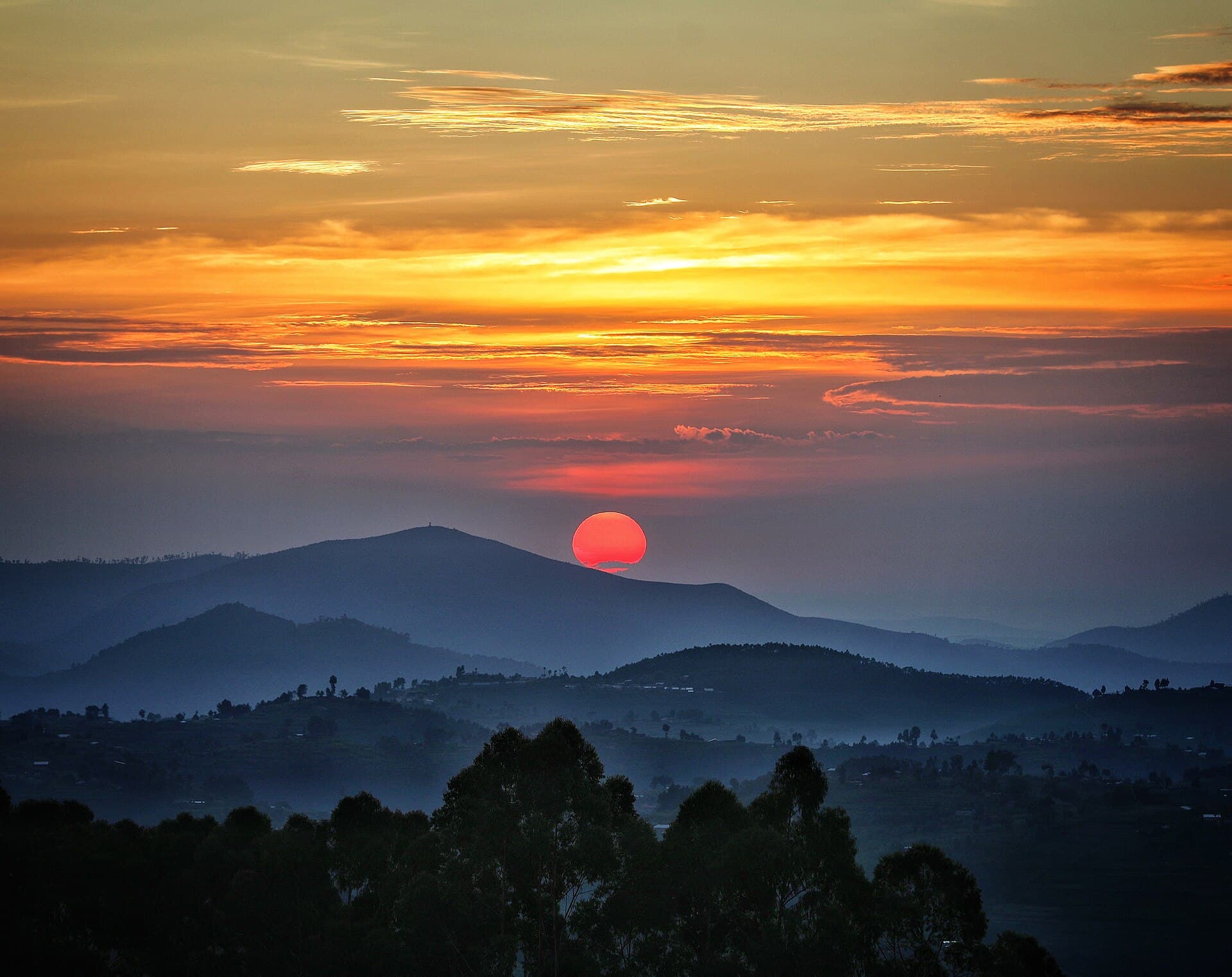
Luxury lodge deck with loungers and umbrellas at golden hourPremium

Lake Kivu · Karongi hillside

Hillside Boutique Lodge · Karongi

Lodge

Karongi has few high-end hotels, so the best stays here are small boutique lodges on the steep hillsides above the bays, with a handful of rooms, a terrace built for sunsets and a path down to the water. They are the most characterful places to stay on this shore, which is why they serve both premium and luxury travelers on our longest Rwanda loop.

  • A handful of rooms with lake views
  • Sunset terrace above the bays
  • Path down to the lakeshore
  • Coffee-farm visits in the hills nearby

Ideal for: Couples who want a quiet, scenic pause halfway through a long journey

Good to know

Frequently asked questions

Is Lake Kivu worth visiting on a Rwanda safari?

On a trip of ten days or more that includes Nyungwe, yes: it breaks up the long drive to the volcanoes and adds a restful, scenic chapter. On a shorter trip built around gorillas and Akagera, the extra driving rarely pays off, and those nights are better spent in the parks.

Is it safe to visit Lake Kivu?

At the time of writing (September 2026), US and UK government travel advice covers parts of the lakeshore near the DRC border, including Rubavu (Gisenyi) and the Rusizi area around Kamembe. We plan lake stays at Karongi, route around those areas and recheck the advice before every departure. Read the current advisory at travel.state.gov before you book.

Kibuye or Gisenyi: which is better?

Gisenyi (Rubavu) has traditionally been the livelier town, with a long waterfront and quick access from the volcanoes, while Kibuye (Karongi) is quieter, with a more intricate shoreline of bays and peninsulas. For now, the travel advice covering the Rubavu area makes Karongi the one we plan around.

Can you swim in Lake Kivu?

Whether to swim is a personal health decision, so ask a travel-health clinic about freshwater exposure in the region before you go and follow local guidance on where it is appropriate. Kayaking close to the shore is the lake activity we plan most often.

Why does Lake Kivu contain gas?

Lake Kivu is one of a handful of lakes whose deep water holds large amounts of dissolved methane and carbon dioxide from volcanic and biological sources. Scientists study it closely, and Rwanda extracts some of the methane to generate electricity. It is a fascinating part of the lake’s story rather than something a lakeshore stay revolves around.

Forested ridgelines of Nyungwe at dusk

Tell Us When You’d Like to Trek

Share your dates, who is traveling and what you hope to see. We check permit availability first, then design a private Rwanda journey around it, and nothing is booked until you approve it.

Plan my safari here