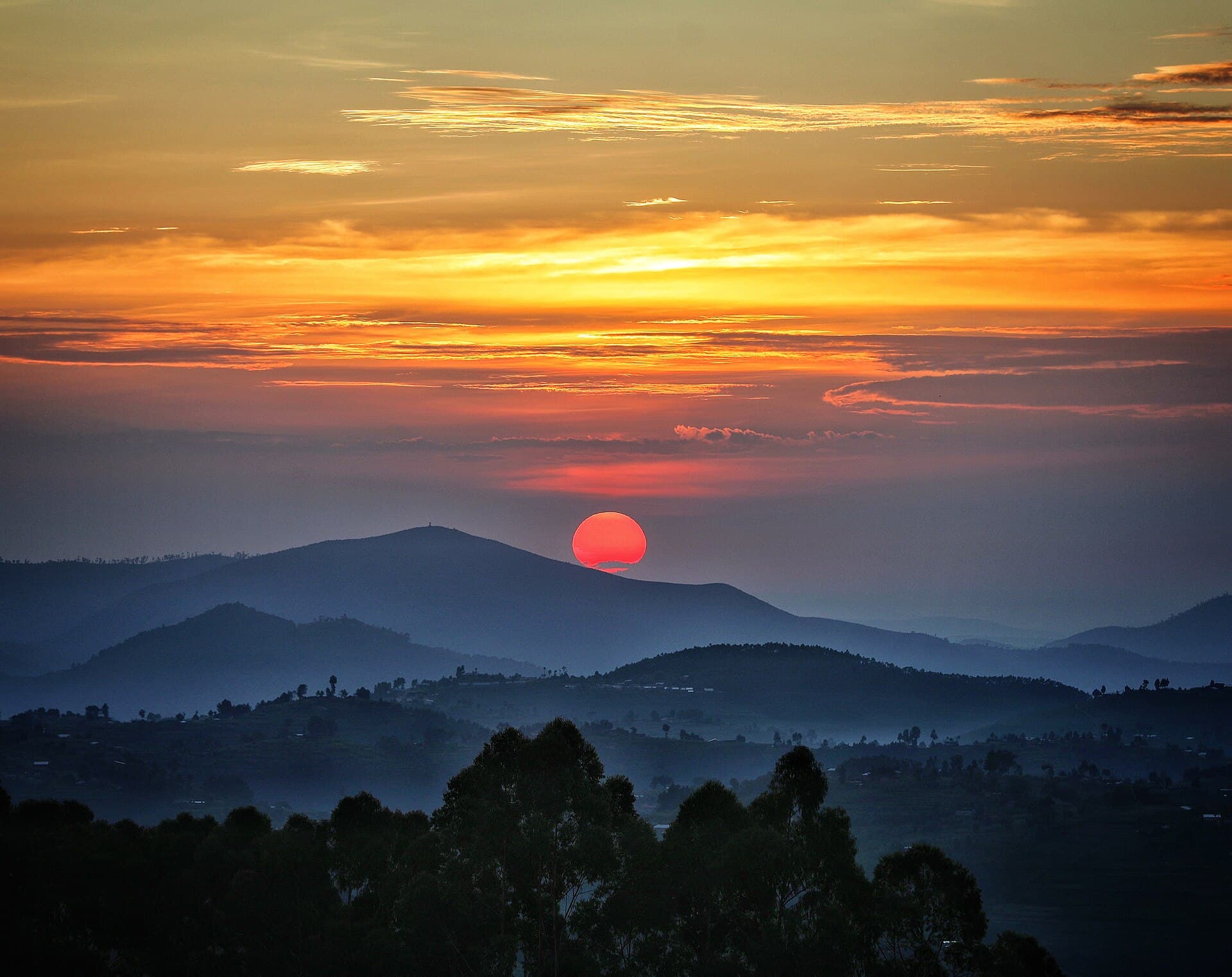
Forested ridgelines of Nyungwe at dusk

Destination guide

Nyungwe National Park: Rwanda’s Montane Rainforest

A thousand square kilometers of ancient montane rainforest in Rwanda’s south-west, where chimpanzees, a huge colobus troop and a walkway through the canopy reward the long road in.

SizeAbout 1,019 km²; UNESCO World Heritage Site since 2023
AltitudeRoughly 1,600–2,950 m, so days are mild and nights cool
Best timeJune–August and December–February for drier trails; rain is possible all year
Recommended stay2 nights minimum; 3 for chimps, the canopy walkway and a longer trail
Getting there5–6 hours by road from Kigali, or a charter helicopter
Managed byAfrican Parks with the Rwanda Development Board, since 2020

Nyungwe National Park

Why Visit

Nyungwe National Park protects one of the largest surviving montane rainforests in East and Central Africa: about 1,019 km² of forested ridges and deep valleys in south-western Rwanda, between roughly 1,600 and 2,950 m. A forest reserve since 1933 and a national park since 2005, it was inscribed as a UNESCO World Heritage Site in 2023. Since 2020 it has been managed by African Parks together with the Rwanda Development Board under a 20-year agreement, and the park publishes its fees and rules clearly.

The numbers explain the fuss. The park counts 13 primate species — about a quarter of all Africa’s primates — some 322 bird species including around 30 Albertine Rift endemics, and roughly 1,100 plant species, among them about 200 orchids. For most visitors, though, Nyungwe comes down to three moments: tracking chimpanzees at first light, stepping onto the canopy walkway above the Uwinka valleys, and watching a troop of several hundred Rwenzori colobus pour through the trees.

Is it worth the long drive? If you want rainforest, primates beyond gorillas, serious birding or real hiking, yes — and three nights let the forest work on you. On a four- or five-day trip built around gorillas, it is usually better saved for another visit. The 12-Day Complete Rwanda Private Safari gives Nyungwe three nights before continuing to Lake Kivu and the volcanoes.

Best for

  • Chimpanzee tracking in Rwanda (age 15+)
  • Primate variety: 13 species in one forest
  • Birders after Albertine Rift endemics
  • Hikers who want real trails
  • A slower middle chapter on a 10–12-day Rwanda trip

Nyungwe National Park

Wildlife & Highlights

  • Eastern chimpanzees in three semi-habituated communities
  • A Rwenzori colobus troop of 400 or more, which the park describes as the largest ever recorded
  • L’Hoest’s monkeys, an Albertine Rift species
  • Hamlyn’s (owl-faced) monkey, rare and seldom seen
  • About 322 bird species, including roughly 30 Albertine Rift endemics
  • Around 200 orchid species among some 1,100 plants
  • Tree ferns and moss-covered giants in the valley bottoms
  • The Kamiranzovu swamp and waterfall in the forest interior
  • Tea estates meeting the forest wall at Gisakura

Season

Best Time to Visit

  1. January
  2. February
  3. March
  4. April
  5. May
  6. June
  7. July
  8. August
  9. September
  10. October
  11. November
  12. December
June–AugustThe main dry season and part of the park’s high season (June–September). Trails are firmer and less slippery, views from the canopy walkway are clearer and mornings often start in mist that burns off by mid-morning.
December–FebruaryA shorter drier window, also high season from mid-December. Good for chimpanzees and birding, though showers still arrive on some afternoons.
March–May and October–mid-DecemberThe wettest months and the quietest in the forest. Expect heavy showers and muddy descents to the chimp areas, but lush growth and very few other visitors; the best time to visit Rwanda page compares the months.

Nyungwe National Park

Areas to Know

Chimpanzee tracking: Mayebe, Gisovu & Cyamudongo

Nyungwe’s chimpanzees live in three semi-habituated communities, each visited by at most eight people a day, aged 15 and over. Starts are early, often before dawn, because the chimps are most vocal at first light before they move off, fast and high, through fruiting trees. Sightings are less predictable than gorilla encounters and views can be brief or overhead, so think of it as a forest walk with a good chance of chimps. Cyamudongo, a separate patch of forest in the far west, lies closer to the DRC border, so while current advisories stand we plan around Mayebe or Gisovu. At the time of writing (September 2026), the park’s 2025–26 price list sets tracking at US$150, and a full-day habituation experience at Gisovu, for groups of up to four, at US$200.

Best for: Primate lovers aged 15 and over

Uwinka & the canopy trails

Uwinka, on the ridge road through the heart of the park, is the visitor centre for the canopy walkway and a network of graded trails. The easy Igishigishigi trail leads to the walkway; longer routes drop into valleys of tree ferns and hanging mosses where birds and monkeys move overhead. It is the most accessible part of the forest for families and first-time walkers.

Best for: Families and first rainforest walks

Gisakura & the western tea country

On the park’s western edge, the forest meets bright green tea estates around Gisakura, where most lodges sit and where the colobus super-troop is usually tracked. A walk through the tea rows at dawn, with the forest wall behind and pickers at work, is one of Nyungwe’s quieter pleasures. For more adrenaline, the park’s 1,935 m zipline and the Gisakura rope course are close at hand.

Best for: Colobus, tea walks and slower days

Kamiranzovu & the long trails

For hikers, Nyungwe is the best walking country in Rwanda. The three-day Cyinzobe trail crosses the Kamiranzovu swamp and passes its waterfall (US$300 per person sharing on the 2025–26 price list, at the time of writing), and the Congo Nile Divide trail runs about 50 km over three to four days along the watershed between two of Africa’s great river basins. Every trail is walked with a park guide.

Best for: Serious hikers with time to spare

Nyungwe National Park

Getting There

Nyungwe is the most remote of Rwanda’s parks: the park’s own estimate is 5–6 hours by road from Kigali, about 213 km to Uwinka and 234 km to Gisakura. The drive south makes a good day in itself, with stops at the King’s Palace Museum in Nyanza and the Ethnographic Museum in Huye. A charter helicopter shortens the trip to under an hour. Scheduled flights also serve Kamembe Airport near the southern tip of Lake Kivu, but the airport lies within an area near the DRC border covered by current UK and US government travel advice (September 2026), so we plan Nyungwe access by road or helicopter instead — is Rwanda safe to visit explains the advisories.

Drive or fly?

Drive at least one way if you can. The road south through Nyanza and Huye crosses Rwanda’s rural heartland and its royal history, and the museum stops turn a long transfer into a day of sightseeing. If time is tight, or you are coming straight from gorilla country, a charter helicopter from Kigali or Volcanoes saves most of a day — and a common pattern is to drive in and fly out.

Airstrips & airports

  • Kigali International Airport (KGL), 5–6 hours by road
  • Charter helicopter landings near the park’s lodges

Typical travel times

Kigali to Uwinka (about 213 km)
About 5 hours
Kigali to Gisakura (about 234 km)
About 5.5–6 hours
Kigali via Nyanza and Huye, with museum stops
A full day
Gisakura to Karongi on Lake Kivu
About 3 hours
Kigali by charter helicopter
Under an hour

Stays

Where to Stay

Most Nyungwe stays are on the western side near Gisakura, where tea estates meet the forest. Choose between a simple, comfortable hotel in tea country, a forest-edge lodge with trails from the door, or a luxury lodge set within a working tea estate, with a pool and long views over the canopy; the park also runs guesthouses inside the forest. A western base matters because chimp starts are early and the drive to Uwinka takes time, so a well-placed room keeps those mornings manageable.

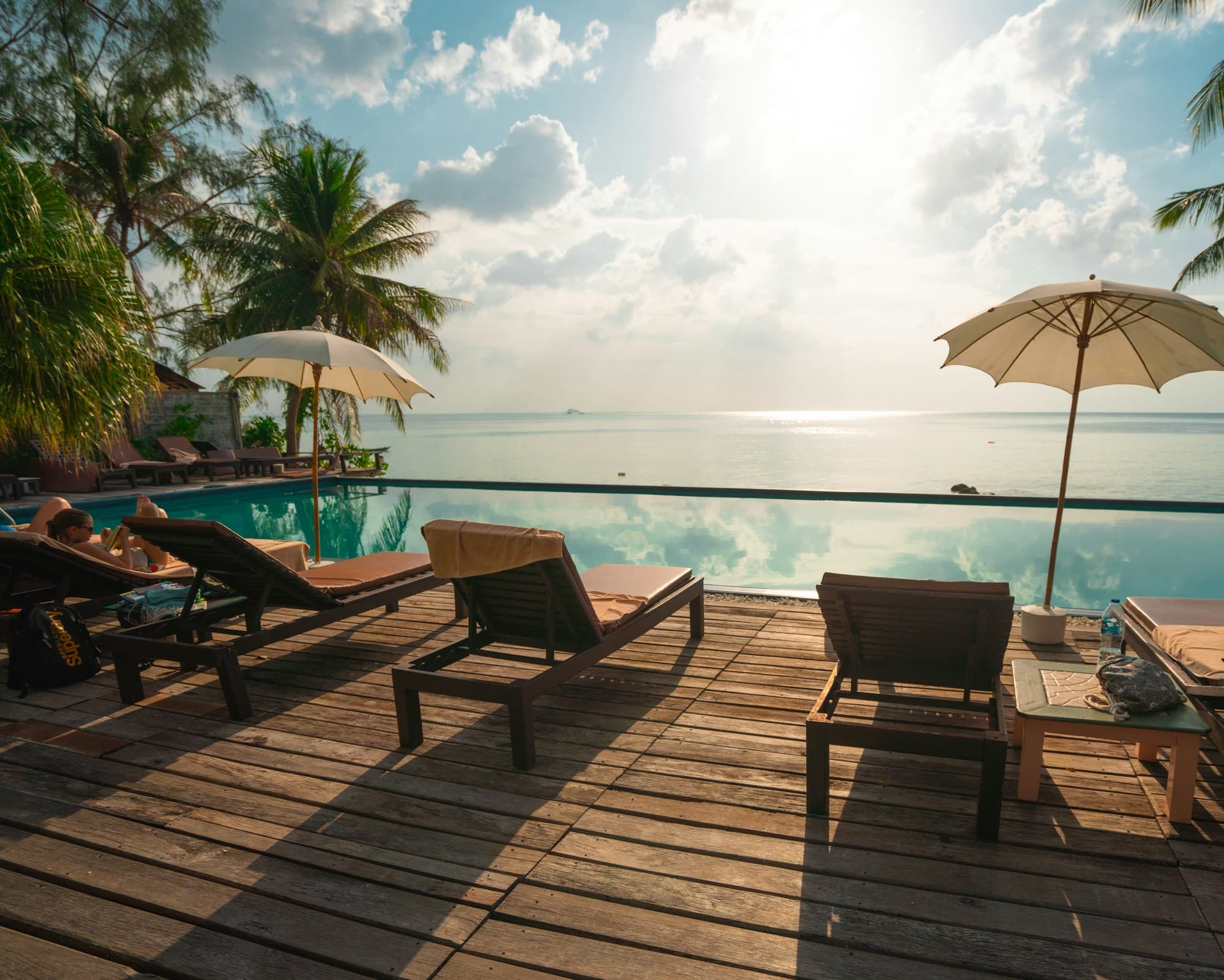
Luxury lodge deck with loungers and umbrellas at golden hourComfort

Nyungwe · Gisakura tea country

Tea Country Lodge · Gisakura

Lodge

Simple, friendly hotels on the tea estates around Gisakura, on Nyungwe’s western edge, look out over bright green terraces to the wall of the forest. Rooms are modest, but the setting is lovely, the staff are used to pre-dawn chimp departures, and the Gisakura rope course and forest trails are close by.

  • Views over tea terraces to the forest
  • Early breakfasts for chimp mornings
  • Close to Gisakura trails and the rope course
  • Warm, simple rooms

Ideal for: Walkers and birders who put forest time ahead of room size
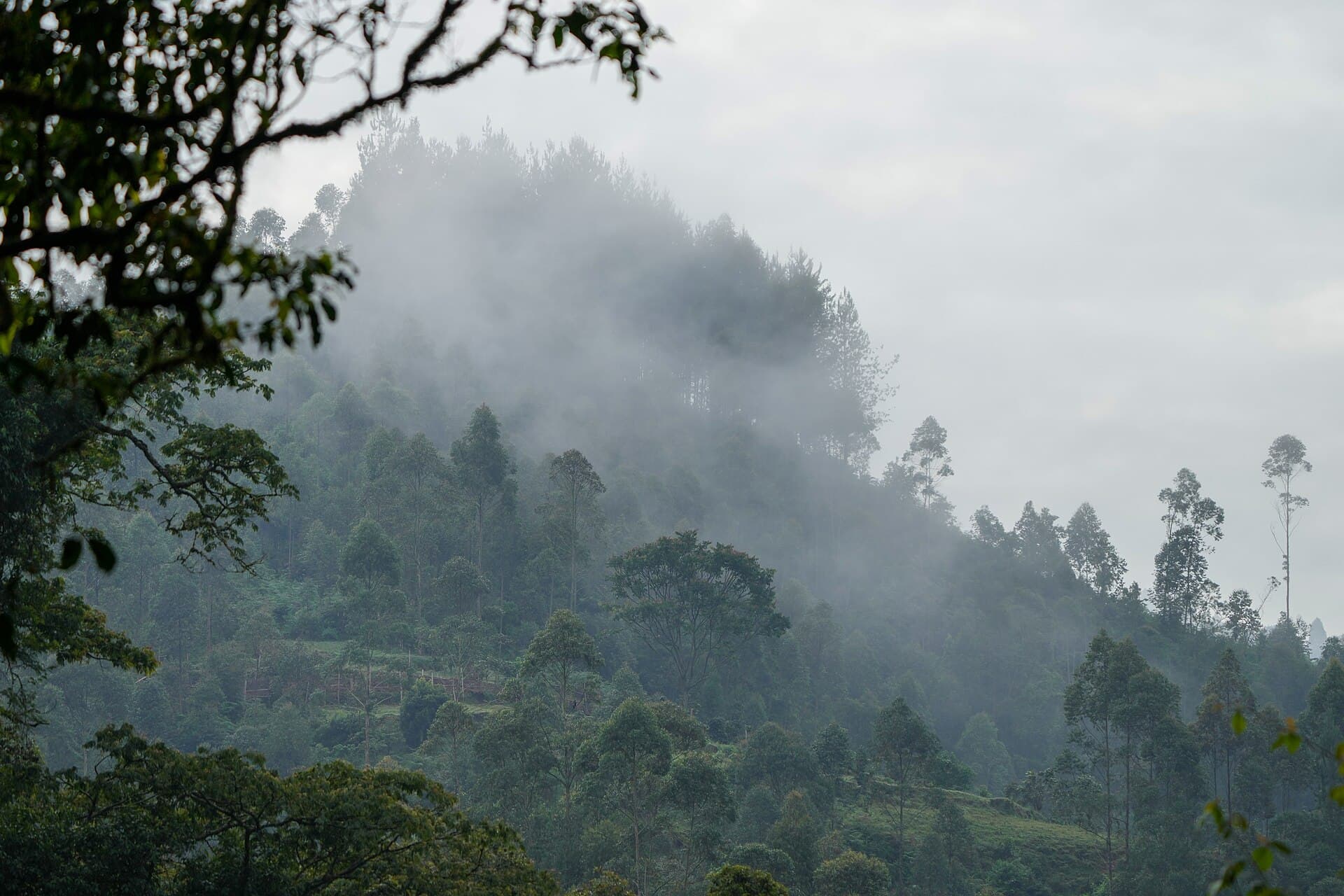
Forest lodge tucked into the canopy near the gorilla parksPremium

Nyungwe · forest edge

Rainforest-Edge Chalets · Nyungwe

Forest lodge

Lodges in this style stand exactly where cultivated land meets the rainforest, so monkeys move through the trees beside your room and the dawn chorus is your alarm clock. Expect wooden chalets with fireplaces or heaters, since Nyungwe is cool and damp at altitude, and trailheads within a short walk or drive.

  • Chalets facing the forest canopy
  • Monkeys and forest birds around the grounds
  • Heating for cool, misty nights
  • Short transfers to trailheads

Ideal for: Primate lovers and hikers who want the forest itself as the view

Forest lodge tucked into the canopy near the gorilla parksLuxury

Nyungwe · tea estate beside the forest

Tea Estate Luxury Lodge · Nyungwe

Forest lodge

The most polished way to stay at Nyungwe takes this form: suites on a working tea plantation that borders the park, with a heated pool, a spa and colobus monkeys often in the trees nearby. Mornings can begin with a walk through the tea rows to learn how the leaves are picked and processed, before a guided afternoon in the forest.

  • Suites on a working tea estate beside the forest
  • Heated pool and spa
  • Tea-estate walks and tastings
  • Early departures for chimp tracking and the canopy walkway

Ideal for: Honeymooners and luxury travelers who want the rainforest with every comfort

Experiences

Experiences

Forested ridgelines of Nyungwe at dusk

Adventure

Nyungwe Canopy Walkway

Walk a suspended bridge high above a rainforest valley in Nyungwe, level with the treetops, the monkeys and the birds.

Safaris

Safaris That Go Here

Forested ridgelines of Nyungwe at dusk
12 daysAll three parks

Complete Rwanda

Kigali · Huye · Nyungwe National Park · Karongi (Kibuye) · Volcanoes National Park · Akagera National Park · Kigali International Airport

Primate enthusiasts, photographers and returning safari-goers who want the whole country rather than one park

Best months
Mid-June–September & mid-December–February
Comfort levels
Premium · Luxury
Individually quoted

Good to know

Frequently asked questions

How much does it cost to visit Nyungwe National Park?

At the time of writing (September 2026), the park’s 2025–26 price list sets international entry at US$100 for one night, US$150 for two and US$200 for three, with nights four to seven free and children aged 6–12 at half rate. Chimpanzee tracking is US$150, and ‘special activities’ such as the canopy walkway, guided birding or a night walk are US$40 each. The park is cashless.

Is chimpanzee tracking in Nyungwe as good as in Uganda?

The chimps are the same eastern subspecies, but Uganda’s Kibale forest is flatter and is usually considered the region’s most reliable chimp destination. Nyungwe’s communities are semi-habituated and range across steep valleys, so sightings vary more from day to day. Nyungwe wins on setting, and on everything else it offers alongside the chimps.

Can I fly to Nyungwe National Park?

Not on a scheduled flight we currently recommend. Kamembe, the nearest airport with scheduled services, sits in an area near the DRC border covered by current UK and US travel advice, so we plan access by road or by charter helicopter from Kigali or Volcanoes. We will revisit that if the advice changes.

What is the minimum age for chimpanzee tracking in Nyungwe?

Fifteen, under the park’s rules. Younger travelers can still follow the colobus, walk easy guided trails such as Igishigishigi and, subject to the current age rule, cross the canopy walkway. Children aged 6–12 pay half the adult entry fee.

What should I wear in Nyungwe?

Plan for rain in any month: a proper waterproof jacket, quick-drying layers, long trousers and boots with good grip for steep, muddy trails. Gaiters and gloves help on chimp tracking, where you may scramble off-trail. Evenings at altitude are cool, so pack a warm fleece.

Forested ridgelines of Nyungwe at dusk

Tell Us When You’d Like to Trek

Share your dates, who is traveling and what you hope to see. We check permit availability first, then design a private Rwanda journey around it, and nothing is booked until you approve it.

Plan my safari here