Travel advisory, last checked 23 September 2026: the US State Department rates Uganda Level 4, “Do Not Travel”, an advisory issued in May 2026 because of Ebola. WHO declared Uganda’s outbreak over on 27 August 2026; the outbreak in the neighbouring DRC continues. Read our dated safety guide before you decide.

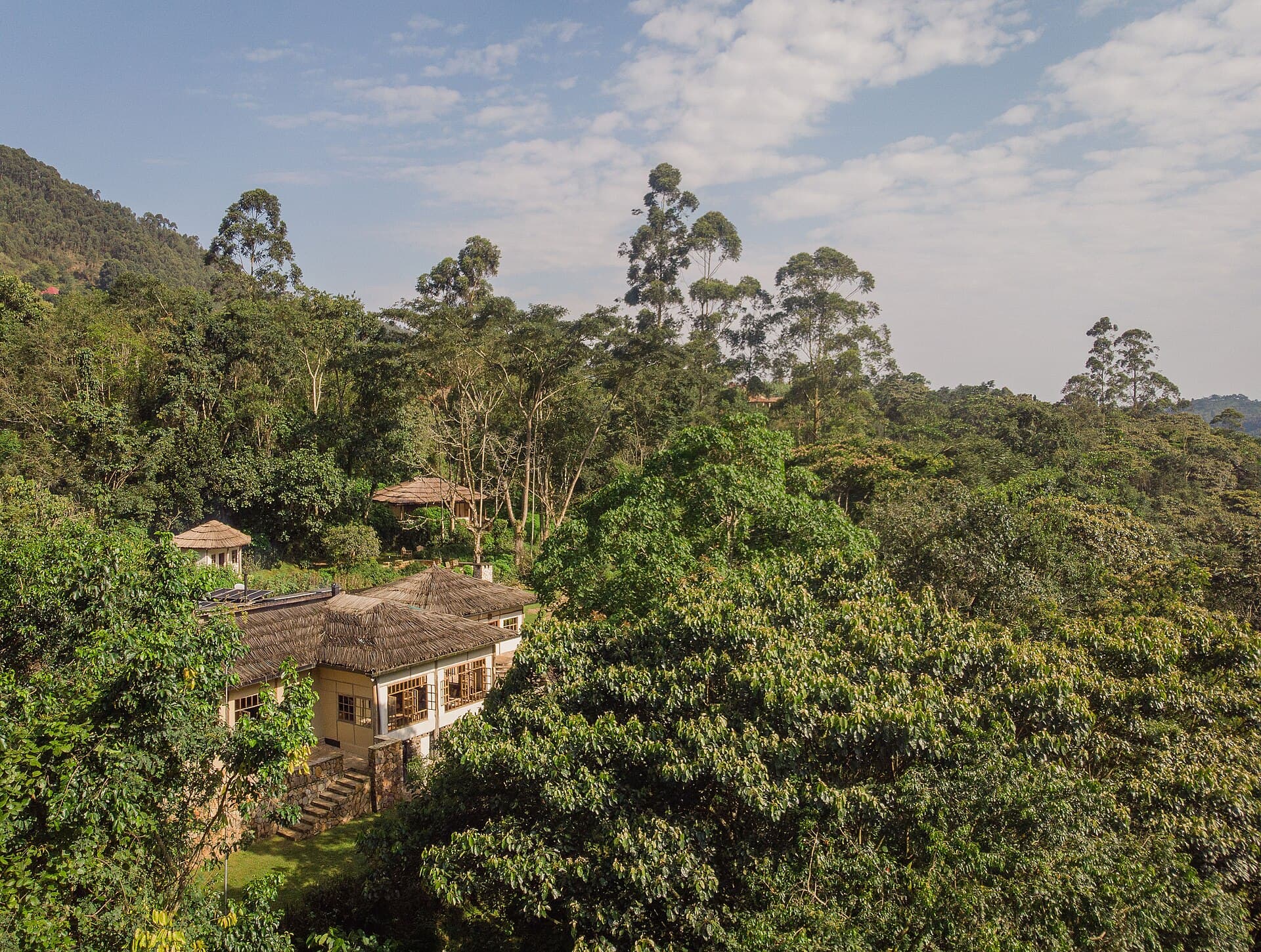
Virunga volcanoes rising over lodge rooftops and farmland

Destination guide

Mgahinga Gorilla National Park Safaris

Uganda’s corner of the Virunga volcanoes: bamboo, montane forest and three extinct cones rising to 4,127 m where Uganda, Rwanda and the DRC meet.

SizeAbout 33.7 km² — Uganda’s smallest national park
Altitude2,227–4,127 m
Best timeJune–August and December–February for firmer trails
Recommended stay2 nights
Getting thereKisoro airstrip (about 1 h 10 from Entebbe), or about 3–4 hours by road from Kigali
Known forThe Nyakagezi gorilla family, golden monkeys and Virunga volcano hikes

Mgahinga Gorilla National Park

Why Visit

Mgahinga Gorilla National Park is Uganda’s share of the Virunga massif and, at about 33.7 km², its smallest national park. Created in 1991, it climbs from 2,227 m to 4,127 m on the summit of Muhabura, one of three extinct volcanoes — with Gahinga and Sabinyo — whose slopes run on into Rwanda’s Volcanoes National Park and the DRC’s Virunga National Park. The bamboo, the forest and the animals living in them pay no attention to the borders.

It is a park built for early mornings. Nyakagezi, the single habituated gorilla family on Uganda’s side of the Virungas, is tracked from Ntebeko with about eight permits a day (UWA), and the gorilla permit costs the same as in Bwindi. Golden monkeys are tracked through the bamboo, and a volcano climb, a gorge walk or the Batwa Trail fills another day. Kisoro town, about 15 km north, and Lake Mutanda make relaxed bases, and the Cyanika border with Rwanda is close — which is why Mgahinga anchors the final nights of our 6-day gorilla safari from Kigali.

Mgahinga or Bwindi? Pick Mgahinga for gorillas and golden monkeys on consecutive mornings, a volcano skyline and a tiny, quiet park where trails climb open volcanic slopes rather than plunging into ravines. Pick Bwindi when permit availability comes first: one family means few permits here, and they go early in the drier months, whereas Bwindi’s four sectors hold many more. Plenty of travelers do both — a gorilla trek in Rushaga, then a short drive to Mgahinga for the monkeys.

Best for

  • Gorillas and golden monkeys on back-to-back mornings
  • Travelers flying into Kigali
  • Hikers who want to stand on a Virunga summit
  • Hearing Batwa history from Batwa guides

Mgahinga Gorilla National Park

Wildlife & Highlights

  • Nyakagezi, Mgahinga’s one habituated mountain gorilla family
  • Golden monkeys, an Albertine Rift endemic, in the bamboo belt
  • Roughly 30 gorillas in all, most in groups not open to visitors (estimates vary)
  • About 76 mammal species, most of them rarely seen in the dense cover
  • 180+ bird species of the montane forest and bamboo zone
  • Bamboo giving way to heath and giant lobelias toward the summits
  • Three extinct volcanoes: Muhabura, Gahinga and Sabinyo

Season

Best Time to Visit

  1. January
  2. February
  3. March
  4. April
  5. May
  6. June
  7. July
  8. August
  9. September
  10. October
  11. November
  12. December
June–AugustThe driest stretch and the best chance of firm footing on the volcanic soils. Mornings are cold above 2,200 m, and the summits are most often clear early in the day. Nyakagezi permits are scarce in these months, so book as soon as your dates are fixed.
December–FebruaryA second drier window, with clear spells between showers that make golden monkey tracking a pleasure. Lodges around Kisoro and Lake Mutanda are a little quieter than in July and August.
March–May and September–NovemberRainy months, with cloud often sitting on the volcanoes and slippery trails through the bamboo. Gorilla treks and monkey tracking still run daily. Reports of a reduced low-season gorilla permit rate for these months had not been confirmed in a published UWA tariff at the time of writing, so check the rate and its conditions before you choose it.

Mgahinga Gorilla National Park

Areas to Know

Ntebeko and the gorilla trail

Gorilla treks leave from the Ntebeko visitor center at the foot of the volcanoes. The approach typically crosses bamboo and montane forest on volcanic slopes rather than the deep, tangled valleys of Bwindi, though at this altitude any climb takes effort. With a single family and about eight permits a day, it is a small, quiet trek — and one that is easy to miss if you book late.

Best for: Small-group gorilla trekking with volcano views

Golden monkeys in the bamboo

Golden monkeys are endemic to the Albertine Rift and live in the Virungas’ bamboo zone. Tracking a habituated troop is often a gentler walk than a gorilla trek, and your time with them is fast and busy as they feed and spring between the canes — patience and a quick shutter speed help. Under UWA’s previous tariff (July 2024–June 2026, now expired), tracking cost US$60 per foreign non-resident plus park entry, and a longer habituation visit US$100. Those figures are a dated reference, not current prices: the replacement tariff was not yet published at the time of writing (September 2026), so current rates must be confirmed when we book.

Best for: Photographers and anyone adding a second primate

The volcanoes

All three volcanoes can be climbed with a UWA ranger. Muhabura, at 4,127 m, is a long, steep day; Gahinga is a shorter outing; Sabinyo’s jagged top is where Uganda, Rwanda and the DRC meet. Starts are early, the altitude is real and the weather turns quickly, so a clear morning and good boots matter more than speed.

Best for: Fit hikers with a spare day

The Batwa Trail

The Batwa lived in these forests as hunter-gatherers until the early 1990s, when Mgahinga and Bwindi became national parks and they were moved out, most without compensation. The Batwa Trail is led by Batwa guides, who show how their families found food, medicine and shelter on the mountain and share songs and history on their own terms. Choosing Batwa-led experiences like this is a practical way to see visitor spending reach the community.

Best for: Understanding the forest through the people who lived in it

Kisoro and Lake Mutanda

Kisoro is the market town and airstrip on the park’s doorstep. Lake Mutanda, a short drive north, is the scenic alternative: a long, island-dotted lake with the volcano chain lined up beyond its southern shore. A dugout paddle or a lakeshore walk makes an easy afternoon after an early trek, and the lake is within reach of both Mgahinga and Bwindi’s southern sectors.

Best for: A relaxed base between the two gorilla parks

Mgahinga Gorilla National Park

Getting There

Scheduled light aircraft fly from Entebbe to Kisoro in about 1 h 10, after which the Ntebeko gate is roughly 15 km away on a rough road. By road from Kampala, UWA puts the drive at about nine hours, so most travelers split it at Lake Mburo or Lake Bunyonyi. For many, the simplest approach is from Kigali: cross at Cyanika and you reach Kisoro in roughly three to four hours. Rushaga, in southern Bwindi, is a short onward drive, which is why the two parks pair so well.

Drive or fly?

If you arrive through Entebbe and are visiting only the gorilla parks, the Kisoro flight saves two long road days, at the cost of a strict soft-bag limit. If you land in Kigali, drive: the border is close and a flight adds nothing. Once you are in the area, Rushaga, Nkuringo, Lake Mutanda and Ntebeko are all linked by short road transfers with your guide.

Airstrips & airports

  • Kisoro

Typical travel times

Kigali to Kisoro via Cyanika
About 3–4 hours
Kampala to Mgahinga
About 9 hours
Kisoro to the Ntebeko gate
About 15 km on a rough road
Rushaga (Bwindi) to Kisoro
About 1–1.5 hours

Stays

Where to Stay

Choose between a lodge on the park boundary, minutes from the Ntebeko briefing and in the shadow of the volcanoes; a lodge on Lake Mutanda, with a longer morning drive and a lovely setting; or a comfortable lodge in Kisoro town. There are only a few properties at each level, so we reserve rooms as soon as your permit is confirmed.

Luxury lodge deck with loungers and umbrellas at golden hourComfort

Mgahinga · Kisoro

Volcano-View Town Lodge · Kisoro

Lodge

Garden lodges on the edge of Kisoro look south to the cones of Muhabura, Gahinga and Sabinyo, and make a practical base for Mgahinga, which lies about 15 km away. The town’s market and the road to the Cyanika border are close, which suits journeys finishing in Kigali.

  • Gardens with views of the Virunga volcanoes
  • Easy access to Mgahinga’s Ntebeko gate
  • Close to the Cyanika border for Kigali departures
  • Friendly, home-style cooking

Ideal for: Travelers who want a comfortable, well-placed base between Mgahinga and the Rwandan border
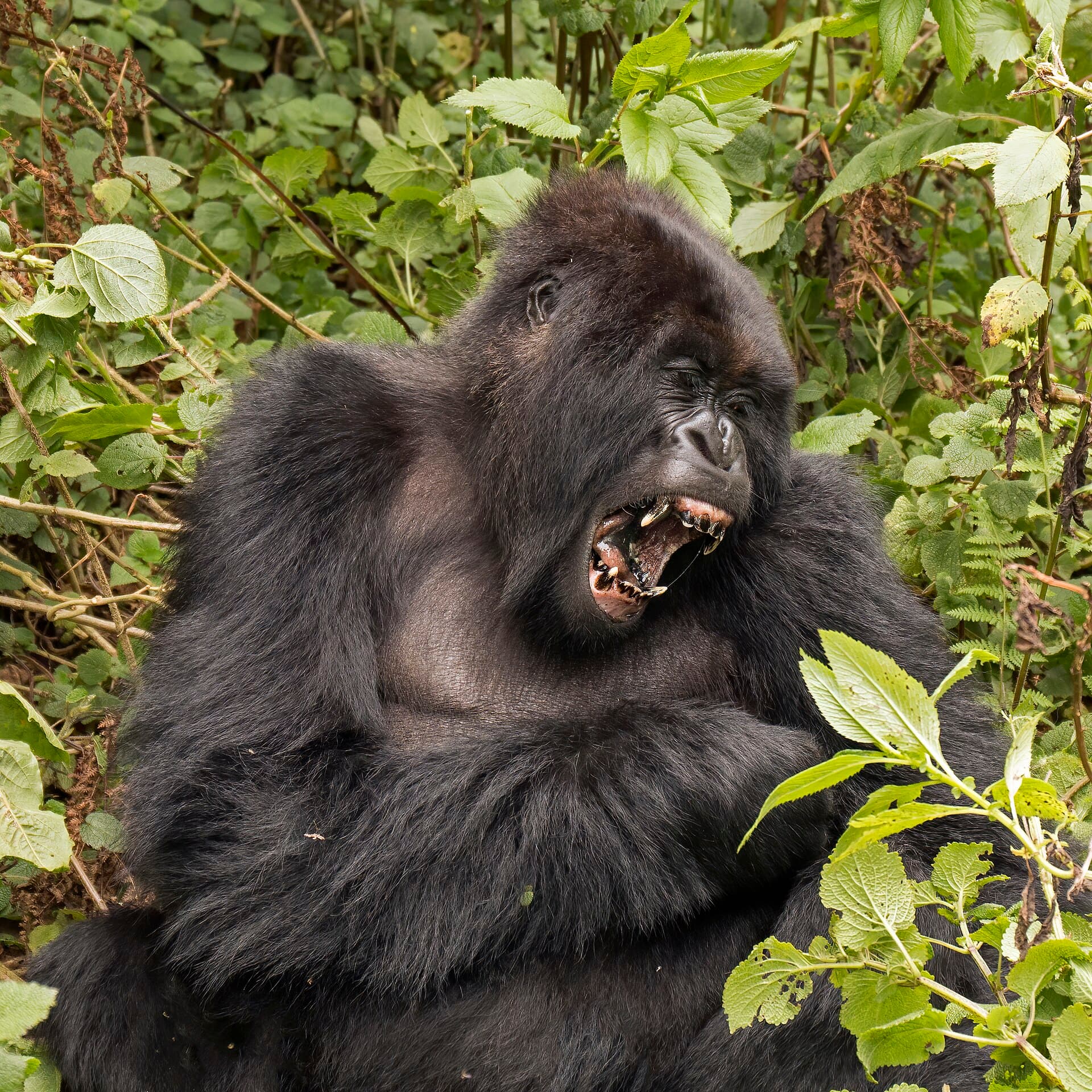
Luxury lodge deck with loungers and umbrellas at golden hourPremium

Mgahinga · Lake Mutanda

Lakeshore Lodge · Lake Mutanda

Lodge

On the green slopes above Lake Mutanda, cottages look across island-studded water to the Virunga volcanoes, one of the finest views in south-western Uganda. The lake sits between Rushaga and Mgahinga, so it works for both, and a dugout canoe outing starts almost at the door.

  • Cottages facing the lake and volcanoes
  • Canoe outings on Lake Mutanda
  • Within reach of both Rushaga and Mgahinga
  • Fires and hot-water bottles for cool evenings

Ideal for: Couples and photographers who want a scenic base for gorillas and golden monkeys

Luxury lodge deck with loungers and umbrellas at golden hourPremium

Mgahinga · park boundary

Park-Boundary Volcano Lodge · Mgahinga

Lodge

A small lodge right at Mgahinga’s boundary puts the slopes of the volcanoes outside your door and the trailheads for golden monkeys, the Nyakagezi gorilla family and the volcano climbs within minutes. It is the most characterful place to stay on Uganda’s side of the Virungas, with stone cottages and big mountain skies.

  • Minutes from Mgahinga’s Ntebeko trailheads
  • Cottages with volcano views
  • Guided walks and climbs arranged on site
  • Log fires on cold mountain nights

Ideal for: Walkers and primate enthusiasts who want to wake up on the volcano slopes

Safaris

Safaris That Go Here

Silverback mountain gorilla mid-yawn among fresh green foliage
6 daysShort & focused

Gorillas via Kigali

Kigali · Rushaga · Mgahinga

Travelers with a week who want two gorilla treks at Uganda’s permit price and the simplest international access

Best months
June–September and December–February
Comfort levels
Comfort · Premium · Luxury
Individually quoted

Good to know

Frequently asked questions

How many gorilla permits does Mgahinga issue each day?

About eight, for its single habituated family, Nyakagezi (UWA). That makes it one of the smallest gorilla treks in the region, and permits for June–August and December–February tend to go early. If Mgahinga is full on your dates, southern Bwindi is the nearest alternative.

Is golden monkey tracking difficult?

It is usually easier than a gorilla trek, because the troops live in the lower bamboo zone and the walk is often shorter. The altitude and mud still make it a proper hike. The monkeys move quickly through the bamboo, so expect to follow them rather than sit and watch.

Can I visit Mgahinga from Rwanda?

Yes. Mgahinga is close to the Cyanika border, about three to four hours from Kigali by road, and many travelers arrive that way. You will need a Uganda visa or an East Africa Tourist Visa, and at least two nights so that the gorilla trek and the golden monkeys each get a morning.

Can I climb Mount Muhabura?

Yes, with a UWA ranger. It is a long, steep day to 4,127 m and back, starting early, and best attempted after a night or two at altitude and in drier weather. Gahinga and Sabinyo are shorter alternatives if you want a summit without the full effort.

Who are the Batwa, and is the Batwa Trail respectful?

The Batwa are the forest people of south-western Uganda, moved out of Mgahinga and Bwindi when the parks were created in the early 1990s. The Batwa Trail is led by Batwa guides who decide what to share, and part of its fee is intended to support their community. We favor experiences like this over staged village visits.

Virunga volcanoes rising over lodge rooftops and farmland

Start With Your Dates

Tell us when you would like to travel, who is coming and how many gorilla days you want. We check permit availability first, then design a private Uganda journey around it, with nothing booked until you approve.

Plan my safari here