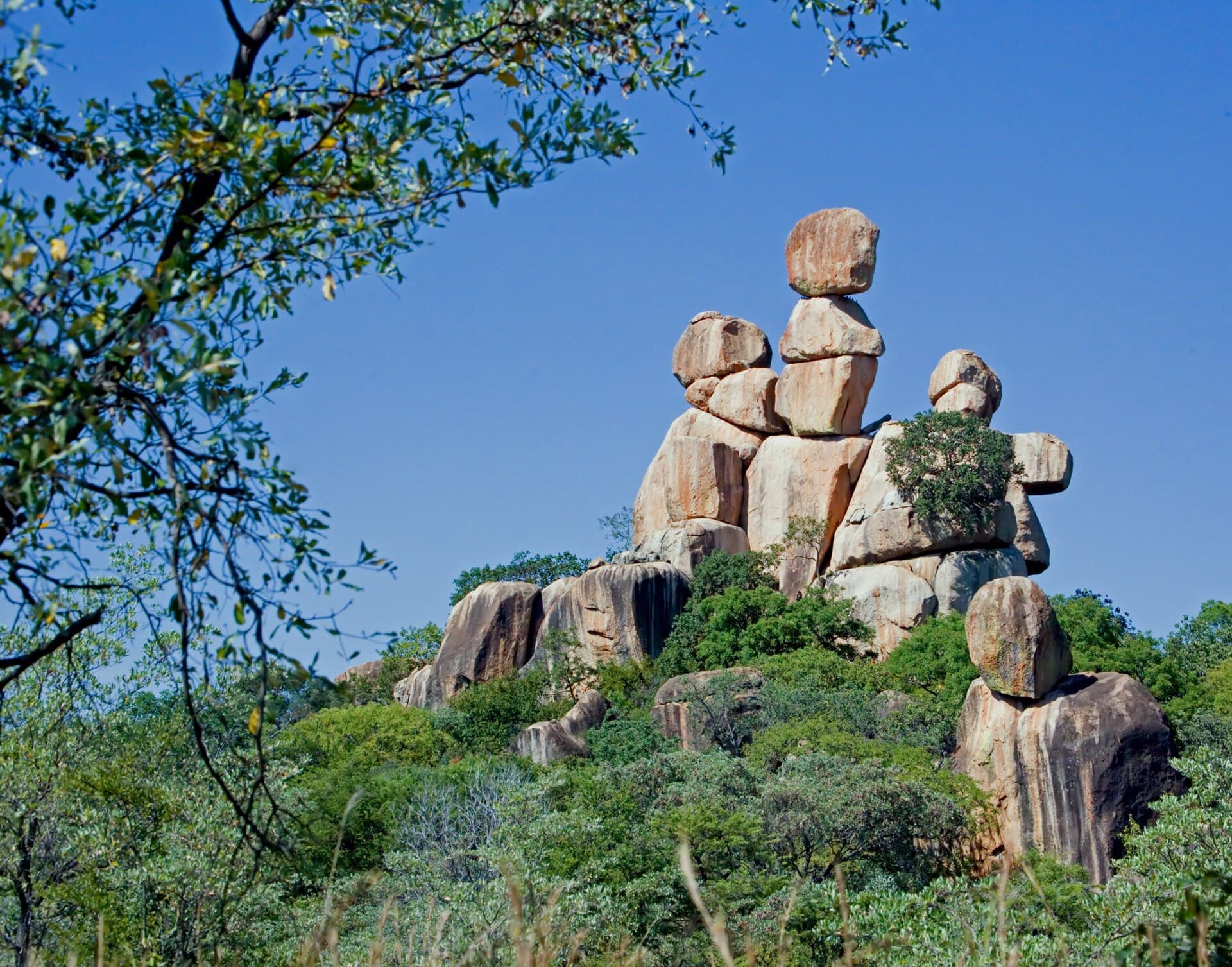
Balancing granite boulders of the Matobo Hills

Destination guide

Matobo National Park & the Matobo Hills

Balancing granite kopjes, rock-art shelters painted over thousands of years and rhino tracked on foot, less than an hour south of Bulawayo.

SizeNational park of about 424 km² within a 205,000 ha World Heritage landscape
Best timeYear-round; May–September for cool, clear tracking days
Recommended stay2–3 nights
Getting thereAbout 30 km on tar from Bulawayo; 45 minutes to 1 hour to most lodges
Known forRhino tracking on foot, rock art, leopards and black eagles
World HeritageMatobo Hills cultural landscape, inscribed 2003

Matobo National Park & the Matobo Hills

Why Visit

Matobo National Park lies about 30–35 km south of Bulawayo, in a landscape of granite domes, balancing boulders and wooded valleys that looks almost sculpted. UNESCO inscribed the Matobo Hills in 2003 as a cultural landscape of about 205,000 ha, recognizing its people and beliefs as much as its rocks: the hills have been lived in for at least 500,000 years, and their shelters hold one of the densest concentrations of rock art in southern Africa, at least 13,000 years old.

For wildlife travelers, Matobo’s draw is rhino. The park is one of ZimParks’ Intensive Protection Zones and holds both white and black rhino, and here you can track them on foot with an armed ZimParks scout and your guide — the only place on our Zimbabwe routes where this is a routine outing. Leopards do well among the kopjes, where rock hyrax make up much of their diet, and the cliffs support one of the highest concentrations of Verreaux’s (black) eagles anywhere.

Matobo works in every season, a useful counterweight to the Zambezi Valley’s closures, and two or three nights is plenty. It sits between Hwange and Bulawayo on a northern route, or opens a southern loop through Great Zimbabwe to Gonarezhou, as on the 9-Day Matobo, Great Zimbabwe & Gonarezhou Private Safari.

Best for

  • Tracking white and black rhino on foot
  • Travelers drawn to rock art, history and living heritage
  • Green-season trips when the Zambezi Valley is closed
  • A cultural chapter between Hwange and Great Zimbabwe

Matobo National Park & the Matobo Hills

Wildlife & Highlights

  • White and black rhino, tracked on foot in the Intensive Protection Zone
  • Leopard, at one of the highest densities anywhere, according to ZimParks
  • Verreaux’s (black) eagles nesting on the granite cliffs
  • Rock hyrax sunning themselves on every kopje
  • Sable, giraffe, zebra, wildebeest and klipspringer
  • Rock-art shelters at Nswatugi, Pomongwe and White Rhino Shelter
  • World’s View (Malindidzimu) at sunset
  • More than 200 tree species on the granite and in the valleys

Season

Best Time to Visit

  1. January
  2. February
  3. March
  4. April
  5. May
  6. June
  7. July
  8. August
  9. September
  10. October
  11. November
  12. December
May–AugustDry, cool and clear, with crisp mornings and warm afternoons — the most comfortable months for tracking on foot. Thinning grass makes rhino spoor easier to follow and animals easier to spot.
September–OctoberHot and dry. Track at dawn and save rock-art shelters for the cooler late afternoon; the bush is bare and visibility at its best.
November–AprilThe rains bring green valleys, running streams, dramatic skies over the granite and excellent birding. Grass grows tall and tracks can be muddy, but Matobo stays open, which makes it a good green-season alternative while Mana Pools camps are shut.

Matobo National Park & the Matobo Hills

Areas to Know

The rhino sanctuary (Intensive Protection Zone)

Rhino tracking happens here. You set out at dawn or in the late afternoon with an armed ZimParks scout and your guide, pick up fresh spoor, and follow it on foot for typically 2–3 hours and 3–5 km over uneven, rocky ground. The approach is quiet and downwind, and the rhino set the distance. One lodge cites a Parks minimum age of 6, but rules and camp policies vary, so we confirm the current age when you book. Walking elsewhere in Zimbabwe is covered on our walking safaris page.

Best for: Seeing rhino on foot

The rock-art shelters

Nswatugi Cave holds some of the finest paintings in the hills — giraffe, antelope and human figures in red and ochre tones — a short climb from the road. White Rhino Shelter has fine outline paintings, and Pomongwe Cave shows why care matters: its paintings were darkened by a misguided linseed-oil preservation experiment in the 1920s. A good guide reads the scenes with you, from hunting parties to figures many researchers link to trance and rain.

Best for: History, archaeology and quiet mornings

World’s View (Malindidzimu)

A bare granite dome scattered with boulders, with views over the hills in every direction. Its name is usually translated as “the place of the spirits”, and it was sacred to local people long before Cecil Rhodes chose it for his grave. Rhodes lies here with Leander Starr Jameson and Charles Coghlan, near a memorial to the Shangani Patrol, British South Africa Company soldiers killed in the 1893 war against the Ndebele kingdom. Many Zimbabweans see the graves as a symbol of colonial conquest on sacred ground; your guide can talk through that history candidly.

Best for: Sunset views and an honest look at colonial history

Living heritage & Mwari shrines

The Matobo Hills are a living religious landscape. The Mwari oracular tradition is still practised, and some shrines are enclosed by palisades that no one may pass without the ancestors’ permission. Visit cultural sites only with local guides or community permission, keep your camera for landscapes unless you are invited otherwise, and treat a closed site as closed.

Best for: Travelers who want culture approached with respect

Matobo National Park & the Matobo Hills

Getting There

Bulawayo is the gateway, with scheduled flights from Johannesburg, Harare and Victoria Falls (check current schedules). From the city it is about 30 km on tar to the park boundary, roughly 45 minutes to 1 hour to most lodges, several of which sit on private granite land just outside the park. Bulawayo also links by road to Hwange Main Camp, about 306 km away, and east to Great Zimbabwe.

Drive or fly?

Once you land in Bulawayo, Matobo is a road destination, and the short drive is part of the appeal as the city’s wide streets give way to granite country. Between Matobo and Hwange you can drive in about half a day or connect through Bulawayo’s airport. Heading east to Great Zimbabwe and Gonarezhou, the road is the only practical option, and a private vehicle with your guide makes those long days comfortable.

Airstrips & airports

  • Bulawayo Airport (BUQ)

Typical travel times

Bulawayo to Matobo lodges
About 45 minutes–1 hour
Bulawayo to Hwange Main Camp
About 4 hours (about 306 km)
Matobo to Great Zimbabwe
About 4 hours
Bulawayo to Victoria Falls
About 5–6 hours (437 km), or a short flight

Stays

Where to Stay

Lodges here are built into the granite: thatched rooms wedged between boulders, pools on rock ledges and views across kopje country. Most sit on private land just outside the park boundary, close to the tracking areas and rock-art sites. Choose between a relaxed, family-friendly lodge and a smaller luxury hideaway with more privacy and design.

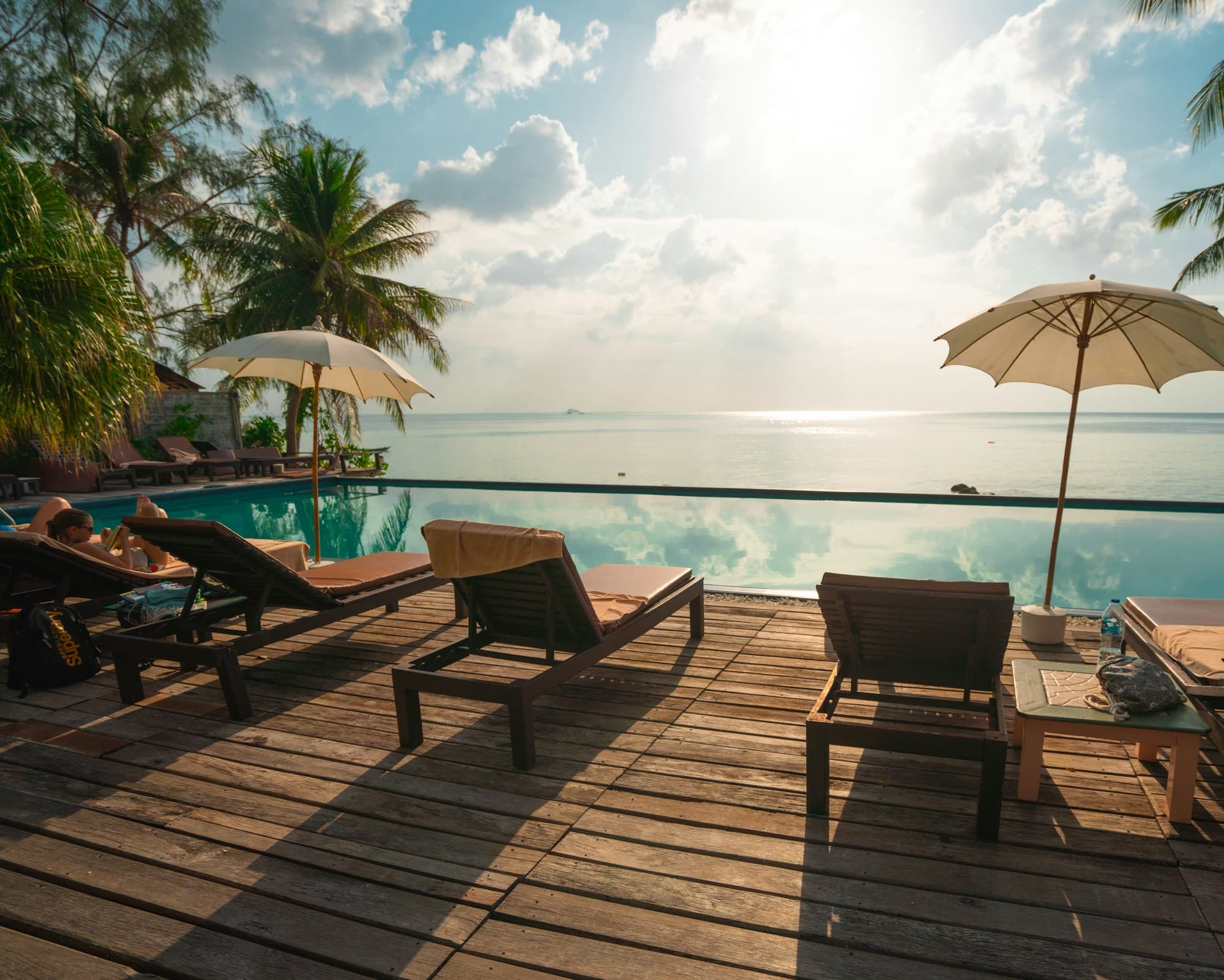
Luxury lodge deck with loungers and umbrellas at golden hourPremium

Matobo Hills · kopje country

Granite Kopje Lodge

Lodge

Built into and around the granite boulders, lodges in this style use the rock itself as walls and viewpoints, with rooms tucked between kopjes and long views over the hills. They sit close to the national park for rhino tracking and rock-art visits, and the grounds are good for short walks looking for klipspringer, hyrax and eagles.

  • Rooms set among granite boulders
  • Close to the national park gates
  • Rhino tracking and rock-art outings arranged
  • Family rooms at some

Ideal for: Families and first-time visitors to Matobo who want character, views and easy access to the park
Luxury lodge deck with loungers and umbrellas at golden hourLuxury

Matobo Hills · granite hideaway

Boutique Granite Hideaway

Lodge

A small, design-led lodge in the Matobo Hills has only a few suites, each placed to frame a view of balancing rocks or a quiet valley. Service is personal, the pool sits among the boulders and your guide tailors each day to rhino, rock art, history or simply sitting still.

  • A handful of suites with private views
  • Pool set among the boulders
  • Private guiding for rhino tracking and rock art
  • Candlelit dinners on the granite

Ideal for: Couples and honeymooners who want intimacy, thoughtful design and the hills almost to themselves

Experiences

Experiences

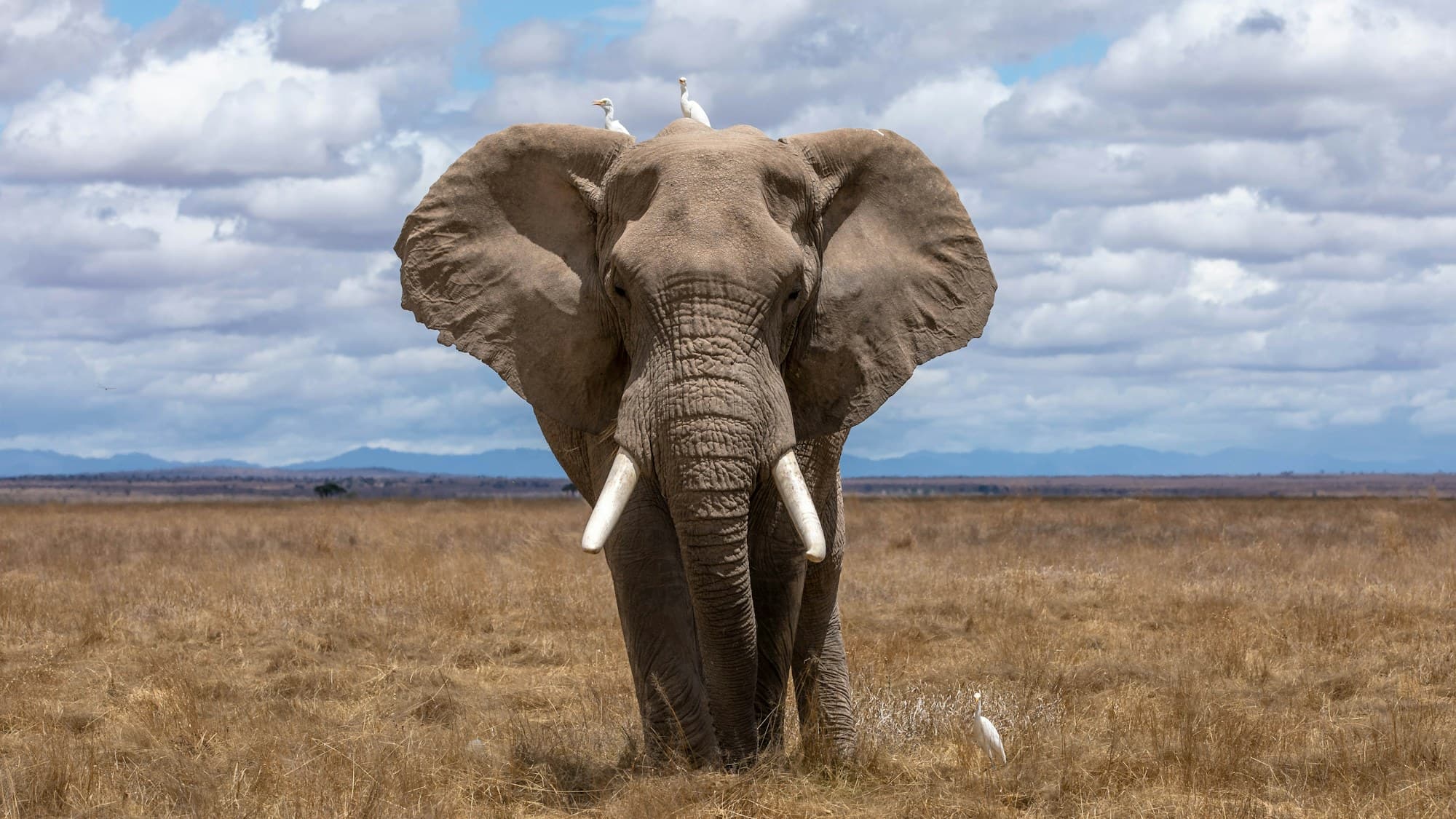
Elephant with white egrets standing front-on in open grassland under a wide sky

On foot

Walking Safaris in Zimbabwe

Walk the bush with some of Africa’s most rigorously trained guides, from Mana Pools’ floodplain to the rhino country of Matobo.

Culture

Great Zimbabwe

Walk through the stone city that gave Zimbabwe its name, built by Shona ancestors between the 11th and 15th centuries.

Safaris

Safaris That Go Here

Balancing granite boulders of the Matobo Hills
9 daysSouthern Zimbabwe

Rhinos, Ruins & Red Cliffs

Bulawayo · Matobo Hills · Great Zimbabwe · Gonarezhou · Buffalo Range Airport

Returning safari travelers and culture-minded couples who want history, rhino on foot and a genuinely remote park

Best months
April–October
Comfort levels
Premium · Luxury · Ultra-Luxury
Individually quoted

Good to know

Frequently asked questions

Is rhino tracking in Matobo safe?

It is carefully managed. An armed ZimParks scout leads, your guide briefs you before you set off, and the group stays together, quiet and downwind. Rocky ground and thick bush carry some risk, so follow instructions exactly and never step ahead of the scout.

What is the minimum age for rhino tracking in Matobo?

One lodge cites 6 as the Parks minimum, but the practical age depends on the walk and the operator, and children need to manage two or three hours on rough ground in silence. Tell us your children’s ages when you enquire and we will confirm the current rules.

How many days do you need in Matobo?

Two nights gives you one rhino-tracking outing, a rock-art shelter and World’s View at sunset. A third night adds a second tracking attempt, more shelters or a heritage visit, and makes the drive from Bulawayo feel unhurried.

Is Matobo worth visiting in the rainy season?

Yes. Unlike Mana Pools or Gonarezhou, Matobo stays open and accessible through the rains, and the hills turn green under stormy skies. Tracking can be wetter and grass taller, but the rock art, birding and landscape are at their most atmospheric.

Can you visit Cecil Rhodes’ grave at World’s View?

Yes. World’s View is inside the national park and reached by a short, steady walk up bare granite from the parking area. It is a national monument on ground sacred to local people, so visit quietly and with an open mind about the history it represents.

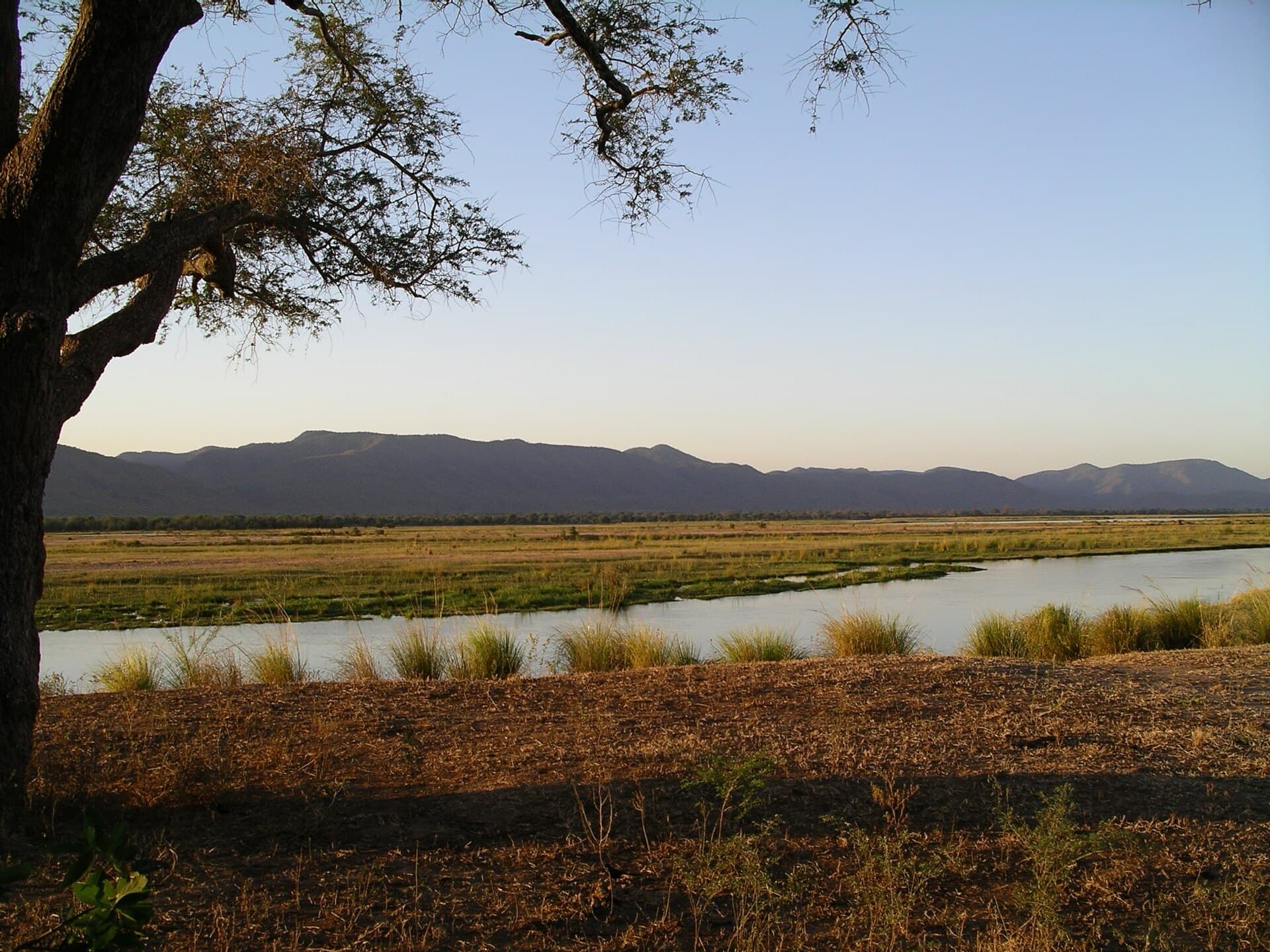
Floodplain and mountains of Mana Pools at dusk

Start With Your Dates

Tell us when you can travel, who is coming and whether you picture the falls, a canoe on the Zambezi or rhino tracks in the Matobo Hills. We’ll design a private Zimbabwe journey around it, and nothing is booked until you approve it.

Plan my safari here