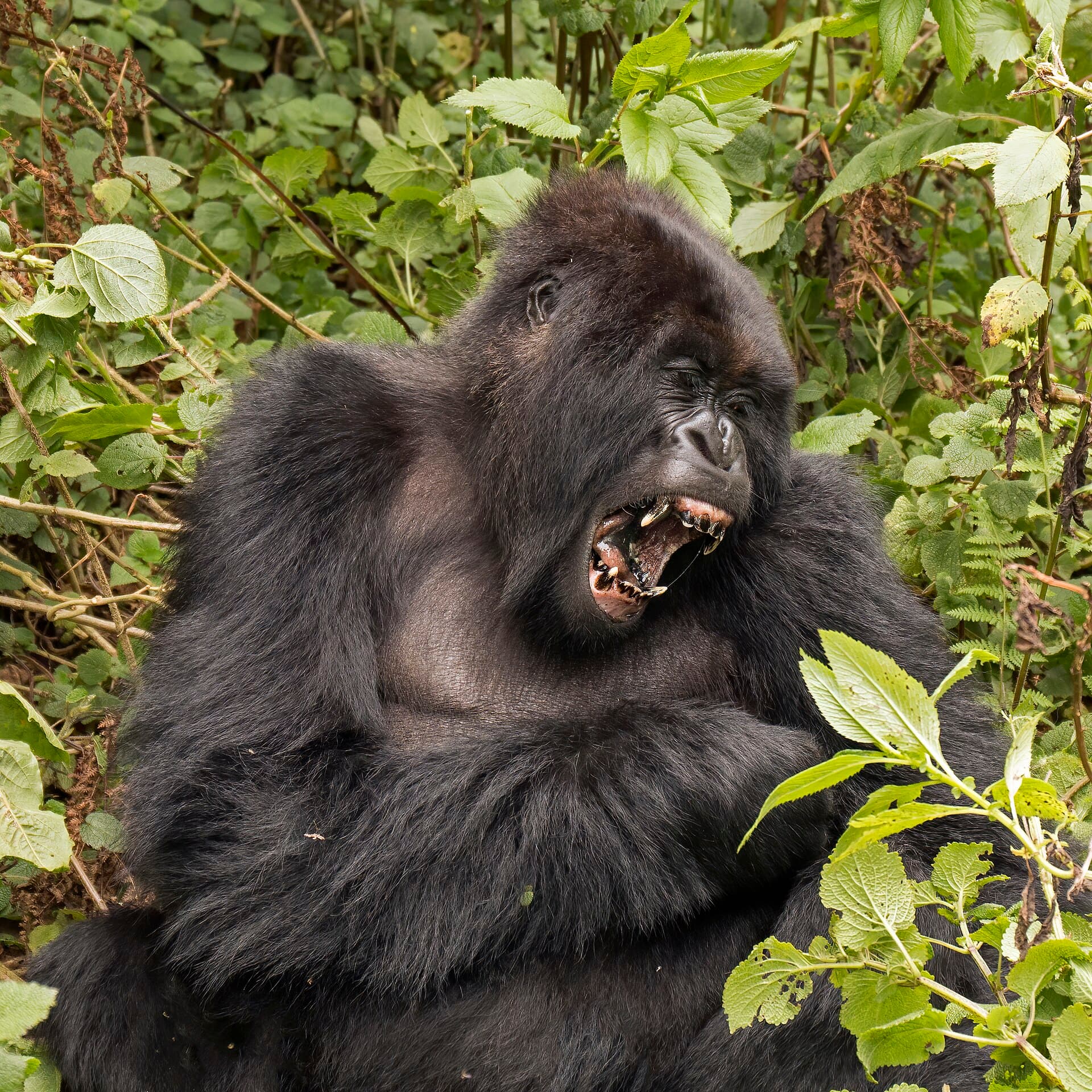
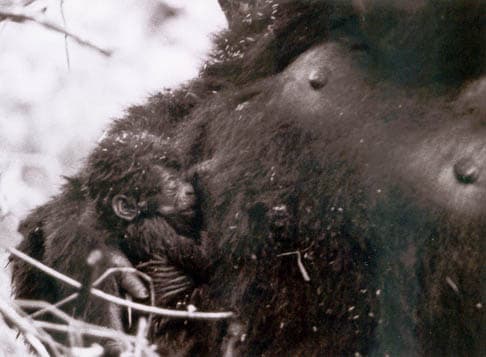
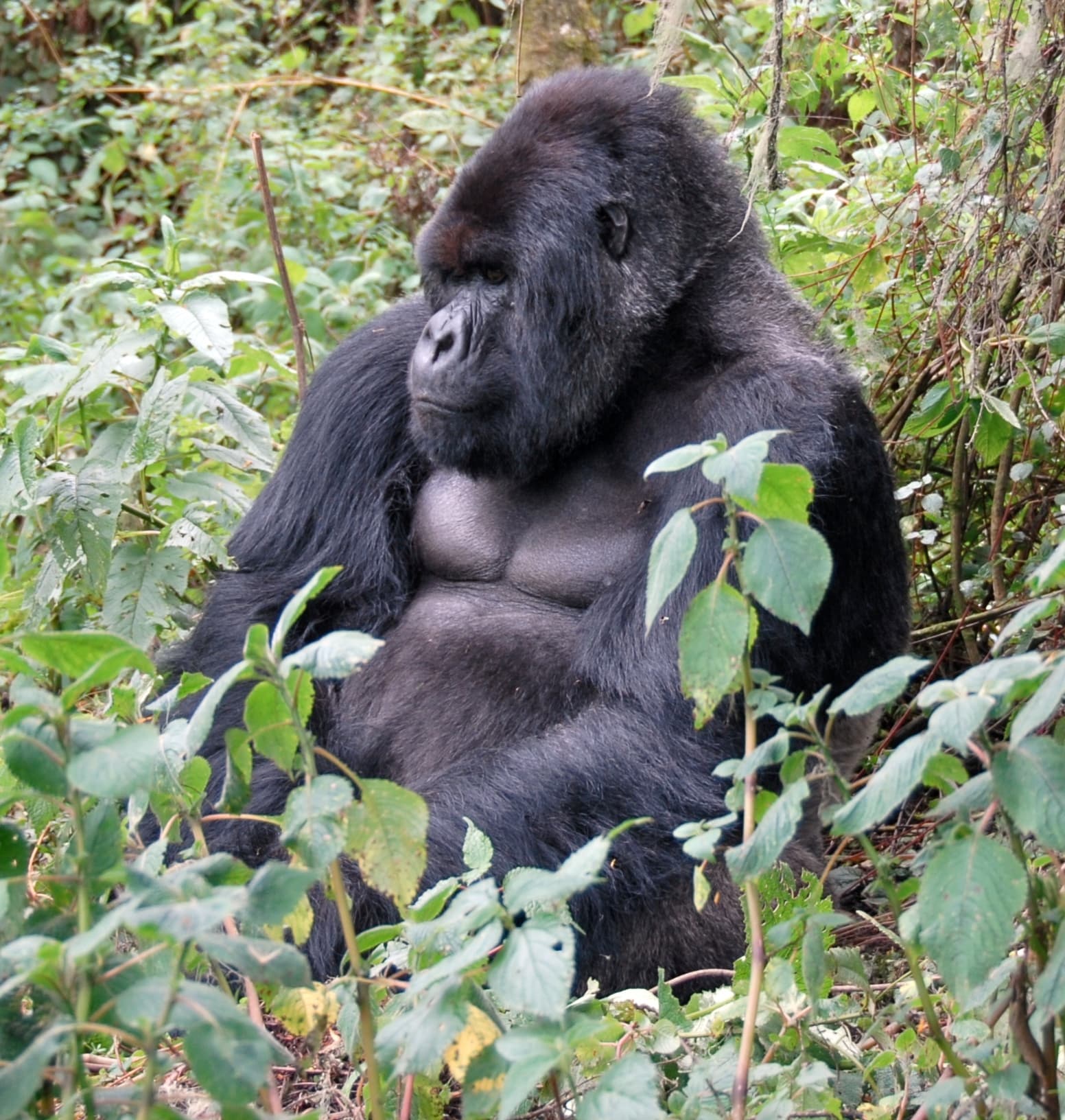
Mountain gorilla silverback of the Susa group resting in dense green foliage, Rwanda

Volcanoes National Park

Gorilla Trekking in Rwanda: Permits, Rules & What a Trek Is Really Like

Everything between buying a permit and the moment a silverback looks up from the bamboo: the price, the booking rules, the morning at Kinigi, the climb and the hour itself.

Gorilla trekking in Rwanda happens in one place: Volcanoes National Park, roughly 160 km² of bamboo and montane forest on the Rwandan flanks of the Virunga volcanoes, in the country’s far north-west. Every trek starts with a 7 am briefing at the park headquarters in Kinigi, and every trek ends the same way, with a strictly timed hour in the company of a habituated gorilla family.

What sets Rwanda apart is access. From Kigali International Airport, the road to Musanze takes about 90 minutes and Kinigi lies a short way beyond, so your trek can fall on the second or third day of a trip instead of after a long overland journey. The trade-off is price: Rwanda sets the region’s highest permit fee, a deliberate policy to keep visitor numbers low and the gorillas calm.

This page covers the practical side: what the permit costs and how its rules work, what the morning and the walk are really like, the rules on the mountain and what to pack. For choosing a country, see Rwanda vs Uganda for gorilla trekking; for the park itself, where to stay and what else to do there, see Volcanoes National Park.

Permit Facts

The Rwanda Gorilla Permit at a Glance

The essentials as published by the Rwanda Development Board (RDB) and Visit Rwanda at the time of writing (September 2026), for foreign non-resident visitors.

ItemWhat applies
PriceUS$1,500 per person per trek, set by RDB
Where to buyRDB’s online booking portal and the Irembo government payment platform, or a licensed tour operator booking on your behalf
Minimum age15 on the day of the trek, applied without exceptions
Group sizeNo more than eight visitors per gorilla family per day
Time with the gorillasOne hour, counted from the moment your group reaches the family
Reporting time7 am at the Kinigi park headquarters, with the passport used for the booking
FamiliesAbout a dozen habituated families; Visit Rwanda lists twelve, which allows up to 96 visitors a day
Changing your dateA rescheduling fee of 20% of the permit value; inside seven days of the trek, RDB must approve the change
Refunds75% if you trek all day without reaching the family; nothing for late arrival, missed flights or no-shows

RDB revises fees and terms from time to time. We confirm the rules in force on the day we book your permits, and itemize the permit separately in your quote.

Booking

How to Book a Rwanda Gorilla Permit

Permits are sold first come, first served, and each one is tied to a single date. There is no lottery and no waiting list: once a day’s allocation has gone, the only options are another date or another country. RDB sells permits directly online, and licensed operators can buy them for you using your passport details.

Build the trip around the permit, not the other way round. The sensible order is to settle your trek dates, secure the permits, and only then confirm lodges and flights. Demand is highest from June to September and over the December holidays, so the earlier you commit to dates in those months, the more choice of trek day you keep.

The passport on the permit must be the one you carry to Kinigi, where documents are checked before the briefing. A permit booked against an old passport number, or a traveler who hasn’t sorted a visa, can be turned away regardless of payment, so we check those details twice before booking. RDB also publishes separate rate categories for Rwandan citizens and residents; the foreign non-resident rate above is the one that applies to US, UK and EU passport holders.

The Small Print

Rescheduling, Refunds and What If You Don’t Find Them

RDB’s terms are strict, and worth understanding before you pay. Here they are in plain English, as published at the time of writing.

  1. Moving your date more than seven days out

    You can switch to another date for a fee of 20% of the permit value, as long as the new date still has space. The change is processed without needing special approval.

  2. Moving your date inside seven days

    The same 20% fee applies, but the change needs RDB’s approval, which is not automatic. Illness or a family emergency is the usual reason, and the request goes in with supporting details.

  3. If the trackers can’t lead you to the family

    Gorillas range freely, so it can happen, although rarely. If you trek all day without making contact, RDB refunds 75% of the permit. If the family’s movements mean the trek can’t be completed at all, the published terms offer another attempt or a full refund.

  4. Arriving late or not at all

    Missing the 7 am briefing, a delayed or cancelled flight, or simply not turning up means the permit expires with no refund. That is the strongest argument for a night in Kigali and a lodge near Kinigi before trek day.

  5. Waking up unwell

    Rangers can refuse anyone with signs of a cold, flu or other infection, because gorillas catch human respiratory illnesses easily. Check whether your travel insurance covers a non-refundable permit in that situation.

The Day Itself

Trek Day, Hour by Hour

The day begins before dawn. From a lodge near Kinigi the drive to headquarters is a few minutes; from Musanze allow 30–40 minutes, and from the ridge above Lakes Burera and Ruhondo closer to an hour. At Kinigi there is coffee, a short talk on the families and the rules, and the day’s visitors are divided into groups of up to eight, one group per family.

Allocation happens that morning, never in advance. Trackers set out at first light to find where each family nested the night before, and the park staff weigh fitness, age and any requests when they assign groups. Your driver-guide can ask for a shorter or a more demanding trek on your behalf, but nothing is assured: the families decide where they spend the day.

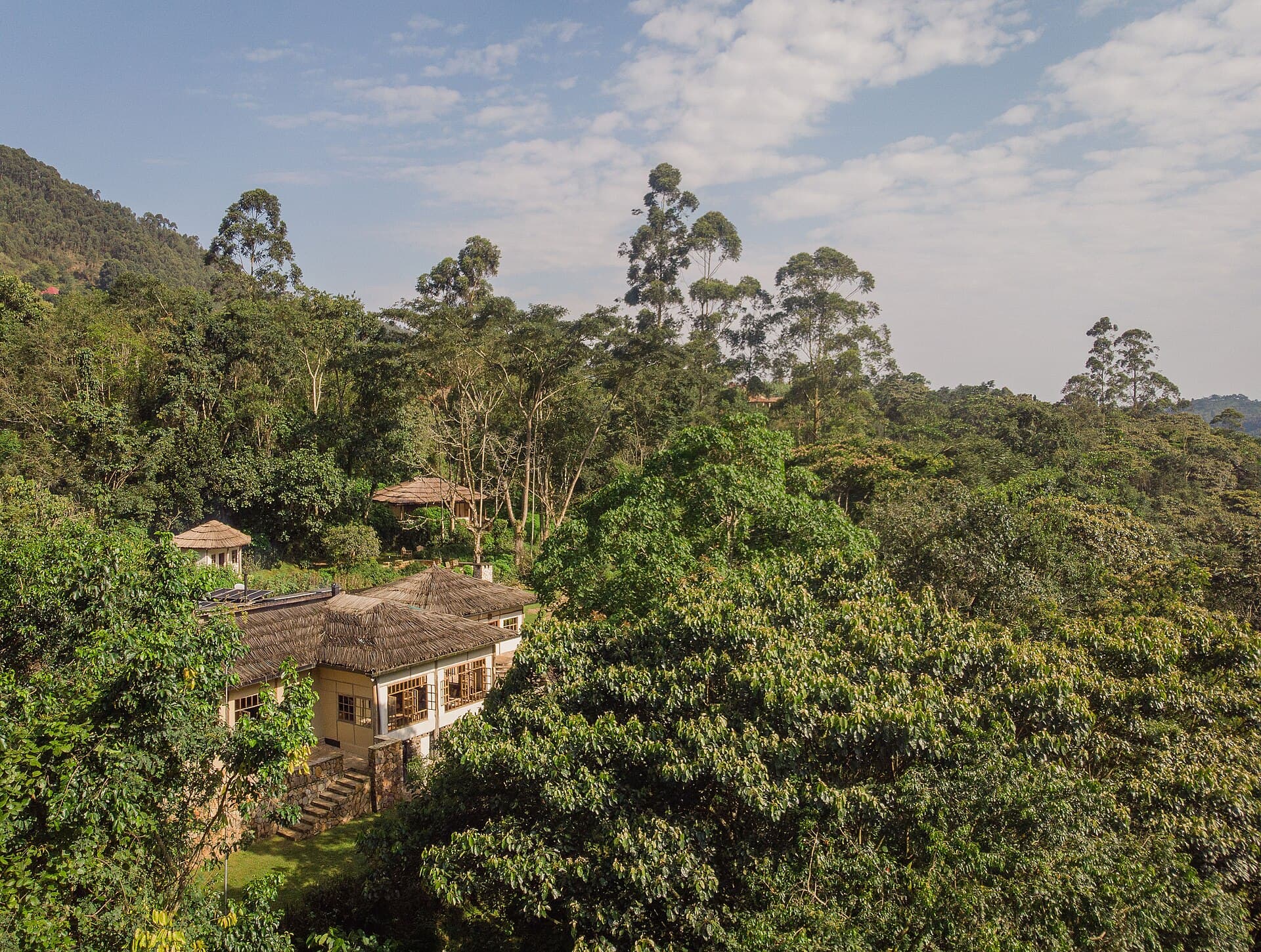
After the briefing you drive to a trailhead on the edge of the park, sometimes on a rough track, then walk through smallholder farmland to the stone wall that marks the park boundary. From there, the trackers’ radio calls guide you through bamboo, nettles and hagenia woodland at roughly 2,500–4,000 m. The walk in can take 30 minutes or well over four hours.

Close to the family, you leave bags and walking sticks with the porters and continue with only a camera. Then the clock starts. The hour passes quickly: the family feeds, grooms, dozes or moves through the undergrowth while your guide positions the group and calls time. The walk out usually feels shorter, and most groups are back at their vehicles by early or mid-afternoon.

Fitness & Trek Grades

How Hard Is Gorilla Trekking in Rwanda?

Permits carry no difficulty grade, but treks tend to fall into three broad types. Which one you get depends on the family you’re allocated and how far it moved overnight.

Shorter treks

Often under an hour each way, across farmland and gentle forest slopes. Families that range close to the park boundary are usually given to older travelers or anyone who asks for an easier day.

Moderate treks

Roughly one to three hours each way, on steep, muddy paths through the bamboo zone. This is the most common experience, and comfortable for anyone who walks regularly and can keep climbing steadily at altitude.

Long, demanding treks

Three to four hours or more each way, higher on the volcano slopes. RDB describes the Susa family as the largest and among the hardest to reach, and families like it usually go to groups who ask for a challenge.

Help on the trail

Porters wait at each trailhead and can be hired for a modest fee to carry your daypack and steady you on steep or slippery ground. The work matters to households around the park, and even strong walkers find a porter useful.

Getting ready

Hill walking with a loaded daypack in the months before you travel helps more than gym sessions. Stairs, steep trails and a few longer walks build the legs and lungs you’ll want above 2,500 m.

Gorilla Etiquette

Rules on the Mountain

Every group is briefed at Kinigi before setting out. These are the core rules RDB sets for visitors:

  • Keep at least 7 m (about 22 ft) from the gorillas, and step back slowly if one approaches you.
  • Stay for one hour only, in a group of no more than eight.
  • Don’t trek with a cold, flu or any other infection; you may be refused at the briefing.
  • No flash photography, and no eating or drinking near the family.
  • Keep your voice low and your movements slow, turn away and cover your mouth to cough or sneeze, and don’t spit anywhere in the park.
  • If a gorilla charges, stand still, look down and away, and follow your guide’s instructions.
  • Carry out everything you carry in, including tissues and food wrappers.
  • Guides speak English and French; save questions for when you’ve moved away from the family.

Trek Kit

What to Wear for Gorilla Trekking

Only the kit that matters on trek day is listed here; the safari packing list covers everything else for your trip.

  • Broken-in waterproof hiking boots with a deep tread, since mud is likely in every month
  • Gardening-style gloves, to grip bamboo and branches and protect your hands from stinging nettles
  • Gaiters, or trousers tucked into long socks, against nettles, mud and biting ants
  • A lightweight waterproof jacket, because rain is possible on any day at this altitude
  • Long, light trousers and a long-sleeved top in muted greens, browns or khaki
  • A warm fleece for the cold, early start, which you can pack away once you’re climbing
  • A small daypack with water, snacks and a rain cover for your camera
  • Your passport, which is checked at headquarters before the briefing

Planning

One Trek or Two?

Many travelers wonder whether a second permit is worth it. The honest answer is that the first hour is often overwhelming, and the second is when you really watch. You’re likely to meet a different family, at a different time of day and in different light, and the urge to get the photograph has faded.

Against that, a second trek doubles the largest single cost of the trip and adds another demanding day. A popular middle path is one gorilla trek followed by golden monkeys the next morning, which need a separate, far lower-priced permit and suit anyone aged 12 or over. Compare the options on the golden monkey trekking page, and see how the days fit together in the 4-day gorilla trekking safari.

The minimum age of 15 is fixed, so families with younger children usually plan the gorilla day for the parents and older teens while the rest of the party enjoys a gentler morning. Akagera’s game drives and boat trips welcome children, which is why the 7-day gorillas and Akagera safari suits mixed-age groups well.

Conservation

Where Your Permit Money Goes

Surveys completed in 2018 and 2019 counted about 1,063 mountain gorillas, across the Virunga volcanoes and Uganda’s Bwindi–Sarambwe forest. In 2018 the IUCN moved the subspecies from Critically Endangered to Endangered, a rare recovery among the great apes and one paid for in large part by gorilla tourism.

According to Visit Rwanda, 10% of permit revenue funds community projects around the park, such as schools, health centres and roads, and a separate fund compensates farmers when wildlife damages crops. The rest pays for protection, ranger teams and daily monitoring of the families. For the whole-trip picture, from permits to lodges and transfers, see Rwanda gorilla safari cost.

Safaris

Recommended safaris

Silverback mountain gorilla mid-yawn among fresh green foliage
4 daysShortest gorilla trip

Rwanda Gorilla Escape

Kigali · Kinigi (park HQ) · Volcanoes National Park · Kigali International Airport

Couples and experienced travelers with limited leave who want the gorillas without a long safari around them

Best months
June–September & December–February
Comfort levels
Premium · Luxury · Ultra-Luxury
Individually quoted
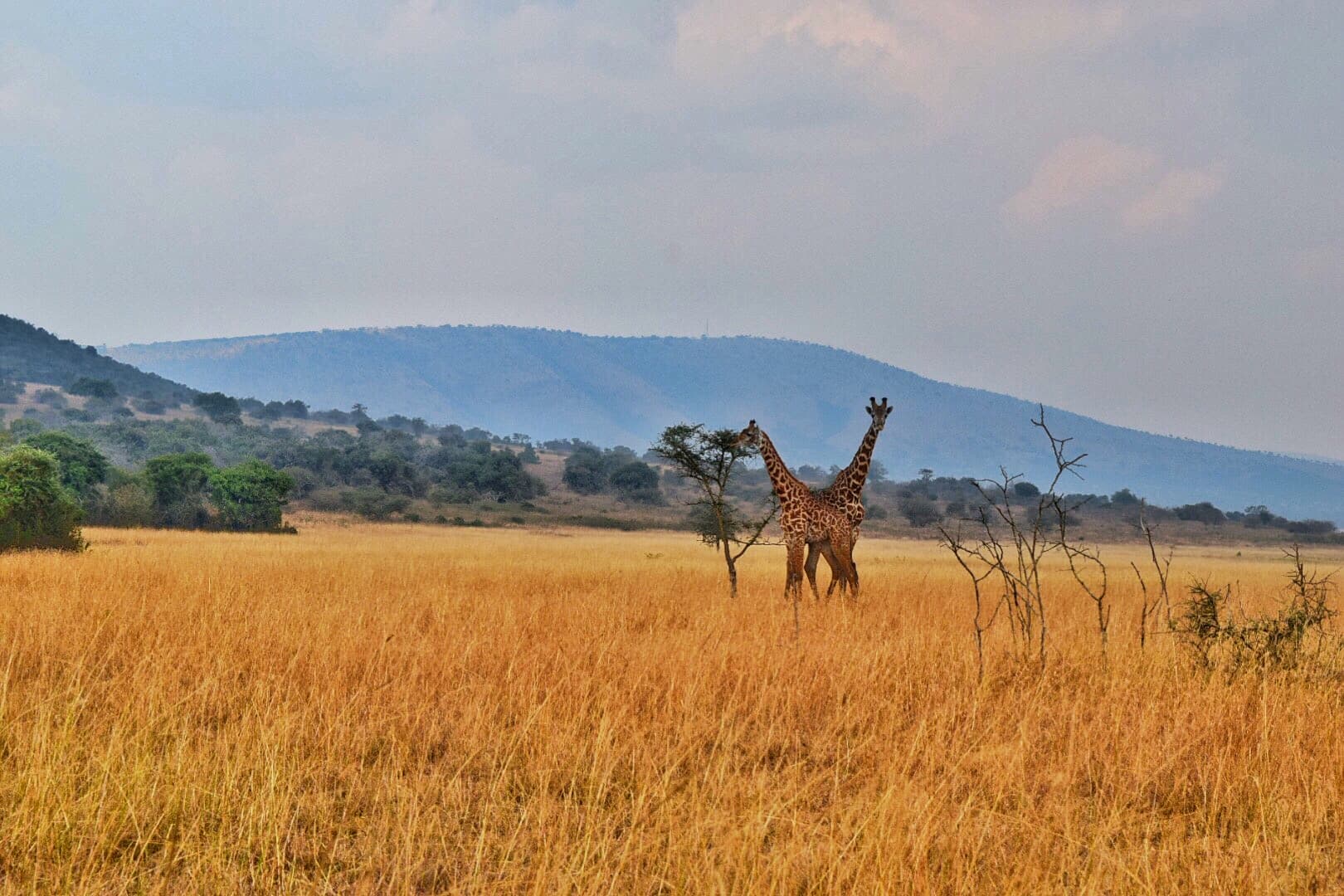
Giraffe on the golden savanna hills of Akagera National Park
7 daysBest first Rwanda trip

Gorillas & Big Five

Kigali · Akagera National Park · Volcanoes National Park · Kigali International Airport

First-time visitors to Rwanda who want gorillas and a classic game drive in a single week

Best months
Dry months: June–September, December–February
Comfort levels
Comfort · Premium · Luxury
Individually quoted
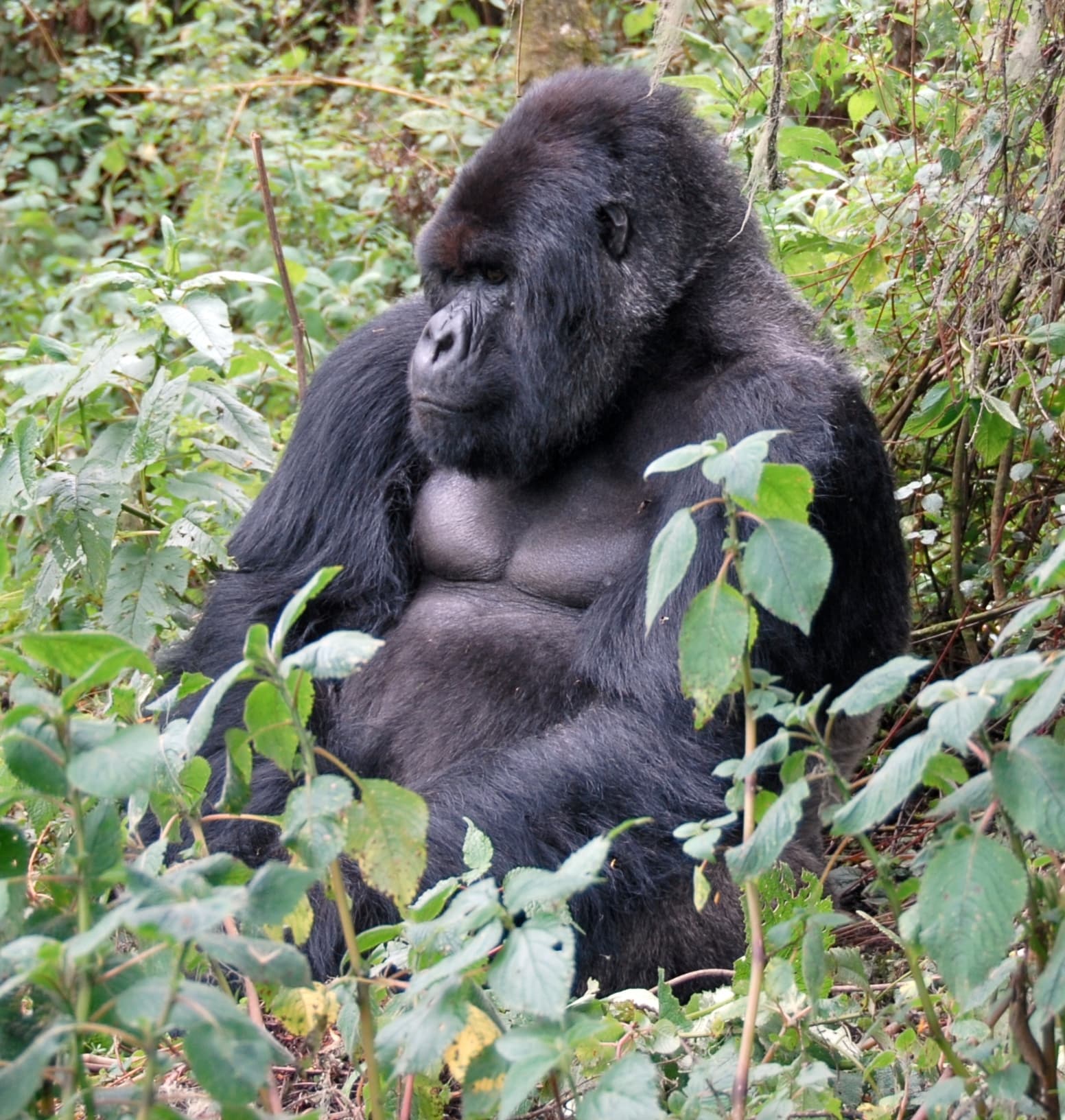
Mountain gorilla resting among green leaves in Volcanoes National Park, Rwanda
11 daysTwo icons

Gorillas & Serengeti

Kigali · Volcanoes National Park · Kilimanjaro Airport · Arusha · Serengeti · Ngorongoro Crater · Kilimanjaro Airport

Travelers who want East Africa’s two headline wildlife experiences in one trip, at luxury or ultra level

Best months
January–February & June–September
Comfort levels
Luxury · Ultra-Luxury
Individually quoted
Forested ridgelines of Nyungwe at dusk
12 daysAll three parks

Complete Rwanda

Kigali · Huye · Nyungwe National Park · Karongi (Kibuye) · Volcanoes National Park · Akagera National Park · Kigali International Airport

Primate enthusiasts, photographers and returning safari-goers who want the whole country rather than one park

Best months
Mid-June–September & mid-December–February
Comfort levels
Premium · Luxury
Individually quoted

Experiences

Related experiences

Primates

Golden Monkey Trekking

Spend an hour among golden monkeys in the Virunga bamboo — a lively, gentler companion to your gorilla trek.

Mist drifting through the forested hills of gorilla country

On foot

Dian Fossey Tomb Hike

Climb through montane forest to Karisoke, where Dian Fossey studied mountain gorillas and now lies buried among them.

Virunga volcanoes rising over lodge rooftops and farmland

Adventure

Mount Bisoke Crater Lake Hike

Climb 3,711 m Mount Bisoke through bamboo and giant lobelias to a lake in the summit crater, right on the DRC border.

Good to know

Frequently asked questions

How much is a gorilla permit in Rwanda?

At the time of writing (September 2026), the Rwanda Development Board charges US$1,500 per person per trek for foreign non-resident visitors. The price is the same whoever books it, and it covers one hour with a habituated family, the ranger guides and the trackers. Porters, tips and transport to the trailhead are extra.

What is the minimum age for gorilla trekking in Rwanda?

Fifteen, and RDB applies it strictly on the day of the trek. Children aged 12 to 14 can join a golden monkey trek instead, which has its own permit and a minimum age of 12.

Can I choose which gorilla family I visit?

Not in advance. Groups are assigned at the 7 am briefing at Kinigi, taking fitness and requests into account, and your driver-guide can ask for an easier or a harder trek. Families move every day, so no particular family or trek length can be promised.

Is a Rwanda permit refunded if the family can’t be reached?

It is rare, but it can happen. Under RDB’s terms at the time of writing, a full day’s trekking without reaching the family earns a 75% refund of the permit. Late arrivals and missed flights are not refunded, which is why we build a buffer night in before trek day.

How long does a gorilla trek take in Rwanda?

The walk to the family takes anything from about 30 minutes to more than four hours each way, depending on where the gorillas moved overnight. With the briefing, the drive to the trailhead and the hour itself, trek day fills most of the day, and most groups are back at their lodge by mid-afternoon.

Do I need to be very fit to trek gorillas in Rwanda?

You need to be comfortable walking uphill for a few hours at altitude on uneven, often muddy ground. Porters and walking sticks make a real difference. Older travelers or anyone with limited mobility can ask to be allocated a family that usually stays closer to the park edge.

Forested ridgelines of Nyungwe at dusk

Tell Us When You’d Like to Trek

Share your dates, who is traveling and what you hope to see. We check permit availability first, then design a private Rwanda journey around it, and nothing is booked until you approve it.

Plan My Rwanda Safari