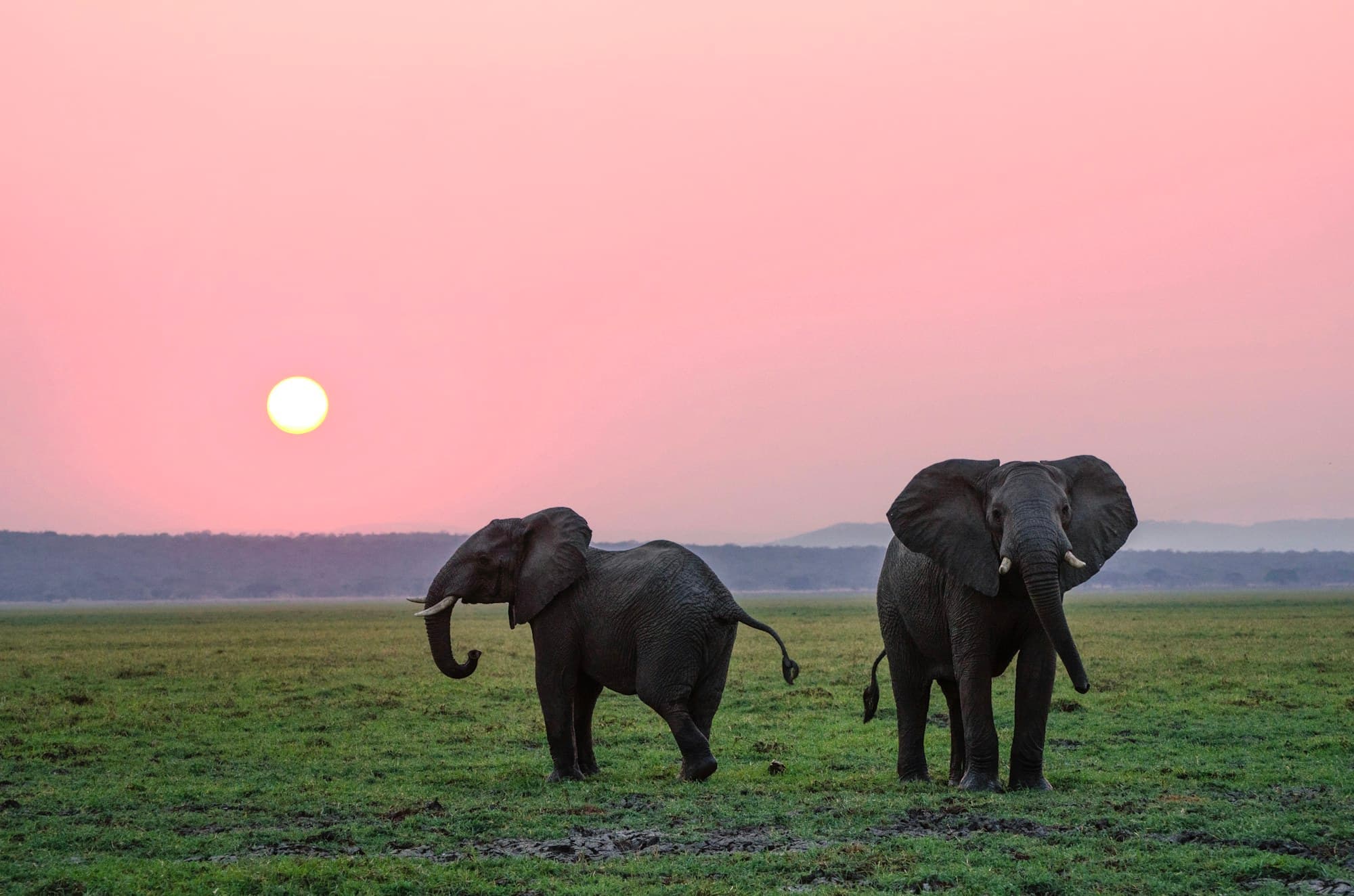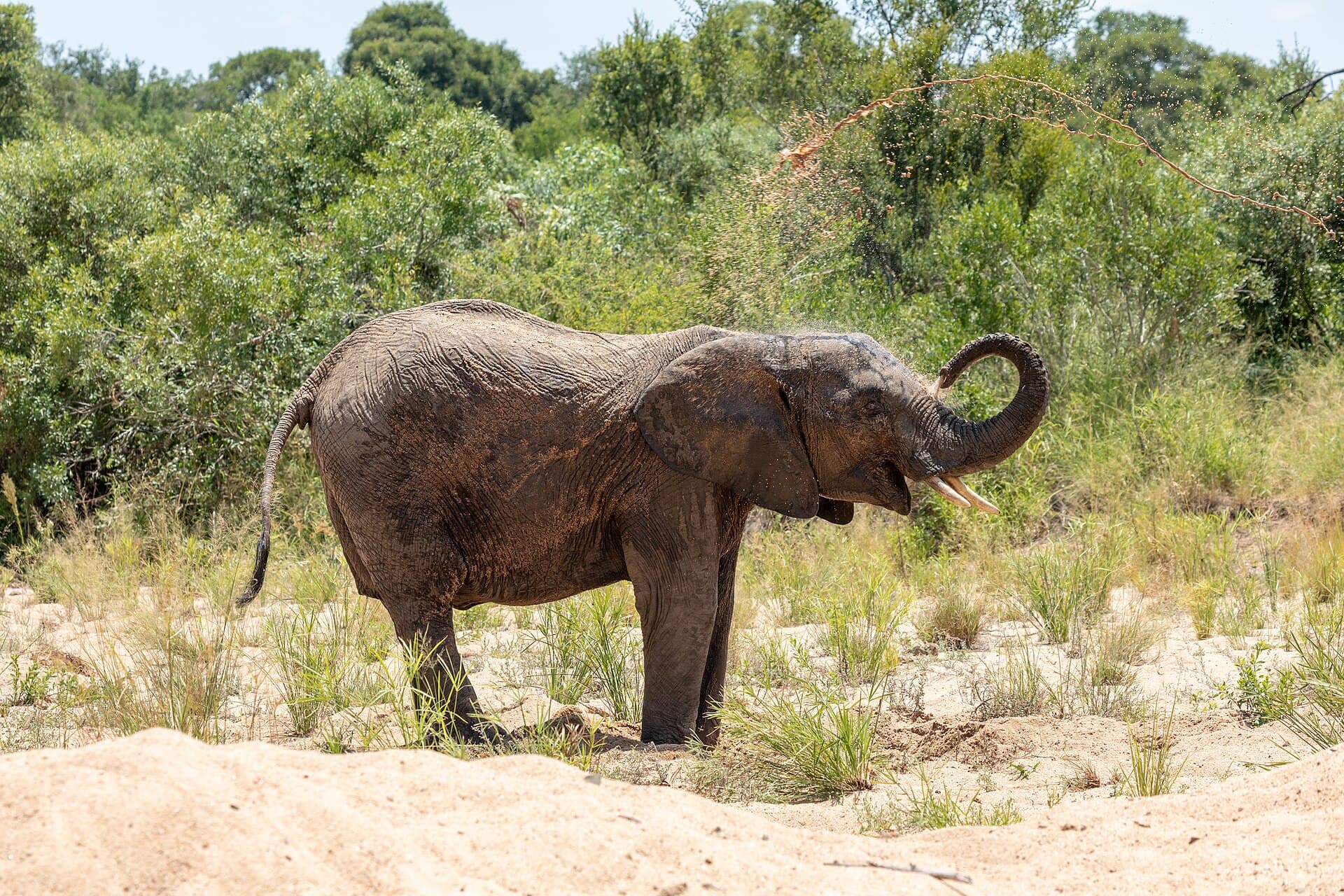
Elephant feeding in a dry riverbed in Greater Kruger

Destination guide

Kruger National Park Safari Guide

Nearly two million hectares of Lowveld bush, about 360 km from the Crocodile River to the Limpopo, protected since 1898 and a national park since 1926.

SizeAbout 19,600 km² (roughly 7,600 sq mi); about 360 km north to south
Best timeMay–October for dry-season game viewing; November–April for green bush, births and migrant birds
Recommended stayAt least 3 nights on a guided safari; 4–6 nights to cover two regions
AccessAbout 1 hour by air from Johannesburg or 2.5 hours from Cape Town; about 5–6 hours by road from Johannesburg
Conservation feeR602 per international adult per day (SANParks, 1 Nov 2025–31 Oct 2026, at the time of writing); a new tariff applies from 1 Nov 2026
MalariaA CDC malaria area where antimalarial medication is recommended, in every month

Kruger National Park

Why Visit

A Kruger National Park safari takes you into South Africa’s oldest and largest national park: about 19,600 km² of Lowveld bush (SANParks describes it as nearly two million hectares), running roughly 360 km from the Crocodile River in the south to the Limpopo in the north and about 65 km from east to west. Protection began in 1898 with the Sabie Game Reserve, and in 1926 it became the country’s first national park. SANParks records 147 mammal and 507 bird species here, and close to two million people visited in 2024.

Those visitor numbers explain how the park works. Kruger is a public park with tar and gravel roads, fenced rest camps, gates that open and close by the clock, and a firm rule that you stay inside your vehicle outside designated areas. There are three ways to experience it: self-driving from the SANParks rest camps; staying at a lodge just outside a southern gate and joining guided open-vehicle drives on the public roads; or staying in a private concession, an area leased inside the park where lodges run their own drives and walks under rules that vary from one concession to the next. We plan Kruger with a private guide, and we are happy to discuss a few self-drive days if you want them.

The park is also the core of the Great Limpopo Transfrontier Park, linked since 2002 with Zimbabwe’s Gonarezhou and Mozambique’s Limpopo National Park, and it is unfenced from the private reserves along its western boundary. If you are deciding between the park and those reserves, our Kruger vs Sabi Sand guide sets out the differences. To see how three nights here sit between the escarpment and Cape Town, look at the 10-Day South Africa Classic.

Best for

  • First-time safari travelers who want the classic Kruger landscape
  • Birders, especially in the far north around Pafuri
  • Longer trips that take in more than one region
  • Guided lodge stays inside the national park itself
  • Pairing with Cape Town on a direct flight

Kruger National Park

Wildlife & Highlights

  • Lion prides on the open grassland around Satara
  • Leopard in the riverine woodland along the Sabie and Sand rivers
  • Elephant and buffalo herds, especially in the mopane country from Letaba northward
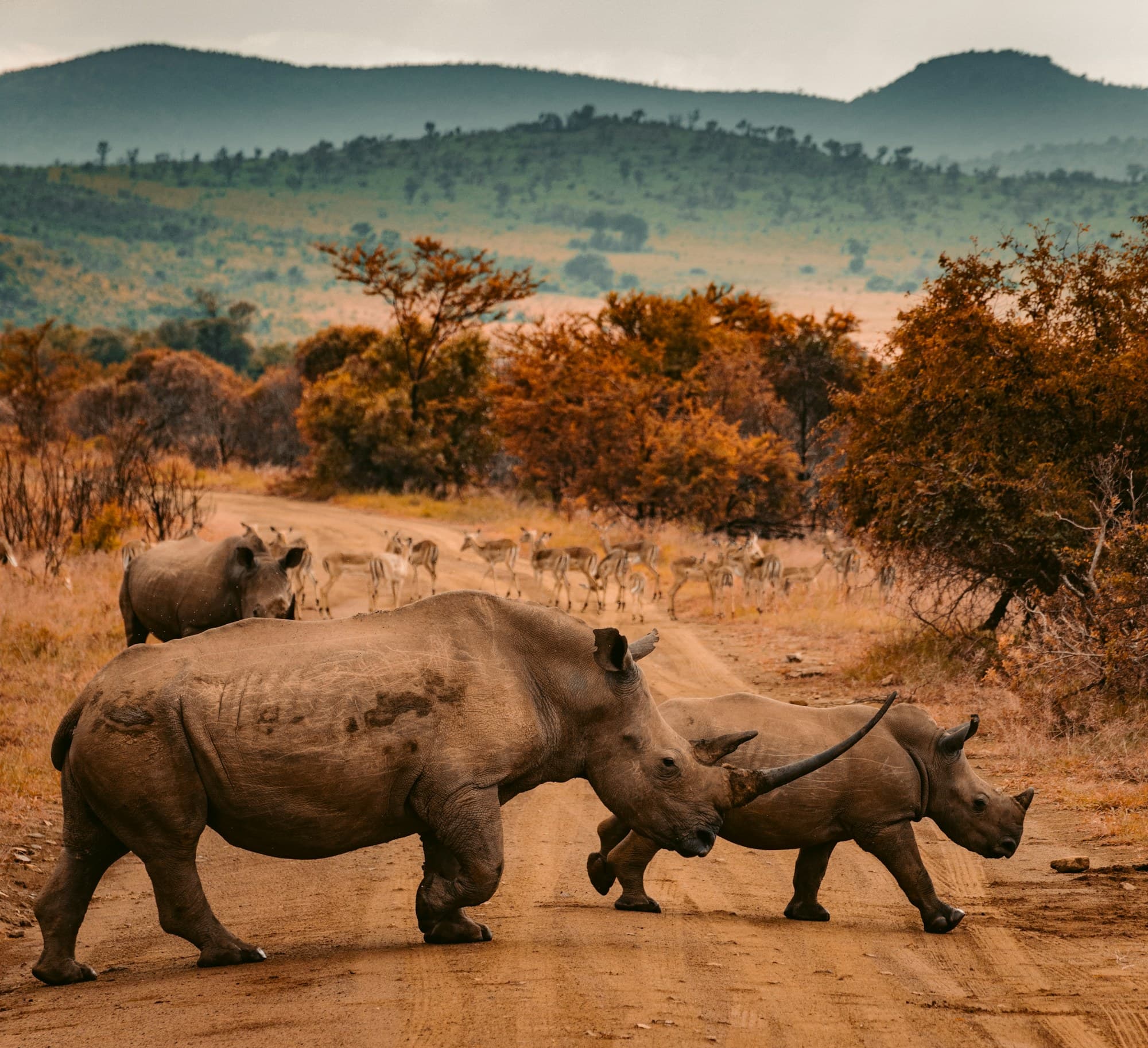
  • White and black rhino, whose whereabouts are deliberately kept quiet
  • African wild dog, most often reported in the southern half of the park
  • Cheetah on the open plains of the south-east and the center
  • Hippo and Nile crocodile in the larger rivers and dams
  • Nyala, baobabs and fever-tree forest around Pafuri in the far north
  • More than 500 bird species, from southern ground hornbill to Pel’s fishing owl

Season

Best Time to Visit

  1. January
  2. February
  3. March
  4. April
  5. May
  6. June
  7. July
  8. August
  9. September
  10. October
  11. November
  12. December
May–AugustDry winter. Grass thins and animals concentrate along rivers and at dams, so sightings come more easily. Early mornings in an open vehicle can be close to freezing, and camp gates close earliest (about 17:30 from May to July), which shortens afternoon drives for anyone staying inside the park.
September–OctoberThe last and hottest weeks of the dry season. Water is scarce, the bush is at its most open and river sightings can be outstanding. Demand stays high, so park-edge lodges and concession camps need booking well ahead.
November–AprilSummer rain turns the bush green and dense, and daytime heat often reaches the 30s °C. Game spreads away from the rivers and is harder to spot, but impala and other antelope drop their young, migrant birds arrive and the landscape looks its best. Camp gates stay open until about 18:30 from November to February.

Kruger National Park

Areas to Know

Southern Kruger

The triangle between the Sabie and Crocodile rivers, around Skukuza, Lower Sabie and Crocodile Bridge, is the most productive and the most visited part of the park. Rainfall is higher, the bush is thicker and the density of lion, leopard, rhino, elephant and wild dog is hard to beat. The price is traffic: popular loops fill with cars, and a lion beside the tar can draw a queue. Early starts and a guide who knows the quieter gravel roads make a real difference.

Best for: Short stays and the densest wildlife

Central Kruger (Satara and Olifants)

North of the Sabie the land opens into flat basalt grassland dotted with knobthorn and marula, the park’s classic big-cat plains. Zebra, wildebeest and buffalo graze here, and the lions that follow them are often visible from the road. Further north the Olifants River cuts through low hills, and its lookouts are among the finest places in Kruger to watch elephant come down to drink. Orpen Gate and Hoedspruit make this the easiest region to reach from the northern private reserves.

Best for: Big cats on open plains and river lookouts

Northern Kruger (Letaba to Punda Maria)

Above the Olifants the park changes character. Mopane woodland takes over, rest camps are far apart and relatively few visitors make the long drive. Big elephant bulls are a feature around Letaba and Shingwedzi, and the sense of space is completely different from the busy south. Game is thinner on the ground, so this region rewards travelers with time and patience more than those who want a lot of animals in a short stay.

Best for: Space, elephants and a slower pace

Makuleke and Pafuri

Kruger’s far northern tip, about 240 km² between the Limpopo and Luvuvhu rivers, runs up to Crook’s Corner, where South Africa, Zimbabwe and Mozambique meet. The Makuleke community lodged a land claim in 1996 and won its land back, then chose to keep it under conservation, in partnership with tourism, rather than resettle. Baobabs, fever-tree forest and tall riverine woodland make it the park’s top birding area, with tropical species seldom recorded further south. It is remote: fly in, or build it into a long northern route.

Best for: Birders and repeat visitors

Kruger National Park

Getting There

Four airports serve the park. Skukuza Airport sits inside Kruger near its headquarters, with direct scheduled flights from Johannesburg and Cape Town; it is capped at 10 landings a day between 09:00 and 15:00, so seats go early in busy months. Kruger Mpumalanga International, 27 km from Mbombela, suits the southern gates, Hoedspruit’s Eastgate Airport is closest to Orpen Gate and the central region, and Phalaborwa has flights from Johannesburg for the Letaba area. Airport-by-airport advice is in getting to Kruger.

Drive or fly?

Driving from Johannesburg takes most of a day, but it can become part of the trip with a night on the escarpment and a morning on the Panorama Route before you descend into the Lowveld. Flying suits short trips and Cape Town connections, and rail enthusiasts can even arrive on a luxury train from Pretoria. Once inside the park, distances take far longer than the map suggests: speed limits are about 50 km/h on tar and 40 km/h on gravel, and every elephant crossing the road earns a stop.

Airstrips & airports

  • Skukuza Airport (SZK)
  • Kruger Mpumalanga International (MQP)
  • Hoedspruit Eastgate (HDS)
  • Phalaborwa (PHW)

Typical travel times

Johannesburg to the southern gates
About 5–6 hours by road on the N4
Johannesburg to Skukuza
About 1 hour by air
Cape Town to Skukuza
About 2.5 hours by direct flight

Stays

Where to Stay

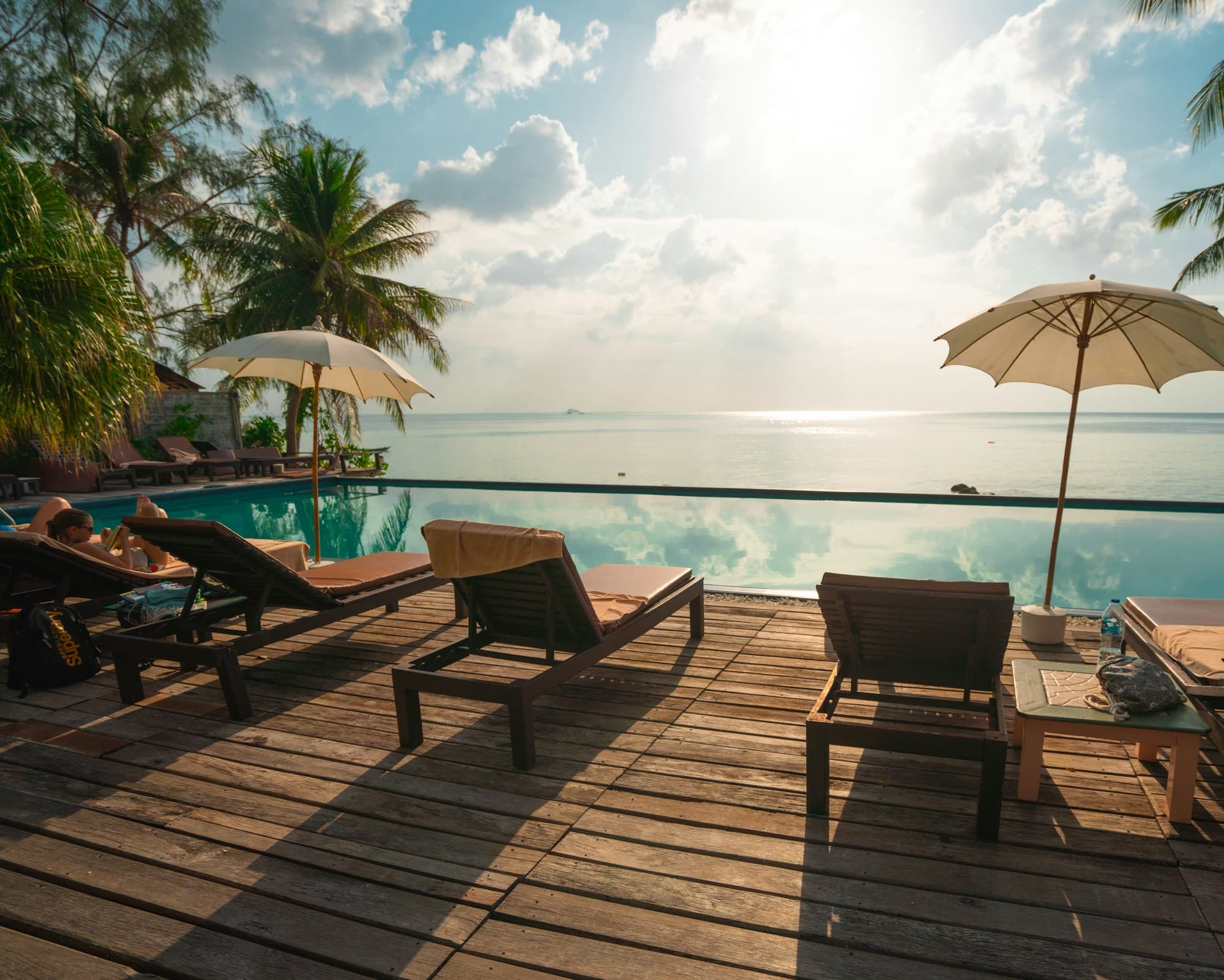
Where you sleep shapes how you see Kruger. Comfortable lodges just outside the southern gates offer pools, good food and guided drives into the park on the public roads, timed to gate hours. SANParks rest camps inside the fence are simple and suit self-drivers. Private concessions inside the park host tented camps and lodges with their own guides and trackers, walks and night drives, and the daily conservation fee is usually built into the rate; what each may do off-road depends on its concession agreement, which we check for you.

Luxury lodge deck with loungers and umbrellas at golden hourComfort

Southern Kruger · park-edge lodge near a main gate

Southern-Boundary Bushveld Lodge · Kruger

Lodge

A relaxed, well-kept lodge just outside the park boundary near one of southern Kruger’s main gates, with comfortable rooms, a pool and, at many, a view across the boundary river. Guided open-vehicle drives enter the national park soon after the gates open, and you are back for lunch and a swim before the afternoon outing.

  • Guided drives inside Kruger in open vehicles
  • Pool and family rooms
  • Early starts timed to the park’s gate hours
  • Good value for longer stays

Ideal for: Families and first-time visitors who want Kruger itself at a gentler price level
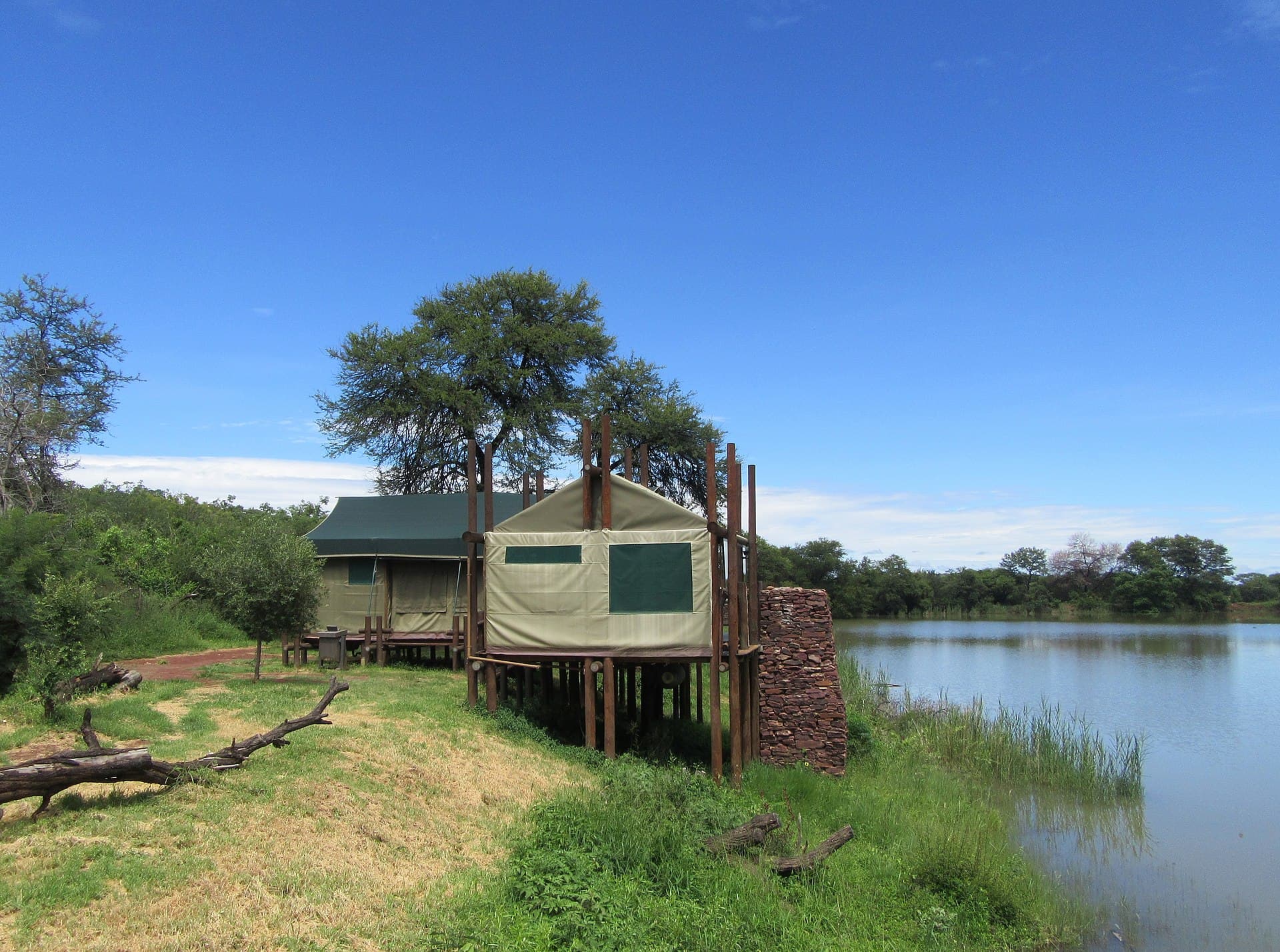
A canvas safari tent set among trees at a private tented campPremium

Kruger National Park · private concession

Private-Concession Canvas Camp · Kruger

Tented camp

Inside the national park itself, on land where only a few lodges hold traversing rights, this is a smaller canvas camp with a light footprint and a strong guiding focus. Depending on the concession’s rules, that can include off-road driving to sightings, night drives and walks that public-road visitors cannot join.

  • Tented suites with outdoor showers
  • Walks with an armed trails guide where permitted
  • Night drives on concession roads
  • Open vehicles set up for photography

Ideal for: Travelers who want Kruger’s wild scale with private-reserve style guiding

Luxury lodge deck with loungers and umbrellas at golden hourLuxury

Kruger National Park · private concession

Concession Suite Lodge · Inside Kruger

Lodge

These are the grandest lodges within Kruger: suites of glass, stone or timber on a riverbank or ridge, each with a plunge pool, on a concession that only their guests traverse. You get the scale and history of South Africa’s first national park with the exclusivity usually associated with a private reserve.

  • Suites with private plunge pools
  • Exclusive traversing on a private concession
  • Spa, gym and wine cellar at many
  • Bush dinners and sleep-out options

Ideal for: Honeymooners and luxury travelers who want to sleep inside the national park

Experiences

Experiences

On foot

Walking Safaris in South Africa

Swap the game-drive seat for boots and follow an armed trails guide through Lowveld bush, reading tracks, trees and birdsong at the pace of your own footsteps.

Adventure

Panorama Route & Blyde River Canyon

The escarpment road above the Lowveld: canyon viewpoints, waterfalls and a gold-rush village, taken as a scenic day on the way into Kruger.

Extensions

Luxury Train Journeys in South Africa

Trade a two-hour flight for a night or more aboard a luxury train, crossing the Karoo in a private suite between Pretoria and Cape Town.

Safaris

Safaris That Go Here

Elephant feeding in a dry riverbed in Greater Kruger
10 daysFirst safari

South Africa Classic

Panorama Route · Kruger National Park · Skukuza Airport · Cape Town

First-time visitors and families who want wildlife, scenery and a great city, at comfort, premium or luxury level

Best months
March–November
Comfort levels
Comfort · Premium · Luxury
Individually quoted
Two elephants together beneath a soft pink dusk sky
11 daysCouples

Winelands, Whales & Kruger

Cape Town · Franschhoek · Hermanus · Skukuza Airport · Kruger National Park

Honeymooners and anniversary couples traveling between June and November

Best months
June–November (whale season and the dry bush)
Comfort levels
Premium · Luxury
Individually quoted

Good to know

Frequently asked questions

How many days do you need in Kruger National Park?

Plan on at least three nights with a guide, which gives you five or six drives and time to find the less obvious animals. Four to six nights let you split your stay between the south and the central plains, which feel quite different. Two nights is possible on a tight schedule, but then a late flight or a rainy morning eats a large share of your time.

What are Kruger National Park’s gate times?

At the time of writing, entrance gates open at 05:30 from October to March and at 06:00 from April to September. Camp gates close at 17:30 from May to July, 18:00 in March, April and August to October, and 18:30 from November to February. Everyone driving in the park must be inside a camp or out of a gate by closing time, so check the current SANParks table before you travel.

How much is the Kruger conservation fee?

At the time of writing (September 2026), SANParks charges international adults R602 per person per day for the period 1 November 2025 to 31 October 2026, and a new tariff is due from 1 November 2026. The fee applies to every day you spend in the park. Private-concession lodges usually include it in their rates, while guests at park-edge lodges and self-drivers pay it separately.

Can you go on a walking safari in Kruger?

Yes. SANParks runs guided morning walks from the main rest camps, as well as multi-night wilderness trails from remote base camps, typically three nights with two full days on foot, around eight guests and age limits of roughly 12 to 65. Lodges in private concessions also offer walks with armed guides. Trails book up months ahead, so tell us early if walking matters to you.

Can you do night drives in Kruger National Park?

Not in your own car, because the roads close at gate time, but SANParks runs guided sunset and night drives from the main rest camps. Lodges in private concessions run their own evening drives with a spotlight. After dark is your best chance of genets, bushbabies and hyena on the move, and occasionally a leopard or lion on the hunt.

Why do Kruger guides avoid sharing rhino sightings?

Kruger’s rhino have been heavily targeted by poaching syndicates, and the park now relies on rangers, drones and surveillance aircraft to protect them. Guides therefore keep rhino locations off the radio and away from other visitors. Please do the same: switch off geotagging on your phone and camera, and never post where you saw them.

Two white rhinos grazing side by side in a private reserve

Tell Us When You Can Travel

Share your dates, who is coming and whether malaria-free matters, and a safari specialist will design a private South Africa route around you. Nothing is booked until you approve it.

Plan my safari here