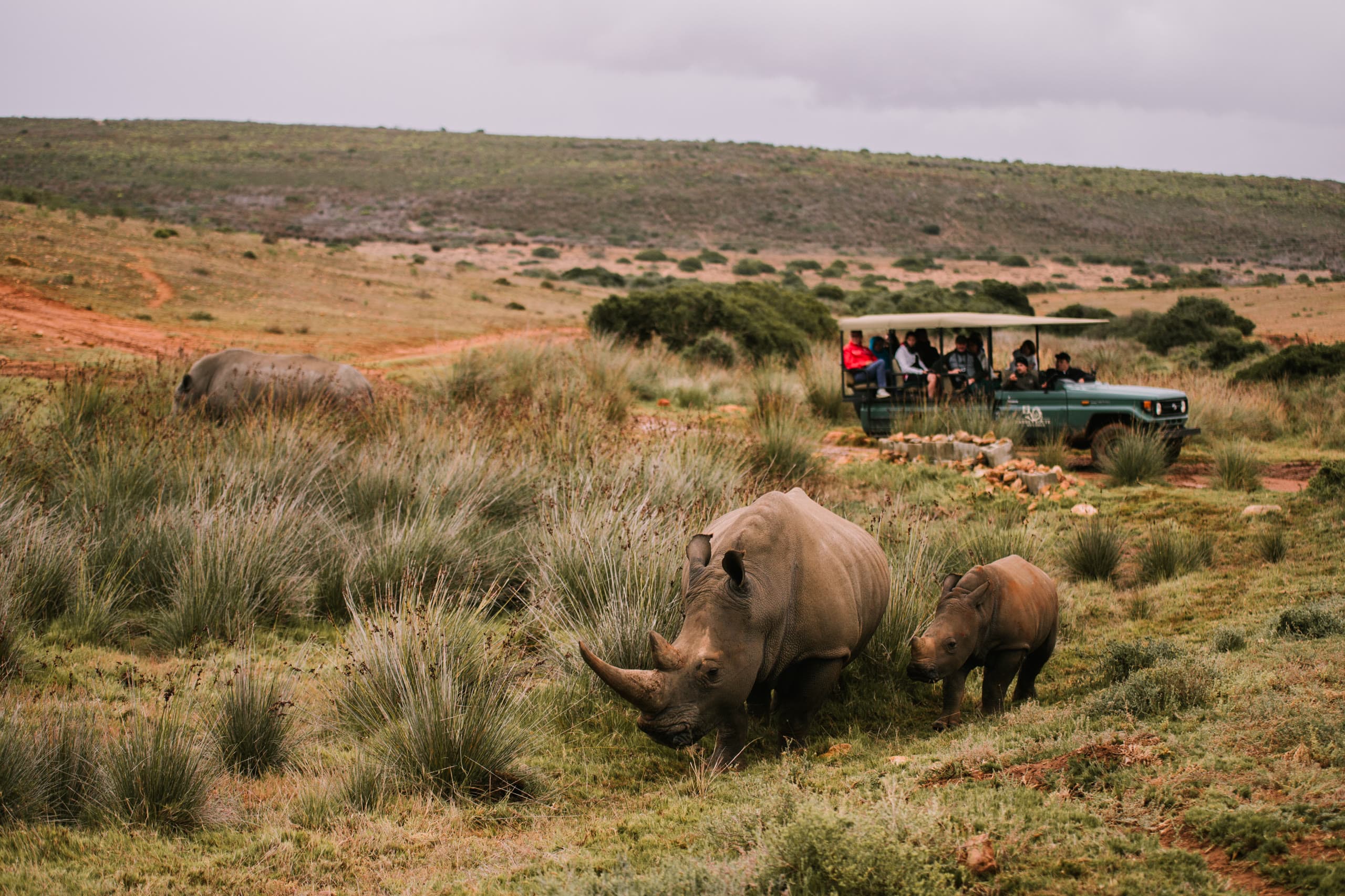
Two white rhinos grazing as guests watch from a safari vehicle in a private conservancy

Destination guide

KwaZulu-Natal Safaris: Zululand and the Elephant Coast

Rhino country, rare sand forest and a World Heritage coastline, with bush and beach in a single province.

SizeHluhluwe–iMfolozi about 960 km²; Munywana Conservancy about 29,900 ha; iSimangaliso about 280 km of coast
Best timeMay–September for game viewing; roughly November–March for turtle nesting
Recommended stay3 nights in a reserve plus 2–3 on the coast
AccessFly Johannesburg to Richards Bay or Durban and drive, or take a light-aircraft shuttle to a reserve airstrip
MalariaThe north (uMkhanyakude district) is a CDC malaria area; antimalarials recommended
World HeritageiSimangaliso Wetland Park, listed in 1999

KwaZulu-Natal: Zululand Safari & the Elephant Coast

Why Visit

A KwaZulu-Natal safari combines two things that most trips need separate countries for: Big Five reserves and a wild Indian Ocean coast. In the province’s north-east, the reserves of Zululand cover thornveld, grassland, wetland and rare dry sand forest, and two to three hours’ drive away the iSimangaliso Wetland Park protects about 280 km of coastline, lakes and swamp forest from the Mozambique border south to Maphelane. It became a UNESCO World Heritage Site in 1999.

The province also holds a special place in conservation history. Hluhluwe–iMfolozi, where reserves were proclaimed in 1895, is often called the oldest reserve in Africa, and it is where the southern white rhino was brought back after numbers fell to somewhere between 20 and 100 animals in the 19th century. That work continues: in 2024, 40 southern white rhino were released into the Munywana Conservancy under African Parks’ Rhino Rewild program.

The region suits travelers who want variety and a less-traveled alternative to Kruger. It is not malaria-free: the far north of the province, including the main private reserves and northern iSimangaliso, is a CDC area where antimalarials are recommended, and summers are hot and humid. Our 8-Day KwaZulu-Natal Safari & Beach shows how three nights in the bush and three on the coast fit together; if malaria is a concern, compare the malaria-free options.

Best for

  • Bush and beach in one trip, without a second country
  • Rhino conservation and history
  • Travelers who know Kruger and want something different
  • Snorkelers, divers and turtle watchers

KwaZulu-Natal: Zululand Safari & the Elephant Coast

Wildlife & Highlights

  • Southern white rhino and black rhino, the heart of the province’s conservation story
  • Cheetah and lion on the private reserves
  • Nyala, suni and red duiker in the sand forest
  • Elephant, buffalo and leopard
  • African wild dog
  • Hippo and Nile crocodile in the St Lucia estuary
  • Loggerhead and leatherback turtles nesting on northern beaches in summer
  • Humpback whales passing offshore in winter and spring
  • Coral reef fish at Sodwana Bay, with whale sharks in some seasons
  • More than 430 bird species recorded on the larger private reserves

Season

Best Time to Visit

  1. January
  2. February
  3. March
  4. April
  5. May
  6. June
  7. July
  8. August
  9. September
  10. October
  11. November
  12. December
May–SeptemberDry, mild and sunny: the best months for game viewing in the reserves, when the bush thins and animals come to water. Humpback whales travel along the coast in this period (see whale watching in South Africa), and evenings can be cool enough for a fire.
October–AprilHot, humid summer, with rain mostly in afternoon storms. Game is more dispersed in the thick green bush, but birding is superb and, from roughly November to March, turtles come ashore to nest and later hatch on the northern beaches, watched on guided night outings run by licensed concessionaires.

KwaZulu-Natal: Zululand Safari & the Elephant Coast

Areas to Know

The Munywana Conservancy (Phinda)

The reserve long known as Phinda covers about 28,555 hectares within the wider Munywana Conservancy. It was established in 1991 on former farmland, restocked with white rhino, nyala, cheetah and elephant, and spans seven habitats, including about 1,000 hectares of rare dry sand forest. In 2007 the land was returned to the Makhasa and Mnqobokazi communities, who chose to keep it under conservation as partners, and the conservancy now supports research into reintroducing Temminck’s pangolin.

Best for: A private Big Five safari with cheetah and sand-forest specials

Hluhluwe–iMfolozi Park

Run by Ezemvelo KZN Wildlife, this 960 km² park of rolling hills is the province’s best-known state reserve with all of the Big Five. Once its white rhino had recovered to about 400 animals, Operation Rhino, led by the conservationist Ian Player in the 1950s and 1960s, began moving them to parks across Africa and beyond. Self-driving is allowed, but a guided day from a nearby private reserve adds context, and poaching means rhino locations are handled discreetly.

Best for: Rhino history and a hilly state-park day

Lake St Lucia and the Eastern Shores

The southern end of iSimangaliso centers on the St Lucia estuary and lake system, the easiest place to see some of the park’s roughly 800 hippos and 1,200 crocodiles. Boat outings on the estuary, drives along the Eastern Shores to Cape Vidal and walks in coastal forest fill easy, varied days. It is the most accessible part of the coast.

Best for: Hippos, crocodiles and wetland birding

Sodwana Bay to Kosi Bay

The northern coast is wilder: coral reefs off Sodwana Bay, the freshwater expanse of Lake Sibaya, the lake chain at Kosi Bay and long, empty beaches where loggerhead and leatherback turtles nest in summer. A few lodges sit in the dune forest here, reached by sand tracks, and in season they arrange guided turtle walks with licensed operators.

Best for: Snorkeling, diving and turtle season

KwaZulu-Natal: Zululand Safari & the Elephant Coast

Getting There

There are two ways in. Scheduled light-aircraft shuttles fly from Johannesburg to the airstrip serving the Munywana Conservancy, putting you at the lodge in time for an afternoon drive. Alternatively, fly from Johannesburg to Richards Bay, or to King Shaka International about 35 km north of Durban, and continue by private road transfer. Between the reserves and the coast, everything moves by road.

Drive or fly?

Flying into the reserve saves a 3.5-hour drive from Durban and makes sense on a short trip. The roads are good in daylight, though, and a private transfer from Richards Bay or Durban lets you stop at Hluhluwe–iMfolozi on the way; we do not plan night driving. If you want to add the Drakensberg mountains or the Anglo-Zulu War battlefields, treat them as a separate extension of a few days inland, and see driving in South Africa for road practicalities.

Airstrips & airports

  • Munywana (Phinda) airstrip
  • Richards Bay (RCB)
  • King Shaka International, Durban (DUR)

Typical travel times

King Shaka International to the Munywana Conservancy
About 3.5 hours
Zululand reserves to the Elephant Coast
About 2–3 hours
Elephant Coast to Richards Bay
About 3 hours

Stays

Where to Stay

Stays fall into two styles. In the reserves, all-inclusive lodges range from classic thatched lodges on open bushveld to glass-walled suites set in the sand forest. On the coast, a small number of lodges sit in iSimangaliso’s dune forest, with boardwalks to near-empty beaches, snorkeling from the shore and, in season, turtle walks. Coastal lodges are few, so they book early for the turtle months.

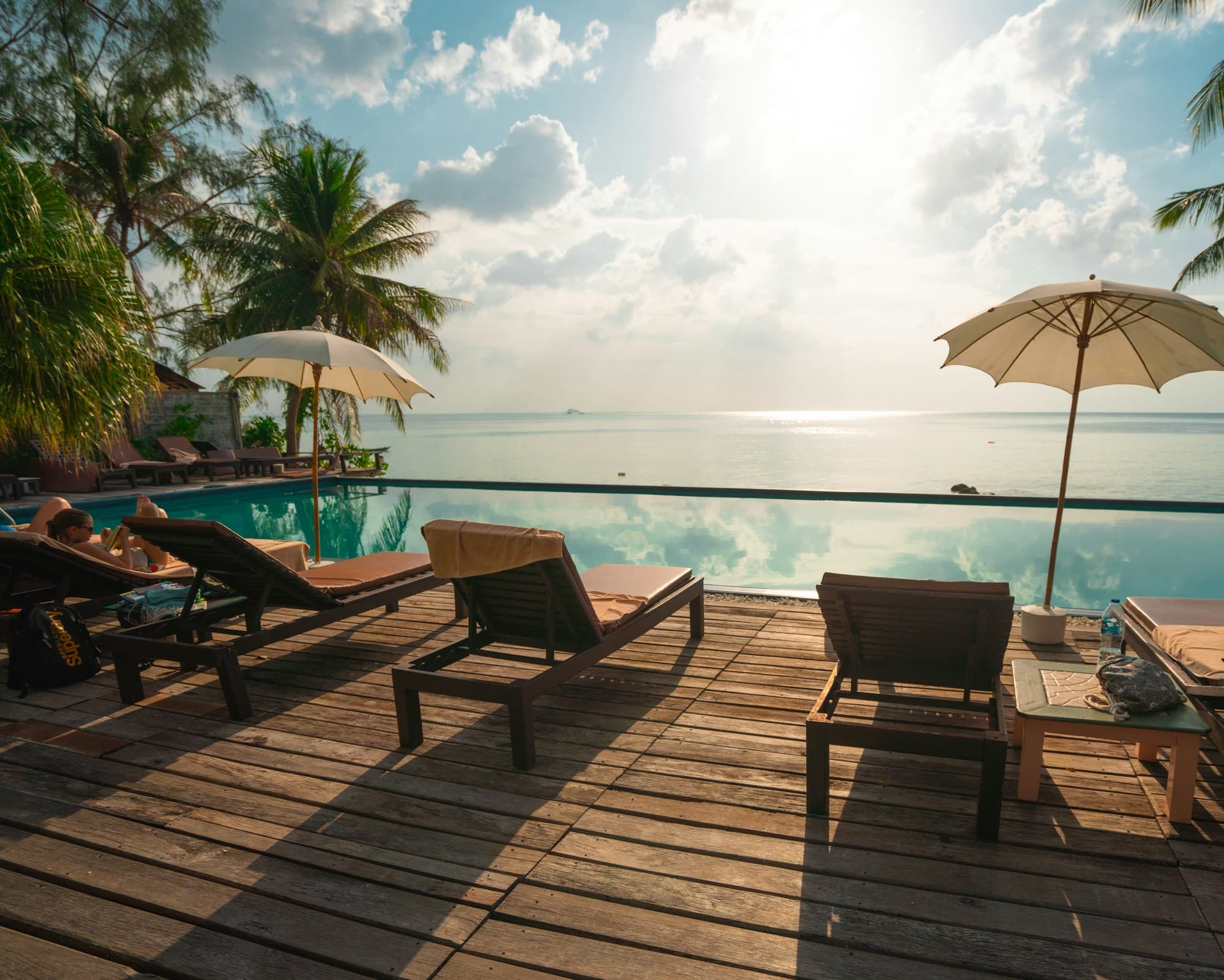
Luxury lodge deck with loungers and umbrellas at golden hourPremium

KwaZulu-Natal · Zululand private reserve

Zululand Private-Reserve Lodge

Lodge

Thatch-and-stone lodges in northern Zululand’s private reserves look over a mosaic of grassland, wetland and woodland that suits cheetah, rhino and a very long bird list. Guides combine daytime and after-dark drives, and many lodges welcome families, though this corner of KwaZulu-Natal is a malaria area.

  • Day and after-dark drives with a ranger and tracker
  • Family rooms at many
  • Pool and viewing deck
  • Transfers from the reserve airstrip or Richards Bay

Ideal for: Photographers and repeat safari-goers looking for cheetah, rhino and fewer vehicles
Luxury lodge deck with loungers and umbrellas at golden hourLuxury

KwaZulu-Natal · sand forest

Sand-Forest Canopy Suites · Zululand

Lodge

Suites raised among the trees of a rare dry sand forest, where suni and nyala pick through the leaf litter a few metres from your deck. Beyond the forest, drives cross open grassland for cheetah and rhino, and the reserve’s conservation work, from rhino monitoring to pangolin research, is often part of the conversation.

  • Secluded suites in the forest canopy
  • Private plunge pools at some
  • Conservation activities where offered
  • Night drives for nocturnal species

Ideal for: Couples and photographers who want an unusual habitat and a strong conservation story

Luxury lodge deck with loungers and umbrellas at golden hourPremium

Elephant Coast · iSimangaliso coastal forest

Coastal-Dune Forest Lodge · Elephant Coast

Lodge

Wooden suites hide in coastal forest on the dunes of the iSimangaliso Wetland Park, joined by boardwalks to a beach that often shows no other footprints. Days follow the tide, with snorkelling on the reefs, forest and lake walks and, in summer, turtle walks with licensed guides.

  • Boardwalk access to an uncrowded beach
  • Snorkelling and diving arranged locally
  • Turtle walks in season, roughly November–March
  • 4x4 transfer for the final sandy stretch at many

Ideal for: Couples who want a wild, uncrowded beach finish without leaving South Africa

Experiences

Experiences

Ocean & reef

Whale Watching in South Africa

Watch southern right whales court and calve within sight of the Cape’s cliffs, from a clifftop path or a licensed boat, roughly June to early December.

Safaris

Safaris That Go Here

Two white rhinos grazing as guests watch from a safari vehicle in a private conservancy
8 daysBush + beach

Zululand Bush & Beach

Phinda · Elephant Coast (iSimangaliso) · Richards Bay Airport

Couples and repeat safari-goers who want bush and beach in one country, away from the Kruger crowds

Best months
April–December (turtles from about November)
Comfort levels
Premium · Luxury
Individually quoted

Good to know

Frequently asked questions

Is KwaZulu-Natal good for a safari?

Yes, especially if you want variety. The private reserves of Zululand offer Big Five game drives with strong cheetah and rhino viewing, and the state-run Hluhluwe–iMfolozi carries some of the country’s deepest conservation history. Its real advantage is the coast two to three hours away, which lets you end the trip in the dunes rather than on another flight.

Is northern KwaZulu-Natal a malaria area?

Partly. The CDC recommends antimalarials for the uMkhanyakude district, which includes the main private reserves and the northern iSimangaliso coast, while the Zululand and King Cetshwayo districts further south are areas where it advises mosquito-bite precautions only. Parts of Hluhluwe–iMfolozi straddle district lines, so talk to a travel-medicine clinic about your exact route.

When is turtle season at iSimangaliso?

Loggerhead and leatherback turtles nest on the northern beaches in summer, roughly from November to March, with hatchlings emerging toward the end of that period. Night-time turtle outings are run only by licensed concessionaires, and what you find on any given night varies. Book coastal lodges well ahead if these months are your aim.

How does Hluhluwe–iMfolozi differ from a private reserve?

It is a state park run by Ezemvelo KZN Wildlife, with public roads, self-drive visitors and day visitors, so you keep to the roads and gate hours. Private reserves such as the Munywana Conservancy are lodge-only, with open vehicles, off-road tracking where permitted and fewer people. Many travelers stay private and visit the state park for a day.

Can you combine KwaZulu-Natal with Kruger?

Yes, usually by flying back through Johannesburg, because the road between the two is long. A common shape is three nights in the Sabi Sand or the Timbavati, then three in Zululand and two or three on the coast, so the trip ends at the beach.

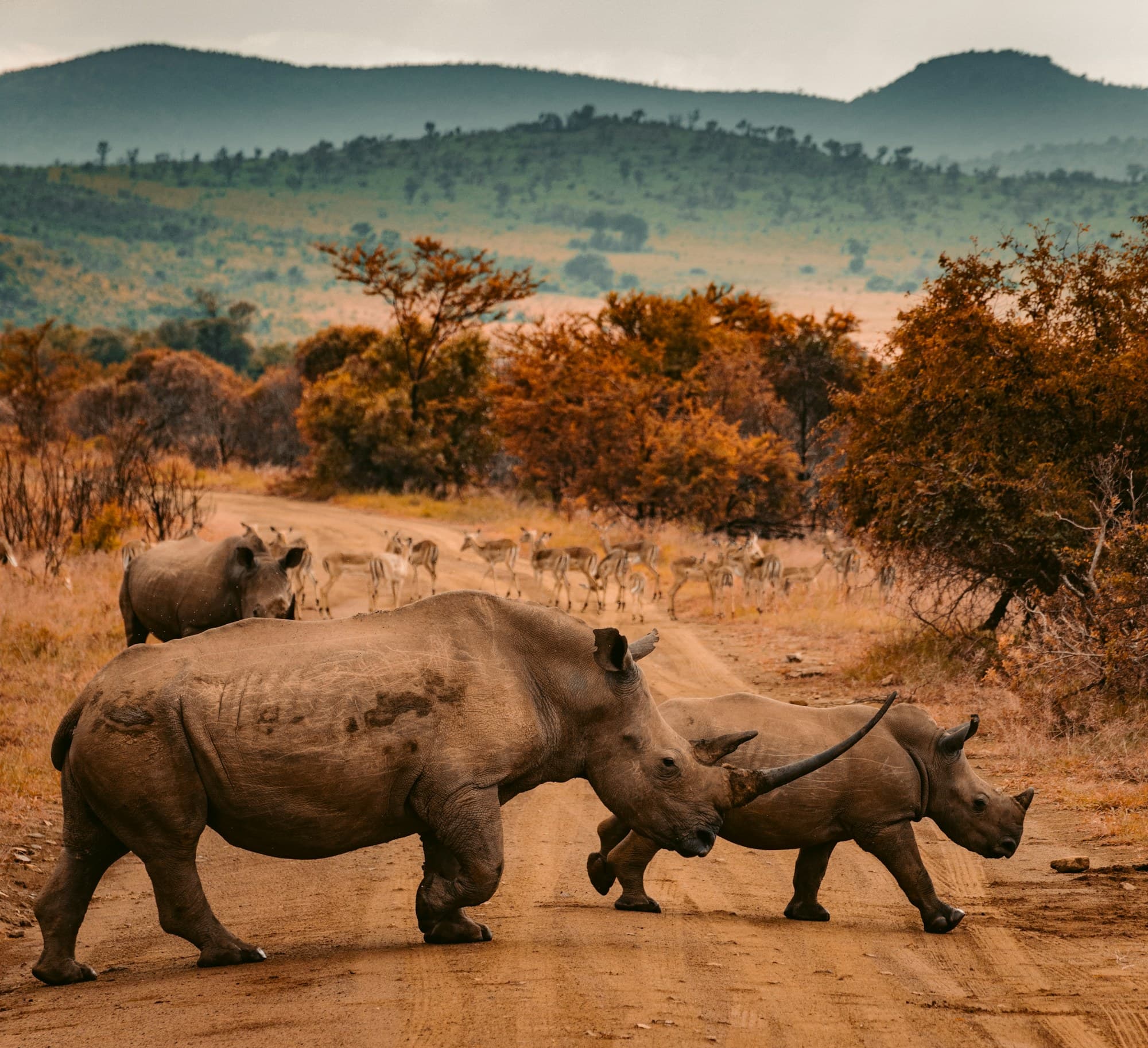
Two white rhinos grazing side by side in a private reserve

Tell Us When You Can Travel

Share your dates, who is coming and whether malaria-free matters, and a safari specialist will design a private South Africa route around you. Nothing is booked until you approve it.

Plan my safari here