Dugout canoe gliding along the Lower Zambezi

Destination guide

Lower Zambezi National Park Safaris

A river safari beneath a wall of escarpment: elephants wading out to islands, canoes slipping down side channels and Zimbabwe on the far bank.

SizeAbout 4,092 km² (roughly 1,580 sq mi)
Best timeMid-August to mid-October for game; camps typically open April to mid-November
Recommended stay3–4 nights
AccessAbout 30–40 minutes by light aircraft from Lusaka to Jeki or Royal airstrip
Known forCanoeing among elephants, boating, fishing and walking
Park feeCategory A: US$25 per person per day for international visitors, plus US$20 a day for canoeing or boating (DNPW table labelled 2025; latest at the time of writing, September 2026)

Lower Zambezi National Park

Why Visit

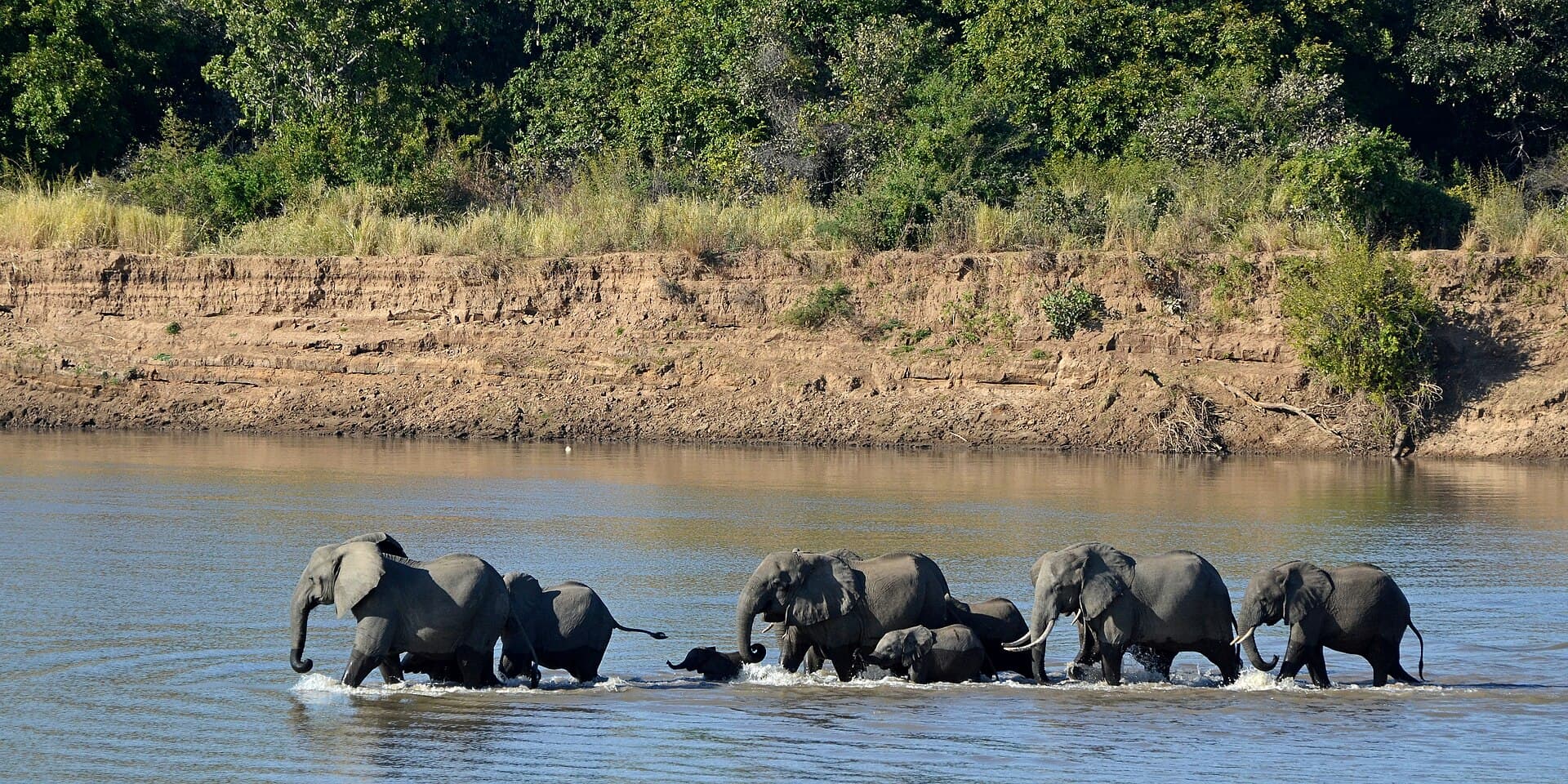
Lower Zambezi National Park is Zambia’s river safari. Proclaimed in 1983, it covers about 4,092 km² on the north bank of the Zambezi, facing Zimbabwe’s Mana Pools National Park across the water. Most of the park is steep escarpment, which works as a natural wall: wildlife concentrates on the narrow valley floor between the hills and the river, and on the grassy islands midstream, where elephants wade across to graze.

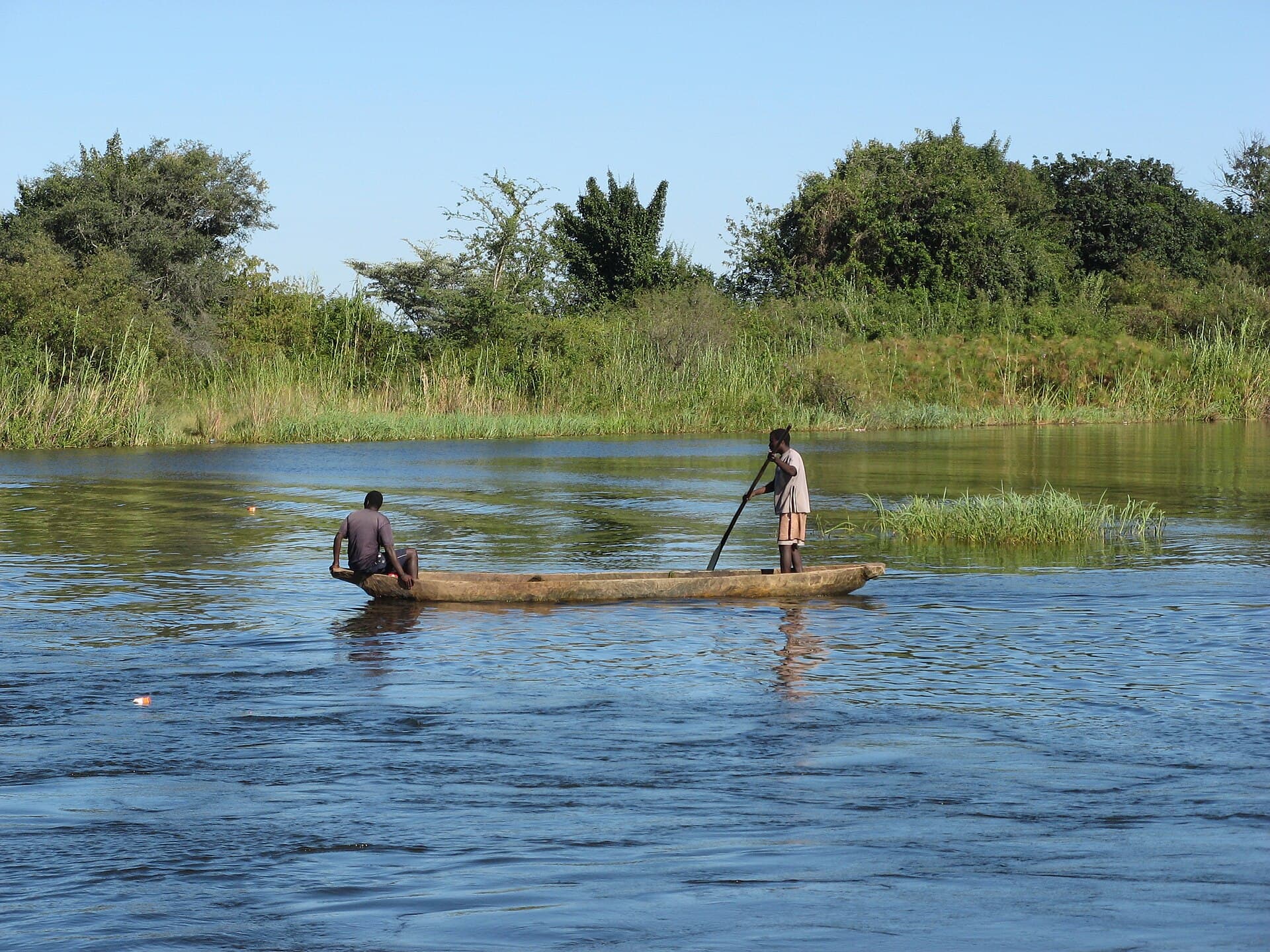
What sets it apart is the range of ways to explore. From a single camp you can take a game drive, a guided walk, a night drive, a boat trip, a catch-and-release fishing session and a canoe outing, often two or three in the same day. Paddling quietly past elephants at water level is the moment most people remember; our canoe safaris page explains how guides run it.

It matters just as much to know what’s missing. There are no giraffe and no cheetah, and black rhino were lost to poaching, so the Lower Zambezi complements a classic big-game park rather than replacing one. That’s why it shines as the second stop after South Luangwa, as on the 10-Day South Luangwa, Lower Zambezi & Victoria Falls Private Safari, or as a short trip on its own from Lusaka.

Best for

  • Canoeing and boating among elephants
  • A water-based second stop after South Luangwa
  • Short trips, just a half-hour flight from Lusaka
  • Honeymooners who want river views and seclusion
  • Anglers combining tiger fishing with game viewing

Lower Zambezi National Park

Wildlife & Highlights

  • Elephant, sometimes in herds of up to about 100, crossing to the river islands
  • Buffalo on the floodplain and islands
  • Lion and leopard, with leopard a regular focus of night drives
  • Wild dog, seen sporadically
  • Hippo and Nile crocodile in the main river and side channels
  • Waterbuck, impala, kudu and bushbuck on the valley floor
  • Hyena, porcupine, civet, genet and honey badger after dark
  • Carmine and white-fronted bee-eaters, and fish eagles along the banks
  • Tigerfish, the river’s celebrated game fish
  • Absent: giraffe, cheetah and black rhino

Season

Best Time to Visit

  1. January
  2. February
  3. March
  4. April
  5. May
  6. June
  7. July
  8. August
  9. September
  10. October
  11. November
  12. December
April–JuneCamps reopen as the rains fade and the river settles. The bush is green, the grass long and some animals skittish, so game viewing takes patience, but the valley is quiet and the soft light is lovely on the water.
July–mid-OctoberPrime time. Inland water dries up and animals move down to the floodplain; mid-August to mid-October brings the best viewing and the highest demand. September–October is also the best fishing, covered in tiger fishing on the Zambezi.
Mid-October–mid-NovemberThe hottest weeks of the year. Game stays close to the river and sightings can be excellent, but activities shrink to the cooler edges of the day, and camps begin closing from mid-November.
Mid-November–MarchThe rains. Roads become impassable and virtually every camp closes; the few that stay open are reached by boat. Plan the Lower Zambezi for another month if you can.

Lower Zambezi National Park

Areas to Know

Inside the national park

The in-park camps line the Zambezi frontage east of the Chongwe River, with the escarpment rising behind. Game density is highest here, and camps offer the full mix of drives, walks, boating, canoeing and night drives, with daily park fees for each day you’re inside. The best of these camps, with river-view suites and quiet decks, are the setting for our 8-Day Lower Zambezi & Victoria Falls Private Honeymoon Safari.

Best for: Peak-season game viewing and the full range of activities

The Chongwe confluence

The Chongwe River marks the park’s western boundary, and camps near its confluence with the Zambezi look straight across into the park. Canoe trips often start on the Chongwe and drift down to the main river, and drives cross into the park by day. It’s a good middle ground: close to the action, but with a little more flexibility.

Best for: Canoeing and families who want easy park access

Chiawa Game Management Area

West of the Chongwe, the Chiawa GMA is community land where lodges line the river and wildlife moves freely in and out of the park. Game is thinner than inside the park, and activities lean toward the water: boating, fishing and canoeing, with drives into the park itself. Camps here may charge community or conservation levies instead of park fees on days you stay outside the park, and rules on walking and fishing can differ, so we confirm them per camp.

Best for: Anglers, shorter stays and travelers watching their spend

Lower Zambezi National Park

Getting There

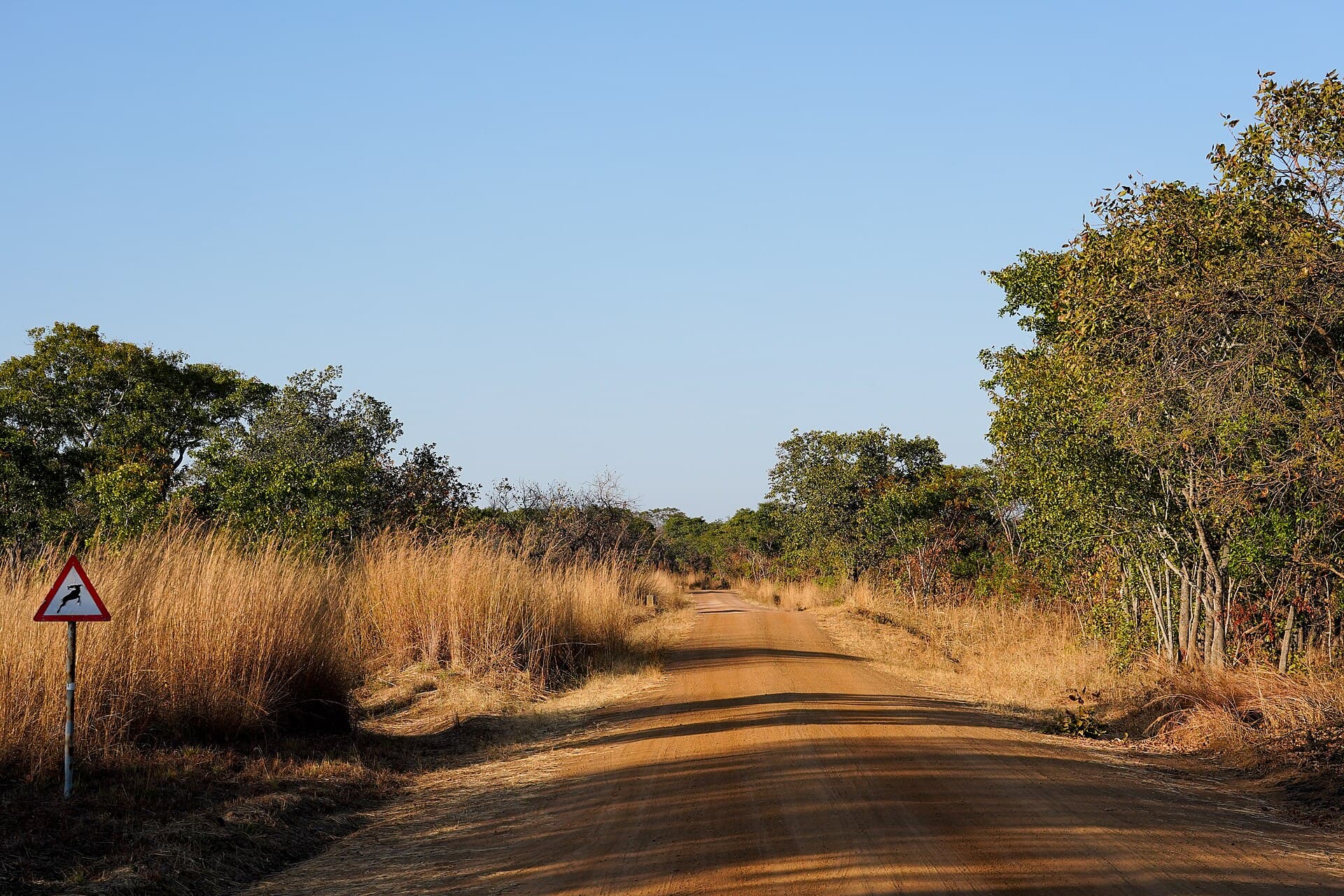
This is the easiest of Zambia’s major parks to reach: a light-aircraft flight of about 30–40 minutes from Lusaka to Jeki, which serves the camps inside the park, or Royal, closer to the Chongwe and Chiawa. By road, you drive to Chirundu on the Zimbabwe border, then follow a rough track east that crosses the Kafue River by pontoon near Gwabi; many lodges instead meet you with a boat for the final stretch. A seasonal light-aircraft link from Mfuwe has run until about mid-November, which lets you arrive from South Luangwa without returning to Lusaka.

Drive or fly?

For a private safari, fly. The flight is short, the airstrips sit close to the camps, and you skip the rough final stretch of road entirely. Driving makes sense if you’re continuing to Zimbabwe overland or staying in the Chiawa GMA, where some lodges combine a road transfer with a scenic boat run downriver. Either way, pack for a light aircraft — soft bags and a strict total weight — as set out in our getting to Zambia guide.

Airstrips & airports

  • Jeki
  • Royal

Typical travel times

Lusaka by light aircraft
About 30–40 minutes
Lusaka to the Chiawa area by road via Chirundu
Roughly 3–4 hours, plus a road or boat transfer to in-park camps
Mfuwe (South Luangwa)
Direct light aircraft in season; otherwise via Lusaka

Stays

Where to Stay

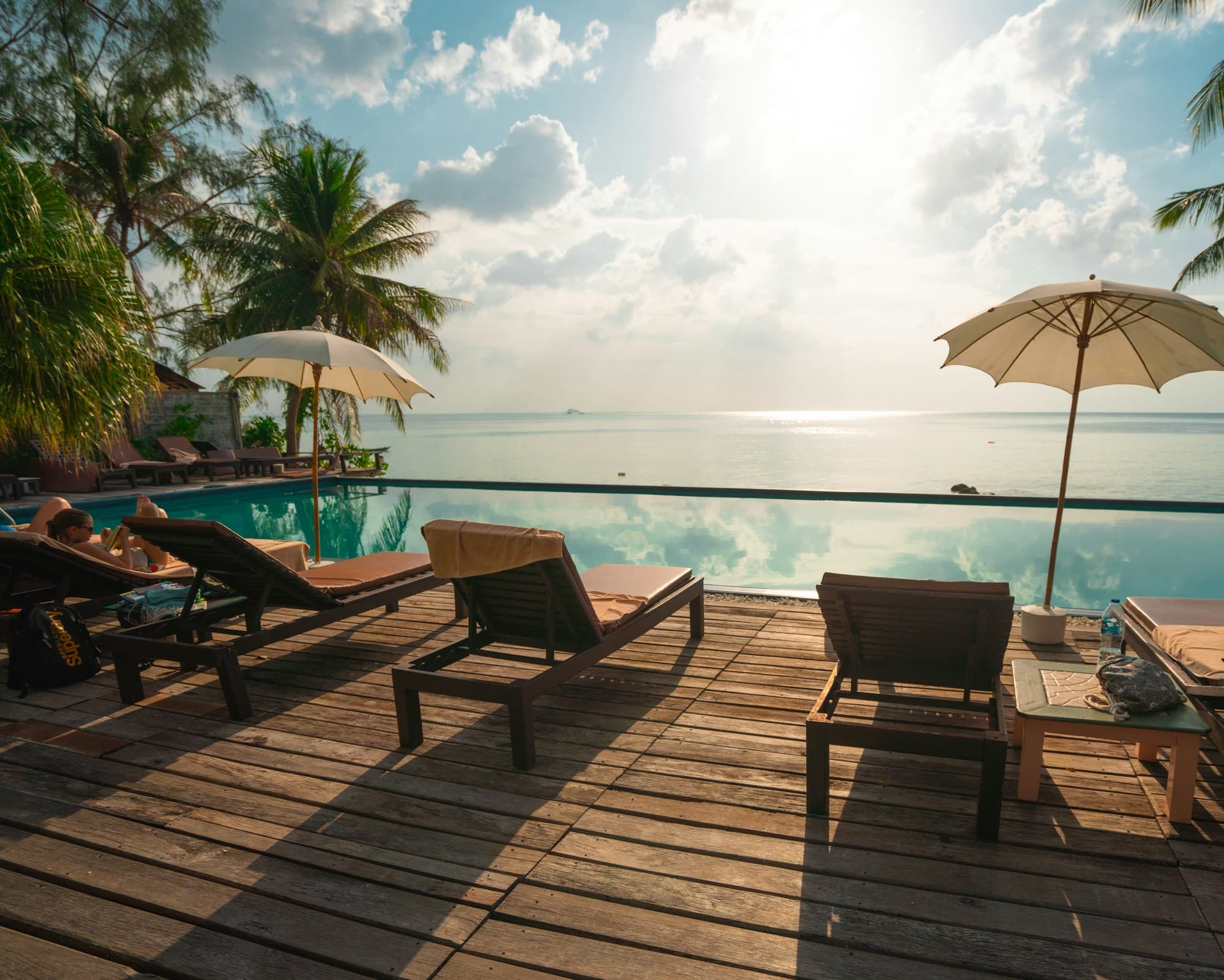
Almost every Lower Zambezi camp faces the river, and the differences come down to location. Camps inside the park put you in the thick of the game; those at the Chongwe confluence and in the Chiawa GMA to the west trade some density for easier access and more flexibility over fishing and walking. Styles run from well-run riverside lodges to intimate tented camps and a few riverfront suites with private plunge pools. Most open from about April to mid-November.

Luxury lodge deck with loungers and umbrellas at golden hourComfort

Lower Zambezi · Chiawa GMA, west of the park

Upstream Riverside Lodge

Lodge · Most open around April–November; a few longer

A friendly riverside lodge in the game management area upstream of the national park, where communities live alongside wildlife. Days revolve around the water, with boat trips, canoeing and fishing, and outings into the park itself mean a longer drive or boat ride downstream.

  • Riverfront rooms or chalets
  • Boat trips, canoeing and fishing
  • Game drives into the park downstream
  • Family-friendly atmosphere

Ideal for: Families and anglers who want a relaxed river stay at a more modest price level
A canvas safari tent set among trees at a private tented campPremium

Lower Zambezi · Chongwe and park-edge riverfront

Park-Edge River Camp

Tented camp · Typically April–mid-November

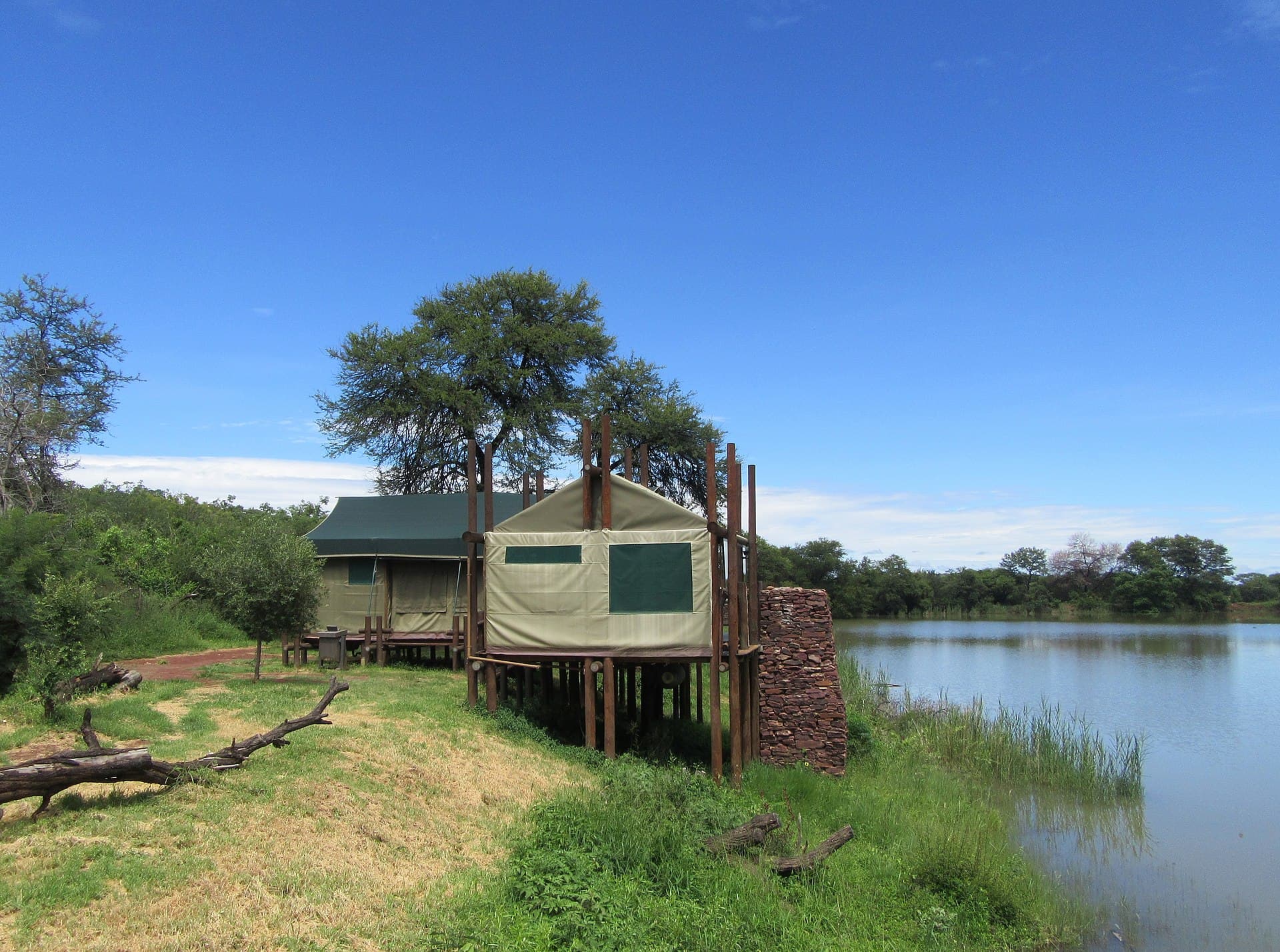
Tented camps along the park boundary, near where the Chongwe River meets the Zambezi, combine the river with walking. Rules just outside the national park can differ from those inside, which can make walks and fishing simpler to arrange, while the park’s wildlife moves freely across the boundary.

  • Spacious tents facing the Zambezi
  • Canoeing, boating, walks and drives
  • Fishing in the open season
  • Family tents at some

Ideal for: Families and active travelers who want canoeing, walking and drives from one camp

A canvas safari tent set among trees at a private tented campLuxury

Lower Zambezi · inside the national park

Luxury In-Park Tented Camp

Tented camp · Typically April–mid-November

Tented suites inside the national park, shaded by big winterthorn and mahogany trees on the bank, face the blue hills of Zimbabwe across the water. Being in the park puts you close to the floodplain’s richest game areas, and elephants often wander between the tents.

  • Large tented suites with river views
  • Canoeing, boating, walks, drives and night drives
  • Private dining on the riverbank
  • Inside the national park boundary

Ideal for: Couples and wildlife enthusiasts who want to wake up in the heart of the park

A canvas safari tent set among trees at a private tented campUltra-Luxury

Lower Zambezi · riverfront suites with private plunge pools

Plunge-Pool River Suites

Tented camp · Typically April–mid-November

The Lower Zambezi’s most exclusive style: a few large, beautifully finished riverfront suites, each with a private plunge pool and deck, and a high ratio of guides and staff to guests. Activities are arranged around you, from a private canoe outing to a boat trip timed for the last light.

  • Riverfront suites with private plunge pools
  • Private activities on request
  • Excellent food and wine
  • Only a few suites per camp

Ideal for: Honeymooners and travelers who want the most private, polished stay on the Zambezi

Experiences

Experiences

Dugout canoe gliding along the Lower Zambezi

On the water

Canoe safaris on the Zambezi

Paddle a two-person canoe down the Zambezi’s side channels with a trained river guide, at eye level with elephants on the banks.

After dark

Night drives in South Luangwa

Head out after sundowners with a spotter and spotlight to look for leopard, genet and hyena in the park that made night drives famous.

Dugout canoe gliding along the Lower Zambezi

On the water

Tiger fishing on the Zambezi

Cast for the Zambezi’s tigerfish on a catch-and-release outing from a riverside camp, while a non-fishing partner walks, drives or paddles.

Safaris

Safaris That Go Here

Elephant family crossing the Luangwa River
10 daysMost complete

Zambia Classic

Lusaka · Mfuwe Airport · South Luangwa · Lower Zambezi · Livingstone · Victoria Falls (Mosi-oa-Tunya)

First-time visitors to Zambia who want walking, water and the falls in one well-paced trip

Best months
June – October, the dry season
Comfort levels
Comfort · Premium · Luxury · Ultra-Luxury
Individually quoted
Dugout canoe gliding along the Lower Zambezi
8 daysCouples

Zambezi Honeymoon

Lusaka · Lower Zambezi · Livingstone · Victoria Falls (Mosi-oa-Tunya)

Honeymooners and anniversary couples who want a gently paced safari with water and privacy

Best months
May – October
Comfort levels
Premium · Luxury · Ultra-Luxury
Individually quoted

Good to know

Frequently asked questions

How many nights do you need in the Lower Zambezi?

Three nights is the sweet spot, enough to fit a canoe outing, a boat trip, game drives and a walk. Four make sense if you also want a full day’s fishing or a slower, river-paced stay as a couple. Two nights feel rushed, because the best activities happen at the edges of the day.

Are there giraffes in the Lower Zambezi?

No. Giraffe and cheetah don’t occur in the Lower Zambezi, and black rhino were lost to poaching. If giraffe matter to you, pair the park with South Luangwa, home of the Thornicroft’s giraffe.

When is the best time to visit the Lower Zambezi?

Mid-August to mid-October brings the best game viewing, as animals gather on the floodplain, but it’s also the busiest and priciest period. June and July are cooler and quieter, and April and May are green and beautiful for paddling, though the grass is long. Most camps close from mid-November to about March.

What is the difference between staying in the park and in the Chiawa GMA?

Camps inside the park have the highest game density and charge daily park fees. Camps in the Chiawa Game Management Area, west of the Chongwe River, sit on community land with fewer animals and easier access, and often have more flexibility over fishing and walking. Which suits you depends on whether game density or flexibility matters more.

How do you get from Lusaka to the Lower Zambezi?

The quickest way is a 30–40 minute light-aircraft flight to Jeki or Royal airstrip. By road, you drive to Chirundu, then follow a rough track east with a pontoon crossing of the Kafue River, or switch to a boat for the last stretch. Most private travelers fly in and out.

Can you visit Mana Pools from the Lower Zambezi?

Not as a casual outing. The two parks face each other across the river, but they’re in different countries, and getting from one to the other means a formal border crossing, usually via Chirundu, or a flight. If both interest you, plan them as two separate stops.

Hippos in a lagoon beside a bush camp in Kafue

Tell Us When You Can Travel

Share your dates, who is coming and whether you want to walk, paddle or simply watch. A safari specialist will design a private Zambia journey around the seasons, with nothing booked until you approve it.

Plan my safari here