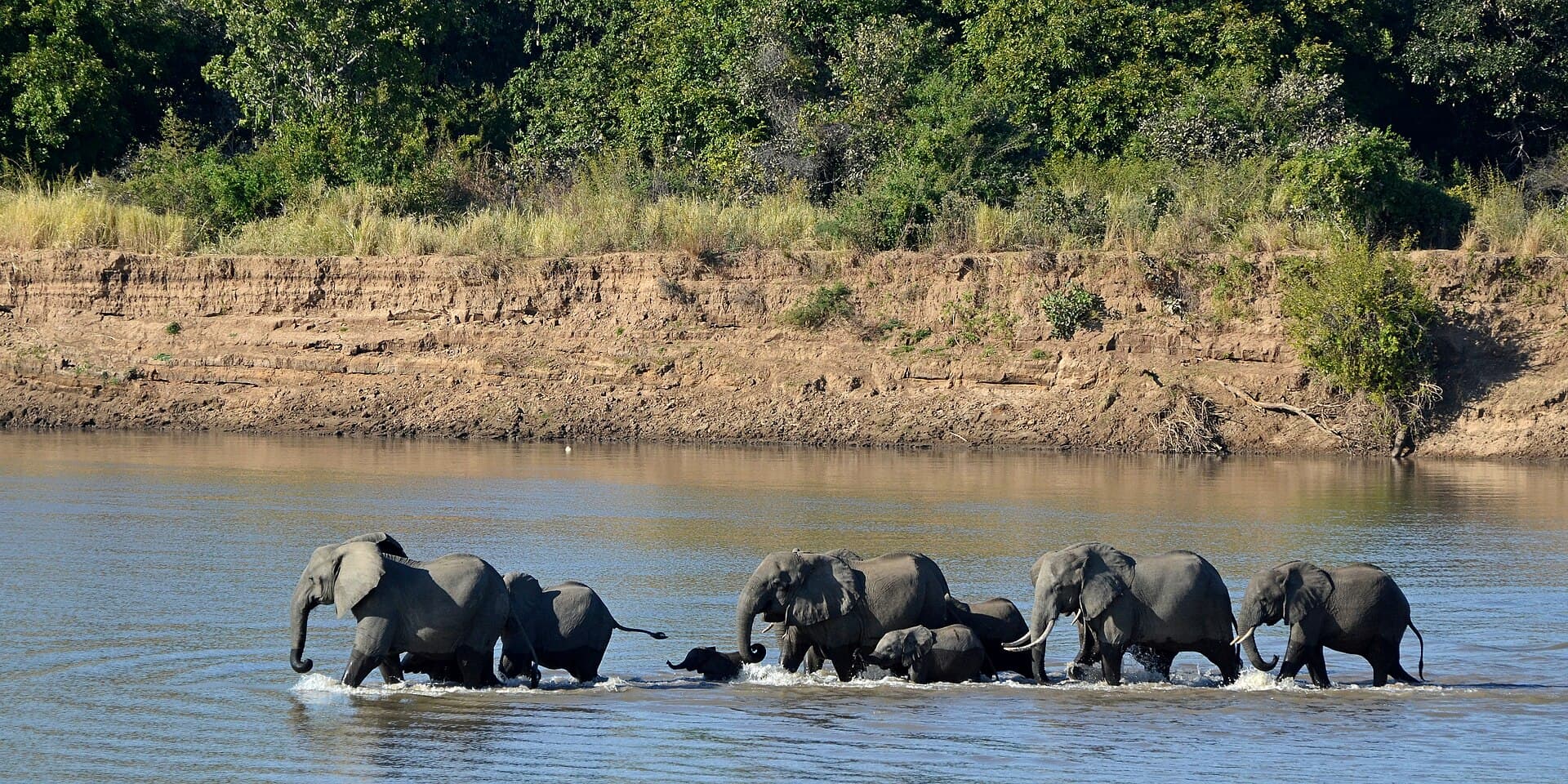
Elephant family crossing the Luangwa River

Destination guide

South Luangwa National Park Safaris

About 9,050 km² of oxbow lagoons, ebony groves and sandy riverbanks beneath the Muchinga escarpment — the valley where the walking safari began.

SizeAbout 9,050 km² (roughly 3,490 sq mi)
Best timeJune–October for walking and peak game; lodges near Mfuwe open all year
Recommended stay4–6 nights, split between a river camp and a bush camp
AccessAbout 1 hour 10 minutes by scheduled flight from Lusaka to Mfuwe, then about 30 minutes by road
Known forLeopard, walking safaris, night drives and Luangwa Valley endemics
Park feeCategory A: US$25 per person per day for international visitors, per the DNPW table labelled 2025 (latest published at the time of writing, September 2026)

South Luangwa National Park

Why Visit

South Luangwa National Park is the park most people have in mind when they picture a Zambian safari. It covers about 9,050 km² of the Luangwa Valley, with the Luangwa River as its eastern boundary and the Muchinga escarpment along the western skyline. The river loops across a sandy floodplain and strands oxbow lagoons as it shifts course, and around them grow ebony groves, winterthorn, sausage trees and mopane woodland. Protected as a game reserve from 1938, it became a national park in 1972.

Three things set it apart. This is where the walking safari took shape: in 1950 Norman Carr persuaded Senior Chief Nsefu to set land aside for wildlife, built the first game-viewing camp open to the public in what was then Northern Rhodesia, and through the 1950s began taking guests out on foot. That story, and how walking works today, is told on our walking safaris in Zambia page. The park is also one of Africa’s most rewarding places to look for leopard, nicknamed the Valley of the Leopard, and licensed operators may run spotlit drives after dark. Finally, its wildlife has a local accent, from Thornicroft’s giraffe, found only in this valley, to Crawshay’s zebra.

Most first visits spend four to six nights here, split between a river camp in the central Mfuwe area and a small bush camp in one of the remote sectors. The first gives you the densest game and the full network of day and night drives; the second gives you long morning walks and near-silence. That pairing is the backbone of our 10-Day South Luangwa, Lower Zambezi & Victoria Falls Private Safari.

Best for

  • Walking safaris in the park where they began
  • Leopard and nocturnal wildlife on night drives
  • A first Zambian safari, paired with the Lower Zambezi
  • Photographers working the low dry-season light on river and lagoons
  • Green-season travelers, thanks to lodges that stay open

South Luangwa National Park

Wildlife & Highlights

  • Leopard, often found in the riverine woodland and on night drives
  • Lion prides on the floodplain and wide-ranging wild dog packs
  • Thornicroft’s giraffe, found nowhere outside the Luangwa Valley
  • Crawshay’s zebra, the valley’s distinctive local race
  • Hippo at densities estimated at around 50 per kilometer of river
  • Elephant, buffalo, puku and impala along the river
  • Spotted hyena, genet, civet and porcupine after dark
  • Carmine bee-eater colonies in the sandy riverbanks late in the dry season
  • Around 400 bird species, including storks and herons fishing the drying lagoons

Season

Best Time to Visit

  1. January
  2. February
  3. March
  4. April
  5. May
  6. June
  7. July
  8. August
  9. September
  10. October
  11. November
  12. December
May–JuneThe rains are over but the bush is still thick and green, and tall grass early in the season makes sightings harder work. Lodges around Mfuwe are open, and the remote bush camps start opening from about June. Nights are cool and the light is soft.
July–OctoberThe main dry season. Lagoons shrink and animals concentrate along the river, so August–October is the peak for game viewing, and for demand and rates. July is the coolest month and the most comfortable for walking; by October the midday heat is fierce and activities cluster around dawn and dusk.
November–DecemberThe first storms break the heat and the valley greens almost overnight. Remote bush camps close while lodges near Mfuwe stay open. This is wild-mango season, when elephants may wander through lodge grounds to feed on fallen fruit, and many antelope give birth.
January–AprilThe emerald season. The swollen river allows boat trips, migrant birds are everywhere and the open camps charge their lowest rates, but walking is largely impractical and some tracks close. Wild dogs are often reported to be especially active around March.

South Luangwa National Park

Areas to Know

Mfuwe & the central sector

Most of the park’s lodges and camps line the river near the main gate at Mfuwe, and several stay open all year. The floodplain here is rich, the loops and lagoons sit close together, and the road network makes night drives productive. The trade-off is company: a leopard in peak season can draw several vehicles, which is where a private vehicle and a guide willing to drive further help most.

Best for: First visits, night drives and travel in any month

Nsefu sector

Upstream of Mfuwe, the Nsefu sector is where Norman Carr’s first camp for visitors stood. Today it has only a handful of camps and a noticeably quieter feel, with open plains and lagoons that hold good general game. It suits travelers who want a step toward solitude without the longer transfers of the remote bush camps.

Best for: A quieter river stay within reach of Mfuwe

Luwi & the northern bush-camp country

Along the seasonal Luwi River and its sandy channels lies the country the walking circuits were made for. A few small bush camps open here from about June to October, and some itineraries move you from one to the next on foot while your bags follow by vehicle. Game is more scattered than at Mfuwe, but you may walk all morning without hearing an engine. The 11-Day North & South Luangwa Private Walking Safari spends its middle nights in this style of camp.

Best for: Walking and solitude, roughly June–October

The southern sector

South of the central area, a few remote seasonal camps sit on the Luangwa’s tributaries, well away from the busier loops. The emphasis is quality over quantity: walks along dry riverbeds, lagoons watched in silence and drives on which you may not meet another vehicle. Some remote camps have built photographic hides at lagoons or riverbanks, a real draw late in the dry season.

Best for: Photographers and return visitors who value seclusion

South Luangwa National Park

Getting There

Almost everyone flies. Scheduled flights link Lusaka and Mfuwe in about 1 hour 10 minutes all year, with up to three a day in peak season and fewer in the rains, and connections through Lusaka reach Livingstone, which makes a falls finish simple. From Mfuwe Airport it’s about 30 minutes by road to the main gate and the central lodges, and longer to the remote sectors. A short light-aircraft hop from Lilongwe in Malawi is sometimes possible, and a seasonal link to the Lower Zambezi makes the classic pairing easy; if you’re choosing between the two parks, read South Luangwa or Lower Zambezi.

Drive or fly?

Fly in unless you have a particular reason to drive. The road from Lusaka through Chipata is now tar the whole way, correcting an old myth, but it still takes 9–10 hours, which costs you a full safari day at each end. Driving makes sense mainly if you’re arriving from Malawi or want to see rural Eastern Province. Inside the park, your move from river camp to bush camp is by road with your guide, and it usually turns into a game drive of its own. Pack for light aircraft either way, as our getting to Zambia guide explains.

Airstrips & airports

  • Mfuwe Airport (MFU)

Typical travel times

Mfuwe Airport to the main gate and central lodges
About 30 minutes
Chipata to Mfuwe
About 2 hours (123 km)
Lusaka to Mfuwe by road via Chipata
About 9–10 hours, tar all the way
Central lodges to remote bush camps
Varies by sector; usually doubles as a game drive

Stays

Where to Stay

South Luangwa has the widest choice of stays in Zambia. Around Mfuwe, riverside lodges and classic tented camps, several open year-round, put you close to the richest game and the night-drive network. In the remote sectors, small seasonal bush camps with only a few rooms open roughly June–October and are built around walking. At the top end there are exclusive-use safari houses with their own guide and vehicle. We match specific camps to your dates, and usually pair one river stay with one bush camp.

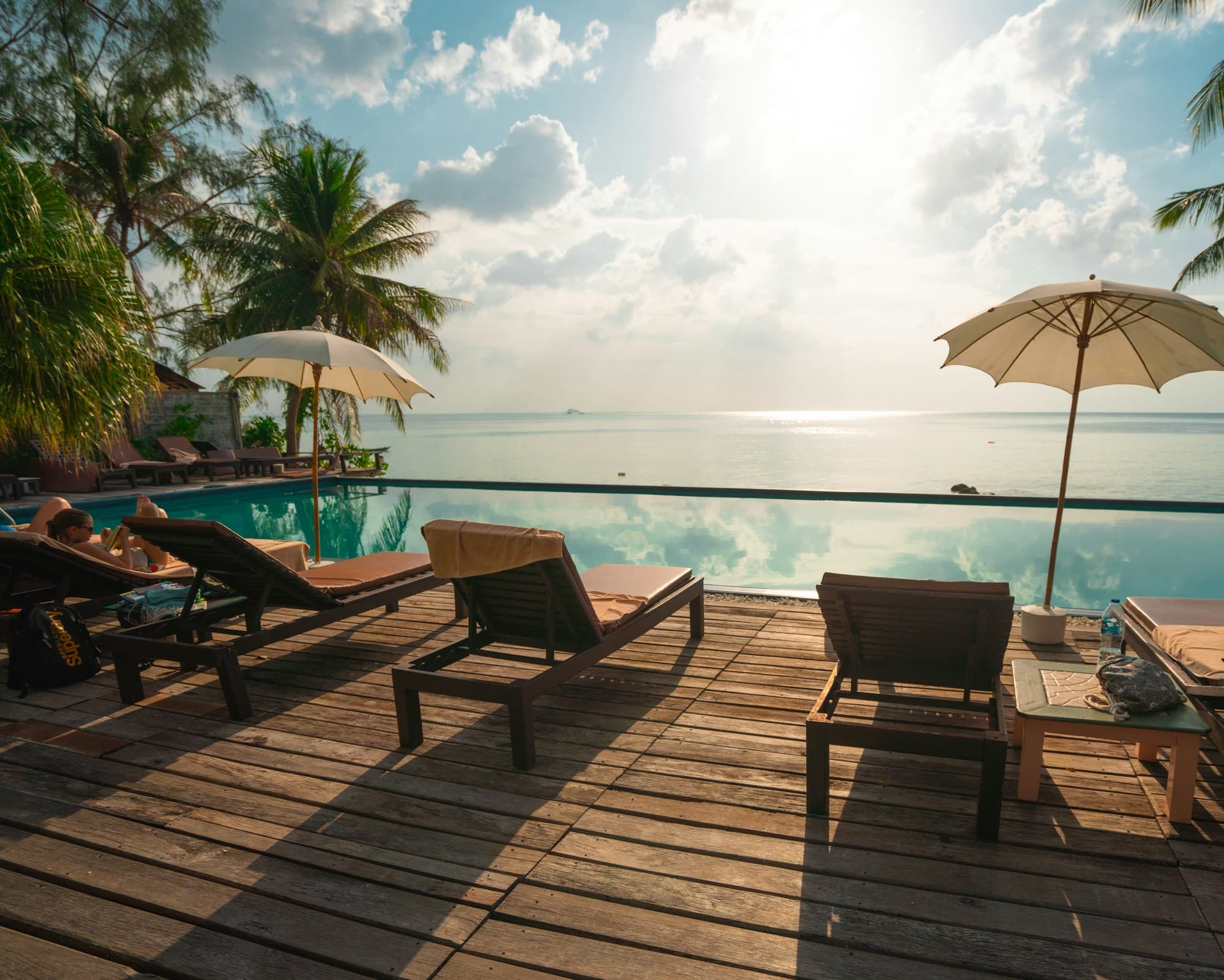
Luxury lodge deck with loungers and umbrellas at golden hourComfort

South Luangwa · Mfuwe gate area

Gate-Area River Lodge

Lodge · Several open year-round

Well-run lodges on the Luangwa River near the main Mfuwe gate put you minutes from the park’s most productive game-viewing loops. Rooms or chalets face the water, where elephants and hippos are regular visitors, and several stay open all year, including the green season when the swollen river allows boat trips.

  • River-view chalets or rooms
  • Morning walks plus day and night drives
  • Swimming pool for the midday heat
  • About half an hour from Mfuwe Airport

Ideal for: First-time visitors and families who want dependable game viewing, a pool and easy access from Mfuwe Airport
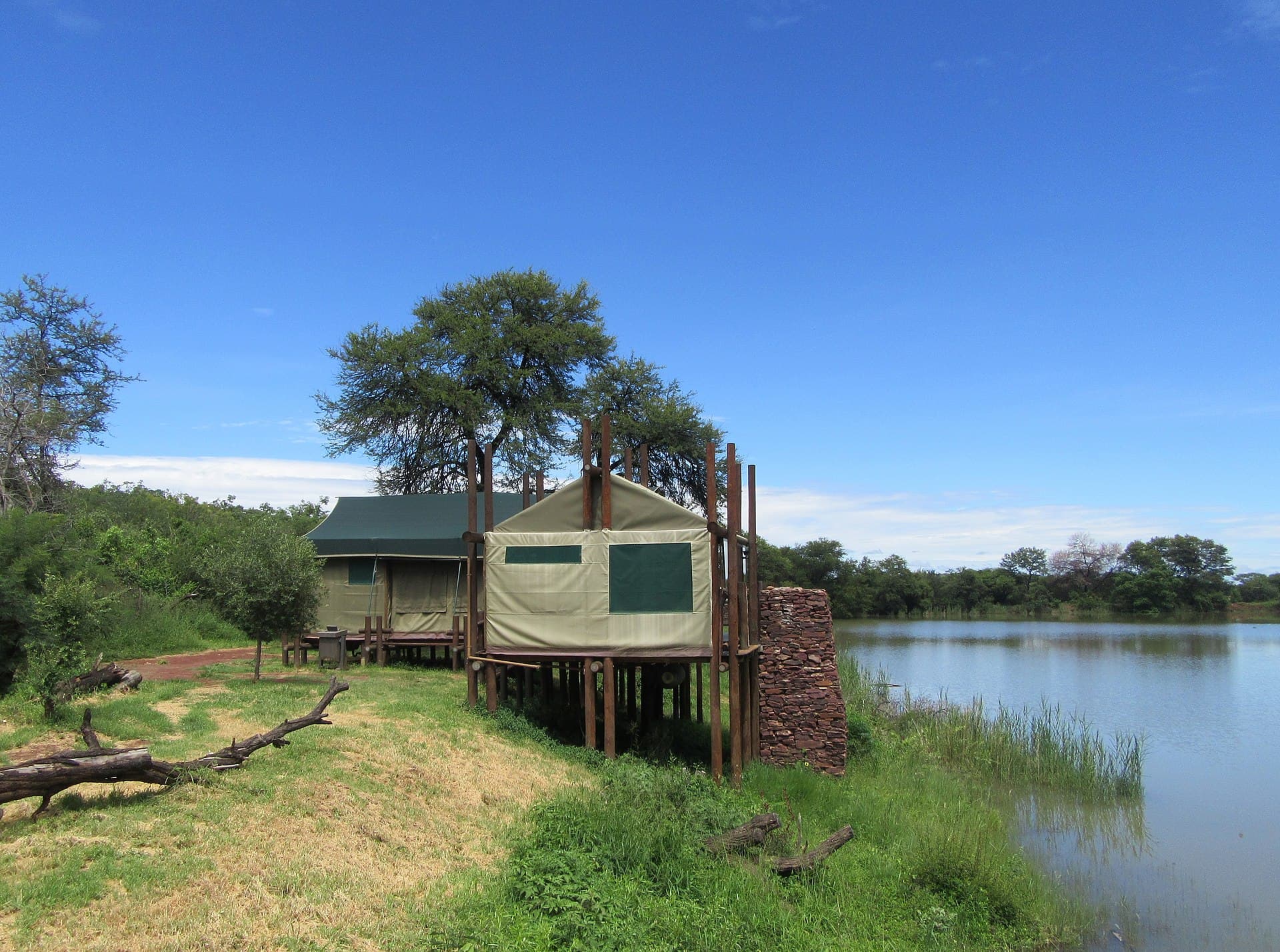
A canvas safari tent set among trees at a private tented campPremium

South Luangwa · central river camps

Classic Riverbank Tented Camp

Tented camp · Most open around April/May–November; a few year-round

The classic Luangwa style: a few large tents or chalets on a bend of the river, a shared deck and fire pit, and experienced guides who switch easily between walking and driving. You alternate dawn walks with afternoon drives that run on into the night in the central area, the part of the valley best known for leopard.

  • A handful of spacious tents or chalets on the riverbank
  • Walking, day drives and night drives
  • Photographic hides at some
  • Small, personal atmosphere

Ideal for: Photographers and first-time Zambia travelers who want walks and drives from a riverside base

Luxury lodge deck with loungers and umbrellas at golden hourLuxury

South Luangwa · private riverfront

Private-Riverfront Luxury Lodge

Lodge · Typically April–November; confirm per lodge

Generous suites on a quiet stretch of the Luangwa, many with a private plunge pool and an outdoor shower, look out over the river and its oxbow lagoons. Design, food and wine are polished, yet the guiding keeps the valley’s walking tradition at the centre of every day.

  • Large suites, many with private plunge pools
  • Walks and drives with few guests per vehicle
  • Photographic hides at some
  • Refined food and a considered wine list

Ideal for: Honeymooners and discerning travelers who want top-level comfort without losing the walking-safari spirit

Luxury lodge deck with loungers and umbrellas at golden hourUltra-Luxury

South Luangwa · private house with its own guide and vehicle

Exclusive-Use Safari House

Lodge · Typically April–November; confirm per house

A private house on the Luangwa reserved for your party alone, with its own guide, vehicle, chef and staff. You shape each day yourselves, from a dawn walk to a late night drive or a long lunch by the pool, which makes it the most flexible way to experience the valley.

  • Exclusive use for your group
  • Dedicated guide, vehicle and chef
  • Private pool and living areas
  • Activities and meals on your timetable

Ideal for: Families, multi-generational groups and couples who want complete privacy and their own schedule

A canvas safari tent set among trees at a private tented campPremium

South Luangwa · Nsefu, Luwi or southern-sector bush country

Seasonal Walking Bush Camp

Bush camp · Typically June–October (a few from late May to early November)

A small camp in one of South Luangwa’s quiet sectors, built from local materials each dry season and gone again before the rains. Walking is the reason to stay, guest numbers are tiny and, after dark, the valley’s sounds come right up to your door; comforts are simple but well considered, often with open-air bathrooms.

  • A few reed, thatch or canvas rooms, each en suite
  • Morning walks with a guide and an armed scout
  • Camp-to-camp walking where routes allow
  • No other camps in sight

Ideal for: Walkers who want quiet, few people and a closer connection to the bush

A canvas safari tent set among trees at a private tented campLuxury

South Luangwa · remote riverside bush camps

Luxury Riverside Bush Camp

Bush camp · Typically June–October

The same remote walking country with more polish: a few spacious rooms facing a lagoon or riverbank, stylish open-air bathrooms and excellent cooking, while keeping the lightness of a seasonal camp. Walks remain the heart of each day, with drives and hides filling the afternoons.

  • Only a handful of rooms, often facing a lagoon
  • Open-air bathrooms and fine finishes
  • Walks, hides and game drives
  • Private dining in the bush

Ideal for: Couples and experienced travelers who want remote walking with a touch of luxury

Experiences

Experiences

After dark

Night drives in South Luangwa

Head out after sundowners with a spotter and spotlight to look for leopard, genet and hyena in the park that made night drives famous.

Safaris

Safaris That Go Here

Elephant family crossing the Luangwa River
10 daysMost complete

Zambia Classic

Lusaka · Mfuwe Airport · South Luangwa · Lower Zambezi · Livingstone · Victoria Falls (Mosi-oa-Tunya)

First-time visitors to Zambia who want walking, water and the falls in one well-paced trip

Best months
June – October, the dry season
Comfort levels
Comfort · Premium · Luxury · Ultra-Luxury
Individually quoted
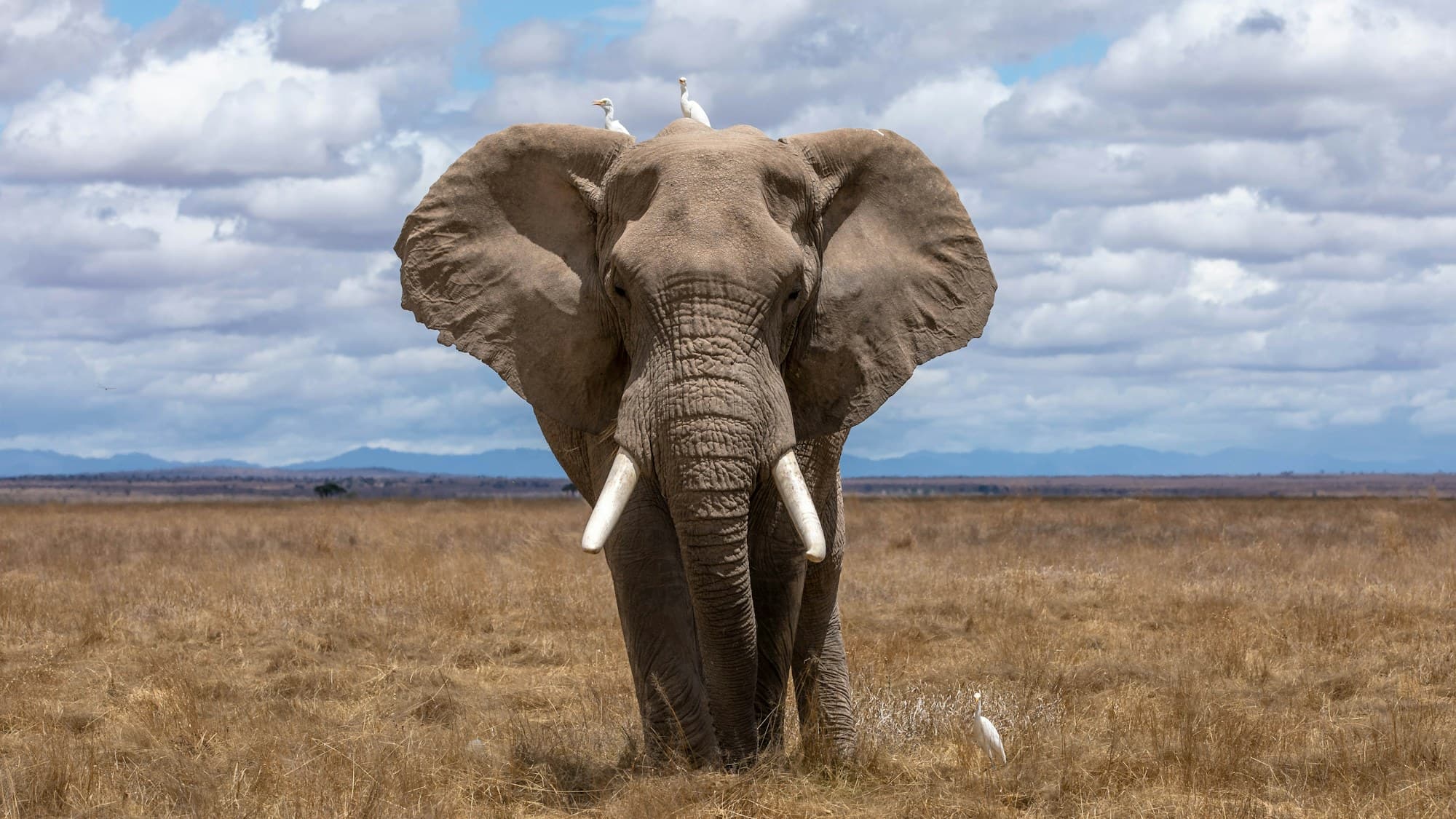
Elephant with white egrets standing front-on in open grassland under a wide sky
11 daysFor walkers

Luangwa Walking Safari

Lusaka · Mfuwe Airport · South Luangwa · North Luangwa

Fit, curious travelers who want to experience the bush on foot and are happy with simple camps

Best months
July – October (late June possible)
Comfort levels
Premium · Luxury
Individually quoted

Good to know

Frequently asked questions

How many days do you need in South Luangwa?

Four nights is a sensible minimum, and five or six let you split your stay between a central river camp and a remote bush camp. With only two or three nights, stay near Mfuwe, where day and night drives are most productive. Add a night if walking is your main reason for coming.

Is South Luangwa open all year?

The park itself never closes. Several lodges in the central Mfuwe area stay open through the rains, and Mfuwe has scheduled flights in every month. What closes are the remote bush camps, typically from about November to May, when tracks flood and walking becomes impractical.

How do you get from Lusaka to South Luangwa?

Most travelers take the scheduled flight to Mfuwe, about 1 hour 10 minutes, followed by roughly 30 minutes by road to the central lodges. The road via Chipata is tarred throughout but takes 9–10 hours, so a private safari almost always flies and saves the day for the bush.

Is South Luangwa good for seeing leopards?

It’s one of the best places in Africa to look for them, and its nickname, the Valley of the Leopard, is well earned. Sightings are never certain, but riverine woodland, experienced guides and night drives give you a strong chance over four or more nights.

What are the park fees for South Luangwa?

South Luangwa is a Category A park. At the time of writing (September 2026), the latest published table from the Department of National Parks and Wildlife, labelled 2025, charges international visitors US$25 per person per day, with half rates for children aged 5–13 and free entry under 5. Many camps include the fee in their rates, so check what your quote covers.

Can you see giraffe in South Luangwa?

Yes. Thornicroft’s giraffe, a form found only in the Luangwa Valley, is often seen in the woodland and on the floodplain. It’s one reason many travelers pair South Luangwa with the Lower Zambezi, which has no giraffe at all.

Hippos in a lagoon beside a bush camp in Kafue

Tell Us When You Can Travel

Share your dates, who is coming and whether you want to walk, paddle or simply watch. A safari specialist will design a private Zambia journey around the seasons, with nothing booked until you approve it.

Plan my safari here