Destination guide

Central Kalahari Game Reserve Safaris

One of the largest game reserves on Earth: fossil river valleys and open pans that come alive with springbok, gemsbok and lions after the summer rains.

SizeAbout 52,800 km² (roughly 20,400 sq mi)
Established1961
Best timeDecember–April, after good summer rains
Recommended stay3 nights
AccessAbout 40–70 minutes by light aircraft from Maun; long 4x4 journeys by road
Known forDark-maned Kalahari lions, green-season springbok herds and deep solitude

Central Kalahari Game Reserve

Why Visit

The Central Kalahari Game Reserve (CKGR) covers about 52,800 km² of the Kalahari basin — larger than Switzerland — which makes it one of the largest game reserves in the world. Established in 1961, it is a land of fossil river valleys, open pans and grassland dotted with acacia, and it receives only a small number of visitors. On many days you may not meet another vehicle.

The time to go is after good summer rains, roughly December to April. Fresh grass draws springbok, gemsbok, wildebeest, red hartebeest, eland and giraffe onto the pans and valley floors, and lion — many of them dark-maned — cheetah and brown hyena follow. In the dry months game spreads thin and the reserve becomes a place for solitude, stars and small things, from meerkats to bat-eared foxes; for much of the year there is almost no surface water, and gemsbok and springbok draw much of their moisture from plants.

The reserve also has a human story that belongs in any honest introduction. It was established partly as a sanctuary for the San who lived there, and in several rounds between 1997 and 2005 the government relocated many residents to settlements outside its boundaries. In 2006 a Botswana court ruled the removals unlawful, and some people have since returned. If you would like to learn about San culture, the San cultural walks page explains how to choose an experience that is respectful and fairly run.

Best for

  • Green-season travelers from December to April
  • Solitude seekers and repeat safari travelers
  • Photographers after storm skies, stars and open horizons
  • Travelers interested in San culture, approached with care
  • Pairing with the Makgadikgadi and the Delta

Central Kalahari Game Reserve

Wildlife & Highlights

  • Kalahari lions, many with dark manes
  • Cheetah on the open pans and valley floors
  • Brown hyena, long studied in Deception Valley
  • Springbok and gemsbok in large numbers after good rains
  • Blue wildebeest, red hartebeest, eland and giraffe
  • Leopard and African wild dog (seen occasionally)
  • Meerkat, bat-eared fox and honey badger
  • Aardvark and other nocturnal species (rarely seen)
  • Pale chanting goshawk, secretarybird and kori bustard

Season

Best Time to Visit

  1. January
  2. February
  3. March
  4. April
  5. May
  6. June
  7. July
  8. August
  9. September
  10. October
  11. November
  12. December
December–AprilThe green season, and the reason most people come. After good rains the pans and valleys fill with grazers and young springbok, predators follow and afternoon storms roll across huge skies. Rainfall is patchy, so the best areas shift from year to year, and some tracks can become heavy.
May–SeptemberDry, clear and increasingly cold at night. Game disperses as the grass dries, but the stars, the silence and the smaller creatures make it rewarding for repeat visitors, and cool days suit walking.
October–NovemberThe hottest and driest time, with temperatures regularly reaching 38 °C or more. Game is sparse and the landscape is stark. Unless you have a particular reason to come, this is the time to be elsewhere in Botswana.

Central Kalahari Game Reserve

Areas to Know

Deception Valley

The best-known part of the reserve is a fossil river valley in the north-east that began forming some 16,000 years ago. After the rains its grassy floor can hold large herds of springbok and gemsbok, with lion, cheetah and brown hyena close by, and the valley has been a base for long-term research on brown hyena. It lies closest to the Matswere Gate and to most of the reserve’s lodges.

Best for: Green-season herds and predators

Sunday and Leopard pans

North of Deception Valley, a string of pans including Sunday and Leopard pans holds some of the reserve’s best green-season game. The open ground suits cheetah and gives lions few places to hide. Distances between pans are long, so a full day out here is typical.

Best for: Cheetah, lion and long, open views

Passarge Valley and Piper’s Pan

Further north and west, Passarge Valley and Piper’s Pan are more remote still, with fewer visitors and longer drives. Game can be excellent after the rains, and the sense of space is extraordinary. These areas suit mobile safaris and repeat visitors with time in hand.

Best for: Remote exploration on a longer stay

The southern and western reserve

The Xade and Tsau gates open onto the reserve’s vast southern and western sections, which see very few visitors. Travel here is expedition-style, with long distances on sand and complete self-sufficiency required. Most fly-in travelers never see this side of the reserve.

Best for: Expedition travelers seeking total solitude

Central Kalahari Game Reserve

Getting There

Most visitors fly: light aircraft from Maun reach the airstrips serving the reserve’s northern camps in about 40–70 minutes, and the flight over the Kalahari shows how empty the country is. By road, the Matswere Gate on the eastern side is closest to Deception Valley, but the journey from Maun is long, with the final stretch on sand, and travel inside the reserve demands a well-equipped 4x4, ample water and fuel, and experience. The 9-day green-season safari flies in from the Makgadikgadi.

Drive or fly?

Flying is the practical choice for most travelers, especially in the green season, when storms can make sand roads heavy. Driving turns the Central Kalahari into a true expedition, with nights at remote public campsites and everything carried with you. A private mobile safari can make that possible, but it best suits experienced travelers who value remoteness above comfort.

Airstrips & airports

  • Airstrips serving the lodges in and around Deception Valley
  • Maun (MUB)

Typical travel times

Maun to a reserve airstrip
About 40–70 minutes by light aircraft
Maun to Matswere Gate
Roughly 4–5 hours, the last stretch on sand
Matswere Gate to Deception Valley
Roughly 1–1.5 hours on sand

Stays

Where to Stay

Accommodation is limited to a handful of lodges and tented camps inside the reserve or on its edge, most of them in the north-east around Deception Valley, plus remote public campsites with minimal facilities. Lodges typically offer game drives, walks and, in some cases, time with San guides. Because there are so few beds, the best-placed camps book early for the green season.

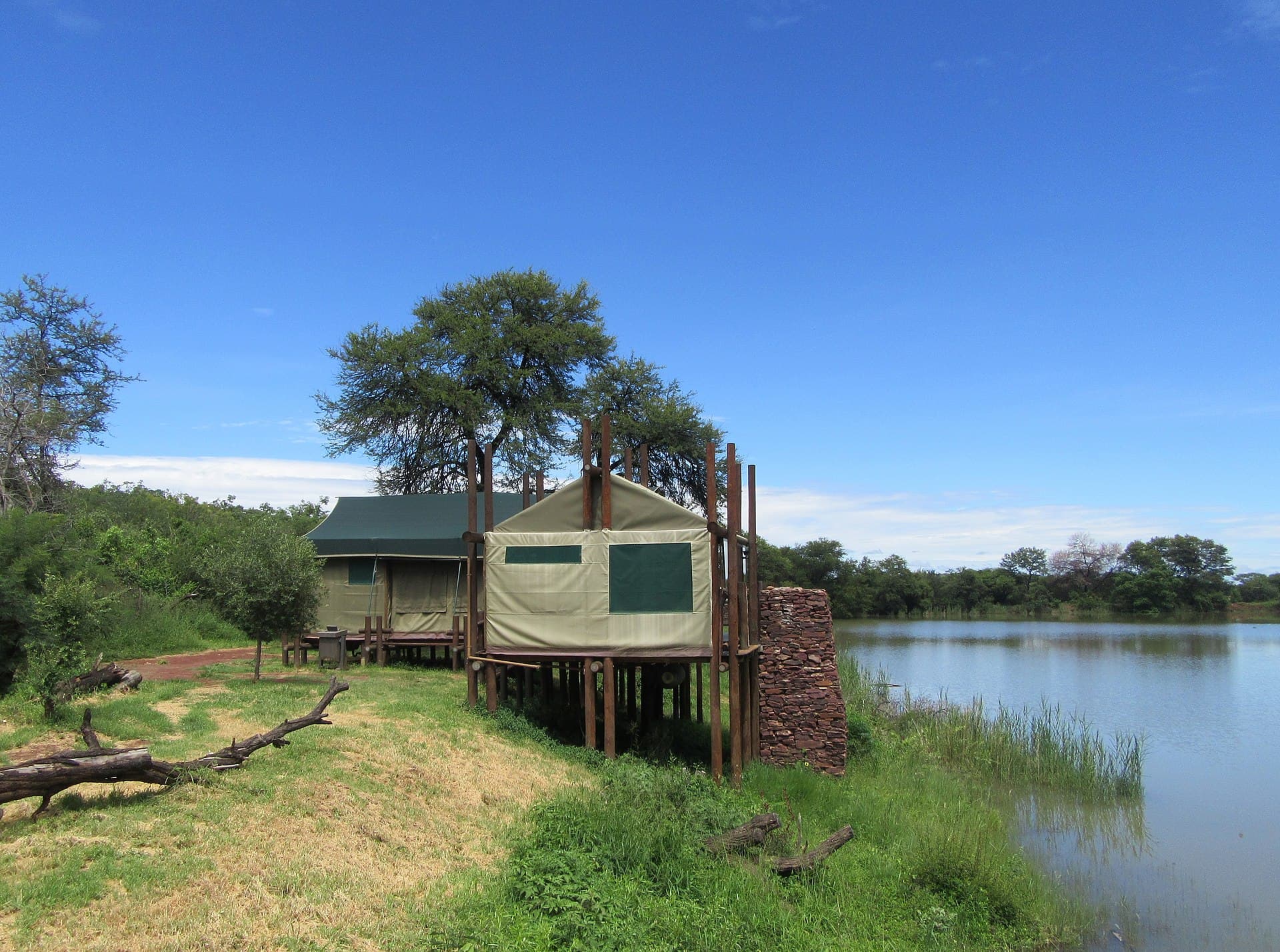
A canvas safari tent set among trees at a private tented campPremium

Central Kalahari · northern reserve

Fossil-Valley Tented Camp · Central Kalahari

Tented camp

In the northern Central Kalahari, tented camps look over the fossil river valleys and pans that fill with springbok, gemsbok and wildebeest after good summer rains. Camps are few in a reserve of about 52,800 km², so days often pass without another vehicle, and nights bring a dense sky of stars and the calls of jackals and lions.

  • Tents facing a pan or fossil valley
  • Game drives through the northern valleys
  • Walks with San guides at some
  • At its best after good rains, typically December–April

Ideal for: Travelers who want solitude and the Kalahari’s desert-adapted wildlife
Luxury

Central Kalahari · Deception Valley area

Kalahari Luxury Desert Lodge

Desert lodge

Close to Deception Valley, desert lodges of this kind combine suites of thatch, canvas or glass with plunge pools and long views over the grassland. The valley, well known for research on brown hyenas, draws herds and predators after the rains, while in the dry months the appeal lies in the silence, the San-guided walks and the sheer scale of the land.

  • Suites with plunge pools
  • Game drives in Deception Valley and nearby pans
  • San-guided nature walks
  • Stargazing from the deck

Ideal for: Couples who want the Kalahari’s quiet and space with a lodge’s comforts

Experiences

Experiences

On foot

Walking Safaris in Botswana

Follow a qualified walking guide across Delta islands, Linyanti floodplains or Kalahari sand, and read the bush from ground level.

Culture

San Cultural Walks in the Kalahari

Walk with San guides in the Kalahari as they share tracking, plant knowledge and fire-making skills handed down through many generations.

Safaris

Safaris That Go Here

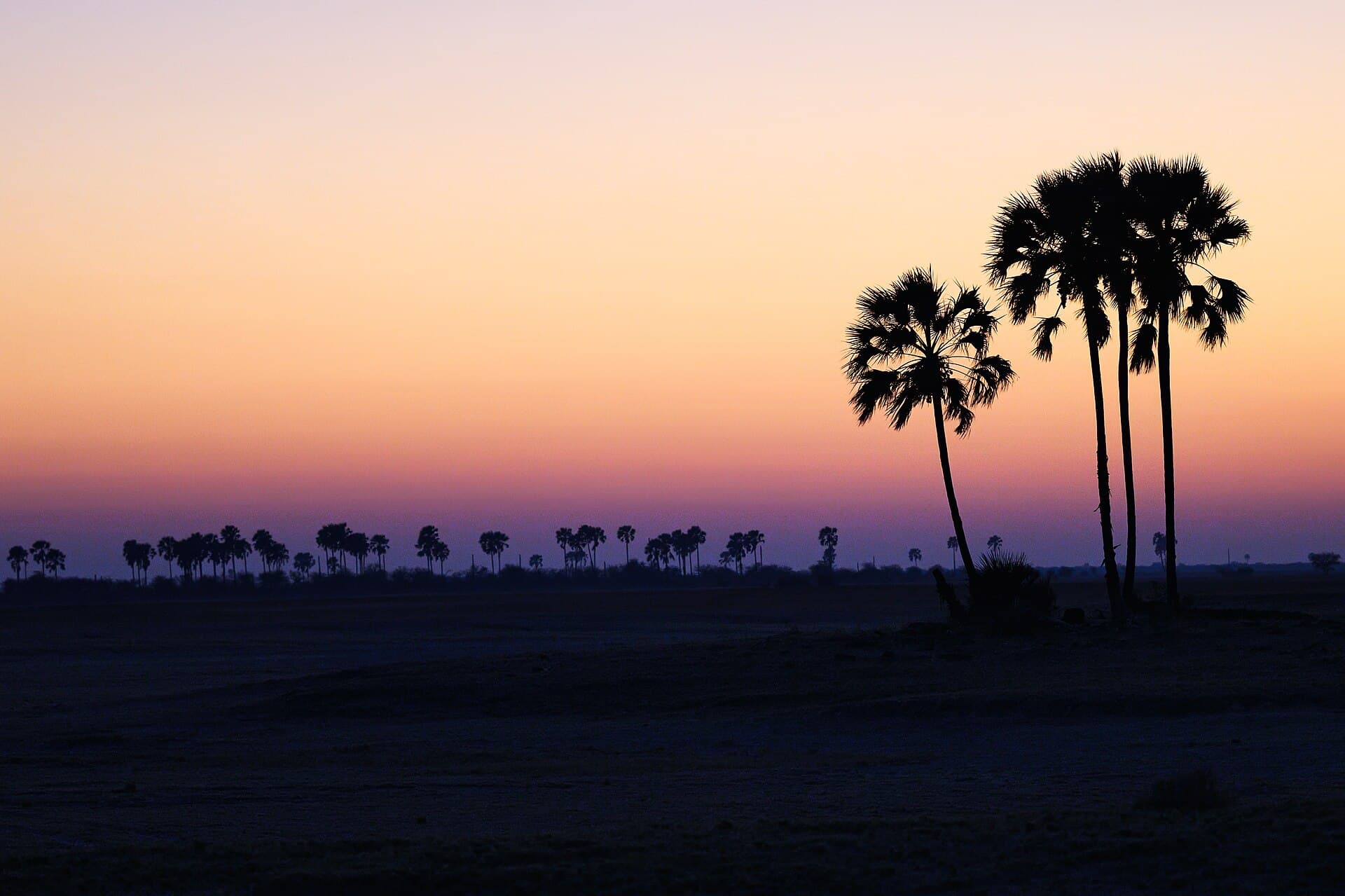
Palm islands silhouetted at dusk on the Makgadikgadi pans
9 daysDec–Apr

Green Season: Kalahari & Pans

Maun · Makgadikgadi Pans · Nxai Pan · Central Kalahari · Okavango Delta

Return visitors, photographers and the Kalahari-curious, happy to trade some certainty for solitude

Best months
December–April, in the rains
Comfort levels
Premium · Luxury
Individually quoted

Good to know

Frequently asked questions

Is the Central Kalahari worth visiting in the dry season?

It depends on what you want. From about May to November game is sparse and scattered, so it is not the place for a first safari focused on animals. If you value silence, stars, walking and smaller Kalahari species, a dry-season stay can still be memorable.

Do San people still live in the Central Kalahari Game Reserve?

A small number do. Many residents were relocated to settlements outside the reserve between 1997 and 2005, and after a 2006 court ruling found the removals unlawful, some families returned. The situation remains sensitive, which is one reason to choose cultural experiences with care.

How remote is the Central Kalahari?

Very. The reserve is larger than Switzerland but has only a handful of lodges and scattered campsites, with no shops, fuel or drinking water inside. Fly-in guests are well looked after, but anyone travelling by road needs to be completely self-sufficient.

Are there lions in the Central Kalahari?

Yes. The reserve is known for Kalahari lions, many with dark manes, which follow the herds across the pans after good rains. They range over huge territories, so sightings are less frequent than in the Delta, but often more memorable.

Can you combine the Central Kalahari with the Okavango Delta?

Yes, and it works well, because both are reached by light aircraft from Maun. A common plan is three nights in the Kalahari after the rains followed by a few nights in the Delta, often with the Makgadikgadi as well. The contrast between desert and water is much of the appeal.

Wetland channels of Moremi Game Reserve

Tell Us Your Month

Share when you can travel, who is coming and what you most hope to see in Botswana. A specialist will shape a private route around it and walk you through every choice before anything is booked.

Plan my safari here