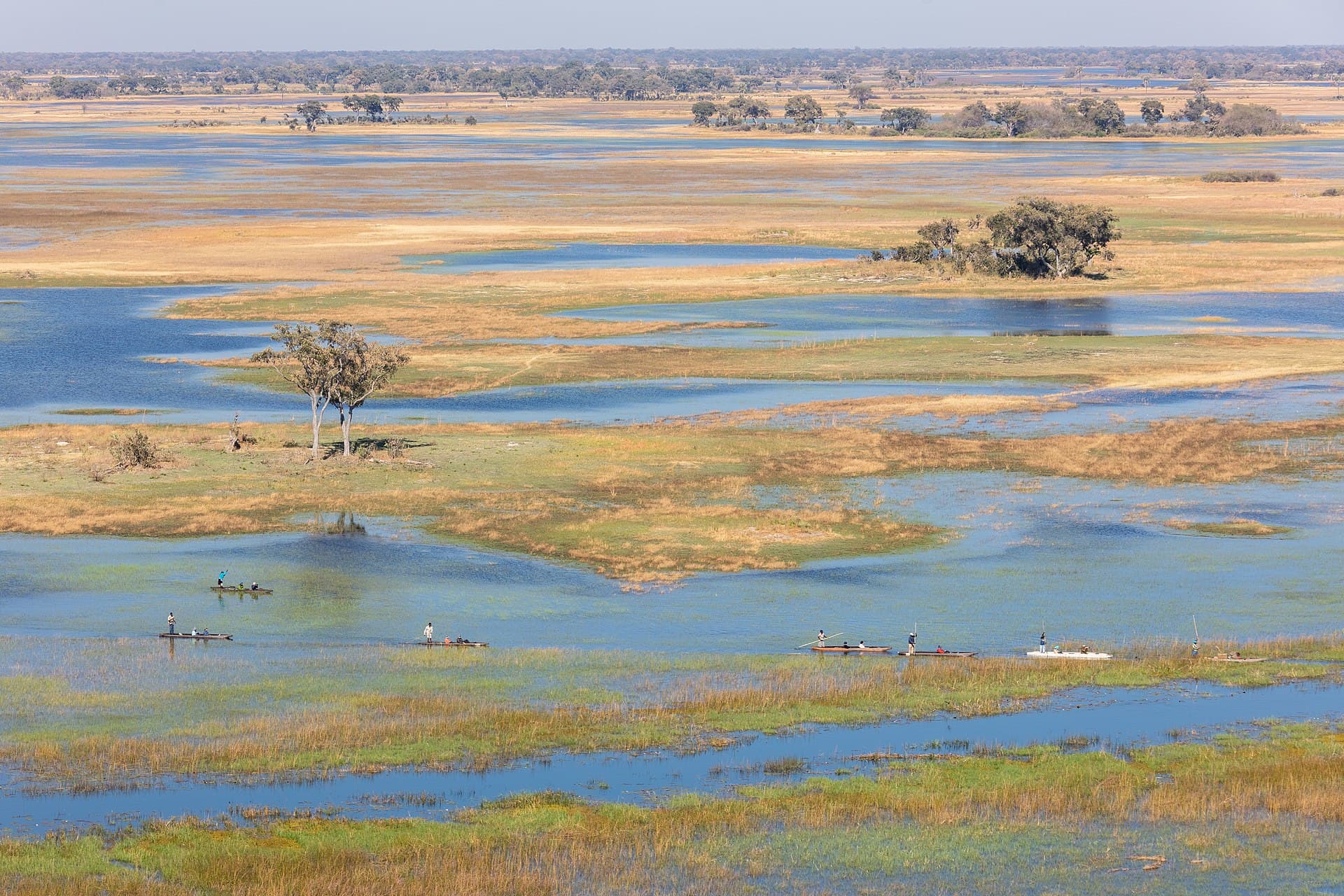
Aerial view over the winding channels and islands of the Okavango Delta

Destination guide

Okavango Delta Safaris

A river that never reaches the sea spreads into the Kalahari each winter, turning roughly 15,000–22,000 km² of islands, channels and floodplains into a wilderness you explore by mokoro, boat, vehicle and on foot.

SizeRoughly 15,000–22,000 km², depending on the year’s flood
StatusUNESCO World Heritage Site since 2014; about 40% lies inside Moremi Game Reserve
Best timeJune–October for high water and concentrated game; December–March for green-season birding
Recommended stay3 nights per camp; 6 nights across a water camp and a land camp
AccessScheduled flight to Maun, then about 20–45 minutes by light aircraft
Known forMokoro channels, red lechwe, wild dog and a flood that arrives in the dry season

Okavango Delta

Why Visit

An Okavango Delta safari is unlike a safari anywhere else in Africa, because the landscape itself moves. The Okavango River rises in the Angolan highlands, crosses a sliver of Namibia and enters Botswana at Mohembo, then fans out across the Kalahari sands, where its water evaporates, feeds the vegetation or sinks away instead of reaching the sea. The result is Africa’s largest inland delta — roughly 15,000 km² in a dry year and 22,000 km² in a wet one — and, since 2014, the 1,000th site inscribed on UNESCO’s World Heritage List.

The Delta’s great paradox is its timing. The rain that feeds it falls in Angola around January and February, then takes months to push down the Panhandle and across a fan so flat that its surface varies by only a couple of metres. The flood peaks roughly June–August, in the middle of Botswana’s dry winter, so fresh water spreads just as the rest of the country dries out and wildlife is drawn in from the surrounding bush. The best time to visit Botswana guide maps that calendar month by month.

The other thing to understand is who manages the land. About 40% of the World Heritage property lies inside Moremi Game Reserve, where national rules apply: no night drives, no off-road driving. Most of the rest is divided into 18 Wildlife Management Areas and controlled areas, run by private concession holders or community trusts, where small camps can offer night drives, guided walks and off-road tracking with very few other vehicles. Choosing your camp type and your land type is the single biggest decision of an Okavango trip, and the comparison below is built to help.

Best for

  • Water safaris by mokoro and boat, in a setting found nowhere else
  • Travelers who value privacy, small camps and very few vehicles
  • Predators, including wild dog, in the private concessions
  • Photographers after aerial views and low-angle water scenes
  • Honeymooners and repeat safari travelers

Okavango Delta

Wildlife & Highlights

  • Red lechwe bounding through the shallow floodplains
  • Sitatunga in the papyrus beds of the permanent swamps — shy and seldom seen
  • Elephant herds wading between islands, sometimes chest-deep
  • Lion prides that are known to swim channels between islands
  • Leopard in the riverine woodland of the larger islands
  • After dark in the private concessions: aardvark, civet and leopard on the hunt
  • African wild dog, most often in the northern private concessions
  • Hippo pods and Nile crocodile in the deeper channels and lagoons
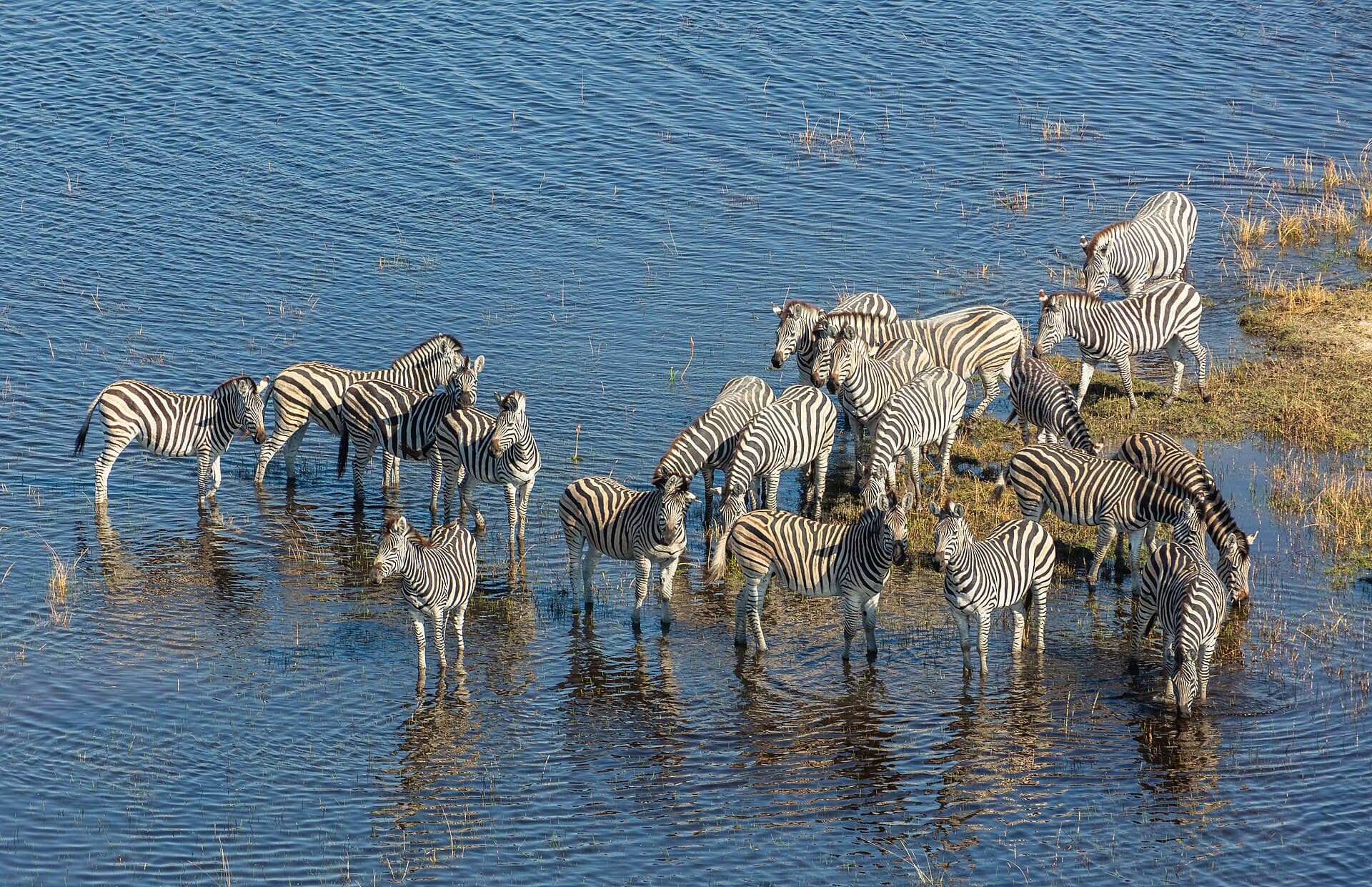
  • Buffalo, giraffe, zebra and tsessebe on the drier islands
  • Pel’s fishing owl, wattled crane and slaty egret among some 480 recorded bird species
  • Rhino, reintroduced to parts of the Delta and closely protected

Season

Best Time to Visit

  1. January
  2. February
  3. March
  4. April
  5. May
  6. June
  7. July
  8. August
  9. September
  10. October
  11. November
  12. December
December–MarchMost of the Delta’s local rain, around 450 mm a year, falls now, and the islands turn green. Seasonal floodplains are usually at their lowest before the new flood arrives, game spreads out, antelope drop their young and migrant birds fill the reeds. Hot and humid, with afternoon storms and the quietest camps of the year.
April–MayThe new flood pushes down the Panhandle into the upper Delta and starts creeping across the fan. The bush is still lush, nights begin to cool and many camps move onto shoulder-season rates. Water activities open up week by week as channels fill.
June–AugustPeak flood in Botswana’s dry winter: floodplains brim, mokoro routes open and animals crowd onto the islands. Days are clear and mild, but dawn in an open vehicle can be close to freezing, so pack proper layers. The busiest and most sought-after months, when the best camps book up well ahead.
September–NovemberThe water slowly retreats while the heat builds toward October, the hottest month. Game gathers around the remaining channels and pools, which makes for some of the year’s most intense viewing, and the first storms usually break in November. Flood levels vary by year, so we check current reports before confirming water activities.

Okavango Delta

Areas to Know

Water camps · the permanent swamps

Deep in the central and northern Delta, papyrus-lined channels and lagoons hold water all year, and some camps here are reached by boat from their airstrip. Days revolve around mokoro excursions, motorboat trips along the main channels and walks on palm islands; game drives are limited or not offered at all. Big game is thinner than on the drier islands, but the birding is superb and this is sitatunga and Pel’s fishing owl country. Best in any month; ideal for travelers who value the setting and the silence over a long species list.

Best for: Year-round water activities, birders and a slower rhythm

Land camps · seasonal floodplains and dry islands

On the Delta’s drier edges — large islands, mopane woodland and grass floodplains that flood only in a good year — camps are built around game drives. This is where most of the predators and plains game live, and where private concessions add night drives, walking and off-road tracking. Water activities depend entirely on the flood: from about June to September a land camp may pole mokoro on a nearby floodplain, and outside that window it may offer none at all. Best June–October; ideal if lion, leopard and wild dog top your list.

Best for: Predators, plains game and plenty of time in a vehicle

Mixed camps · land and water

Mixed camps sit where permanent water meets dry ground, so they can run game drives and a mokoro or boat outing from the same base in most months. They are the natural choice if you only have time for one Delta camp, and families often prefer them because the day can switch between vehicle and water. The trade-off is that they rarely go as deep into either experience as a dedicated water camp or land camp. Good in every season; ideal for first-time visitors.

Best for: One-camp Delta stays, families and first-time visitors

Private concessions, community areas and Moremi

Beyond the water-or-land question, check who manages the ground. Private concessions, leased from the government, cap the number of beds and usually allow night drives, walks and off-road driving to stay with predators. Community areas such as Khwai allow many of the same activities, with more vehicles and income flowing to a village trust. Inside Moremi you stay on the tracks and return by dark, but you are in the Delta’s oldest and best-known reserve.

Best for: Deciding which activities matter most to you

The Panhandle

Before it fans out, the river runs for about 80 km from Mohembo on the Namibian border, confined between two parallel faults into a papyrus-fringed corridor. Hambukushu, Bayei and other communities live along its banks, and the Panhandle is best known for fishing, birding and a small number of riverside lodges reached by road. It is a rewarding add-on for anglers and birders, and the natural jumping-off point for the Tsodilo Hills rock-art site to the west.

Best for: Fishing, birding and road-accessible river scenery

Okavango Delta

Getting There

Almost every Delta journey starts in Maun, reached by scheduled flights from Johannesburg in about 1.75–2 hours, and less often from Cape Town or Victoria Falls. From Maun, light aircraft fly you to your camp’s own airstrip in roughly 20–45 minutes, where a camp vehicle or boat meets the plane. Those small aircraft limit you to about 20 kg per person in soft bags, hand luggage and camera gear included; the flying to Botswana guide covers bag dimensions and what to pack.

Drive or fly?

For the inner Delta there is no real choice. UNESCO notes that tourism there is limited to small, temporary tented camps reached by air, and channels cut every would-be road. The flights are part of the appeal: at low altitude you watch elephant paths thread between islands and the flood’s silver fingers spread through the grass. Driving only works on the eastern side, where sand roads from Maun reach Moremi and Khwai, which is how a private mobile safari travels. For the aerial view at leisure, book a doors-off helicopter flight over the Delta.

Airstrips & airports

  • Maun International Airport (MUB), the gateway
  • Private camp airstrips across the concessions
  • Xakanaxa and Chief’s Island (Moremi)
  • Khwai River (north-eastern edge)

Typical travel times

Johannesburg to Maun
About 1.75–2 hours by scheduled flight
Maun to a Delta camp airstrip
About 20–45 minutes by light aircraft
Maun to Moremi South Gate
About 2–3 hours by road
Maun to Linyanti, Selinda or Kwando
About 40–70 minutes by light aircraft

Stays

Where to Stay

Delta camps are small, unfenced and almost always tented, from characterful community-concession camps to design-led lodges on exclusive private concessions, many hosting no more than about twenty guests. The more useful choice is between water, land and mixed camps, which shape what you do each day far more than the thread count does. Most travelers combine two: three nights at a water camp for the mokoro and the quiet, then three at a land or mixed camp for predators. Rates are usually all-inclusive, typically covering meals, most drinks, laundry and two guided activities a day, while park or concession fees and light-aircraft transfers may be listed separately, so we confirm what each rate includes. We match specific camps to your month and to the year’s water levels.

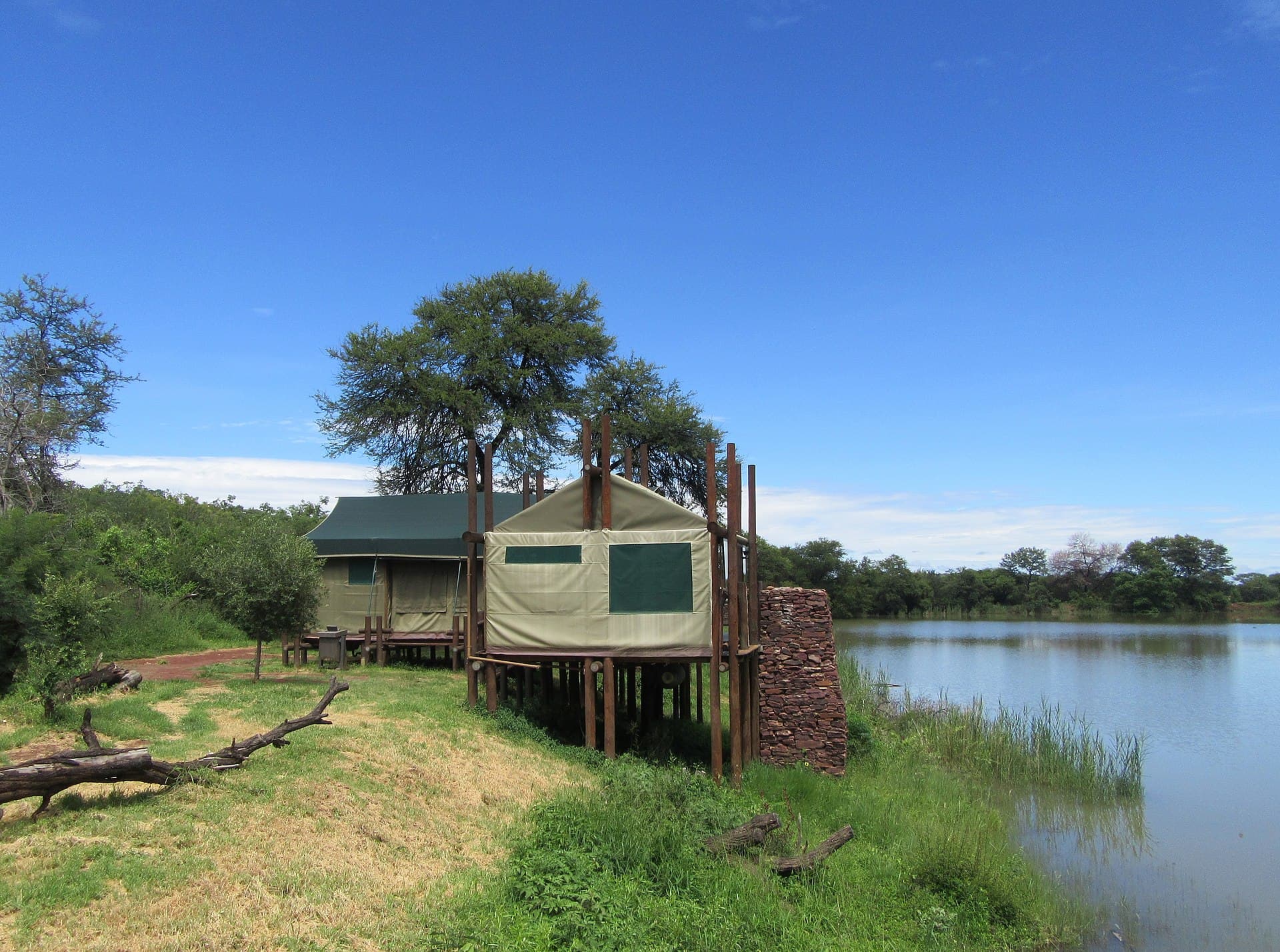
A canvas safari tent set among trees at a private tented campComfort

Okavango Delta · community concession

Community-Concession Delta Camp

Tented camp

Comfort-level Delta camps usually sit in community-run concessions toward the southern and eastern fringes of the Delta, closer to Maun, so the bush flight is short. The focus is the water: mokoro trips with polers from nearby villages, island walks and quiet evenings by the fire, with fewer frills than the private-concession camps further in.

  • Simple en-suite tents or chalets
  • Mokoro trips with polers from local communities
  • Guided island walks
  • Short flights from Maun

Ideal for: Families and first-time Delta visitors who want mokoro and island walks at a lighter price level
A canvas safari tent set among trees at a private tented campPremium

Okavango Delta · permanent channels

Papyrus-Channel Water Camp

Tented camp

Water camps stand on islands along the Delta’s permanent channels, where the water stays deep enough for boats all year and there are few roads or none. Days pass in a mokoro or motorboat among papyrus, lily pads and reed frogs, with walks on nearby islands; game drives are limited or absent, and that is exactly the point.

  • Mokoro and motorboat outings in every season
  • Island walks with your guide
  • Tents raised on decks above the water’s edge
  • Birding for fish eagles, kingfishers and herons

Ideal for: Travelers who want the Okavango’s water world at its purest

A canvas safari tent set among trees at a private tented campPremium

Okavango Delta · private concession, land & water

Land-and-Water Delta Camp

Tented camp

Mixed camps sit where dry land meets permanent water, so each day you can choose between a game drive and a mokoro or boat trip, and often do both. On a private concession they also run night drives and walks, which makes this the most versatile style in the Delta and a sound choice for a first visit or a family.

  • Game drives and water activities from one camp
  • Night drives and walks on the concession
  • Family tents at some
  • Activities that shift with the flood level

Ideal for: First-time visitors and families who want variety without changing camp

A canvas safari tent set among trees at a private tented campLuxury

Okavango Delta · central Delta islands

Palm-Island Luxury Water Camp

Tented camp

In the central Delta, luxury water camps are built on palm-shaded islands ringed by channels and floodplain, and are reached only by air. Suites open onto wide decks with plunge pools, and the rhythm is a mokoro at dawn, a long lunch and a boat out to a lagoon for sundowners as the reed frogs tune up.

  • Suites with plunge pools and outdoor showers
  • Mokoro and boat outings for your party alone
  • Island walks with a guide
  • Access by light aircraft only

Ideal for: Honeymooners and couples who want the Delta’s water world with real comfort

A canvas safari tent set among trees at a private tented campLuxury

Okavango Delta · northern private concessions

Northern-Concession Luxury Camp

Tented camp

The northern Delta’s private concessions, where permanent water meets drier mopane country, are known for strong predator viewing, and each is shared by only a few small camps. Guides can leave the track to follow a hunting pack where the concession permits, run night drives and walks, and switch to the water in the flood months, while many camps welcome families with dedicated family tents.

  • Off-road driving where the concession permits
  • Night drives and guided walks
  • Seasonal mokoro and boat trips
  • Family tents and private vehicles at many

Ideal for: Photographers, families with older children and anyone who wants the full range of Delta activities

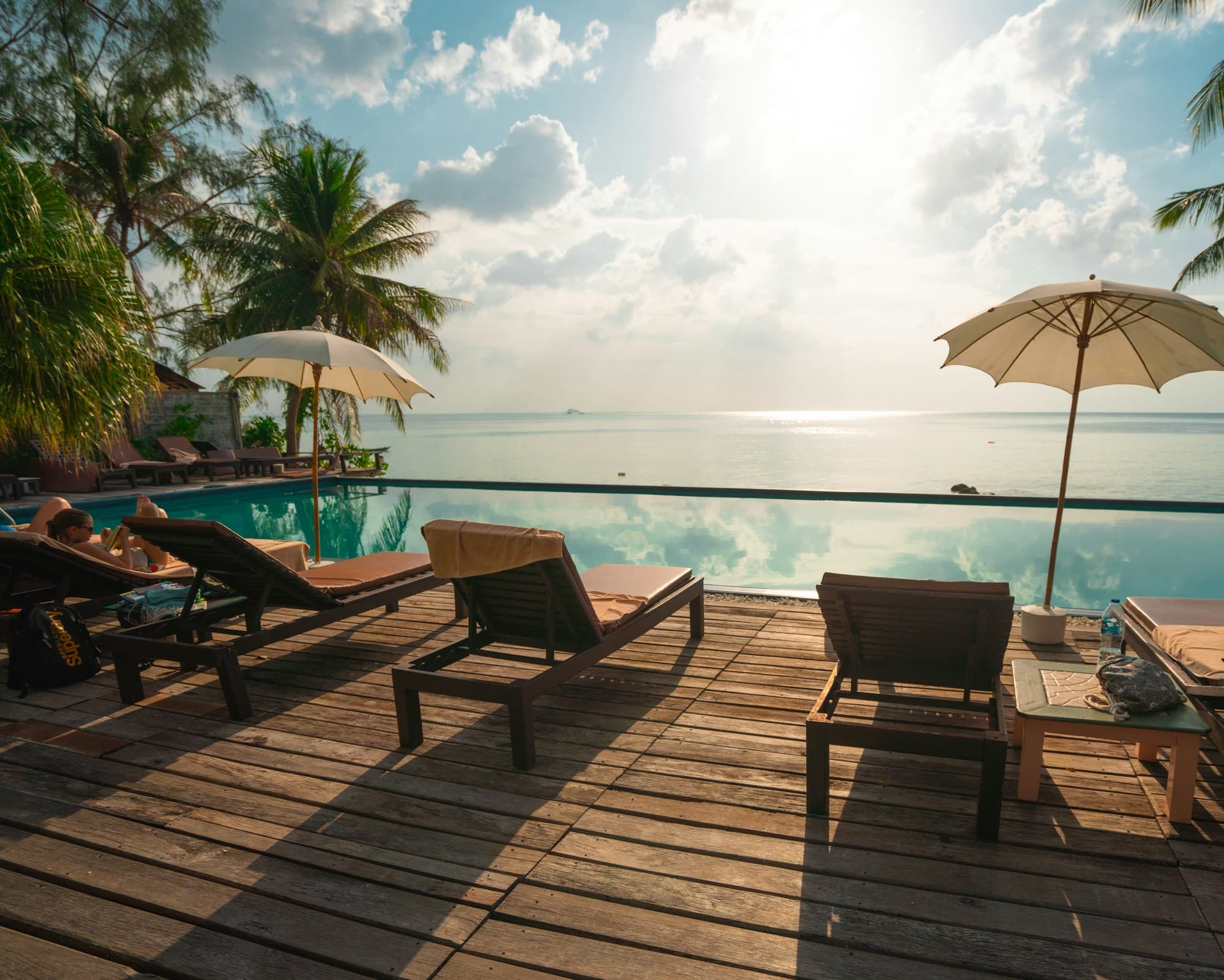
Luxury lodge deck with loungers and umbrellas at golden hourUltra-Luxury

Okavango Delta · private concession

Exclusive Floodplain Water Lodge

Lodge

At the very top of the Delta’s range, a few lodges on private concessions pair contemporary architecture with a front-row view of the floodplain: glass-fronted suites, a private pool on every deck and enough staff to plan each day around you. Boats, mokoros and drives run by season and water level, and some can arrange helicopter flights from their own landing pad.

  • Suites with private plunge pools
  • Private guide and vehicle at many
  • Water and land activities by season
  • Spa, wine cellar and personal host at some

Ideal for: Honeymooners and travelers who want the most refined stay the Delta offers

Experiences

Experiences

Aerial view over the winding channels and islands of the Okavango Delta

On the water

Mokoro Excursions

Glide through the Okavango’s papyrus channels in a poled canoe, low enough to meet reed frogs and lily-trotters at eye level.

Aerial view over the winding channels and islands of the Okavango Delta

In the air

Helicopter & Scenic Flights over the Delta

See the Okavango’s channels, islands and wading herds from the air, on a doors-off helicopter flight or a fixed-wing scenic flight from Maun.

On foot

Walking Safaris in Botswana

Follow a qualified walking guide across Delta islands, Linyanti floodplains or Kalahari sand, and read the bush from ground level.

On horseback

Horseback Safaris

Ride among zebra, giraffe and lechwe on horses schooled for big-game country, splashing across Delta floodplains or cantering over the Kalahari pans.

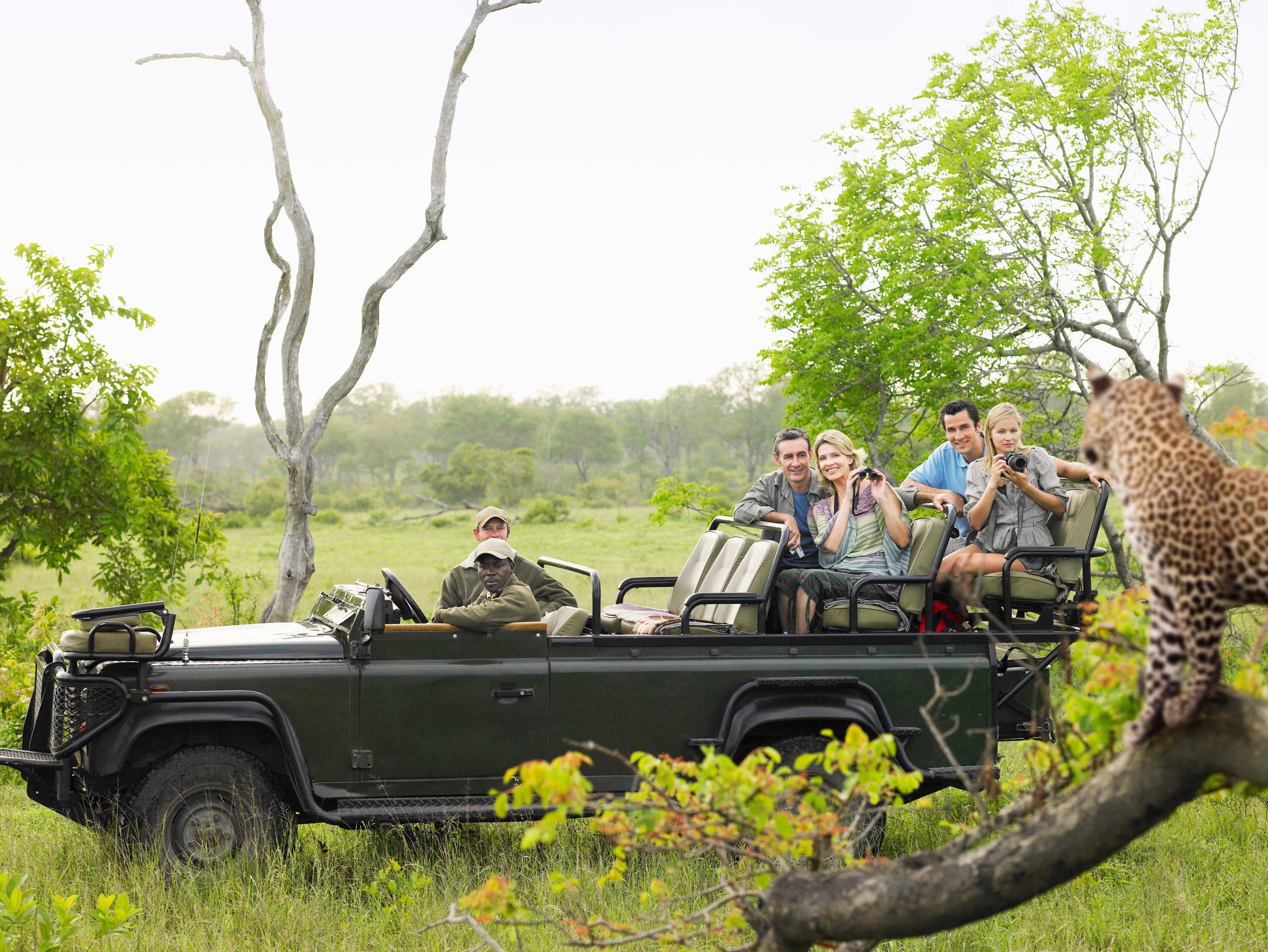
Safari guests in an open vehicle watching a leopard at close range on a private game drive

Photography

Photographic Safaris in Botswana

Private vehicles set up for cameras, low-angle boats on the Chobe, ground-level hides and concession rules that let you position for the light.

Safaris

Safaris That Go Here

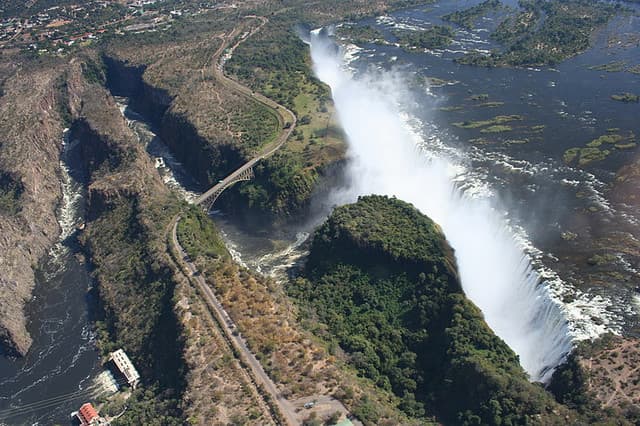
Aerial view of Victoria Falls plunging into the gorge
11 daysFalls + Delta

Botswana & Victoria Falls

Victoria Falls · Kasane · Chobe Riverfront · Khwai · Okavango Delta · Maun

First-time visitors who want Victoria Falls and Botswana’s finest water country in one trip, without rushing either

Best months
April–October, ideally May–July
Comfort levels
Comfort · Premium · Luxury
Individually quoted
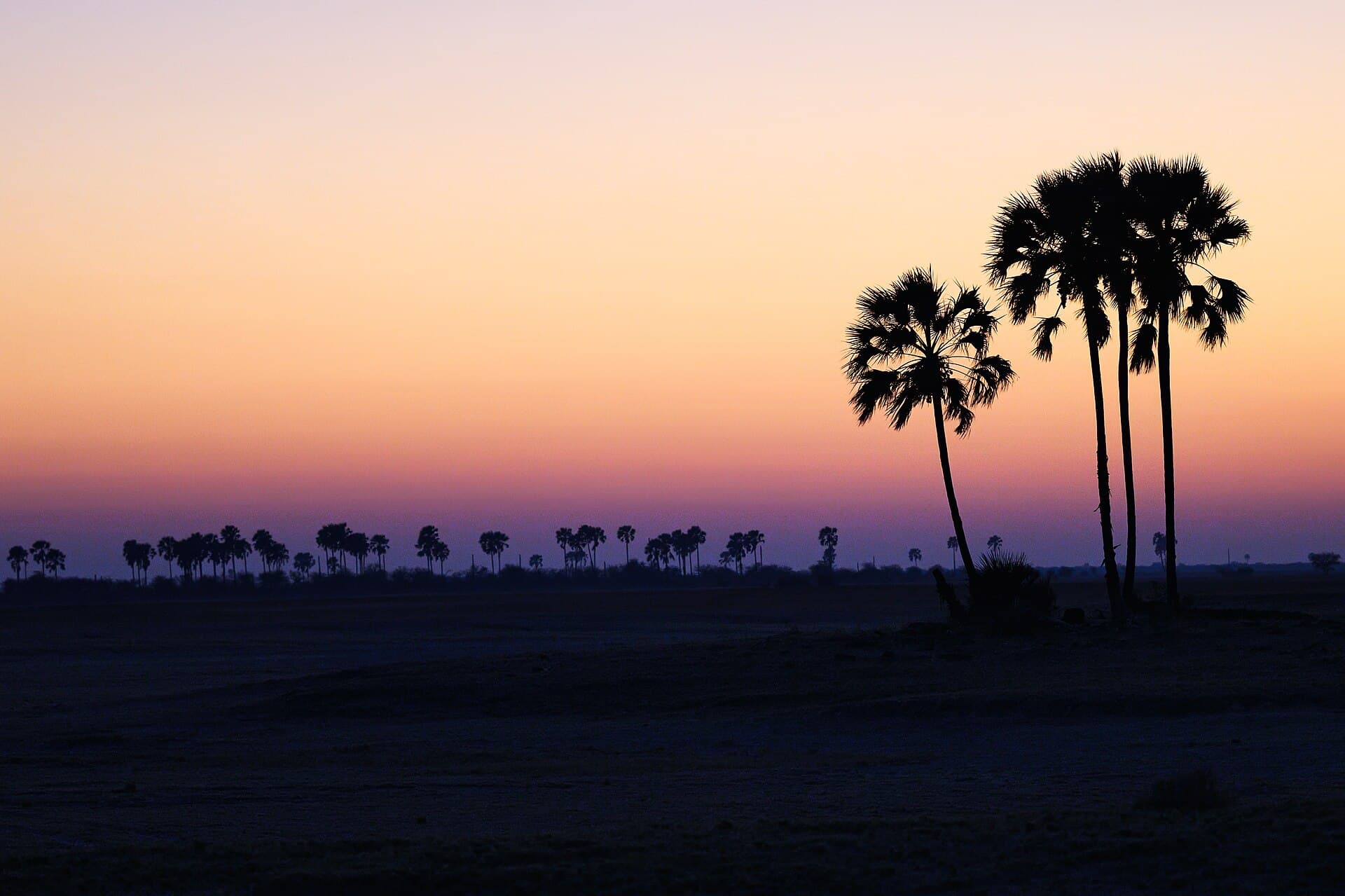
Palm islands silhouetted at dusk on the Makgadikgadi pans
9 daysDec–Apr

Green Season: Kalahari & Pans

Maun · Makgadikgadi Pans · Nxai Pan · Central Kalahari · Okavango Delta

Return visitors, photographers and the Kalahari-curious, happy to trade some certainty for solitude

Best months
December–April, in the rains
Comfort levels
Premium · Luxury
Individually quoted
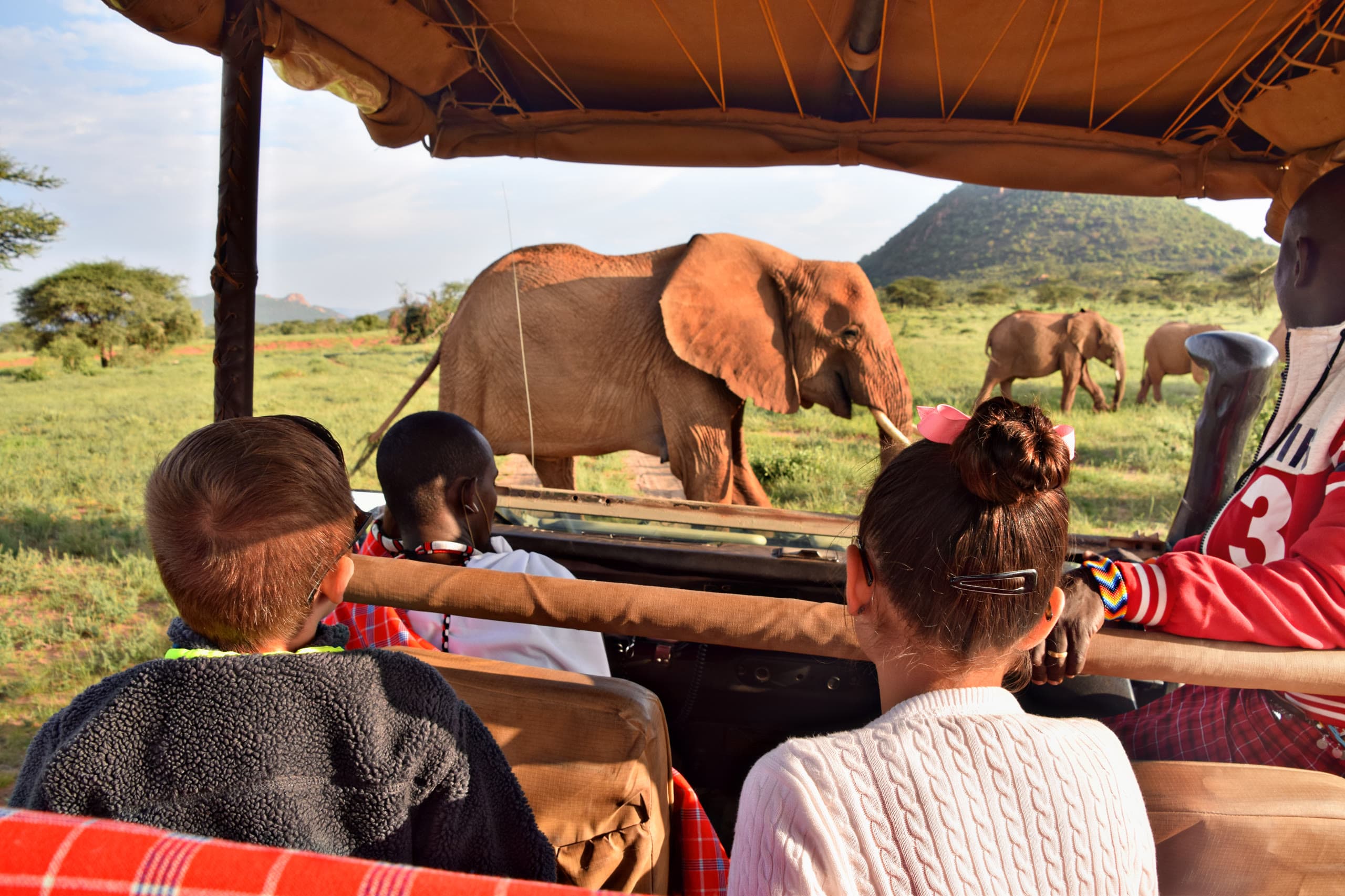
Safari guests watching a herd of elephants from an open vehicle on a family game drive
9 daysFamilies with teens

Botswana Family Adventure

Kasane · Chobe Riverfront · Okavango Delta · Makgadikgadi Pans · Maun

Families with children roughly 12 and older who want variety, activity and a little adrenaline

Best months
April–October (book school-holiday dates early)
Comfort levels
Comfort · Premium · Luxury
Individually quoted
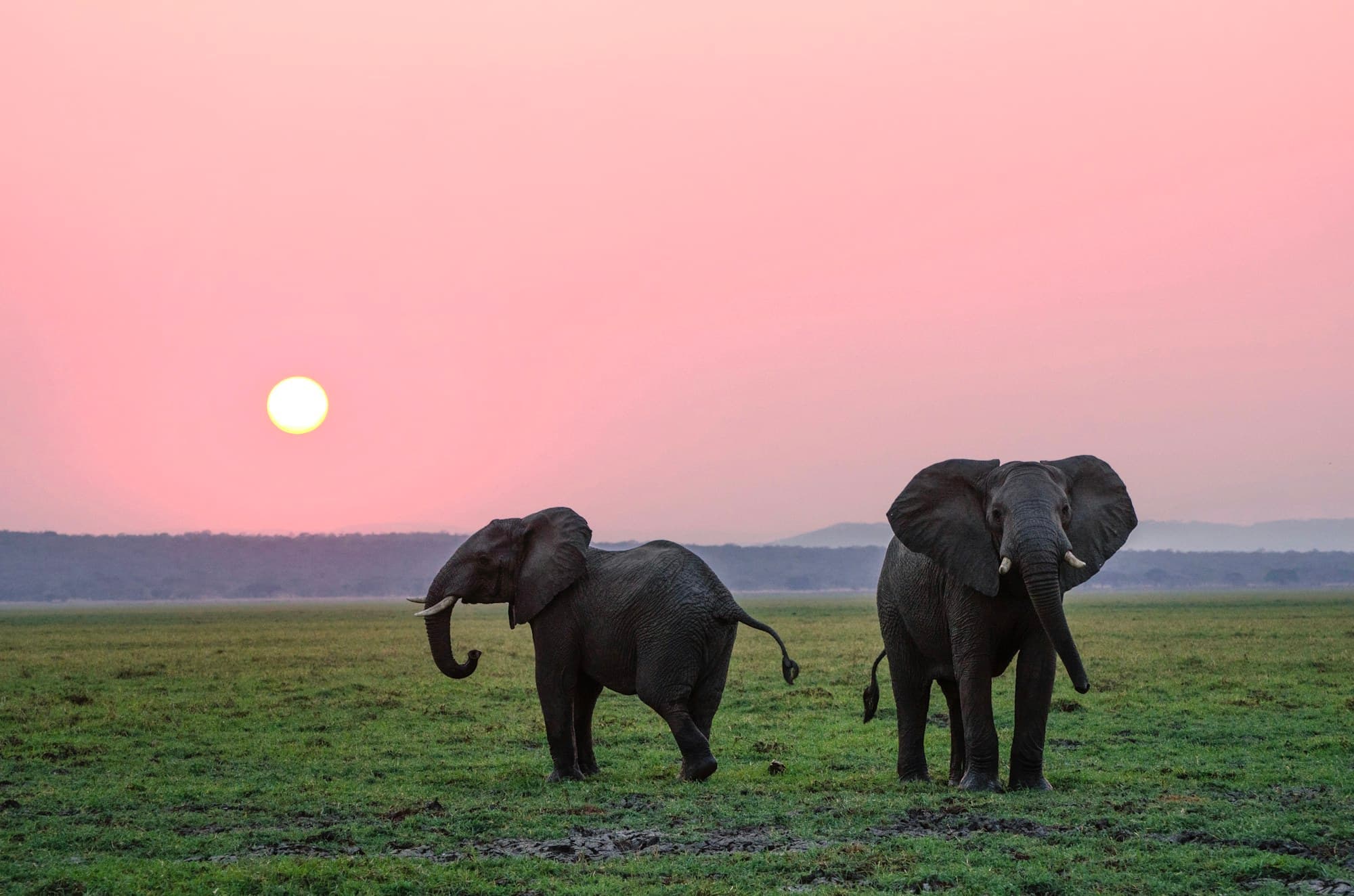
Two elephants together beneath a soft pink dusk sky
10 daysCouples

Botswana Honeymoon

Maun · Okavango Delta · Northern Delta concessions · Makgadikgadi Pans

Couples who want privacy, water and wilderness rather than a resort-style honeymoon

Best months
April–October
Comfort levels
Premium · Luxury · Ultra-Luxury
Individually quoted
Zebra herd wading through shallow delta water
14 daysIn-depth

Grand Botswana

Maun · Okavango Delta · Moremi Game Reserve · Linyanti, Selinda & Kwando · Savuti · Chobe Riverfront · Kasane

Returning safari travelers, photographers and anyone with two weeks to see northern Botswana properly

Best months
May–October
Comfort levels
Luxury · Ultra-Luxury
Individually quoted

Good to know

Frequently asked questions

Can you visit the Okavango Delta on a day trip from Maun?

You can get a taste of it. A scenic flight or helicopter trip from Maun shows you the Delta from above in an hour or so, and mokoro day trips run on the Delta’s southern fringe. Staying inside the Delta is a different experience altogether: remote channels, predators at night and no road traffic, which is why we recommend at least three nights in a camp.

Should I choose a water camp or a land camp in the Okavango?

If you can, choose both. A water camp gives you mokoro and boat trips in permanent channels in every month, while a land camp gives you the best predator viewing and, in a private concession, night drives. With time for only one, a mixed camp that offers both is the safest choice.

How many nights do I need in the Okavango Delta?

Three nights per camp is the practical minimum, because each move means a flight and a new area to learn. Five or six nights split between two contrasting camps is ideal. Many travelers then add Linyanti, Chobe or the Makgadikgadi for a different landscape, often finishing at Victoria Falls via Kasane.

What is a private concession in the Okavango Delta?

It is an area of the Delta leased by the government to a tourism operator or community trust, usually with a small number of camps. Because the leaseholder sets the rules within national guidelines, most concessions allow night drives, guided walks and off-road driving to follow predators. Vehicle numbers are far lower than in public reserves.

Does the Okavango Delta have water all year?

The permanent swamps in the central and northern Delta hold water all year, so water camps there run boat and mokoro trips in every month. The seasonal floodplains around them fill only when the flood arrives, roughly from May or June, and dry out again from around September. How far the water spreads varies from year to year.

Wetland channels of Moremi Game Reserve

Tell Us Your Month

Share when you can travel, who is coming and what you most hope to see in Botswana. A specialist will shape a private route around it and walk you through every choice before anything is booked.

Plan my safari here