Destination guide

Swakopmund & Walvis Bay on a Namibia Safari

A cool, foggy seaside town between the dunes and the Atlantic: the place to slow down mid-trip, eat well and head out onto the lagoon, the sand and the sea.

ClimateAverage highs of about 18–23 °C all year; roughly 16 mm of rain annually
Best timeAny month; December–January is busiest with Namibian holidaymakers
Recommended stay1–2 nights; 2–3 with children or to fit in both main outings
AccessAbout 360 km from Windhoek on tar, or scheduled flights to Walvis Bay from Cape Town and Johannesburg
Known forSandwich Harbour, the Living Desert, flamingos, seafood and colonial-era buildings
Walvis BayAbout 35 km south: the port, a Ramsar-listed lagoon and the coast’s airport

Swakopmund & Walvis Bay

Why Visit

Swakopmund is where most Namibia road journeys meet the sea, and after days of heat and gravel the change is abrupt: cool air, grey mornings, a palm-lined promenade, bakeries and a town you can walk. Founded in 1892 as the port of German South West Africa, it is now a favorite holiday town for Namibians. Walvis Bay, about 35 km south along the coast road, is the working port, with the lagoon, the marine cruises and the coast’s airport. Together they make an easy one- or two-night pause between Sossusvlei and Damaraland.

The weather surprises almost everyone. The cold Benguela current keeps average daytime highs between about 18 and 23 °C in every month, and the town gets roughly 16 mm of rain a year. Fog is common, especially in the mornings, so pack a fleece and a windproof jacket even in January, while the desert just inland may be baking.

Two nights let you do one full outing and one easy one. A Sandwich Harbour and marine cruise day combines dolphins and seals in the bay with dunes plunging into the Atlantic, and the half-day Living Desert tour reveals the small creatures of the dune belt. The 9-Day Namibia Family Safari spends three nights here for exactly those reasons.

Best for

  • Families who want a mid-trip break with short, varied outings
  • Food lovers, for oysters and fresh fish
  • Birders, thanks to the Walvis Bay lagoon
  • Travelers flying out via Walvis Bay to Cape Town

Swakopmund & Walvis Bay

Wildlife & Highlights

  • Greater and lesser flamingos feeding in the Walvis Bay lagoon
  • Great white pelicans that follow the boats out of the harbor
  • Cape fur seals around Pelican Point, best watched from a distance
  • Heaviside’s and bottlenose dolphins on morning cruises
  • Whales on some cruises in season, never assured
  • Namaqua chameleon, Peringuey’s adder and other dune specialists on the Living Desert tour
  • Welwitschia plants, some thought to be many centuries old, on the gravel plains inland
  • Dunes meeting the Atlantic at Sandwich Harbour
  • Fresh oysters and fish from the cold, rich waters offshore

Season

Best Time to Visit

  1. January
  2. February
  3. March
  4. April
  5. May
  6. June
  7. July
  8. August
  9. September
  10. October
  11. November
  12. December
November–MarchSummer inland, but on the coast it means mild days, frequent morning fog and a steady afternoon breeze. December and January bring Namibian families on holiday, so book rooms and outings early.
April–OctoberClearer days are more common and nights are cold. In winter, hot east winds occasionally blow off the desert, bringing a day or two of warm, dusty weather that can feel strange after the fog.

Swakopmund & Walvis Bay

Areas to Know

Swakopmund old town & seafront

The center is compact and walkable: the jetty, the lighthouse, the promenade and streets of German colonial-era buildings, with cafés, bakeries and galleries in between. That architecture has a harder history behind it. Between 1904 and 1908, German colonial forces carried out the genocide of the Herero and Nama peoples, in which tens of thousands died; survivors were held in concentration camps, including at Swakopmund and on Shark Island at Lüderitz, where many more died. In May 2021 the German government acknowledged the killings as genocide and agreed a development-aid package with Namibia, an agreement many Herero and Nama representatives have criticized as falling short of reparations and for how it was negotiated. A knowledgeable local guide can add the context the facades leave out.

Best for: A walkable town, history and good food

Walvis Bay lagoon & Pelican Point

The lagoon at Walvis Bay is a Ramsar-listed wetland and a reliable place to see flamingos feeding in the shallows along the promenade. Marine cruises leave from the waterfront toward Pelican Point, a long sand spit with a lighthouse and a seal colony, and kayak trips paddle among the seals there. Seals in the region have been affected by rabies since 2024, and the CDC’s advice is not to get close to or touch them, even when an operator says it is safe. Walvis Bay itself was administered by South Africa until 1994, four years after Namibia’s independence.

Best for: Birding, cruises and an easy morning

Sandwich Harbour

South of Walvis Bay, inside the Namib-Naukluft, dunes run straight into the ocean around a lagoon listed as a Ramsar site in 1995. You reach it by 4x4 along the beach, and the tide decides when you can go and how long you can stay, so outings are timed to the tide tables and need a permit.

Best for: The coast’s signature landscape

The dune belt & Dorob National Park

Between Swakopmund and Walvis Bay, a narrow band of dunes runs along the coast inside Dorob National Park. It looks empty but supports geckos, chameleons, beetles and snakes adapted to live on fog, and vehicle tracks can scar the surface for years, which is why driving is restricted to set areas. Quad biking and sandboarding take place in designated zones.

Best for: Families and anyone curious about desert life

Moon Landscape & Welwitschia Plains

Inland from Swakopmund, the Swakop River has carved an eroded maze of hills known as the Moon Landscape, and beyond it the gravel plains hold scattered welwitschia, a plant that can live for many centuries and draws much of its moisture from fog. The drive runs into Namib-Naukluft and needs a park permit, so it works best as a guided half-day.

Best for: A half-day of desert botany and big views

Swakopmund & Walvis Bay

Getting There

Most travelers arrive by road as part of a guided circuit. From Windhoek it is about 360 km on the B2 tar road, roughly 4 hours; from Sossusvlei the route crosses the Gaub and Kuiseb passes to Walvis Bay, about 5–6 hours mostly on gravel. Walvis Bay’s airport has scheduled flights from Cape Town and Johannesburg, which makes an open-jaw trip easy: start in Windhoek and finish on the coast, or the reverse, without driving back. Light aircraft also connect the coast with Etosha and the desert lodges.

Drive or fly?

The road from the desert is part of the appeal: the roadside stop at Solitaire, the canyons of the Kuiseb and the first glimpse of the sea through the fog, with a private guide handling the long gravel stretches. Flying suits families who want to cut a long road day, as the family journey does from Etosha, and it is the obvious way out at the end, since scheduled flights from Walvis Bay to South Africa save a four-hour drive back to Windhoek.

Airstrips & airports

  • Walvis Bay Airport (WVB)
  • Swakopmund airfield (light aircraft and scenic flights)

Typical travel times

Windhoek (about 360 km)
About 4 hours on tar
Sesriem via Solitaire and the Kuiseb Pass
About 5–6 hours
Walvis Bay
About 30 minutes along the coast road
Twyfelfontein via Spitzkoppe
About 4.5–5 hours
Cape Cross Seal Reserve
About 1.5 hours

Stays

Where to Stay

Stays on the coast are town hotels rather than safari lodges. Comfortable guesthouses in Swakopmund’s quieter streets suit families and short stays, while boutique and heritage hotels on the seafront or in the old town put restaurants and the promenade on your doorstep. There is no true top-tier safari-style property here, so luxury itineraries use the best boutique addresses and save the splurge for the desert and Etosha.

Comfort

Swakopmund · Town

Seaside Town Guesthouse · Swakopmund

Boutique hotel

Family-run guesthouses of this style sit a short walk from the centre and the sea, with bright rooms, a proper breakfast and hosts full of restaurant tips. Swakopmund is compact and easy to explore on foot, so a simple, central base suits families who will spend their days out on the dunes and the water.

  • Walking distance to cafés and the beachfront
  • Family rooms at many
  • Generous breakfasts
  • Heating for cool, foggy evenings

Ideal for: Families who want a comfortable, well-located base between coastal excursions
Premium

Swakopmund · Seafront & old town

Jetty-Quarter Heritage Hotel · Swakopmund

Heritage hotel

Swakopmund’s heritage hotels occupy restored buildings from the German colonial period near the seafront and the old jetty, with high ceilings, period details and modern rooms behind the façades. Some rooms overlook the Atlantic, the town’s best restaurants are a short walk away, and larger rooms or suites suit families well.

  • Restored period building close to the sea
  • Ocean-view rooms at some
  • Family suites or interconnecting rooms
  • In-house restaurant and café

Ideal for: Couples and families who want character, comfort and a seafront location for two or three nights

Experiences

Experiences

Ocean & reef

Sandwich Harbour & Walvis Bay Marine Cruise

Cruise Walvis Bay for dolphins, pelicans and seals in the morning, then drive the shoreline at low tide to where towering dunes drop into the Atlantic.

Adventure

Living Desert Tour

A half-day 4x4 outing in the dunes outside Swakopmund, where a sharp-eyed guide finds chameleons, geckos, sidewinding adders and fog-drinking beetles.

Safaris

Safaris That Go Here

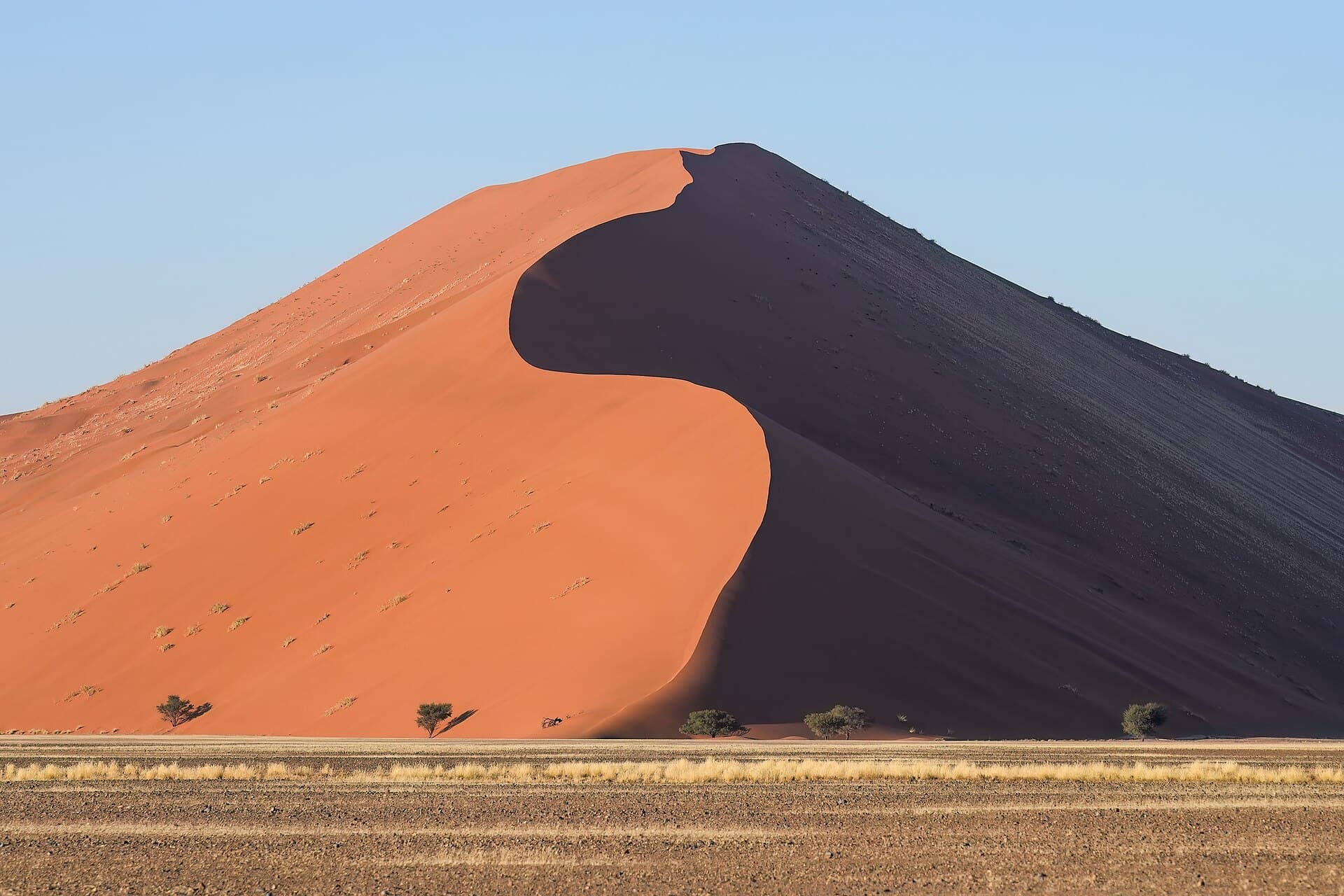
Red curve of Dune 45 at sunrise in Sossusvlei, Namibia
14 daysPrivate guide

Namibia Grand Loop

Windhoek · Sossusvlei · Swakopmund · Spitzkoppe · Damaraland · Etosha National Park · Eastern Etosha · Okonjima

First-time visitors to Namibia who want to see the whole country properly, with time to stop, walk and ask questions

Best months
April–November
Comfort levels
Comfort · Premium · Luxury
Individually quoted
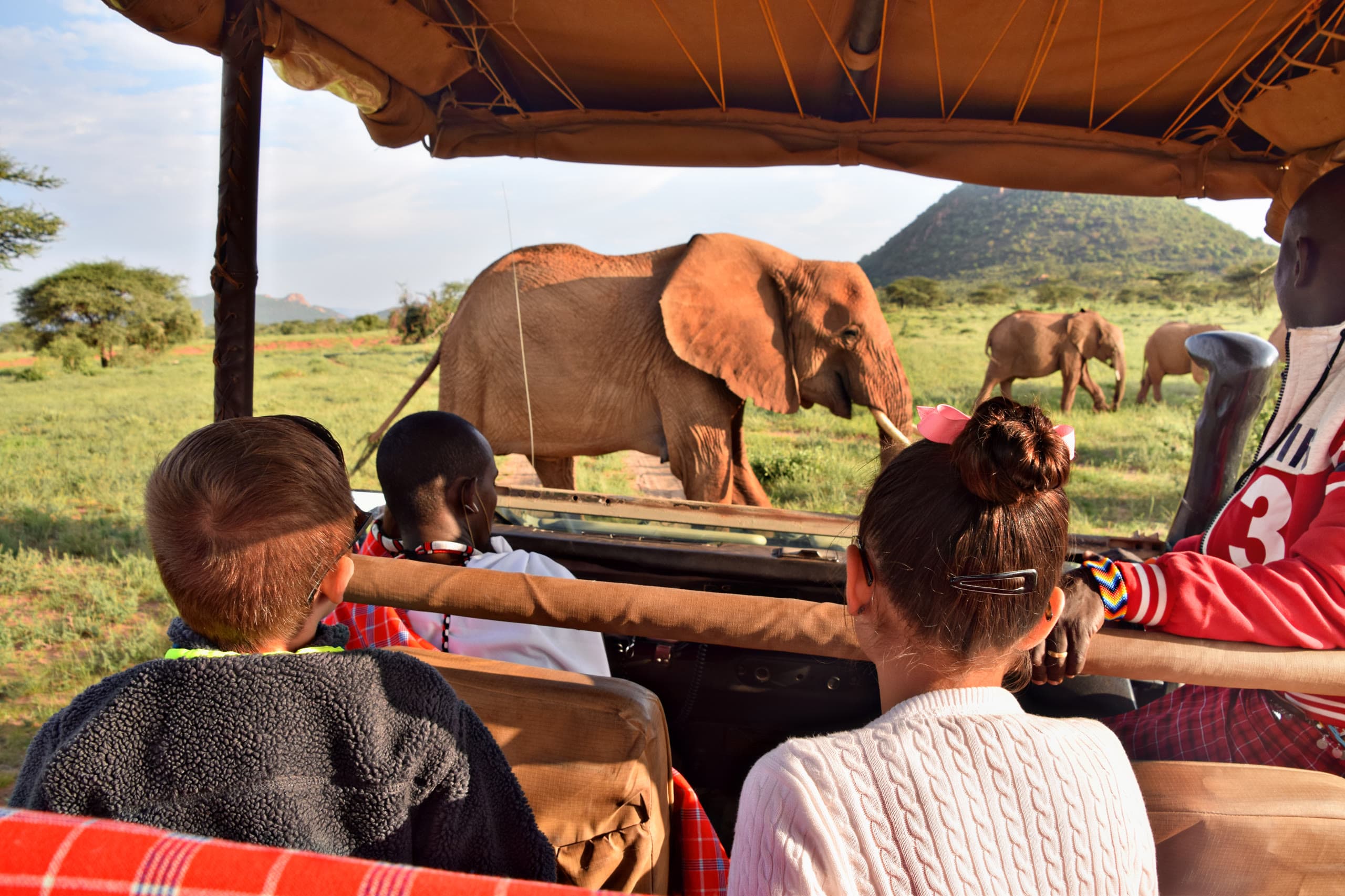
Safari guests watching a herd of elephants from an open vehicle on a family game drive
9 daysFamily

Namibia Family Adventure

Okonjima · Etosha National Park · Swakopmund · Walvis Bay

Families with school-age children who want real wildlife, short drives and plenty of variety

Best months
May–October, the dry winter months
Comfort levels
Comfort · Premium · Luxury
Individually quoted

Good to know

Frequently asked questions

Is Swakopmund worth including on a Namibia safari?

On most road journeys, yes. It breaks the long distances between Sossusvlei and Damaraland, has good restaurants and a relaxed seaside pace, and adds activities you can’t do inland. On a short fly-in trip focused on wildlife, it is the easiest stop to leave out.

How cold is Swakopmund?

Cooler than most visitors expect. Average daytime highs sit around 18–23 °C all year, mornings are often foggy, and evenings feel chilly in the sea breeze. Bring a warm layer and a windproof jacket in every season.

Should you stay in Swakopmund or Walvis Bay?

Swakopmund, for most travelers: it has more character, better streets to walk and a wider choice of places to stay. Walvis Bay suits an early marine cruise or an early flight, and the two towns are only about 30 minutes apart.

Can you fly out of Walvis Bay instead of Windhoek?

Yes. Walvis Bay airport has scheduled flights to Cape Town and Johannesburg, where you can connect to international departures. Finishing on the coast saves the drive back inland and suits trips that continue to Cape Town.

Why does Swakopmund look so German?

The town was founded in 1892 as the main port of the German colony, and many buildings from that period survive; German is still spoken by part of the community. The colonial period included the 1904–1908 genocide of the Herero and Nama, which Germany acknowledged in 2021.

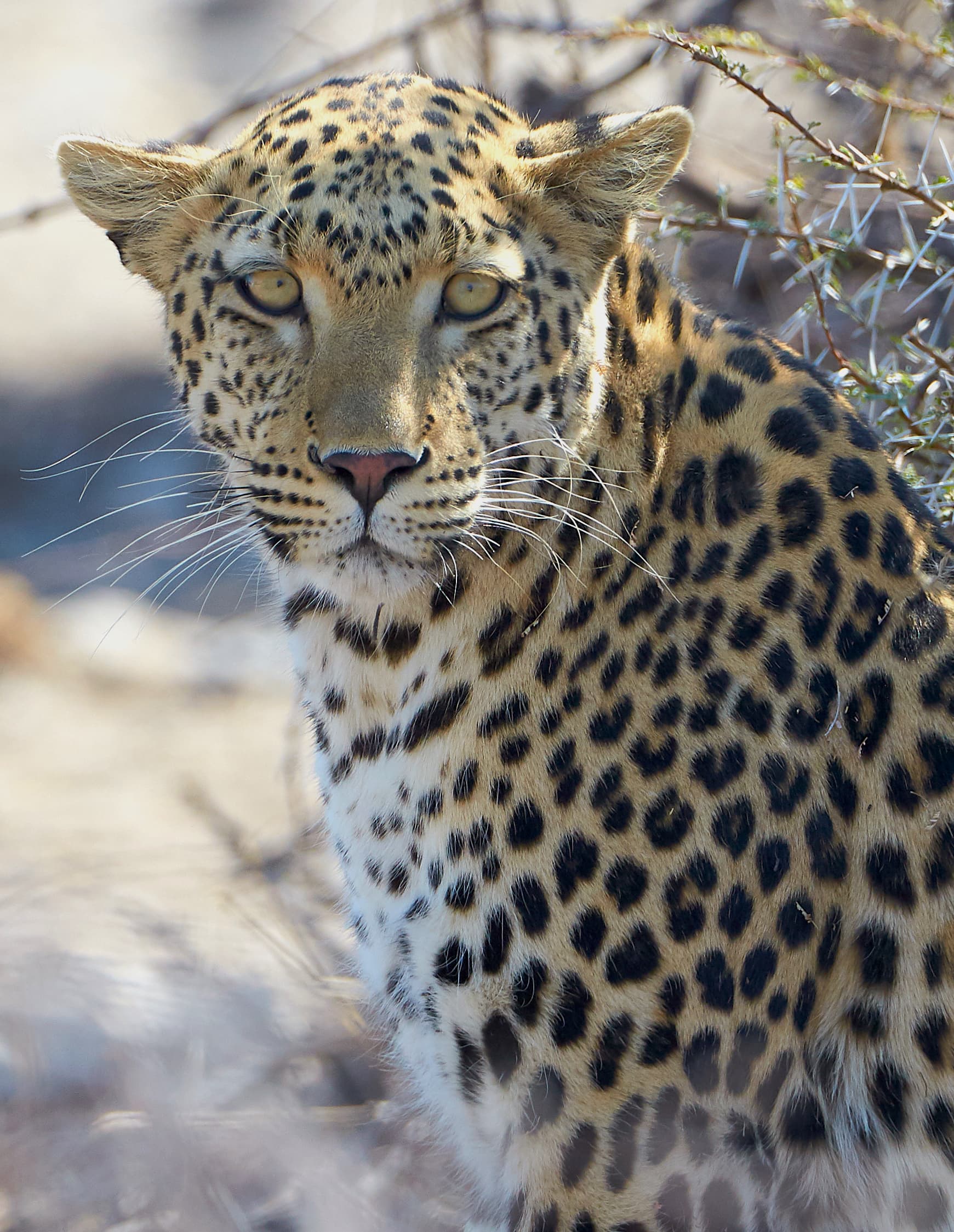
Close leopard portrait in golden light

Tell Us How You Picture Namibia

Share your dates, who is traveling and whether you imagine dunes at dawn, rhino tracks in Damaraland or a waterhole at night. We’ll shape a private route around those ideas and talk you through every choice before anything is confirmed.

Plan my safari here