Destination guide

Kaokoland Safaris: Epupa Falls & the Kunene River

Namibia’s far north-west: bare mountain ranges, long grass valleys running to the Angolan border and a palm-lined river where the desert suddenly turns green.

WhereNorth-western Kunene Region on the Angolan border; Opuwo is the main town
Best timeMay–September, for bearable heat and lower malaria risk
Recommended stay3 nights, ideally after 2–3 in Damaraland
AccessLight aircraft to riverside and valley airstrips, or long 4x4 expedition days
Known forEpupa Falls, the Kunene River, OvaHimba communities and empty desert valleys
Epupa FallsCascades spread over about 1.5 km, with a largest single drop of about 37 m

Kaokoland & the Kunene River

Why Visit

Kaokoland, also called the Kaokoveld, is the north-western corner of the Kunene Region, bounded by the Kunene River and Angola to the north and the Skeleton Coast to the west. Opuwo is its only real town. Beyond it lie rugged ranges, wide grassy valleys such as the Marienfluss and Hartmann’s, and very few roads. It is the least-visited part of a country that already feels empty, and reaching it takes either a light aircraft or a proper expedition.

Many travelers come for people and landscape rather than big game. About 50,000 OvaHimba live across the Kunene Region and southern Angola, semi-nomadic pastoralists who keep base homesteads and move their cattle and goats with the rain and grazing. Women traditionally use otjize, a mixture of butterfat and red ochre, on their skin and hair. A visit is only worthwhile when the community sets the terms, which is why we only arrange visits agreed with a community in advance and led by a local Otjiherero-speaking guide; visiting OvaHimba communities respectfully explains how that works and what we won’t do.

The Kunene River is the other draw: a ribbon of makalani palms, baobabs and fig trees through otherwise bare country, with crocodiles on the sandbanks and Epupa Falls tumbling through a gorge on the border. Wildlife is sparse compared with Etosha, though desert-adapted elephants and giraffe move through the southern valleys. The 8-Day Damaraland & Kaokoland Private Safari flies in for three nights after Damaraland, the logical way to see it in a week.

Best for

  • Travelers drawn to culture and landscape more than big-game counts
  • Return visitors to Namibia who want its far edges
  • Photographers who love raw, open country
  • Couples or small groups comfortable with heat and remoteness

Kaokoland & the Kunene River

Wildlife & Highlights

  • Epupa Falls, a chain of cascades and channels framed by baobabs and makalani palms
  • Nile crocodiles basking on the Kunene’s sandbanks
  • Kunene birding specials such as the Cinderella waxbill and rufous-tailed palm thrush
  • Desert-adapted elephants and giraffe around Purros and the Hoarusib valley
  • Oryx and springbok grazing the Marienfluss grasslands
  • Fairy circles, bare rings in the grass whose origin scientists still debate
  • Sand dunes meeting the Kunene’s green banks in the far west
  • Night skies with almost no artificial light

Season

Best Time to Visit

  1. January
  2. February
  3. March
  4. April
  5. May
  6. June
  7. July
  8. August
  9. September
  10. October
  11. November
  12. December
May–SeptemberThe dry, cooler months and the best time to travel. Days are warm, nights in the valleys can be cold, and UKHSA rates malaria risk in the Kunene Region as low from May to November.
October–NovemberExtreme heat settles over the region, especially in the Kunene valley, and activities shrink to early mornings and evenings. Travel is possible, but only for those who cope well with temperatures that stay high after dark.
December–AprilErratic rains can cut tracks, humidity rises and malaria risk is high. Epupa Falls runs strongest late in the rains as water arrives from Angola’s highlands, but this is not the time for a first visit.

Kaokoland & the Kunene River

Areas to Know

Epupa Falls & the Kunene

At Epupa, the Kunene splits into dozens of channels and drops through a gorge in a series of cascades spread over about 1.5 km, with a largest single drop of about 37 m. Baobabs cling to the rocks and makalani palms line the banks. Sunset from the ridge above the falls is the classic outing, and short walks along the river show how the water shapes everything around it. Swim only where your camp says it is safe, because crocodiles live in the river.

Best for: The falls, river walks and a base for community visits

The lower Kunene & Hartmann’s valley

Further west, the Kunene runs between the Hartmann Mountains and Angola’s dunes toward the Skeleton Coast. Fly-in camps here sit on the riverbank, with boat trips upstream past crocodiles and waterbirds, and drives into Hartmann’s valley cross open grassland to where the dunes begin. It is as remote as Namibia gets.

Best for: Boating and deep wilderness by air

The Marienfluss

Parallel to Hartmann’s valley, the Marienfluss is a broad grassy valley running north to the Kunene between mountain ranges, dotted with fairy circles and OvaHimba cattle posts. The notorious Van Zyl’s Pass descends toward it from the east: terrain for expedition vehicles with experienced drivers and backup, and not something to attempt on a first visit to Namibia.

Best for: Landscape photography and expedition travel

Opuwo & Purros

Opuwo is the region’s supply town, with fuel, groceries and the last reliable services for a long way. South-west of it, Purros sits in the Hoarusib valley, where desert-adapted elephants and giraffe move along the riverbed and a community campsite and small lodge-style stays make a base between Damaraland and the Kunene.

Best for: Desert-adapted wildlife and a southern entry point

Kaokoland & the Kunene River

Getting There

Light aircraft make Kaokoland possible within a normal vacation. From Damaraland, a flight of about 1.5 hours reaches airstrips on the Kunene and in the valleys, and the return to Windhoek takes about 3 hours including a stop, so plan an evening international departure that day. By road, Opuwo itself is straightforward to reach, but the river and the western valleys mean hours of slow gravel and rough 4x4 tracks beyond it. Fuel, water and medical care are scarce, and comprehensive evacuation insurance is essential.

Drive or fly?

For most travelers, fly. It turns what would be several days of hard driving into a short hop and lets you spend your time on the river rather than the road. Expedition-style journeys by 4x4 are possible with a specialist guide, two vehicles and full self-sufficiency, and they suit people who want the Marienfluss and the mountain passes themselves. We don’t recommend driving yourself here: breakdowns are serious, help is far away, and tracks change after every rainy season.

Airstrips & airports

  • Epupa airstrip
  • Opuwo airstrip
  • Hartmann’s Valley airstrip
  • Marienfluss airstrip

Typical travel times

Damaraland to the Kunene by light aircraft
About 1.5 hours
Kunene to Windhoek by light aircraft
About 3 hours including a stop
Opuwo to Epupa Falls
About 3 hours on gravel

Stays

Where to Stay

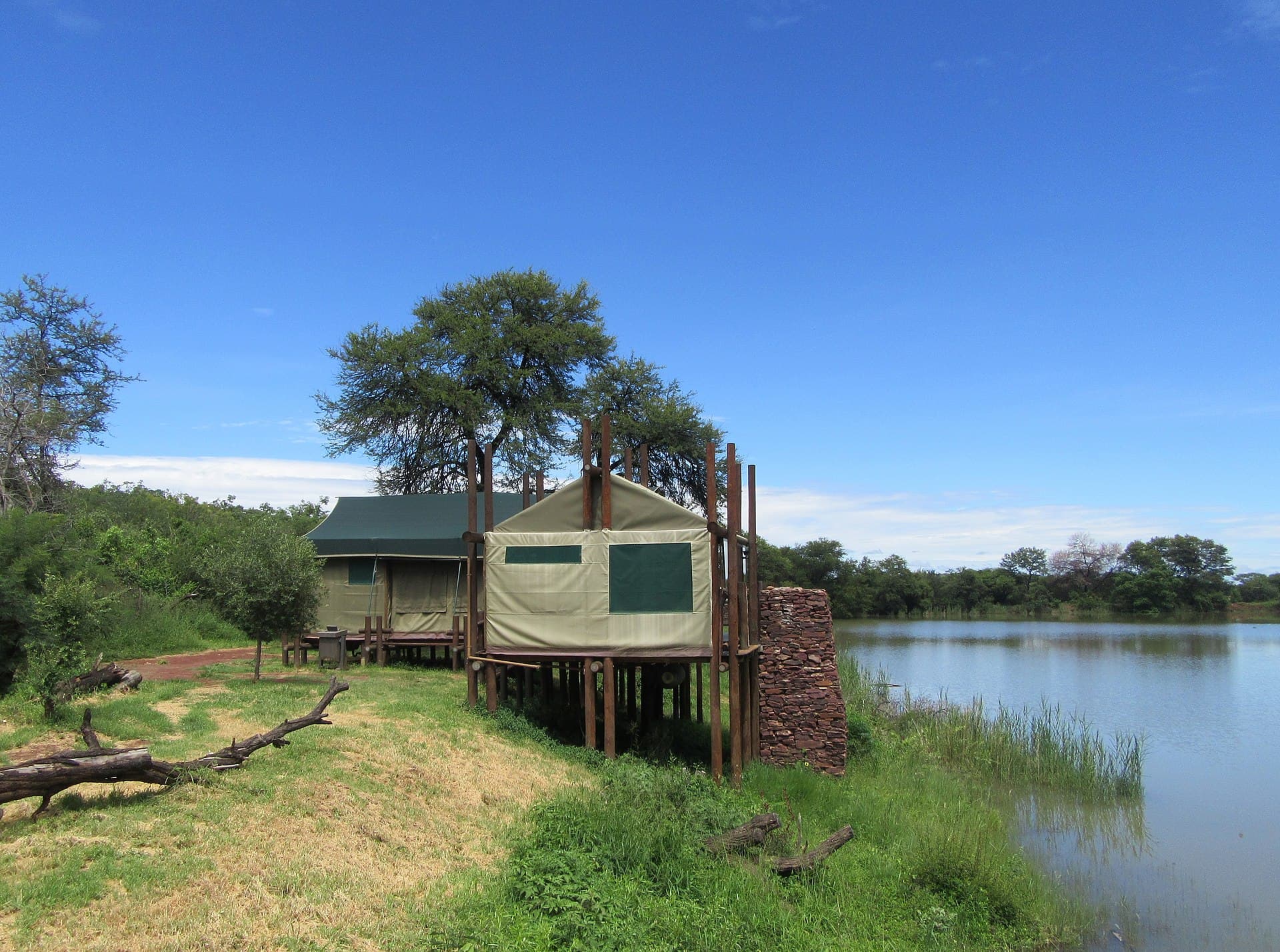
Accommodation is limited and characterful. At Epupa, riverside tented camps sit under palms within earshot of the falls. On the Kunene or near Purros, a small lodge offers more comfort and a base for boating or desert-elephant drives. At the far western end, an exclusive fly-in tented camp on the river in Hartmann’s valley is among the most remote places to stay in Namibia. Expect heat from October to March, and book well ahead for the cooler months.

A canvas safari tent set among trees at a private tented campPremium

Kaokoland · Epupa Falls on the Kunene

Makalani-Palm River Tents · Epupa Falls

Tented camp · Open year-round; very hot October–March

Tents shaded by makalani palms line the Kunene just above Epupa Falls, where the river splits into channels and drops through a series of cascades on the Angolan border. The sound of water never stops, sunset walks lead to viewpoints over the falls, and the camp is a relaxed base for community visits in the surrounding hills.

  • Riverside tents under palms
  • Sunset viewpoints over the falls
  • Community visits arranged with local guides
  • Birding along the river

Ideal for: Travelers who want the Kunene’s river scenery and a gentle base in the heart of Kaokoland
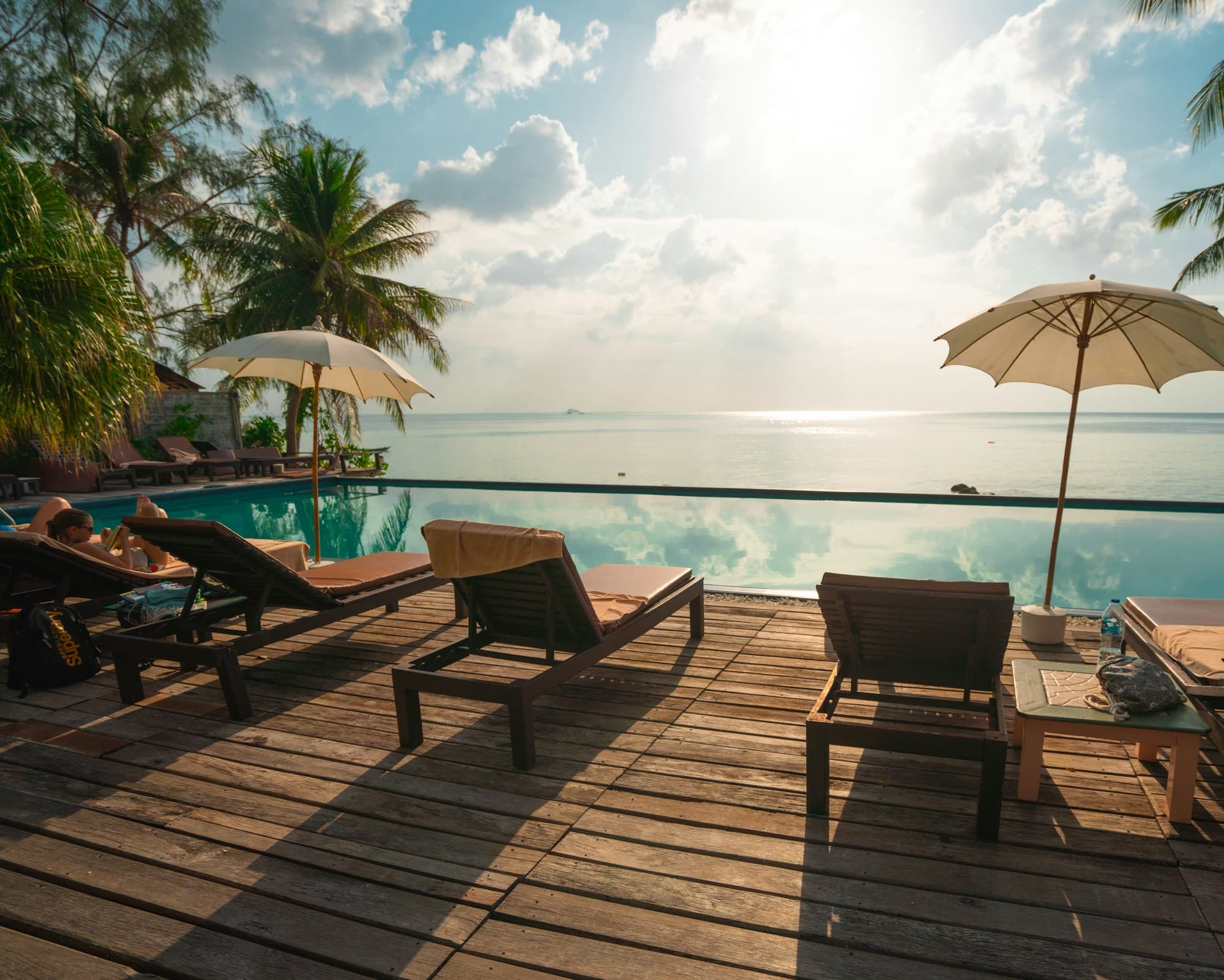
Luxury lodge deck with loungers and umbrellas at golden hourLuxury

Kaokoland · Kunene River or Purros

Remote Riverside Lodge · Kunene or Purros

Lodge

Lodges in this style sit either on the banks of the Kunene or in the Purros area beside the Hoarusib, both far from any town. Rooms of canvas, stone or thatch open onto the river or a green ribbon of riverine trees that contrasts sharply with the bare hills, and guides combine boating or riverbed drives, walks and community visits.

  • Rooms with private decks facing the river
  • Boat trips at the Kunene locations
  • Riverbed drives for desert-adapted wildlife near Purros
  • Fly-in access

Ideal for: Couples and small groups who want comfort in some of Namibia’s most isolated country

A canvas safari tent set among trees at a private tented campUltra-Luxury

Kaokoland · Kunene River, Hartmann's Valley

Far-Frontier Kunene Camp · Hartmann’s Valley

Tented camp · Fly-in only; very hot October–March

On a bend of the Kunene at the far western end of Kaokoland, near Hartmann’s Valley, a small camp of this style ranks among the most remote safari stays in southern Africa. Suites of canvas and wood sit among riverine trees opposite the Angolan mountains, and days alternate between boat trips, dune drives and long hours in the valleys.

  • Only a handful of suites
  • Boat trips on the Kunene
  • Drives into Hartmann’s Valley and the dunes
  • Access by light aircraft only

Ideal for: Experienced travelers and photographers who want true remoteness with every comfort

Experiences

Experiences

After dark

Stargazing & Dark Skies

Sleep under some of the darkest skies on earth, with the Milky Way overhead, the Magellanic Clouds rising and the southern constellations explained.

Safaris

Safaris That Go Here

Granite domes of Spitzkoppe rising from the Damaraland plains
8 daysRemote

Desert Rhino & the Kunene

Windhoek · Damaraland · Kaokoland

Seasoned safari travelers who value wilderness, conservation and silence over a long species list

Best months
April–September, before the heat builds
Comfort levels
Premium · Luxury · Ultra-Luxury
Individually quoted

Good to know

Frequently asked questions

Where is Kaokoland?

In Namibia’s far north-west, in the Kunene Region, bordered by the Kunene River and Angola to the north and the Skeleton Coast to the west. Opuwo is the main town. The name is informal but widely used, as is Kaokoveld.

When is the best time to visit Epupa Falls?

May to September is the most comfortable time, with warm days, cool nights and lower malaria risk. The falls carry the most water late in the rainy season, so April and May combine a strong flow with easing heat. October to March is very hot.

Do you need to visit a Himba community to enjoy Kaokoland?

No. The river, the falls and the empty valleys are reason enough, and a cultural visit should never feel like an obligation on either side. If you would like to meet an OvaHimba family, it can be arranged with a community on agreed terms, with a local guide and a fee paid to the community.

Can you self-drive in Kaokoland?

Experienced 4x4 travelers do, but it is no place for a first self-drive. Distances are long, tracks are rough and change with the rains, fuel and help are scarce, and some routes demand expedition skills. Flying in, or traveling with a specialist guide and a backup vehicle, is the safer choice.

How remote is Kaokoland if someone falls ill?

Very. Medical facilities are basic and far apart, and a serious problem means an air evacuation, so comprehensive evacuation insurance is essential. UKHSA reported cholera cases in the Kunene and Otjozondjupa regions in 2025, so check the current situation with a travel clinic before you go and drink only treated or bottled water.

Are there crocodiles in the Kunene River?

Yes, Nile crocodiles are common along the Kunene. Swim only in places your camp confirms are safe, keep back from the water’s edge and follow your guide’s lead on boat trips. Watching them bask on the sandbanks is part of a river day.

Close leopard portrait in golden light

Tell Us How You Picture Namibia

Share your dates, who is traveling and whether you imagine dunes at dawn, rhino tracks in Damaraland or a waterhole at night. We’ll shape a private route around those ideas and talk you through every choice before anything is confirmed.

Plan my safari here