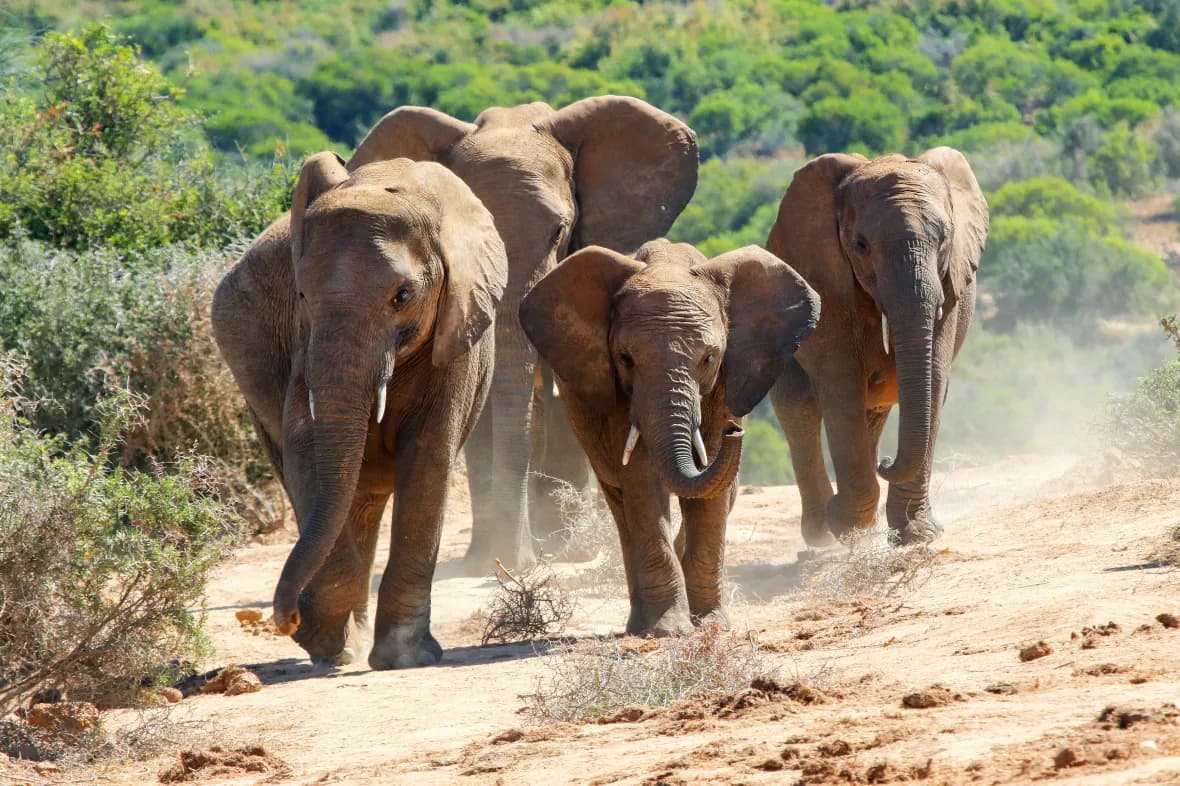
A family of elephants walking along a dusty track through dense green thicket

Destination guide

Eastern Cape Safaris: Malaria-Free Big Five Country

Thicket, Karoo plains and river valleys about an hour’s flight from Cape Town, with Big Five reserves, Addo’s elephants and no malaria.

SizeAddo Elephant National Park about 1,640 km²; most private reserves are far smaller
Best timeYear-round; March–April and September–November are the mildest months
Recommended stay2–3 nights
AccessAbout 1 hour 15 minutes by air from Cape Town to Gqeberha, then 45 minutes to 2 hours by road
MalariaNone under CDC mapping
Known forAddo’s elephants, restored Big Five reserves, thicket and Karoo landscapes

Eastern Cape Safaris

Why Visit

An Eastern Cape safari answers a question many travelers ask: can you see the Big Five without malaria, and without flying far from Cape Town? The province’s reserves lie around Gqeberha (formerly Port Elizabeth), about 1 hour 15 minutes by air from the Cape, in a landscape nothing like the Lowveld: dense evergreen thicket, open Karoo plains, fynbos ridges and deep river valleys. No part of the Eastern Cape appears on the CDC’s malaria map, and the mild climate means you can travel in any month.

It pays to understand what you are choosing. Most private reserves here were restored from farmland and livestock ranches over the past few decades; they are fenced, smaller than the Kruger reserves, and their lion, elephant and rhino populations are actively managed. The rewards are real, from skilled guiding and lodges built for couples and families to cheetah, black rhino and scenery that photographers love, but expect fewer species, and fewer animals of each, than in the Lowveld.

The region is the natural finale to a Garden Route drive and the simplest malaria-free safari from Cape Town, as in our 7-Day Cape Town & Eastern Cape Safari and the longer 13-Day Cape Town, Whale Coast, Garden Route & Eastern Cape Safari. If you are wondering whether a reserve closer to Cape Town would do, safari near Cape Town sets out the options honestly.

Best for

  • A malaria-free Big Five safari within easy reach of Cape Town
  • Families with young children
  • Finishing a Garden Route road trip with a safari
  • Photographers after landscapes Kruger doesn’t have

Eastern Cape Safaris

Wildlife & Highlights

  • Addo’s elephant herds, grown from a handful of survivors
  • Black rhino browsing in dense thicket
  • Lion and cheetah on private reserves, in managed populations
  • Buffalo, eland, kudu and red hartebeest
  • Black-footed cat, one of Africa’s smallest wild cats, on night drives in the Great Fish River valley
  • Blue cranes, South Africa’s national bird, on open grassland
  • African penguins and southern right whales in Addo’s marine section
  • Flightless dung beetles, which have right of way on Addo’s roads

Season

Best Time to Visit

  1. January
  2. February
  3. March
  4. April
  5. May
  6. June
  7. July
  8. August
  9. September
  10. October
  11. November
  12. December
September–NovemberSpring. Mild days, fresh growth and newborn antelope make this one of the most comfortable times to visit, and it follows neatly after a Garden Route drive in whale season.
December–FebruarySummer. The inland valleys are hot, with January highs of about 28–32 °C around the Great Fish River, and South African holidaymakers fill lodges from mid-December to mid-January, so book early.
March–AprilAutumn brings settled weather, softer light and fewer visitors: a favorite window for photographers and for couples.
May–AugustWinter. Days are often clear and bright, but nights are cold, with July lows of about 2–5 °C in the valleys. Thinner vegetation helps visibility in the thicket, and warm layers are essential for early drives.

Eastern Cape Safaris

Areas to Know

Addo Elephant National Park

Addo was created to protect the last elephants of the region, when only about 16 survived, and has grown into South Africa’s third-largest national park, about 1,640 km², behind Kruger and Kgalagadi. The expanded park spans five of the country’s seven biomes and includes a marine section around St Croix Island, a major African penguin breeding site, which is why SANParks promotes it as home to a “Big 7”. Its roads are public, so it works well as a guided day from a private reserve; a daily SANParks conservation fee applies.

Best for: Elephant herds and a national-park day

Sundays River and Paterson

The nearest private reserves lie north-east of Gqeberha, around the Sundays River valley and the small town of Paterson, about 75 km from the airport. Most were rebuilt from farmland and are fenced, with the Big Five, a strong family focus and short transfers. One reserve in this area hosts Born Free Foundation sanctuaries for lions and leopards rescued from captivity; they are for viewing only, which is exactly how a genuine sanctuary should work.

Best for: Short transfers and first safaris with children

The Great Fish River valley

Further north-east, near Makhanda (formerly Grahamstown), the Great Fish River cuts through dry thicket and steep valley slopes. Reserves here are larger and feel more remote, and night drives can turn up rarities such as the black-footed cat. Some lodges offer guided walking safaris on their land. Summers are hot and winters cold, so it rewards travelers who pack layers.

Best for: A wilder, more remote Eastern Cape stay

The Karoo edge

Inland, the thicket gives way to the plains and mountains of the Great Karoo, where one private reserve has become known for reintroducing cheetah. Distances from Gqeberha are longer, but the big skies, open landscapes and silence make a striking contrast to the coast. It suits a second safari stay, or travelers who already know the Lowveld.

Best for: Cheetah, wide skies and open landscapes

Eastern Cape Safaris

Getting There

Fly into Gqeberha’s Chief Dawid Stuurman International Airport (PLZ), which has direct flights from Cape Town (about 1 hour 15 minutes) and Johannesburg. Private road transfers to the reserves take from about 45 minutes to 2 hours, depending on how far inland you go. Coming along the coast, Gqeberha is about 2.5 hours from Plettenberg Bay on the Garden Route, and the nearer reserves are roughly 2–3 hours’ drive from Plett.

Drive or fly?

From Cape Town, fly: by road it is roughly nine hours via Knysna and Plettenberg Bay, which only makes sense if the Garden Route itself is the point of the trip. From the Garden Route, drive, and let the reserve be the final stop before you fly home or onward from Gqeberha. Flights from Gqeberha to Johannesburg also make it easy to add a Lowveld safari afterwards.

Airstrips & airports

  • Chief Dawid Stuurman International, Gqeberha (PLZ)

Typical travel times

Cape Town to Gqeberha
About 1 hour 15 minutes by air
Gqeberha airport to the reserves
About 45 minutes–2 hours by road
Plettenberg Bay to the nearer reserves
About 2–3 hours by road

Stays

Where to Stay

Accommodation is almost entirely private lodges on fenced reserves, from relaxed family lodges near Addo to luxury lodges in the river valleys that add walks and night drives. Many welcome children of all ages, and the absence of malaria makes this the easiest South African safari for families with toddlers. We do not include cub petting, walking with lions or any other hands-on predator activity, and we avoid reserves that offer them.

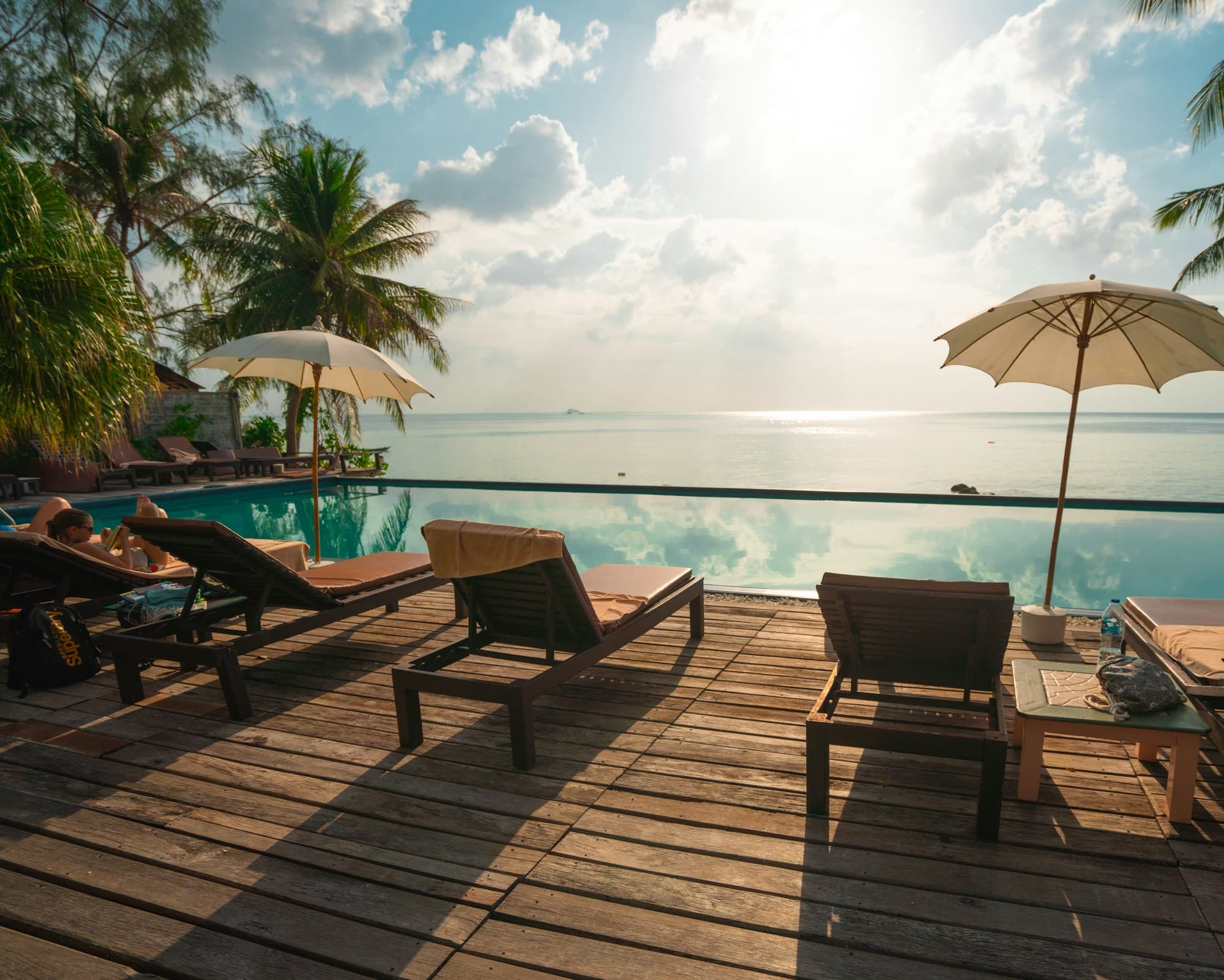
Luxury lodge deck with loungers and umbrellas at golden hourComfort

Eastern Cape · near Addo

Addo-Gateway Country Lodge

Lodge

A friendly country lodge just outside Addo Elephant National Park, with gardens, a pool and easy access to the park’s gates. Guided drives take you among Addo’s elephant herds and, with luck, lion and buffalo, and Gqeberha’s airport is around an hour away.

  • Guided game drives into Addo
  • Pool and gardens for family downtime
  • Family rooms and cottages
  • No antimalarials needed

Ideal for: Families and first-timers who want a malaria-free safari at a comfortable price level
Luxury lodge deck with loungers and umbrellas at golden hourPremium

Eastern Cape · private Big Five reserve

Thicket-Country Game Lodge · Eastern Cape

Lodge

On a private Big Five reserve restored from old farmland, a lodge overlooking dense spekboom thicket and open grassland. Rangers lead two drives a day, children are usually welcome with family suites and dedicated activities, and there is no malaria to plan around.

  • Two guided game drives a day
  • Family suites and children’s activities at many
  • Pool and viewing deck
  • Road transfer from Gqeberha of about 1–2 hours

Ideal for: Families and first-time visitors pairing a short safari with Cape Town or the Garden Route

Luxury lodge deck with loungers and umbrellas at golden hourLuxury

Eastern Cape · private reserve river valley

Riverine Valley Suites · Eastern Cape

Lodge

Suites with private pools sit above a river valley on one of the Eastern Cape’s larger private reserves, where thicket, grassland and Karoo scrub meet. Guided walks, rhino tracking on foot where offered and night drives add depth to the Big Five, all in a malaria-free setting.

  • Suites with private plunge pools
  • Guided walks with an armed ranger
  • Night drives with a spotlight
  • Exclusive-use homesteads at some

Ideal for: Couples and discerning travelers who want a malaria-free safari with real wilderness character

Experiences

Experiences

On foot

Walking Safaris in South Africa

Swap the game-drive seat for boots and follow an armed trails guide through Lowveld bush, reading tracks, trees and birdsong at the pace of your own footsteps.

Safaris

Safaris That Go Here

Green fynbos hills meeting the ocean along the Garden Route
13 daysCoastal road trip

Cape to Garden Route

Cape Town · Hermanus · Knysna · Plettenberg Bay · Eastern Cape private reserves · Gqeberha Airport (PLZ)

Families and first-timers who want Cape Town, the coast and a Big Five safari without malaria or rushed transfers

Best months
February–April and September–November
Comfort levels
Comfort · Premium · Luxury
Individually quoted
A family of elephants walking along a dusty track through dense green thicket
7 daysShort & malaria-free

Cape Town + Malaria-Free Safari

Cape Town · Gqeberha Airport (PLZ) · Eastern Cape private reserves

First-time visitors and families with one week, or anyone who wants a safari without antimalarials

Best months
September–May
Comfort levels
Comfort · Premium · Luxury
Individually quoted

Good to know

Frequently asked questions

Is an Eastern Cape safari as good as Kruger?

It is different rather than a smaller copy. Kruger’s open system has more species, larger populations and a wilder feel, while Eastern Cape reserves are fenced, managed and more compact. In return you get no malaria, a short flight from Cape Town, mild weather all year and some of the best family lodges in the country. For a first safari with young children, it is often the better fit.

Can you see the Big Five in the Eastern Cape?

Yes. Several private reserves and Addo Elephant National Park hold lion, leopard, elephant, buffalo and rhino. Leopard are the hardest to find because they are shy and the thicket is dense, so count any sighting as a bonus. Elephant, rhino and lion are seen far more often.

Is Addo Elephant National Park worth a visit?

If you like elephants, yes: Addo’s herds are among the easiest to watch in South Africa, often at waterholes close to the road. A guided day from a nearby private reserve is the best way to do it, combining open-vehicle viewing with local knowledge. The park’s daily SANParks conservation fee is usually added to your day-trip cost.

How can I tell a real sanctuary from a captive-predator facility?

A genuine sanctuary does not breed animals, never lets visitors touch or walk with them, and takes in animals that cannot be released, such as lions rescued from circuses or captivity. Places offering cub petting, lion walks or photos with big cats belong to the captive-predator industry, whatever they call themselves. We leave all such places off the trips we plan.

What is the weather like on an Eastern Cape safari?

Mild for most of the year. Summer days in the inland valleys can reach about 28–32 °C, while winter nights drop to about 2–5 °C and early drives are cold. Rainfall is modest, so there is no month you need to rule out.

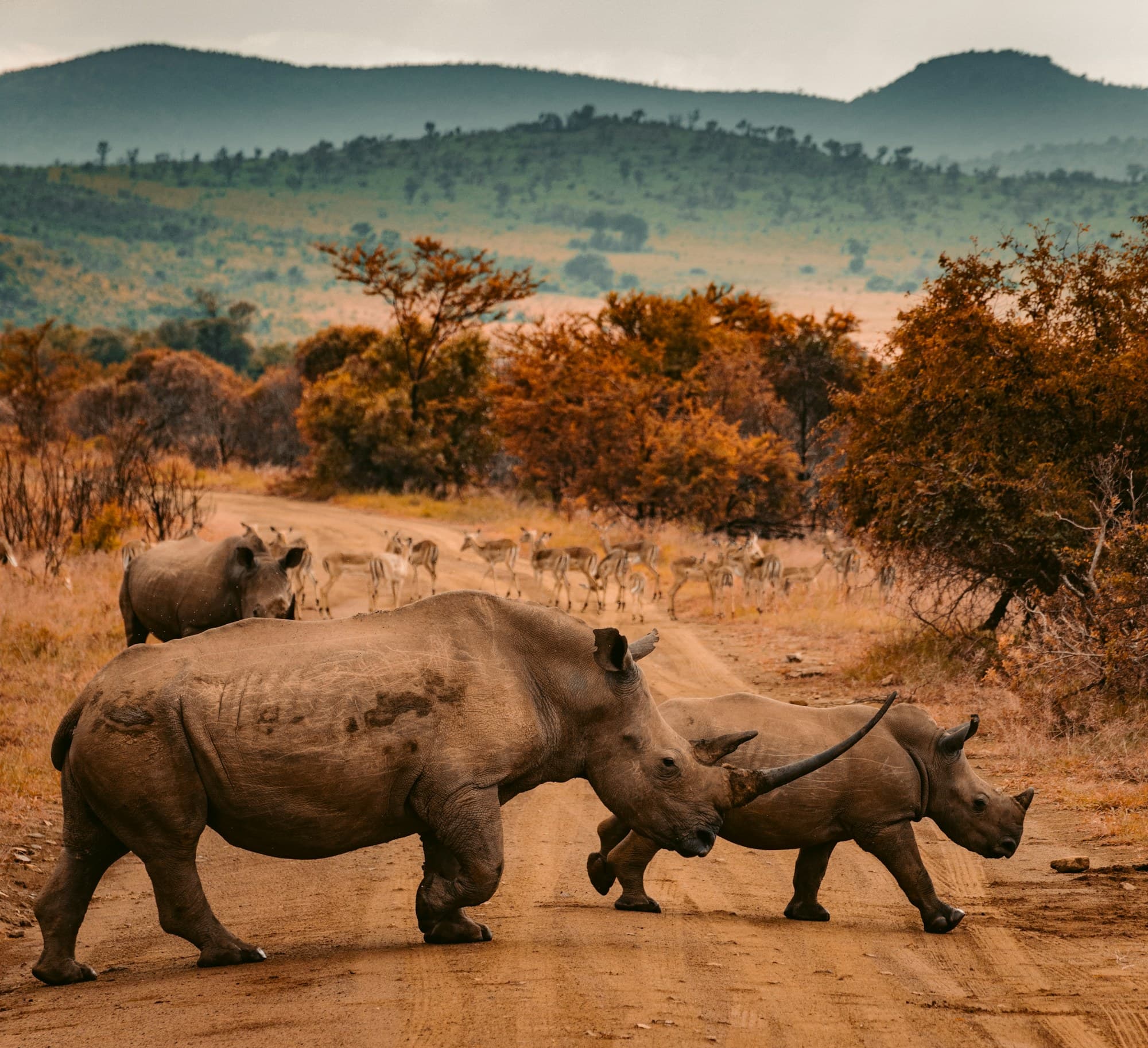
Two white rhinos grazing side by side in a private reserve

Tell Us When You Can Travel

Share your dates, who is coming and whether malaria-free matters, and a safari specialist will design a private South Africa route around you. Nothing is booked until you approve it.

Plan my safari here