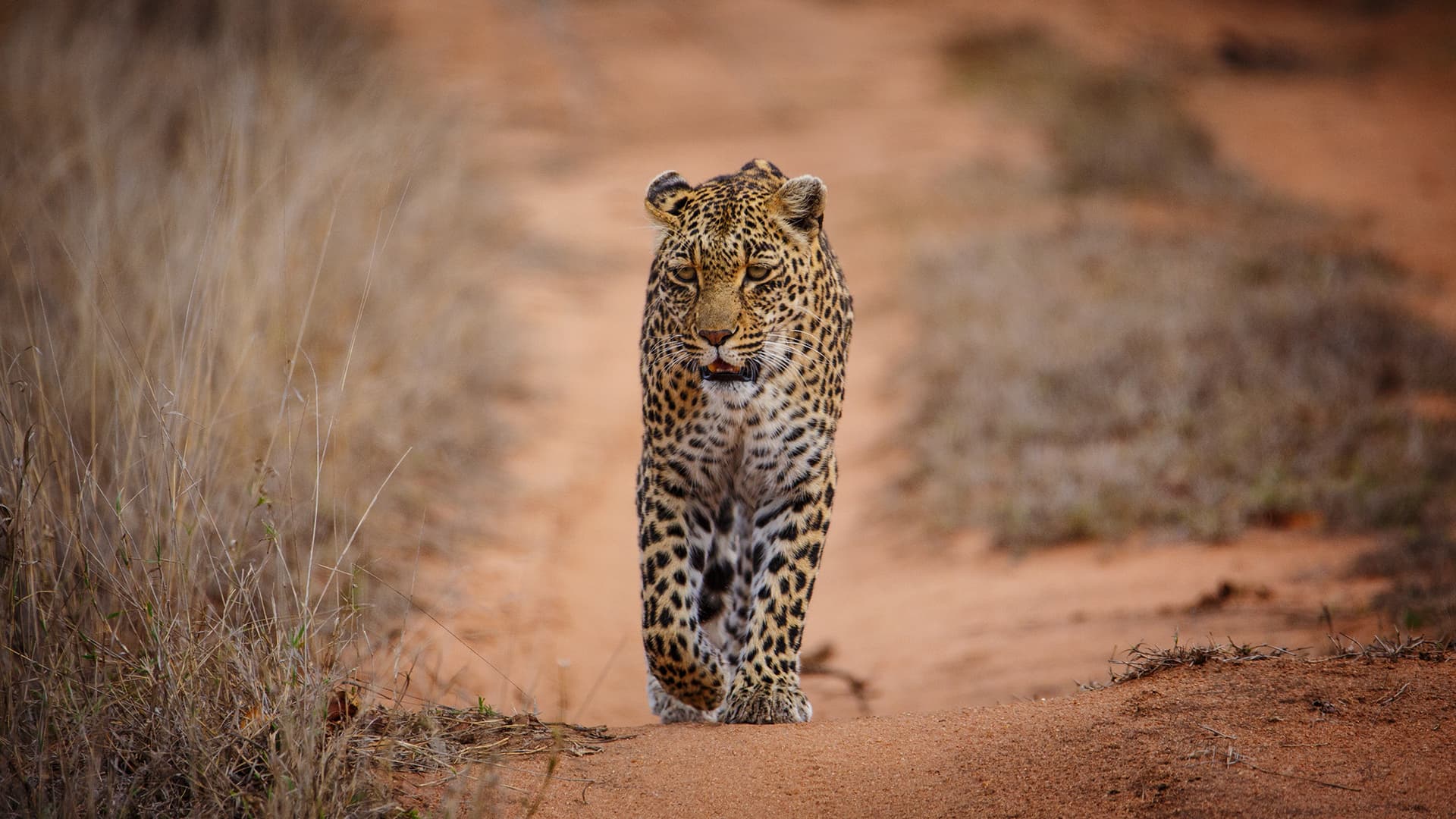
Leopard walking straight toward the camera in a private reserve

Destination guide

Sabi Sands Game Reserve: Leopard Country Beside Kruger

More than 65,000 hectares of private bushveld between the Sabie and Sand rivers, open to Kruger on its eastern side and famous for leopards that barely glance at a vehicle.

SizeA little over 65,000 ha (about 250 sq mi)
Best timeMay–October for open bush; November–April for births, birds and green landscapes
Recommended stay3–4 nights
AccessLight-aircraft shuttles to reserve airstrips, or direct flights to Skukuza from Johannesburg and Cape Town
Boundary with KrugerUnfenced since 1993, along roughly 50 km
MalariaWithin a CDC malaria area (Ehlanzeni district); antimalarials recommended

Sabi Sand Game Reserve

Why Visit

The Sabi Sands game reserve, officially the Sabi Sand, is a group of privately owned properties on the south-western boundary of Kruger National Park, in the Mpumalanga Lowveld. It covers a little over 65,000 hectares (published figures range from about 623 to 650 km²) and takes its name from two rivers: the Sabie along its southern edge and the Sand, which winds through the middle of the reserve. The last fences with Kruger came down in 1993, so animals move freely across a shared boundary of roughly 50 km.

What sets it apart is not the species list, which matches the national park’s, but the access. Only lodge guests drive here, guides may follow a sighting off the road where reserve rules allow, and tracker-and-guide teams spend years learning the same stretch of bush. Several generations of leopards have grown up around quiet vehicles, and that is the source of the reserve’s reputation. Leopard sightings are frequent and often long; like any wildlife encounter, they are never certain.

Most travelers give the reserve three or four nights, often as the first half of a two-reserve trip such as our 8-Day Sabi Sand & Timbavati Private Safari. If you are still weighing it against the national park, the Kruger vs Sabi Sand guide compares the two in detail.

Best for

  • Leopard sightings and big-cat photography
  • Short safaris where every drive has to count
  • Flying in directly from Cape Town
  • Honeymooners and families who want an all-inclusive lodge

Sabi Sand Game Reserve

Wildlife & Highlights

  • Leopards habituated to vehicles over several generations
  • Lion prides that move between the reserve and the national park
  • Elephant and buffalo along the Sand River, especially in the dry months
  • White rhino, whose locations are never broadcast
  • African wild dog, which range widely and turn up unpredictably
  • Spotted hyena dens, often busiest at dusk
  • Hippo and crocodile in the Sabie and Sand rivers
  • Giraffe, kudu, nyala and large herds of impala
  • Around 500 bird species, including bateleur and martial eagle

Season

Best Time to Visit

  1. January
  2. February
  3. March
  4. April
  5. May
  6. June
  7. July
  8. August
  9. September
  10. October
  11. November
  12. December
May–AugustCool, dry and clear. The bush thins, sandy riverbeds hold fresh tracks, and animals come to the rivers and remaining pans to drink. Morning drives start cold, so lodges typically hand out blankets and hot-water bottles.
September–OctoberHot and dry, with the least cover of the year. A leopard hoisting a kill into a bare tree is easier to pick out, and elephant herds gather at the Sand River. Midday heat makes the lodge siesta a genuine necessity.
November–AprilThe wet season. Thunderstorms green the bush within days, impala lambs appear from about late November, and migrant birds such as carmine bee-eaters and woodland kingfishers arrive. Thicker vegetation makes the tracker’s skill and off-road access matter even more.

Sabi Sand Game Reserve

Areas to Know

The Sand River corridor

The Sand River runs through the heart of the reserve, lined with tall jackalberry, sycamore fig and leadwood trees. It is prime leopard habitat: big trees for resting and hoisting kills, thick riverine cover for hunting, and sandy banks that record every set of tracks. In the dry months elephant and buffalo come down to drink, and lodges along the river often have decks that look straight onto the action.

Best for: Leopard viewing and dry-season river sightings

The Sabie River frontage

The reserve’s southern boundary follows the perennial Sabie River, the busiest wildlife corridor in southern Kruger. Lodges here look across the water into the national park, with hippo, crocodile and waterbirds in view from breakfast, and Skukuza Airport is a short transfer away. Drives cover the southern properties and, in places, the riverbank itself.

Best for: River views and quick transfers from Skukuza

The northern and western sectors

Away from the main rivers the reserve becomes drier woodland and open clearings, running north to the Manyeleti boundary. Some properties here are smaller and share traversing, and the atmosphere is often quieter. It is good country for lion, wild dog and general game, and these sectors can offer a Sabi Sand stay at a slightly gentler price level.

Best for: Quieter drives within the reserve

Traversing: why the property matters

Every lodge drives only on its own land and on neighboring properties with which it has a traversing agreement. A larger traverse means more territory to search, more individual leopards to follow and less chance of repeating the same loop; a smaller one can still be excellent when it sits on a river. This, far more than the thread count, separates one Sabi Sand lodge from the next, and it is the first thing we check.

Best for: Anyone choosing between lodges

Sabi Sand Game Reserve

Getting There

The Sabi Sand is one of the easiest private reserves in Africa to reach. Scheduled light-aircraft shuttles fly from Johannesburg and from Kruger Mpumalanga International to airstrips inside the reserve, where your lodge vehicle meets the plane. Skukuza Airport, just across the Kruger boundary, has direct scheduled flights from Johannesburg and Cape Town, so you can fly from the Cape and reach your lodge the same afternoon without passing through Johannesburg. By road, allow about 1.5–2.5 hours from Kruger Mpumalanga International, depending on the gate; vehicles pay an entry fee at the reserve gates. More detail is in getting to Kruger and the Sabi Sand.

Drive or fly?

Flying is the norm, and it makes sense: from Johannesburg the road is a five- to six-hour drive before you even reach a reserve gate, and lodge life revolves around the afternoon drive. Light-aircraft shuttles usually cap luggage at about 20 kg per person in soft bags, hand luggage included, which is plenty for a safari wardrobe. Driving works well if you are arriving from the Panorama Route or heading north to the Timbavati, where a private road transfer is usually simpler than an extra flight.

Airstrips & airports

  • Reserve airstrips (scheduled light-aircraft shuttles)
  • Skukuza Airport (SZK)
  • Kruger Mpumalanga International (MQP)

Typical travel times

Kruger Mpumalanga International to the reserve
About 1.5–2.5 hours by road
Cape Town to Skukuza, then a short road transfer
About 2.5 hours in the air
Johannesburg to the reserve gates
About 5–6 hours by road
Sabi Sand to the Timbavati
About 2–2.5 hours by road

Stays

Where to Stay

Sabi Sand stays are all-inclusive lodges: river-frontage lodges with decks over the Sand or the Sabie, contemporary lodges with private plunge pools, and a handful of private-villa lodges that come with their own vehicle, guide and chef. Rates typically cover meals and two guided activities a day. Many lodges set a minimum age for open-vehicle drives, commonly six, and families often book a private vehicle so that the children set the pace. We match the lodge to the traversing area and your priorities, not just the room.

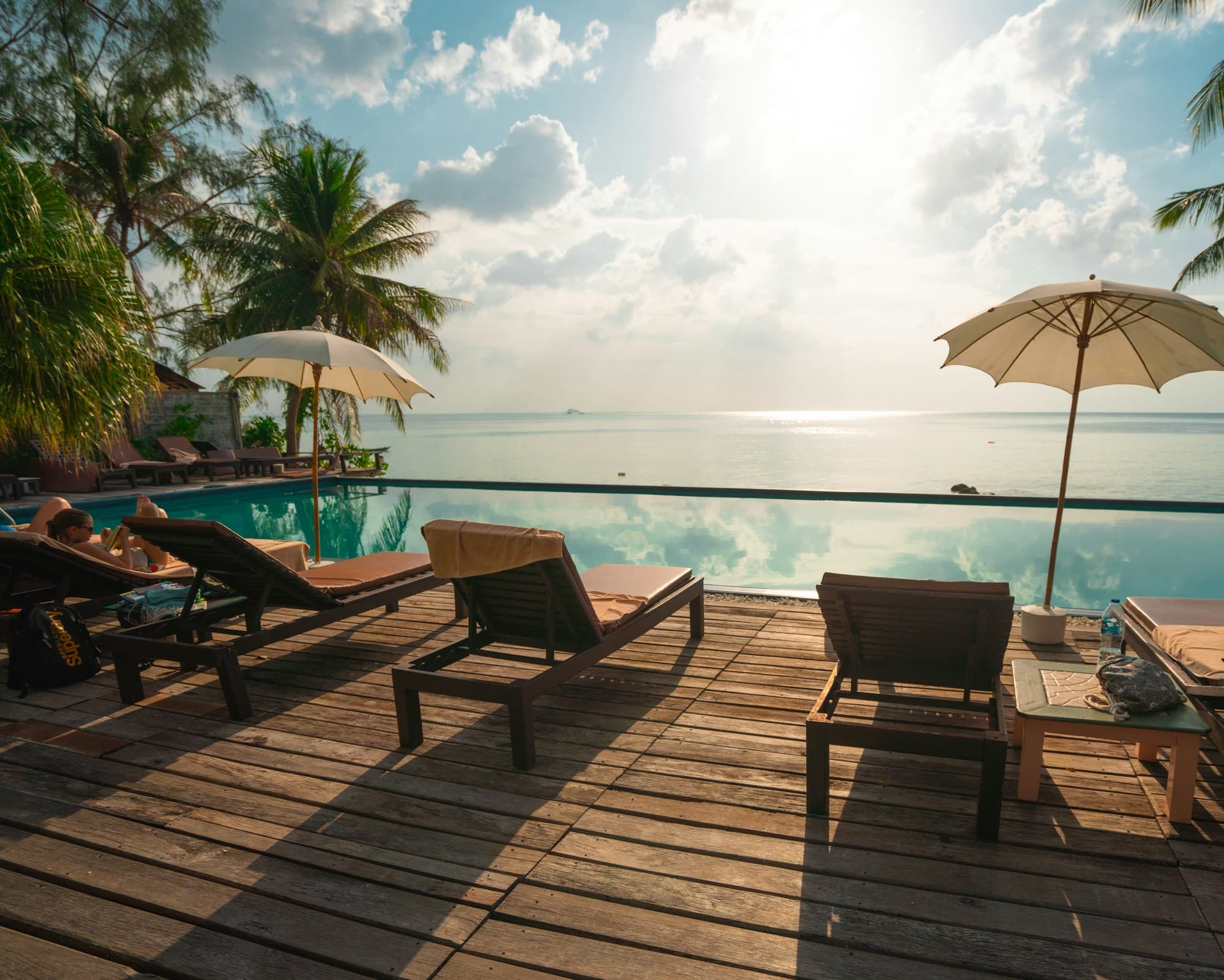
Luxury lodge deck with loungers and umbrellas at golden hourPremium

Sabi Sand · river frontage

Classic River-Frontage Lodge · Sabi Sand

Lodge

Thatched suites line the bank of the Sand or Sabie River, and the deck has its own passing traffic of elephants, hippos and bushbuck coming down to drink. Rangers and trackers here are practised at finding the reserve’s relaxed leopards, and many lodges welcome children with family suites and dedicated drives.

  • Twice-daily open-vehicle drives with a ranger and tracker
  • River-view deck and pool
  • Family suites and children’s programmes at many
  • Guided bush walks on request

Ideal for: First-time visitors and families who want the Sabi Sand’s leopard country with a classic lodge feel
Luxury lodge deck with loungers and umbrellas at golden hourLuxury

Sabi Sand

Plunge-Pool Suite Lodge · Sabi Sand

Lodge

Each suite stands on its own, with a private plunge pool and a deck facing a riverbed or waterhole, so the quiet hours between drives feel like part of the safari. Off-road tracking, radio contact between rangers and strict limits on vehicles at a sighting make for long, close encounters, especially with leopards.

  • Private plunge pool with every suite
  • Off-road tracking with a ranger and tracker
  • Spa and gym at many
  • Wine-cellar dinners and boma evenings

Ideal for: Couples and photographers who want intimate suites and patient, close leopard viewing

Luxury lodge deck with loungers and umbrellas at golden hourUltra-Luxury

Sabi Sand · private-villa lodge

Private-Villa Safari Lodge · Sabi Sand

Lodge

The very top of the Sabi Sand: a handful of suites or a stand-alone villa, often with its own chef, butler, vehicle and ranger team reserved for your party. Design, art and wine cellars rival the finest city hotels, yet the leopard tracks outside the door still set the rhythm of each day.

  • Exclusive-use villa with its own vehicle and ranger
  • Private chef and butler service
  • Heated plunge pools and outdoor showers
  • Camera equipment and photographic vehicles at some

Ideal for: Honeymooners, celebrations and families who want exclusive use and complete flexibility

Experiences

Experiences

On foot

Walking Safaris in South Africa

Swap the game-drive seat for boots and follow an armed trails guide through Lowveld bush, reading tracks, trees and birdsong at the pace of your own footsteps.

Adventure

Panorama Route & Blyde River Canyon

The escarpment road above the Lowveld: canyon viewpoints, waterfalls and a gold-rush village, taken as a scenic day on the way into Kruger.

Safaris

Safaris That Go Here

Leopard walking straight toward the camera in a private reserve
8 daysPure safari

Kruger Private Reserves

Sabi Sand · Timbavati · Hoedspruit Airport

Photographers, returning safari travelers and couples who want a week of pure safari, with time both in the vehicle and on foot

Best months
April–November
Comfort levels
Premium · Luxury · Ultra-Luxury
Individually quoted
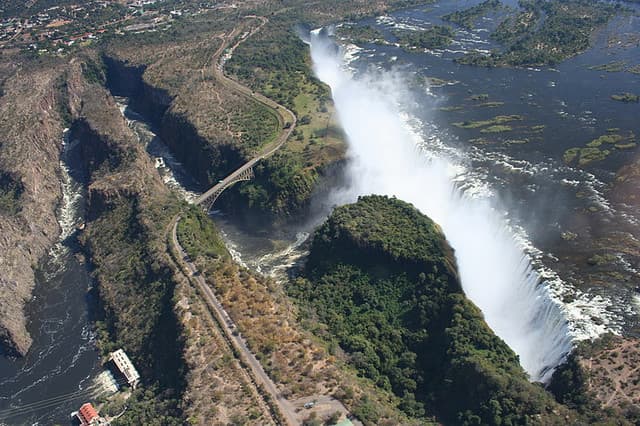
Aerial view of Victoria Falls plunging into the gorge
11 daysThree icons

Cape Town, Kruger & Victoria Falls

Cape Town · Kruger Mpumalanga Airport · Sabi Sand · Victoria Falls

First-time visitors to Africa who want the region’s three best-known highlights in under two weeks

Best months
March–November
Comfort levels
Premium · Luxury · Ultra-Luxury
Individually quoted

Good to know

Frequently asked questions

Is it Sabi Sand or Sabi Sands?

Both names refer to the same reserve. The official name is the Sabi Sand (Sabi Sand Wildtuin in Afrikaans), after the Sabie and Sand rivers, but “Sabi Sands” is how most people say it and search for it. Lodges, maps and guidebooks use the two interchangeably.

Why is the Sabi Sand so good for leopards?

Leopards here have grown up over several generations with quiet, respectful vehicles, so many individuals keep hunting, feeding and raising cubs as if no one were watching. Guide-and-tracker teams know each cat’s territory, may leave the road to follow one where the rules allow, and share sightings by radio with a limit on how many vehicles attend at once. The result is frequent, close and unhurried viewing, though no sighting is ever certain.

What does a day at a Sabi Sand lodge look like?

A wake-up call comes before dawn, followed by coffee and a morning drive of about three to four hours, sometimes with a short walk. Brunch follows, then a midday rest by the pool while the bush is quiet. After afternoon tea you head out again, pause for a drink at sunset and return after dark with a spotlight, in time for dinner by the fire.

Can children go on game drives in the Sabi Sand?

Usually, but lodge rules vary. Many set a minimum age for shared open-vehicle drives, often six, and some accept younger children only on a private vehicle. Family suites, children’s programs and flexible meal times are common, and we check each lodge’s policy against your children’s ages before suggesting it.

Is the Sabi Sand fenced off from Kruger National Park?

No. The fences between the reserve and the national park were removed in 1993, and wildlife crosses the shared boundary freely. Vehicles do not: lodge guests drive on the reserve’s side, and national-park visitors cannot drive into the Sabi Sand.

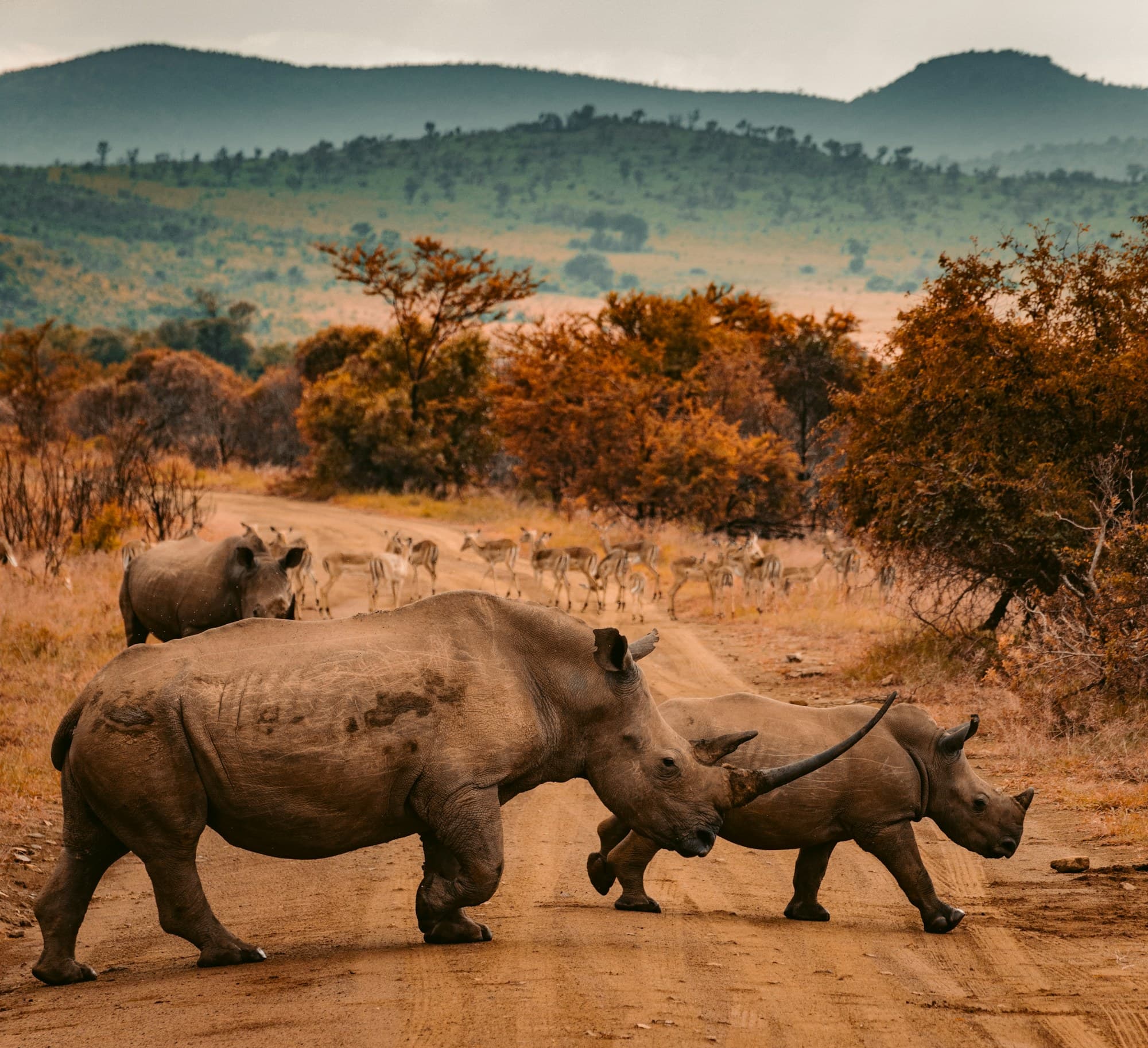
Two white rhinos grazing side by side in a private reserve

Tell Us When You Can Travel

Share your dates, who is coming and whether malaria-free matters, and a safari specialist will design a private South Africa route around you. Nothing is booked until you approve it.

Plan my safari here