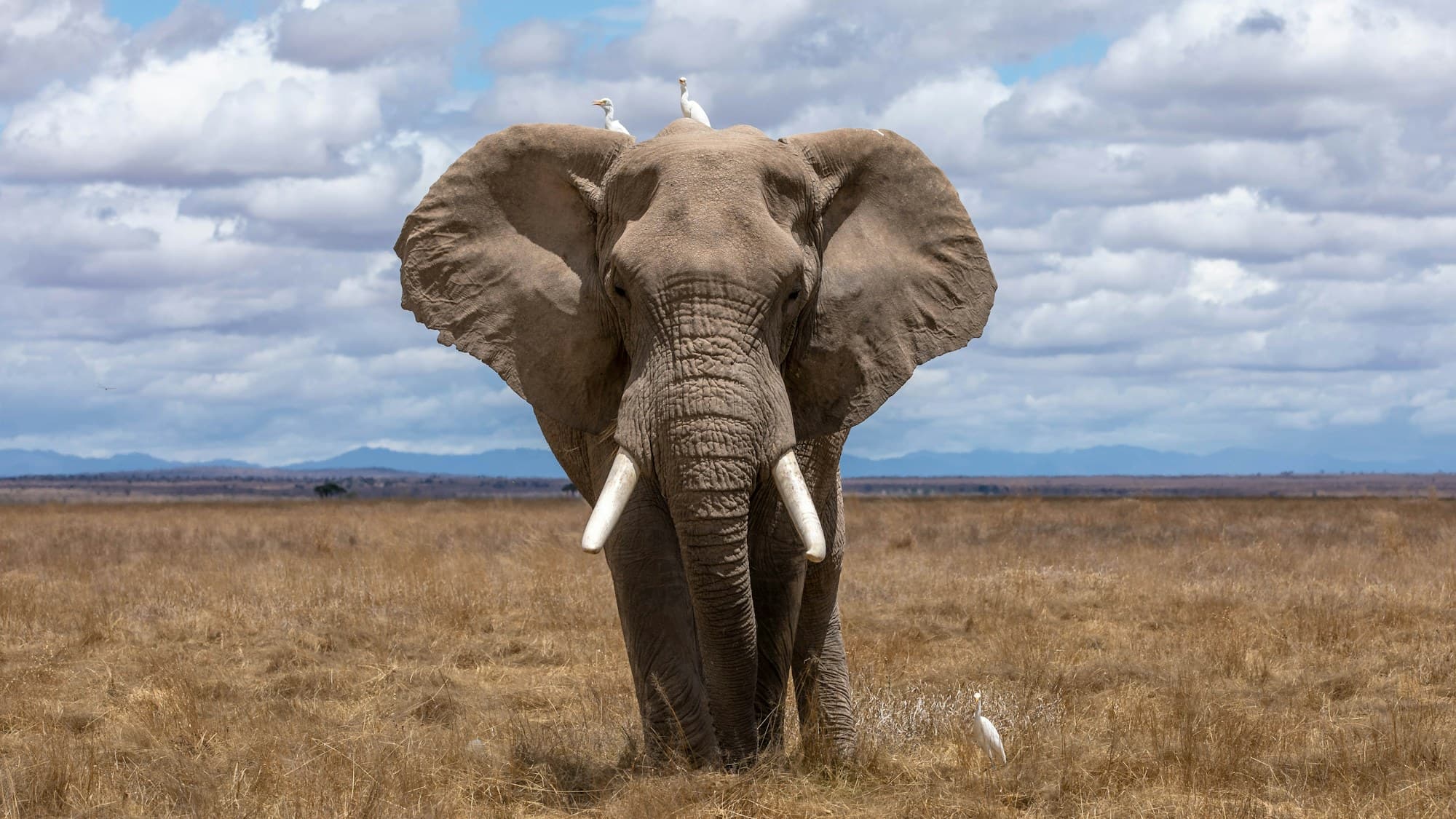
Elephant with white egrets standing front-on in open grassland under a wide sky

Destination guide

Tsavo National Park: Tsavo East & Tsavo West

Around 22,000 km² of red earth, lava flows and thornbush between Nairobi and the coast, big enough to drive for an hour without meeting another vehicle.

SizeAbout 22,000 km² combined: Tsavo East 13,747 km², Tsavo West 9,065 km²
Best timeJune–October and January–February
Recommended stay2 nights in one park; 3–4 to see both
Getting thereAbout 4–5 hours by road from Nairobi or 2–3 hours from Mombasa; train stations at Mtito Andei and Voi
Park feeUS$80 per non-resident adult for each park, Kenya Wildlife Service ‘Wilderness’ rate (at the time of writing, September 2026)
Known forRed elephants, maneless lions, Mzima Springs and vast, empty space

Tsavo East & Tsavo West

Why Visit

Tsavo National Park is really two parks, split by the Nairobi–Mombasa highway and railway, and together they cover around 22,000 km², close to 4% of Kenya. Tsavo East, at 13,747 km², is the larger and flatter: open plains of red soil, the Galana River and the Yatta Plateau, often described as the world’s longest lava flow. Tsavo West, at 9,065 km², is volcanic hill country, with lava fields, crystal-clear springs and a fenced rhino sanctuary.

The park’s character comes from its scale and its soil. Elephants dust-bathe in the iron-rich earth and often look rust-red, and many of Tsavo’s male lions have little or no mane. History is written on the land here, too: the railway builders’ encounter with the man-eating lions of 1898, the poaching that cut elephant numbers in the 1970s and 1980s, and the long recovery since. Because so few people visit relative to its size, patient driving is rewarded with sightings you share with nobody.

For most travelers Tsavo works as a bridge: the natural stop between Amboseli and the coast, or a short safari from Diani or Mombasa. Tsavo West is the easier fit for road trips from Amboseli, and the 10-Day Kenya Family Safari & Diani Beach spends two nights there before continuing to the Indian Ocean by train.

Best for

  • Road-trip safaris between Nairobi, Amboseli and the coast
  • A short safari from Diani, Watamu or Mombasa
  • Travelers who value space and solitude over density
  • Families who like lodges with waterholes and short drives

Tsavo East & Tsavo West

Wildlife & Highlights

  • Large elephant herds, often rust-red from dust-bathing
  • Lions, many of the males with thin or absent manes
  • Black rhino in Tsavo West’s Ngulia sanctuary
  • Hippo and crocodile in the clear pools of Mzima Springs
  • Fringe-eared oryx, lesser kudu and gerenuk in the dry bush
  • Buffalo herds along the Galana and Tsavo rivers
  • Leopard, cheetah and striped hyena, with luck
  • Palearctic migrant birds over the Ngulia Hills from about November

Season

Best Time to Visit

  1. January
  2. February
  3. March
  4. April
  5. May
  6. June
  7. July
  8. August
  9. September
  10. October
  11. November
  12. December
January–FebruaryHot and dry between the rains, with wildlife gathering at the Galana, Aruba Dam and the springs. The coast is at its calmest too, which makes this a strong window for pairing Tsavo with a beach.
March–MayThe long rains. The bush thickens and animals disperse, some roads on black-cotton soil become impassable and a few camps close. The landscape turns green and the birding is excellent.
June–OctoberThe long dry season and prime game viewing. Rivers and waterholes concentrate the elephants, the grass dies back to improve visibility, and the red earth glows in the low sun.
November–DecemberShort rains bring flowers and fresh grazing, and migrant birds from Europe and Asia pass through in large numbers. Game is more scattered, but the parks stay very quiet.

Tsavo East & Tsavo West

Areas to Know

Tsavo West: Mzima Springs & the volcanic north

In the north-west of Tsavo West, water filtered through the Chyulu Hills surfaces at Mzima Springs, where an underwater viewing chamber lets you watch hippos and fish in the clear pools. Nearby, the Shetani lava flow is a black river of rock from a relatively recent eruption. Lodges in the surrounding hills overlook busy waterholes, and Amboseli is a few hours’ drive away.

Best for: Scenery, Mzima Springs and road trips from Amboseli

Tsavo West: Ngulia & Lake Jipe

The fenced Ngulia Rhino Sanctuary, below the Ngulia Hills, protects a breeding population of black rhino; the bush is thick, so waterholes at dawn and dusk give the best chance. Far to the south-west, Lake Jipe straddles the Tanzanian border, with papyrus, waterbirds and views toward Kilimanjaro.

Best for: Rhino chances and remote corners

Tsavo East: the Galana River & southern plains

South of the Galana, Tsavo East is open and flat, and its elephants stand out against the red earth. Lugard Falls is a stretch of rapids where the river cuts through banded rock, Mudanda Rock overlooks a natural catchment where elephants drink in the dry season, and Aruba Dam draws herds in the south-east. The Yatta Plateau runs along the park’s western edge.

Best for: Big elephant herds and wide-open plains

Private & community sanctuaries near Voi

Between the two parks, around Voi and the Taita Hills, private and community wildlife sanctuaries host a handful of small camps. Some can offer guided walks and night drives, which the national parks do not allow, and vehicle numbers are low. They make a good base for a short safari from the coast.

Best for: Smaller camps, walks and short safaris from the coast

Tsavo East & Tsavo West

Getting There

Tsavo sits astride the main Nairobi–Mombasa road, so most visitors arrive by vehicle: Tsavo West’s Mtito Andei Gate is about four to five hours from Nairobi, and Tsavo East’s Buchuma Gate is about two hours from Mombasa. The Madaraka Express, Kenya’s standard-gauge railway, stops at Mtito Andei and Voi, where a guide and vehicle can meet you for a safari that continues to the Kenya coast. Light aircraft use airstrips near the main lodges and sanctuaries.

Drive or fly?

Tsavo is one of the few Kenyan safari areas where driving usually beats flying. The roads linking the parks with Amboseli and the coast are good, distances inside the parks are long, and your guide and vehicle earn their keep throughout. Fly only if you are short of time or staying at a remote camp. The train is the pleasant alternative for families: it runs along the park boundary, and elephants are sometimes visible from the carriage window.

Airstrips & airports

  • Voi
  • Kilaguni (Tsavo West)
  • Private sanctuary strips (charter)

Typical travel times

Nairobi to Mtito Andei Gate (Tsavo West)
About 4–5 hours
Amboseli to Tsavo West
About 2–3 hours
Mombasa to Buchuma Gate (Tsavo East)
About 2 hours
Diani Beach to Tsavo East
About 3–4 hours

Stays

Where to Stay

Tsavo’s classic stays are lodges built around floodlit waterholes, where elephants and buffalo come to drink while you dine, alongside tented camps on the Galana and Tsavo rivers. For more privacy, small camps in the sanctuaries between the two parks add walks and fewer vehicles. Standards vary more here than in the Mara, which is where local knowledge of each property earns its place.

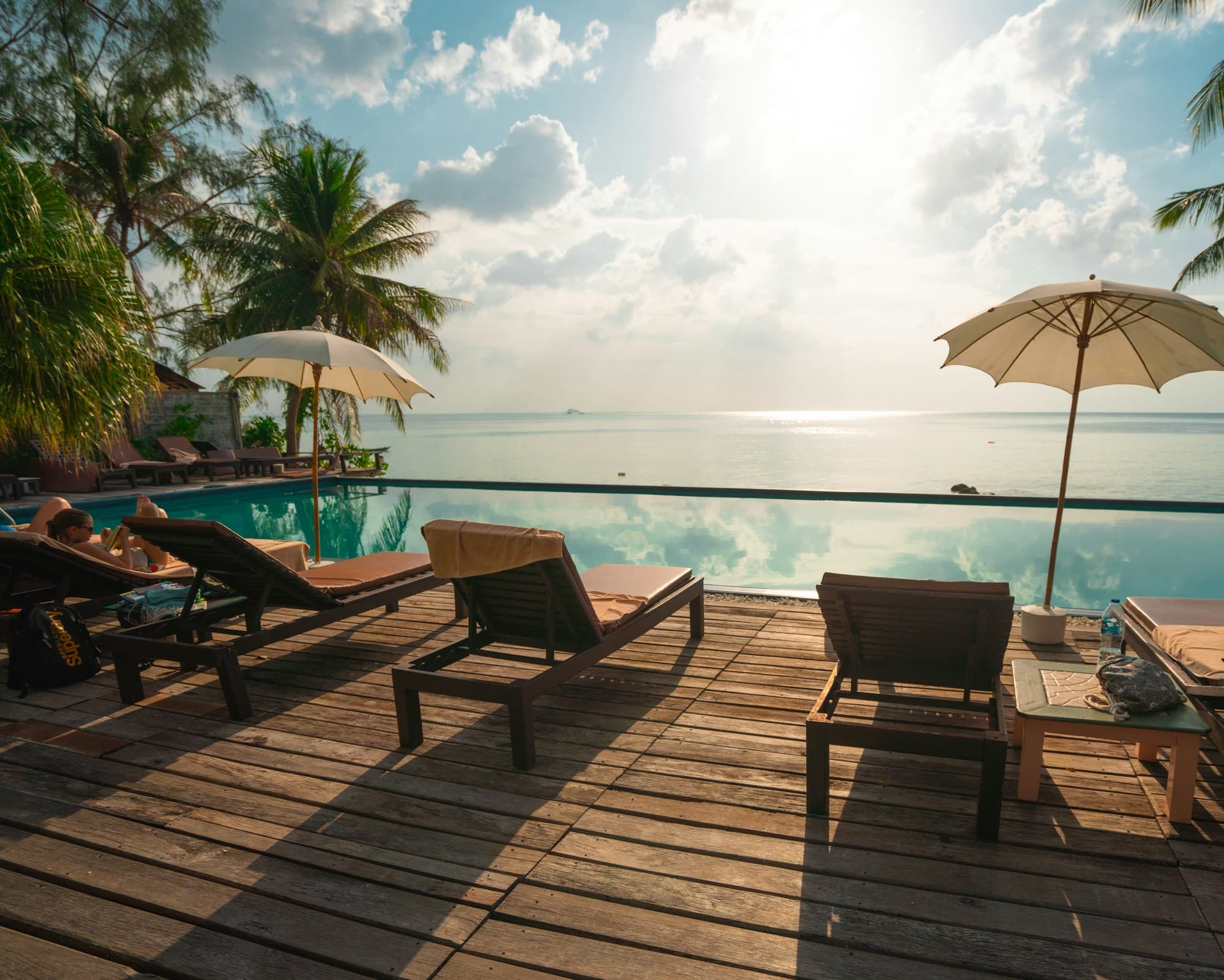
Luxury lodge deck with loungers and umbrellas at golden hourComfort

Tsavo West · volcanic hills

Waterhole Safari Lodge

Lodge

Long-established lodges in the volcanic hills of Tsavo West, built around a waterhole that is floodlit after dark so you can watch elephants and buffalo drink from the terrace. Rooms are straightforward and comfortable, and Mzima Springs and the Shetani lava flow are an easy drive away.

  • Floodlit waterhole viewing after dark
  • Views across the lava hills
  • Easy drives to Mzima Springs
  • Family rooms at many

Ideal for: Families and road travelers who want wildlife in view from the dinner table
A canvas safari tent set among trees at a private tented campPremium

Tsavo West or East · river frontage

Palm-Shaded River Camp

Tented camp

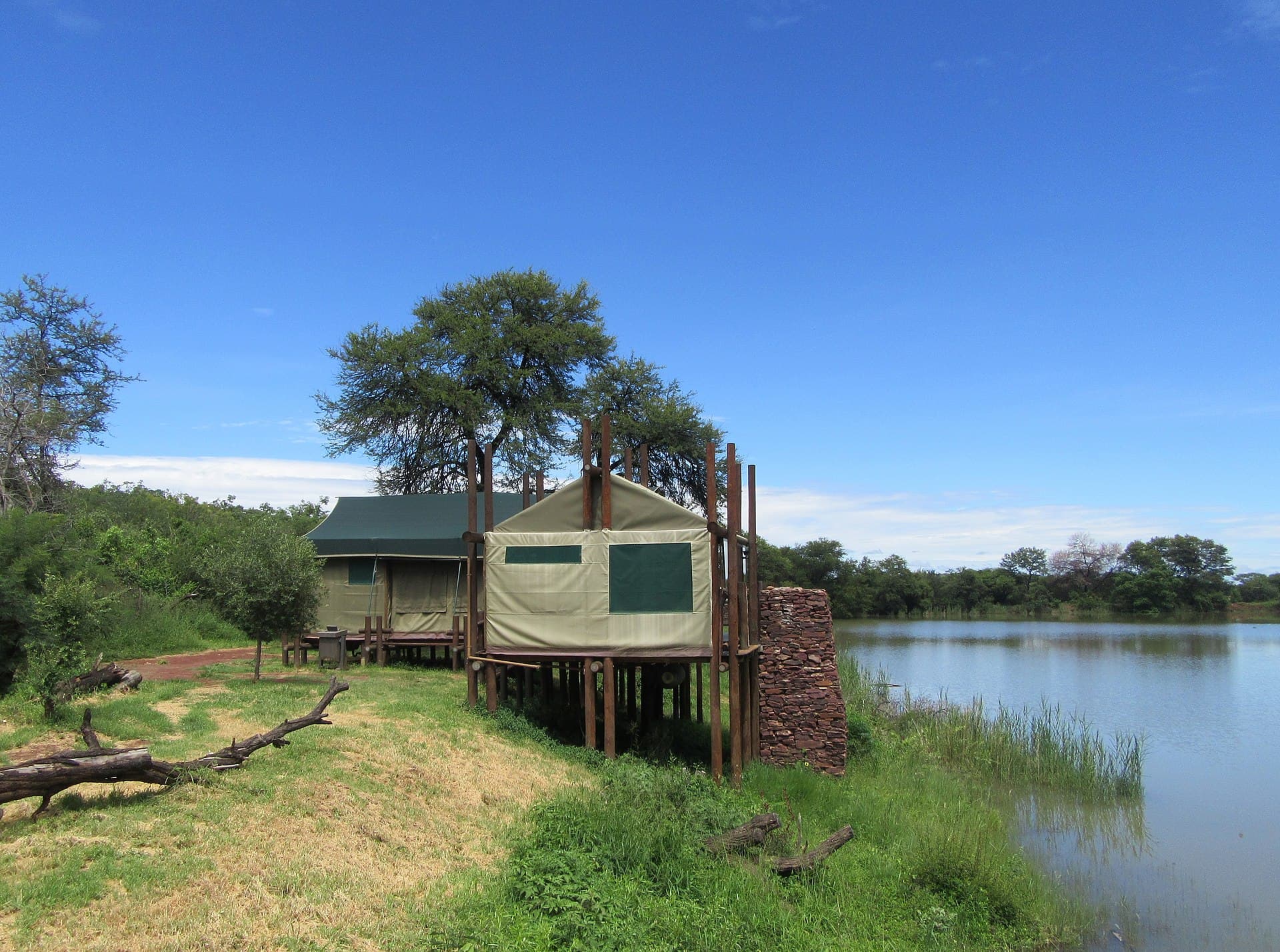
Tented camps on the banks of the Tsavo, Athi or Galana rivers, shaded by doum palms, where hippos and crocodiles share the water and elephants come to drink in the late afternoon. In a park system this vast, you meet few other vehicles, and your guide can plan long, quiet loops along the river.

  • Riverfront tents with verandas
  • Hippos and birdlife from camp
  • Long, quiet game-drive loops
  • Pool at some camps

Ideal for: Families and photographers who want a riverside base in Kenya’s biggest wilderness

A canvas safari tent set among trees at a private tented campLuxury

Tsavo · private or community sanctuary

Private Sanctuary Camp

Tented camp

Small, stylish camps on private or community sanctuaries bordering Tsavo, where the freedom to walk, drive at night and dine in the bush comes with very few neighbours. Many overlook a waterhole or look west toward Kilimanjaro, and the best pair serious conservation work with fine food and a pool.

  • Walks and night drives on sanctuary land
  • Waterhole or Kilimanjaro views
  • Pool and shaded lounges
  • Low guest numbers

Ideal for: Travelers who want Tsavo’s scale with the privacy and activities of a sanctuary

Safaris

Safaris That Go Here

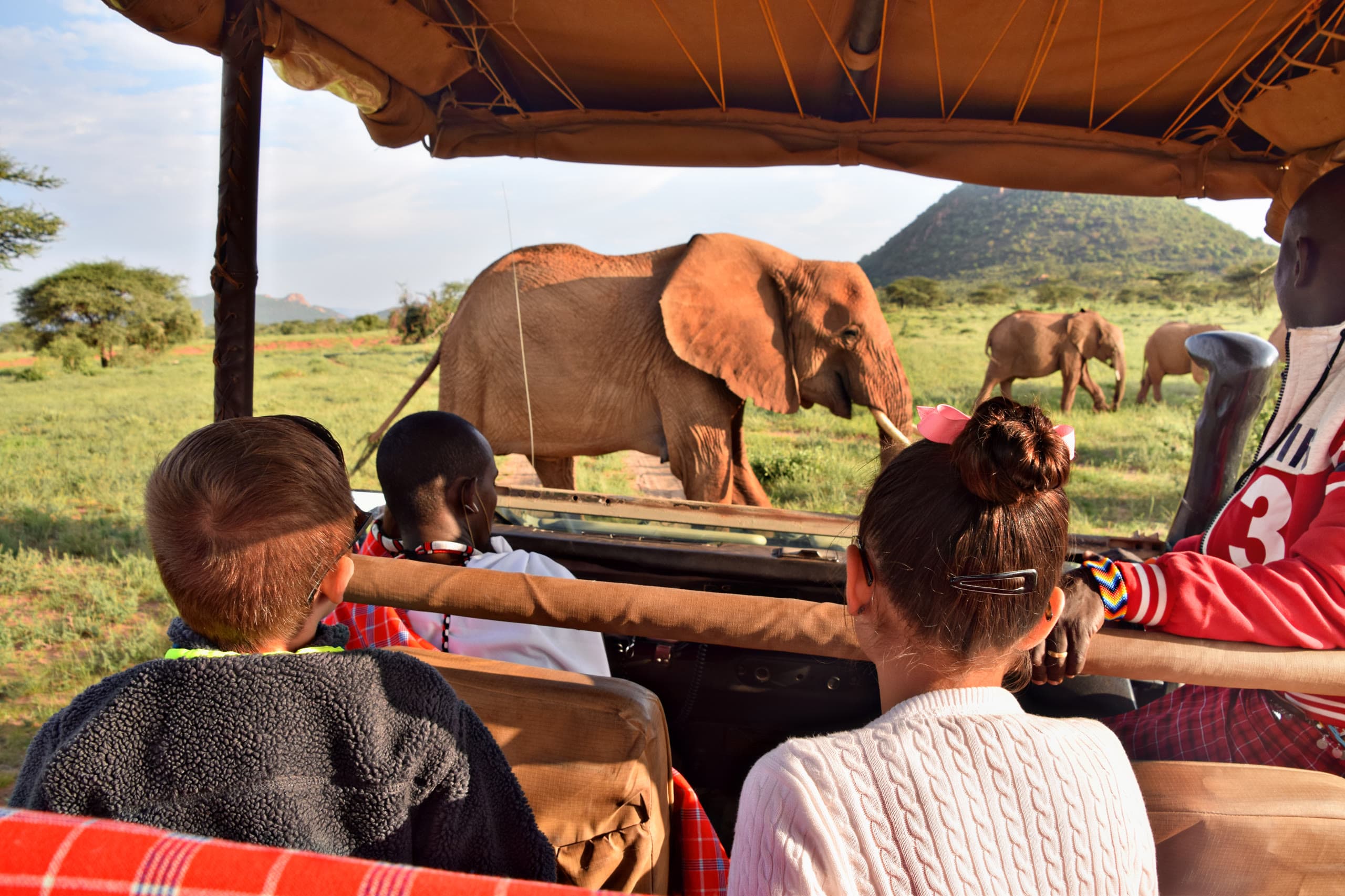
Safari guests watching a herd of elephants from an open vehicle on a family game drive
10 daysFamilies

Family Safari & Beach

Nairobi · Amboseli · Tsavo West · Diani Beach

Families with school-age children who want wildlife and a proper beach in one trip, mostly by road and rail

Best months
July–October and December–February
Comfort levels
Comfort · Premium · Luxury
Individually quoted

Good to know

Frequently asked questions

Tsavo East or Tsavo West: which is better?

Tsavo West is more scenic, with volcanic hills, Mzima Springs and a rhino sanctuary, and it links easily to Amboseli. Tsavo East is flatter and more open, which makes its big elephant herds easier to find, and it is closer to the coast. With two nights, choose the park that fits your route; with four, see both.

Can you do a Tsavo safari from Diani or Mombasa?

Yes, but a day trip is long: six hours or more of driving in total from Diani, leaving little time in the park itself. One or two nights in Tsavo East, or in a sanctuary near Voi, turns it into a proper safari with game drives at dawn and dusk, when animals are most active.

What are the Tsavo park fees?

At the time of writing (September 2026), Kenya Wildlife Service classes both Tsavo East and Tsavo West as ‘Wilderness’ parks, with a non-resident adult fee of US$80 for each, under rates introduced in October 2025. KWS also sells combined tickets, reported at US$150 for Tsavo West with Amboseli and US$215 for both Tsavo parks with Amboseli. Check the KWS website for current rates before you travel.

Is the story of the Tsavo man-eaters true?

Yes. In 1898 two maneless male lions killed a number of workers building the Uganda Railway bridge over the Tsavo River before they were shot by the engineer John Henry Patterson. Their remains are now in the Field Museum in Chicago, and the episode is part of Tsavo’s history rather than a concern for visitors today.

Is Tsavo safe to visit?

The southern and western sectors used by safaris are well visited and patrolled by Kenya Wildlife Service. Remote northern Tsavo East, beyond the Galana River, is little visited and borders counties covered by current government travel warnings, so the journeys we plan stay south of the river. The busy Mombasa highway is the more everyday consideration, which is why we avoid driving it after dark.

Can you see rhino in Tsavo?

Your best chance is Tsavo West’s Ngulia Rhino Sanctuary, a fenced area where black rhino breed under protection. The bush is dense and the animals are shy, so sightings are far from certain; guides usually wait at waterholes early or late in the day.

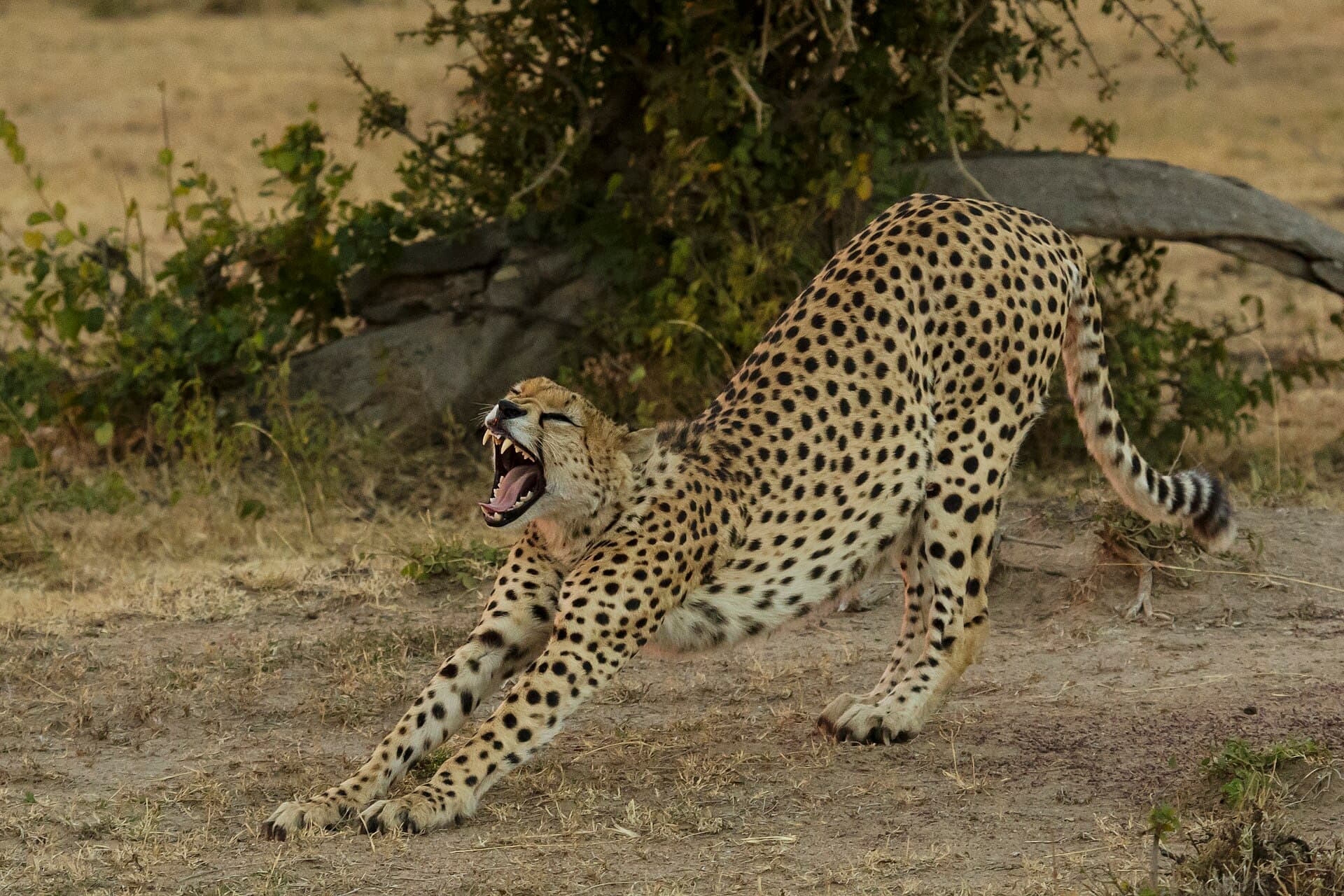
A cheetah scanning the plains in the Masai Mara

Start With Your Dates

Tell us when you can travel, who is coming and what you most want from Kenya. A safari specialist will design a private route around you, and nothing is booked until you approve it.

Plan my safari here