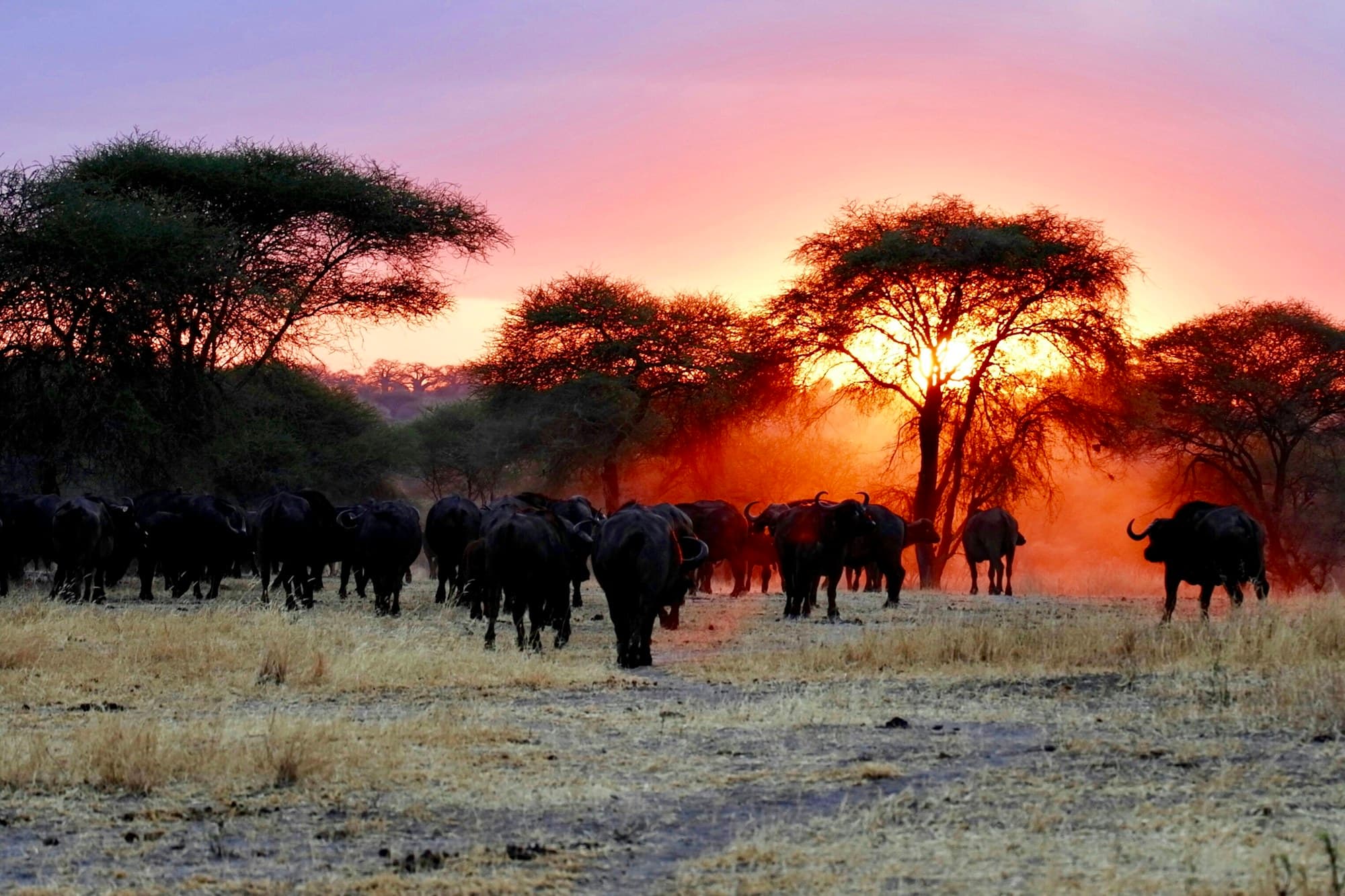
Herds moving through golden dust at a fiery Masai Mara sunset

Destination guide

Masai Mara Safari: The National Reserve & Mara Triangle

About 1,510 km² of rolling grassland, riverine forest and the Mara River, where big cats hunt all year and the migrating herds arrive from Tanzania in the dry months.

SizeAbout 1,510 km², including the Mara Triangle (about 510 km²)
Best timeJuly–October for the migration herds; January–February for dry, quieter game viewing
Recommended stay3 nights minimum; 4–5 in migration season
Getting thereAbout 45 minutes by light aircraft from Wilson Airport, or 5–6 hours by road via Narok
Entry12-hour tickets (06:00–18:00), cashless only, set by Narok County and the Mara Conservancy
Known forLion, cheetah and leopard, Mara River crossings and year-round resident herds

Masai Mara National Reserve

Why Visit

A Masai Mara safari is the reason many travelers choose Kenya in the first place. The national reserve covers about 1,510 km² of the country’s south-west, where rolling grassland runs up to the Oloololo escarpment and the Mara and Talek rivers wind through ribbons of croton and fig. It is the Kenyan end of the ecosystem it shares with Tanzania’s Serengeti (our Serengeti vs Masai Mara comparison weighs the two), and its lions, cheetahs and leopards are on view in every month, not only when the Great Migration arrives.

The reserve is managed as two areas. The larger Narok side, east of the Mara River, is run by Narok County and holds most of the camps, the busy Talek and central plains and the Musiara marsh. The Mara Triangle, about 510 km² between the river and the escarpment, is managed by the non-profit Mara Conservancy; it has fewer camps, well-graded roads and rangers who actively police behaviour at sightings. Which bank you base yourself on shapes your days more than any single camp choice.

Inside the reserve the rules are simple: vehicles keep to roads and tracks, game drives run between dawn and dusk, and walking is not permitted. That is why so many travelers split their stay, pairing reserve days at the river with nights in one of the neighbouring Masai Mara conservancies, where walks, night drives and caps on vehicle numbers are the norm. The split is the backbone of our 8-Day Masai Mara Great Migration Safari.

Best for

  • First safaris centred on big cats and open plains
  • Watching the migration herds at the Mara River, roughly July–October
  • Photographers after the classic East African grassland
  • Short fly-in safaris with a lot packed in
  • Pairing with a conservancy stay or with Tanzania’s Serengeti

Masai Mara National Reserve

Wildlife & Highlights

  • Lion prides on the central plains and around the Musiara marsh
  • Cheetah hunting on the short-grass plains east of the river
  • Leopard in the riverine thickets along the Talek and Mara rivers
  • Wildebeest and zebra in vast numbers, usually from about July to October
  • Hippo pools and very large Nile crocodiles in the Mara River
  • Elephant and buffalo in the marsh and along the foot of the escarpment
  • Topi on termite mounds, with impala, eland and Thomson’s gazelle
  • Spotted hyena clans and black-backed jackal
  • Black rhino in small numbers, rarely seen and best looked for with a patient guide
  • Martial eagle, southern ground hornbill and secretarybird

Season

Best Time to Visit

  1. January
  2. February
  3. March
  4. April
  5. May
  6. June
  7. July
  8. August
  9. September
  10. October
  11. November
  12. December
January–MarchWarm and mostly dry after the short rains, with green grass, young topi and gazelle, and very good cat viewing. The migrating herds are in Tanzania, so there are far fewer vehicles than in August, and cheetah hunts are easier to follow on the short grass.
April–MayThe long rains. Black-cotton soils make tracks slippery, several camps close for a few weeks and the reserve is at its quietest. Resident predators stay put, and travelers who come find emerald plains and long, uncrowded sightings.
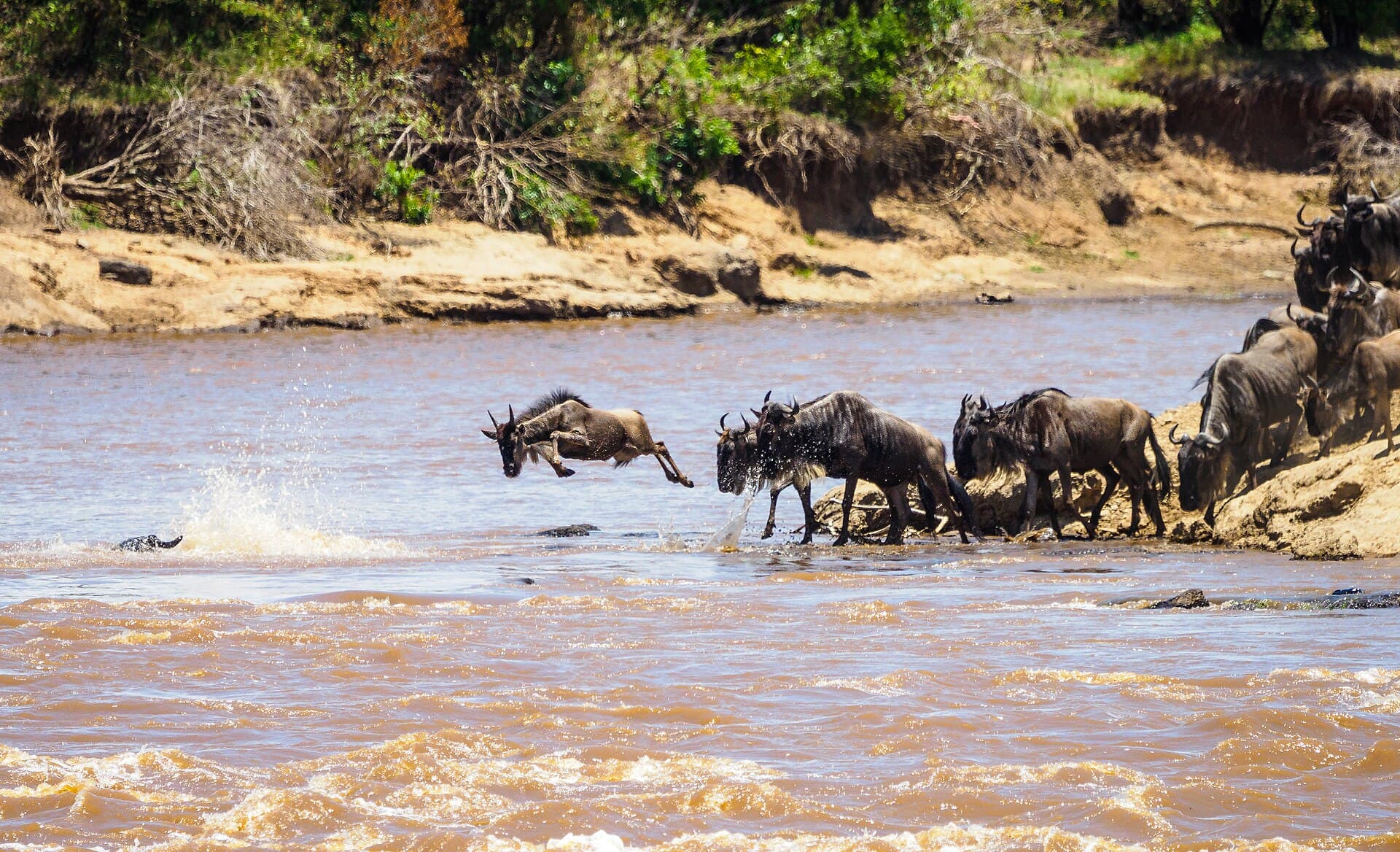
June–OctoberThe long dry season. The first migration columns usually cross from the Serengeti in July, and river crossings are most likely from late July into September, though rainfall across the border shifts the timing every year. This is the busiest period; our Mara migration guide has the month-by-month detail, and a dawn balloon flight over the herds is at its most popular now.
November–DecemberShort rains bring afternoon storms and fresh grass. The herds typically head back south by early November, and the reserve settles into its resident rhythm, with strong predator viewing and moderate vehicle numbers until the festive weeks.

Masai Mara National Reserve

Areas to Know

Mara Triangle

West of the Mara River and beneath the Oloololo escarpment, the Triangle is the reserve’s most tightly managed corner. The Mara Conservancy maintains all-weather roads, runs regular anti-poaching patrols and limits crowding at sightings, so crossings on the western bank tend to be calmer. Camps are few, and the lodges on the escarpment look out across the whole plain toward the Tanzanian border.

Best for: Calmer crossings, fewer vehicles and big views

Musiara marsh & the upper Mara River

In the reserve’s north-west, the Musiara marsh holds water all year and draws buffalo, elephant and the lion prides made famous by wildlife television. Several of the most-watched crossing points lie along the river to the south of it. This is superb country in July–September, and busy with it: a private vehicle and early starts help you stay ahead of the crowd.

Best for: Marsh lions, elephant and classic crossing points

Talek & the central plains

Around the meeting of the Talek and Mara rivers, the open central plains support the reserve’s highest density of big cats and, inevitably, of vehicles. It is excellent cheetah country, and leopards use the Talek’s wooded banks. Camps along the Talek make this the most practical base on a road trip from Nairobi.

Best for: Cheetah, lion and first visits by road

Sekenani, Keekorok & the Sand River

Road travelers usually enter at the Sekenani Gate on the eastern boundary, and the Keekorok area to the south is one of the reserve’s longest-established lodge areas. The rolling eastern and southern plains are often the first to fill with wildebeest as the herds arrive from Tanzania, and the Sand River along the border can host smaller crossings. Camps here are convenient rather than remote.

Best for: Easy road access and early migration arrivals

Masai Mara National Reserve

Getting There

Scheduled light aircraft leave Nairobi’s Wilson Airport for the Mara several times a day, a flight of about 45 minutes, though your plane may call at two or three other strips first. A guide and vehicle from your camp wait at the strip, so the first game drive begins on the way in. Luggage is strictly limited to about 15 kg per person, hand baggage included, in soft-sided bags; flying into Kenya explains the connection from an international arrival. By road, the route drops into the Rift Valley, climbs to Narok and continues to the Sekenani or Talek gates.

Drive or fly?

Driving from Nairobi takes most of a day: good tarmac to Narok, then a slower, rougher final stretch to the gates, with little wildlife until the last hour. It suits travelers who are combining the Mara with the Rift Valley lakes, or families who would rather keep one vehicle and guide throughout. Flying costs more and caps your luggage, but you land in time for an afternoon drive and leave after a final morning one, which is why most short stays, including the 5-Day Masai Mara Fly-In Safari, go by air.

Airstrips & airports

  • Keekorok
  • Ol Kiombo
  • Musiara
  • Mara Triangle strips

Typical travel times

Nairobi to Sekenani Gate via Narok
About 5–6 hours
Wilson Airport to a Mara airstrip
About 45 minutes, plus any stops
Talek to the main Mara River crossing points
About 1–1.5 hours with game viewing
Neighbouring conservancies to the reserve boundary
Typically 30–90 minutes

Stays

Where to Stay

Inside the reserve you can choose long-established lodges near the eastern gates, tented camps on the banks of the Mara and Talek rivers or, from about July to October, seasonal camps pitched within reach of the crossing points. On the Triangle side, a handful of lodges sit high on the escarpment with the whole plain below. Staying inside puts you at the river at first light, which matters in crossing season; for walks and night drives, look to the conservancy camps instead.

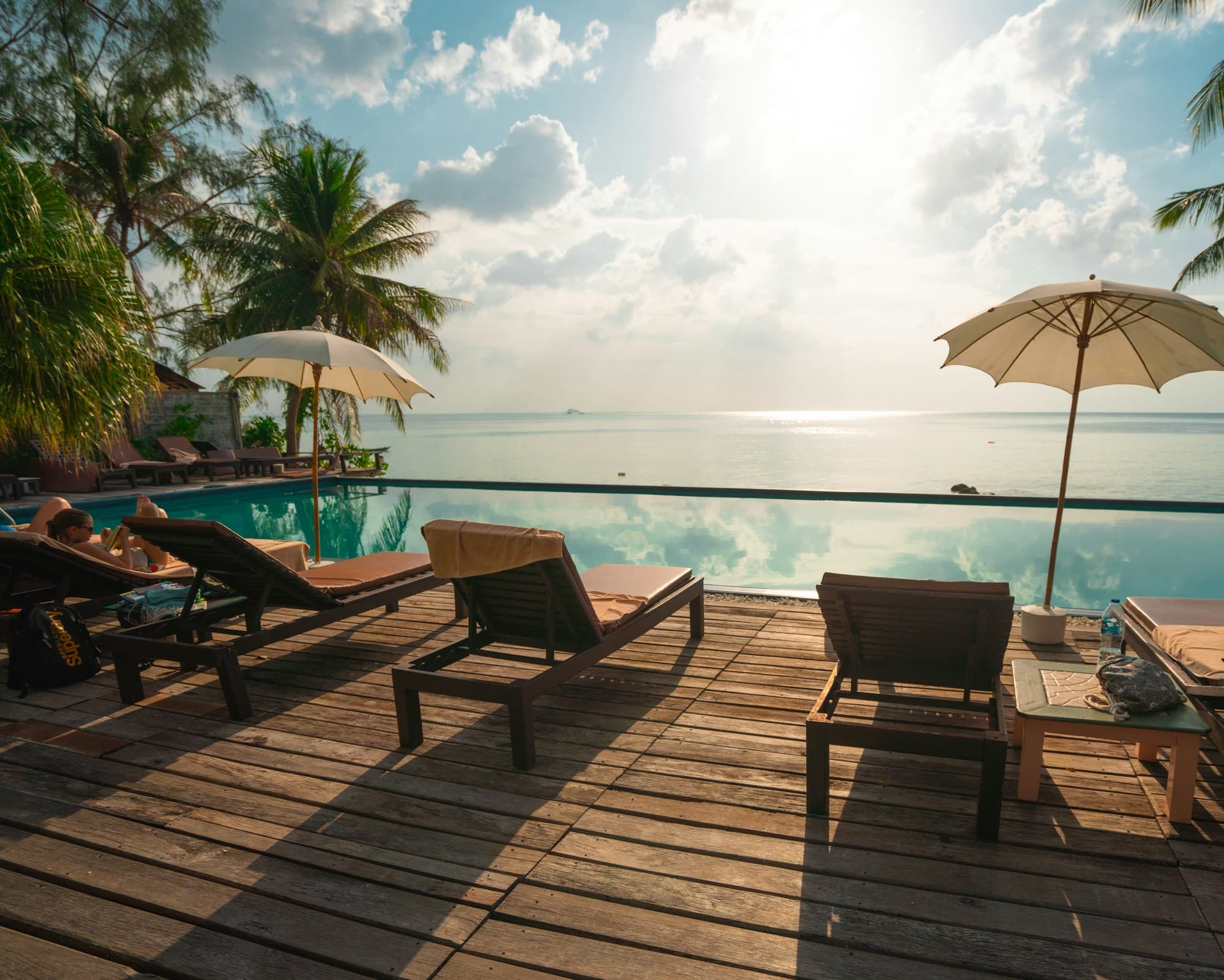
Luxury lodge deck with loungers and umbrellas at golden hourComfort

Masai Mara Reserve · Sekenani & Talek

Classic Reserve Lodge

Lodge

Established lodges near the Sekenani and Talek gates put you inside or right beside the national reserve, with stone or canvas rooms, a pool and a dining room that keeps to a timetable. They make a sensible base for families and road safaris, with the reserve’s central plains, known for big cats, close by.

  • Pool and gardens for the midday break
  • Family rooms at many lodges
  • Short drives to the Talek River and central plains
  • Daytime game drives under the reserve’s rules

Ideal for: Families and first-time visitors who want dependable comfort and quick access to the reserve
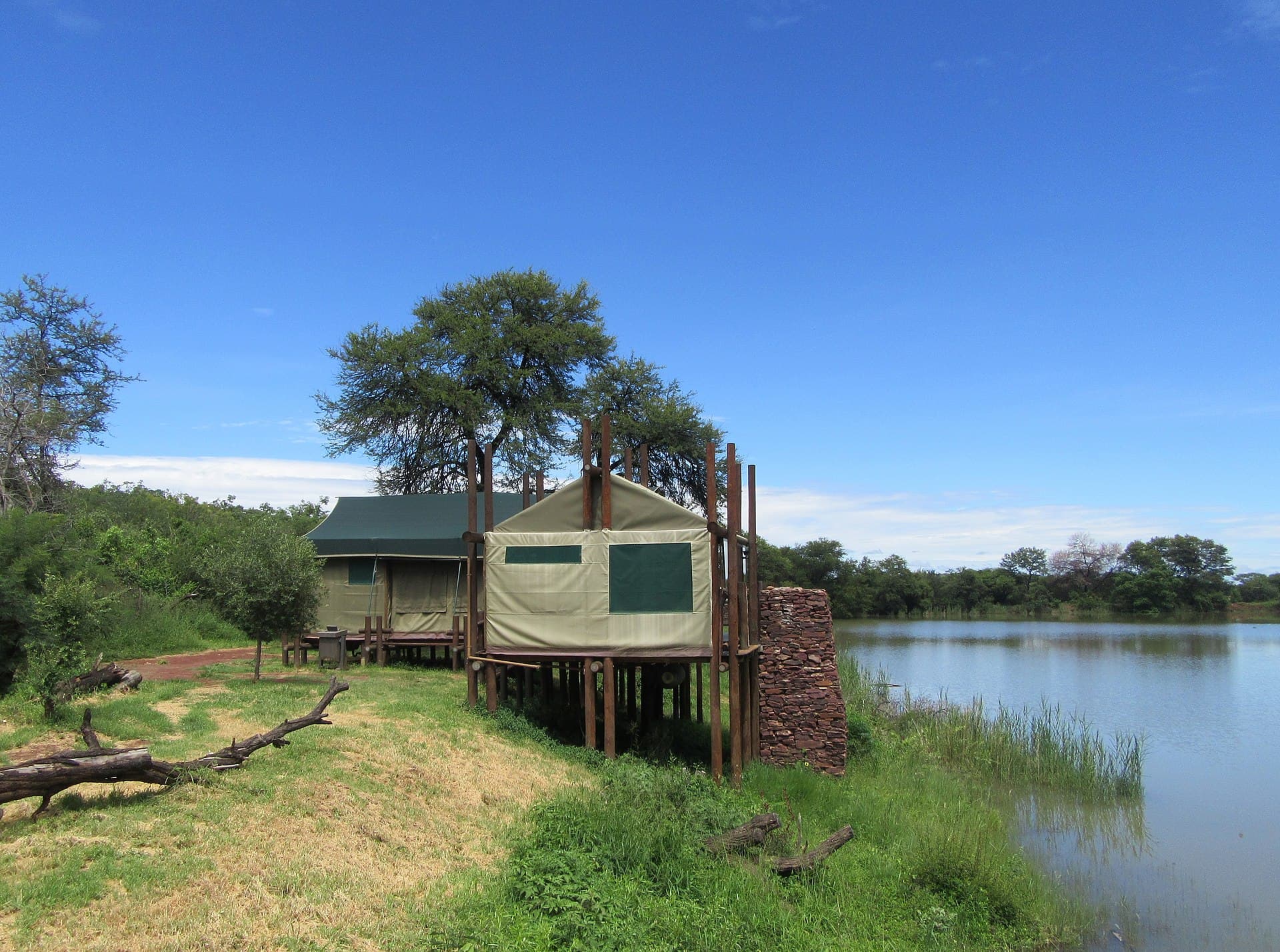
A canvas safari tent set among trees at a private tented campPremium

Masai Mara Reserve · Musiara & the Mara River

Riverine Forest Tented Camp

Tented camp

Canvas tents stand in the fig and croton forest along the Mara River near the Musiara marsh, where hippos grunt through the night and elephants sometimes wander between the tents. It is one of the best-placed styles for the marsh’s lions and the northern crossing points, within the reserve’s rules on daytime driving.

  • Riverbank tents with en-suite bathrooms
  • Hippos and birdlife on the doorstep
  • Quick access to the Musiara marsh and the river
  • Packed breakfasts for long crossing days

Ideal for: Photographers and migration travelers who want to wake up beside the river

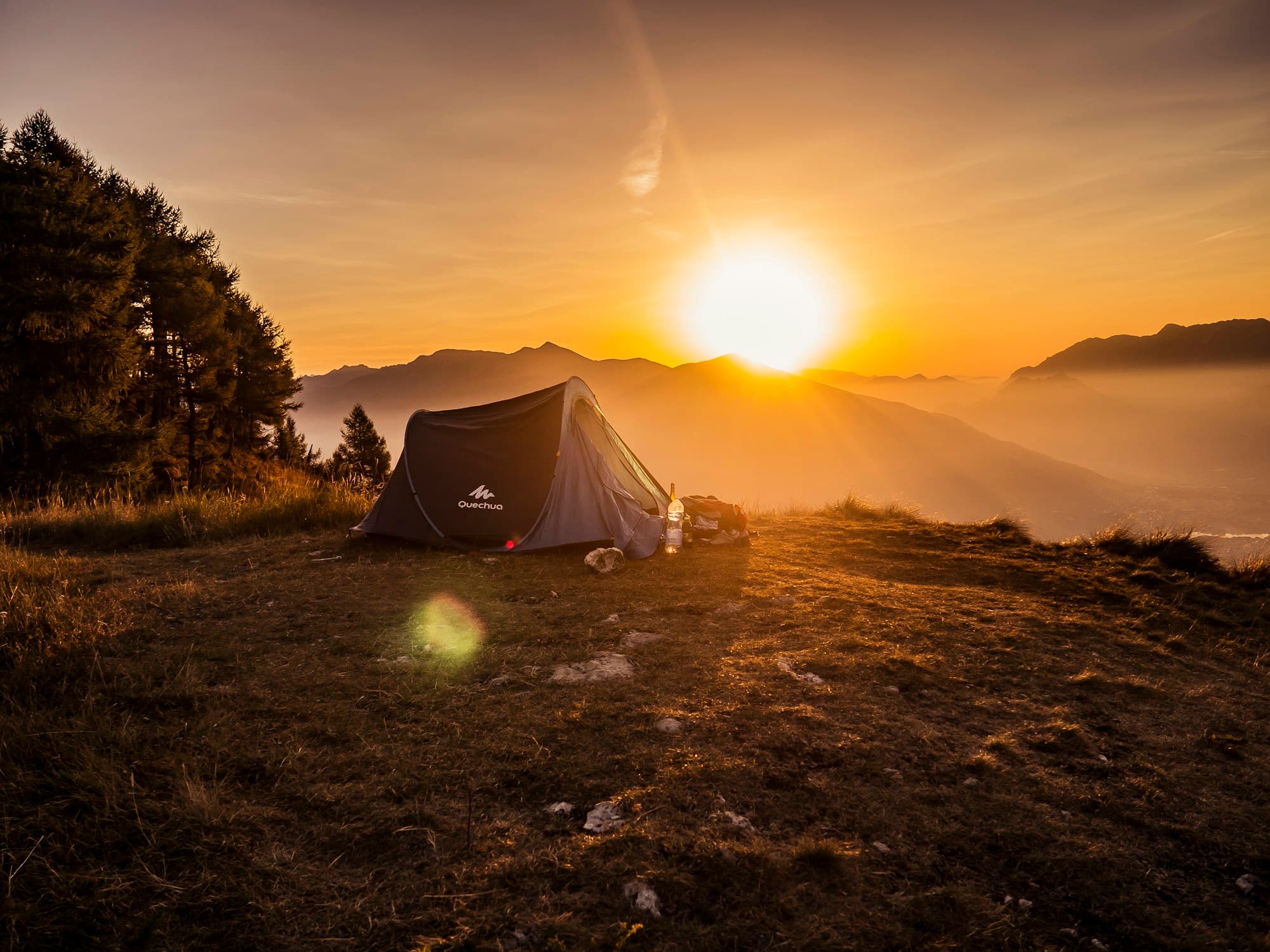
Tented camp glowing at sunrise over golden hillsLuxury

Masai Mara Reserve · river-crossing country

Crossing-Season Mobile Camp

Seasonal mobile camp · Typically open July–October

A small seasonal camp pitched close to the Mara River for the migration months, then packed away when the herds head south. Tents are spacious and properly furnished despite the temporary setting, and being near the crossings means you reach the river soon after the reserve opens rather than driving in from a distant lodge.

  • Usually only a handful of tents
  • Short drives to the crossing points
  • Hot showers, filled on request at some
  • Guides who track the herds’ movements daily

Ideal for: Travelers whose priority is time at the Mara River while the herds are there

Luxury lodge deck with loungers and umbrellas at golden hourUltra-Luxury

Mara Triangle · Oloololo escarpment

Escarpment Luxury Lodge

Lodge

High on the Oloololo escarpment, lodges in this style look straight down across the Mara Triangle to the river, with glass-fronted suites, a pool on the edge of the drop and service to match the view. The Triangle below is less visited than the rest of the reserve, and its crossing points are a short drive away.

  • Suites with floor-to-ceiling views over the Triangle
  • Pool on the escarpment edge
  • Easy access to the Triangle’s crossing points
  • Spa or wellness studio at many

Ideal for: Honeymooners and travelers who want a view that stops them in the doorway

Experiences

Experiences

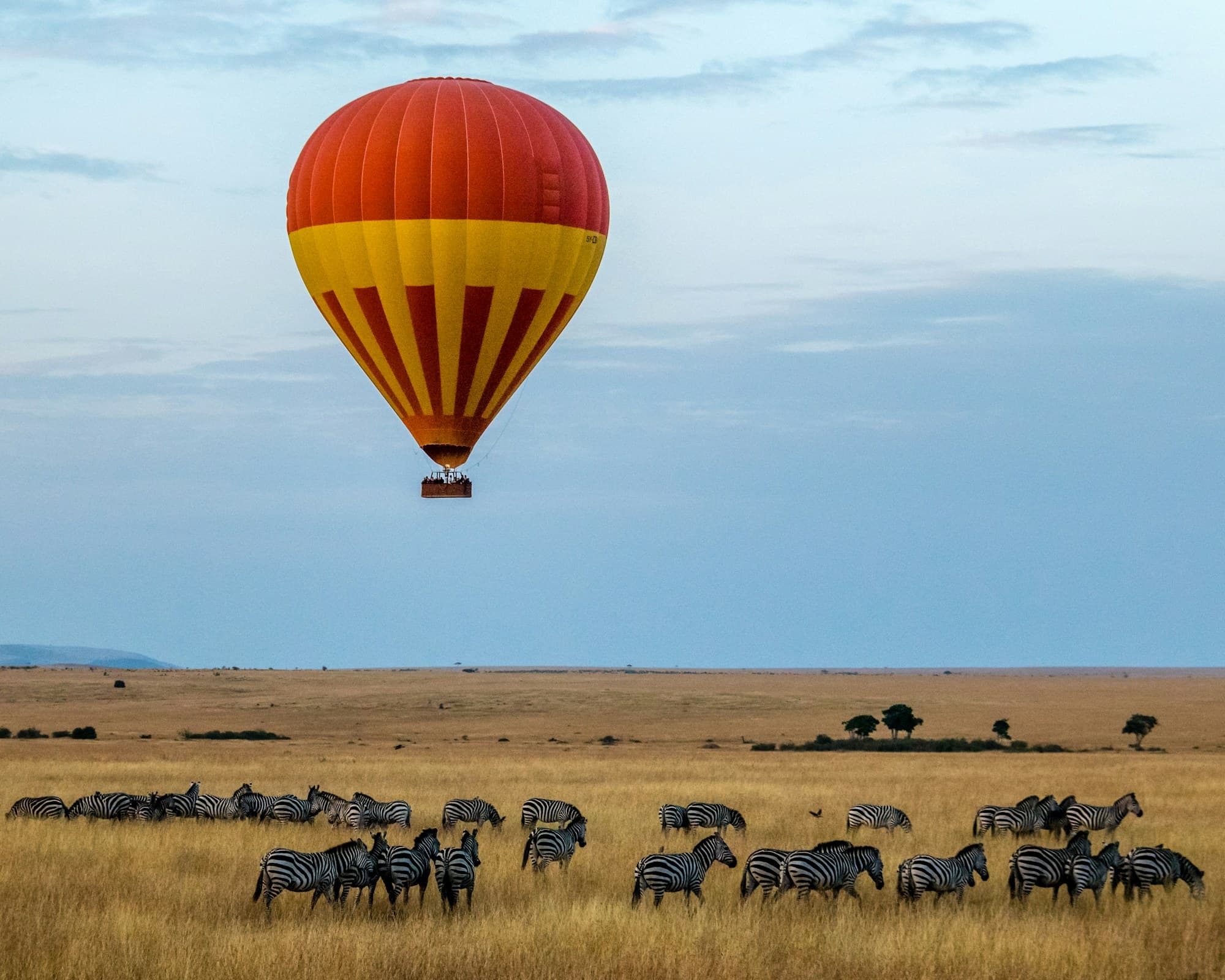
Aerial view over savanna herds from a hot-air balloon at first light

In the air

Masai Mara Hot-Air Balloon Safari

Lift off over the Mara at sunrise, drift for about an hour above the river and the plains, then land for a champagne breakfast in the grass.

Safaris

Safaris That Go Here

Wildebeest leaping into the Mara River during the Great Migration crossing
8 daysJul–Oct

Mara Migration Safari

Nairobi · Mara Conservancies · Masai Mara Reserve

Migration-focused travelers and photographers with July–October dates and realistic expectations

Best months
July–October, the Mara’s migration months
Comfort levels
Premium · Luxury · Ultra-Luxury
Individually quoted

Good to know

Frequently asked questions

How does the Masai Mara entry ticket work?

Entry is sold as a 12-hour ticket valid from 06:00 to 18:00, whatever time you pass the gate, and payment is cashless, by card or M-Pesa. At the time of writing (September 2026), Narok County and the Mara Conservancy charge non-residents more in the peak months, which include July–October, with lower child rates and free entry for young children. Because the figures have changed recently, we confirm the current rates when we prepare your quote.

How many nights do you need in the Masai Mara?

Three nights is the practical minimum: two full days plus your arrival afternoon, enough to find the big cats and settle into the rhythm of early starts. In migration season, four or five nights lets you sit out quiet days at the river, and many travelers divide them between a conservancy and the reserve.

Is the Masai Mara better than Amboseli or Samburu?

It depends on what you want most. The Mara is the stronger choice for lion, cheetah and leopard and for sheer numbers of plains game, especially once the herds arrive in about July. Amboseli is smaller and built around elephants beneath Kilimanjaro, while Samburu offers dry-country species the Mara lacks, such as Grevy’s zebra and gerenuk; with a week or more, flying between them gives you all three landscapes.

Should I stay in the Mara Triangle or on the Narok side?

Choose the Triangle if you value fewer vehicles, good roads and a calmer atmosphere at the western-bank crossing points. The Narok side offers more camps, the cat-rich Talek and central plains and easier road access from Nairobi. The main road link between the two is Purungat Bridge in the south, so it pays to base yourself on the side you most want to explore.

Is the Masai Mara safe?

The Mara lies well away from the areas named in current government travel advisories for Kenya, and the everyday risks are long road journeys and wild animals. Flying in removes most of the road time. Camps are unfenced, so staff walk you to your tent after dark, and inside the reserve you stay in the vehicle except at designated picnic and viewing spots.

What can you do in the Masai Mara besides game drives?

Dawn hot-air balloon flights are the classic extra, usually followed by a bush breakfast. Walking, night drives and off-road driving are not allowed in the reserve itself, so travelers who want them add a few nights in a neighbouring conservancy. Visits to Maasai communities are best arranged through the conservancies, where the landowners set the terms.

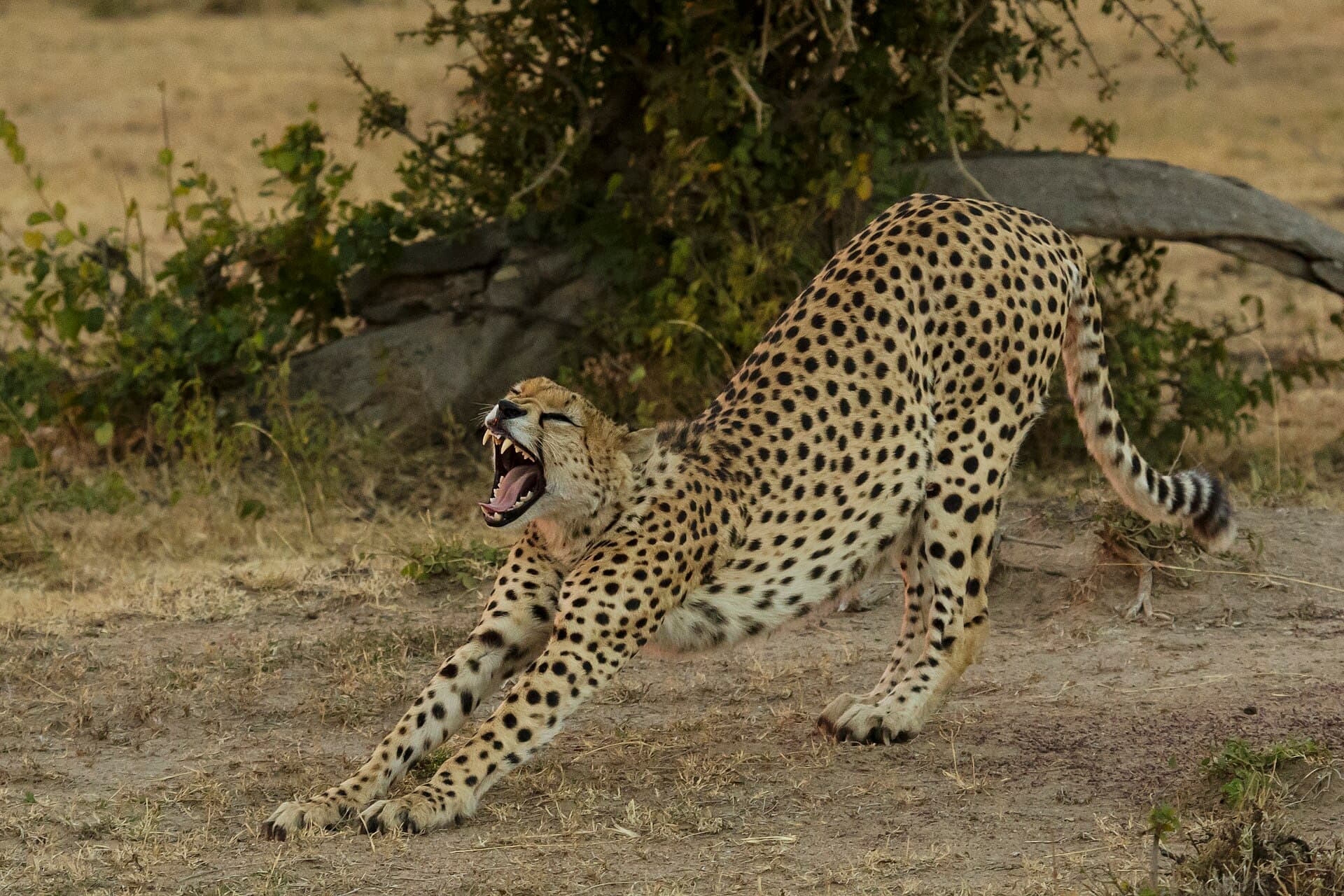
A cheetah scanning the plains in the Masai Mara

Start With Your Dates

Tell us when you can travel, who is coming and what you most want from Kenya. A safari specialist will design a private route around you, and nothing is booked until you approve it.

Plan my safari here