Kenya Travel Guide

Flying Into Kenya: JKIA, Wilson & Safari Flights

Two Nairobi airports, one strict luggage rule and a choice between flying and driving: how the flights on a Kenya safari fit together.

Two airports, one city

Kenya safari flights almost always run through Nairobi, but through two different airports. Long-haul flights land at Jomo Kenyatta International Airport (JKIA, code NBO) on the city’s eastern edge. Flights into the parks leave from Wilson Airport (WIL), a busy domestic airfield on Langata Road about 6–8 km from the city center, where each scheduled carrier runs its own check-in building.

That split explains most of the planning advice below: why we usually build in a night in Nairobi, why your luggage has to shrink to 15 kg, and why flying into the Mara so often beats a long day on the road.

Getting From the US to Nairobi

At the time of writing, a single nonstop route links the US and Kenya; every other itinerary connects once.

Nonstop from New York

A nonstop service links New York JFK and Nairobi, the only one from the US at the time of writing. It is the quickest option from the East Coast; check the current number of weekly flights, which has varied.

Via Europe

Amsterdam and London have long-established links to Nairobi and suit travelers who like to break the journey with a night in Europe.

Via the Gulf or Istanbul

Doha, Dubai and Istanbul connect to Nairobi from many US cities, often on overnight flights that reach Kenya early in the morning.

Via Addis Ababa

Addis Ababa has nonstop links with several US gateways and a short onward hop to Nairobi.

Adding Tanzania

If the Serengeti is also on your route, compare an open-jaw ticket into Nairobi and home from Kilimanjaro with a simple return. Our Kenya and Tanzania journey shows how the two connect.

JKIA to Wilson, and why we plan a night in Nairobi

The transfer from JKIA to Wilson takes about 30–60 minutes, using the elevated Nairobi Expressway and the Southern Bypass to skip the worst of the traffic. On paper, a same-day connection works. In practice, you need at least three hours between an international landing and a Wilson departure once immigration, the eTA check, bags and the drive are added up.

For most US arrivals we recommend a night in Nairobi instead, usually in the green suburbs of Karen or Langata, close to Wilson. It absorbs a late or delayed flight, buys you a shower and a proper sleep, and puts you on the morning’s first flights into the bush. If you land early in the day, a few hours in Nairobi can fill the gap with orphaned elephants and giraffes rather than a departure lounge.

Typical Flight and Drive Times From Nairobi

Approximate times for a direct flight from Wilson; scheduled services often stop at other airstrips on the way.

DestinationExample airstripsFlight from WilsonDriving instead
Masai Mara reserve & conservanciesKeekorok, Ol Kiombo, Musiara, Mara North, Olare OrokAbout 45 minutesAbout 5–6 hours via Narok
AmboseliAirstrips in and beside the parkAbout 45 minutesAbout 4–5 hours
LaikipiaNanyuki, Lewa, LoisabaAbout 1 hourAbout 3.5–4 hours to Nanyuki
SamburuSamburu, Kalama, Buffalo SpringsAbout 1 hourAbout 5–6 hours
Lake Naivasha and Lake NakuruUsually reached by roadAbout 1.5–2 hours to Naivasha; 2.5–3 hours to Nakuru
Diani (south coast)UkundaRoughly 1.5 hoursNot practical; fly, or take the train to Mombasa

Drive times assume daylight and ordinary traffic leaving Nairobi.

What bush flights are really like

Most safari flights are scheduled services on small turboprop aircraft run by established light-aircraft carriers. They work like a bus route: a morning flight to the Mara may land at two or three airstrips before yours, so 45 minutes on the timetable can stretch past an hour. Take a window seat on the way west for the view of the Rift Valley escarpment.

A private charter costs more, flies to your schedule and straight to your airstrip, and can sometimes relax the luggage limit. A seasonal scheduled link between the Mara and the Serengeti has operated via Migori in Kenya and Tarime in Tanzania, with a road transfer across the border; ask us whether it is running for your dates, since the fallback is a longer routing through Nairobi. Our 5-day Masai Mara fly-in safari shows the classic flying pattern.

The 15 kg Rule

Luggage is where bush flying bites, and the scales at Wilson are not negotiable.

  • The standard allowance on scheduled safari flights is 15 kg (33 lb) per person, and it includes your hand luggage and camera bag.
  • Bags must be soft-sided, because the aircraft holds are small and irregular; a duffel without a rigid frame or wheels is safest.
  • At least one scheduled carrier allows 20 kg on routes to the coast (Diani, Malindi, Mombasa and Lamu) and to Zanzibar, but the 15 kg limit still applies on legs into the parks.
  • Infants without their own seat get no allowance, so a baby’s things count against a parent’s 15 kg.
  • Extra bags can wait at Wilson, where carriers commonly store them free, or at your Nairobi hotel until you return.
  • More weight means a freight booking or an extra seat, so tell us early about long lenses or specialist kit. For what goes in the bag, see our safari packing list.

Reaching the Coast

Our Kenya coast page compares the beaches; these are the gateways.

Diani

Fly into Ukunda airstrip, a short drive from the beach, from Wilson or, in some seasons, directly from the Mara.

Watamu

Fly to Malindi, then drive about 28 km south to Watamu’s coves and marine park.

Mombasa and the train

Moi International Airport (MBA) takes larger jets from Nairobi. The Madaraka Express train, opened in 2017, links Nairobi and Mombasa and stops at Tsavo gateways such as Mtito Andei and Voi.

Lamu

Manda airport serves Lamu, which falls under current US advice against travel; read Is Kenya safe? before considering it.

Arrival Essentials

  • SIM or eSIM: Kenyan SIM cards and eSIMs must be registered with your passport before they work.
  • M-Pesa: Kenya runs on mobile money, from craft stalls to park gates, and visitors can often use it once registered; cards and cash cover most safari needs.
  • Plugs: Kenya uses the UK-style three-pin plug (Type G), so bring an adapter; some camps charge devices in the main area rather than in tents.
  • Cash: carry small US dollar notes of recent series and a few Kenyan shillings for incidentals; older, marked or torn dollar bills are often refused.

Safaris

Recommended safaris

A cheetah scanning the plains in the Masai Mara
5 daysShort & focused

Masai Mara Fly-In

Nairobi · Mara Conservancies

First-timers and travelers short on leave who want the Mara done properly in under a week

Best months
All year except the April–May rains
Comfort levels
Comfort · Premium · Luxury · Ultra-Luxury
Individually quoted
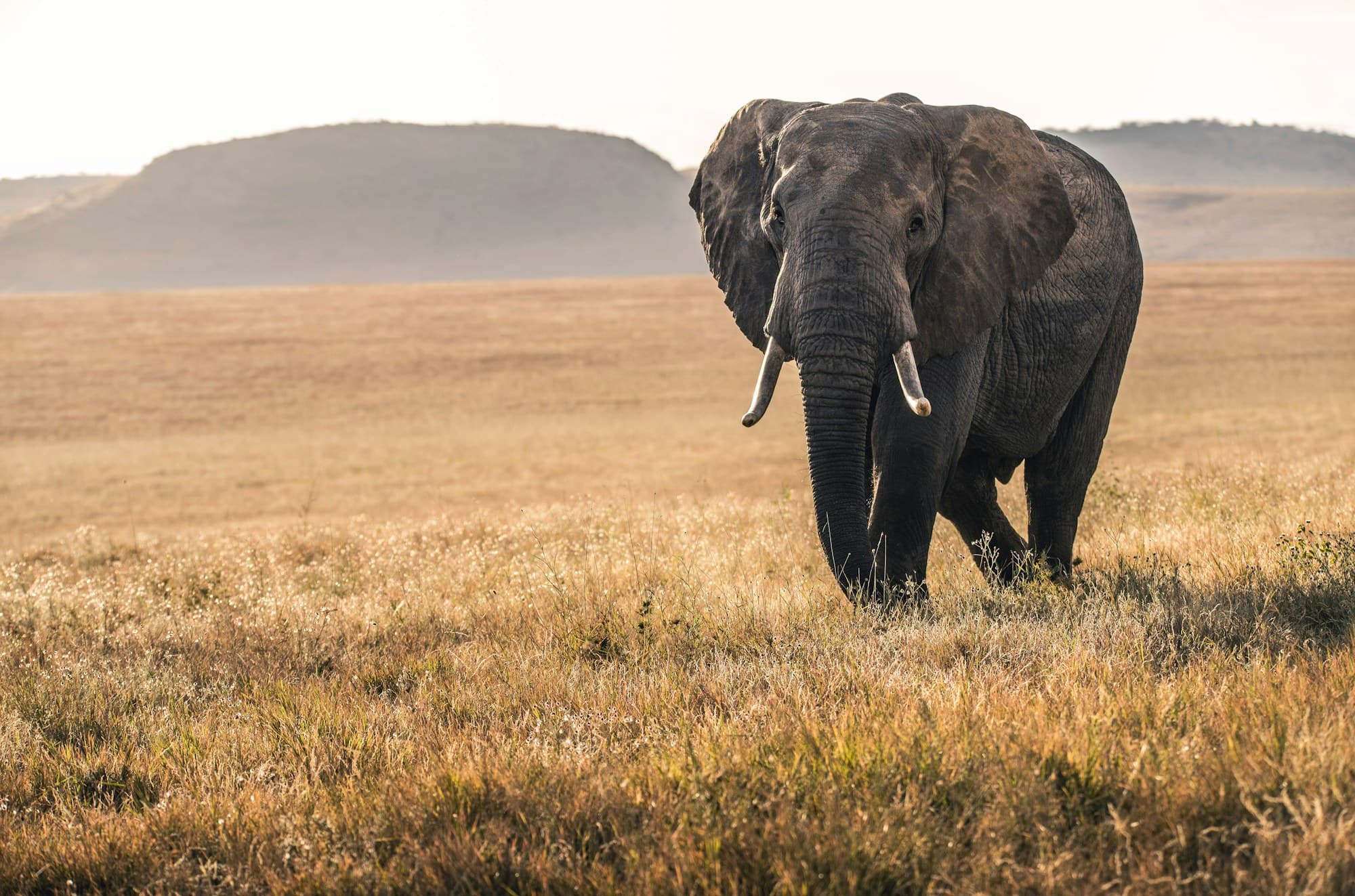
Elephant walking through dry golden grassland in northern Kenya
10 daysComplete Kenya

Kenya Highlights

Nairobi · Samburu · Laikipia · Mara Conservancies

First-timers who want Kenya’s full range, and returning travelers who have seen the Mara alone

Best months
June–October and December–March
Comfort levels
Premium · Luxury · Ultra-Luxury
Individually quoted
Good to know

Frequently asked questions

How do I get from JKIA to Wilson Airport?

By private transfer, arranged in advance, which takes about 30–60 minutes via the Nairobi Expressway and Southern Bypass. Allow at least three hours between landing at JKIA and a flight from Wilson, or better, spend a night in Nairobi and fly out the next morning.

How long is the flight from Nairobi to the Masai Mara?

About 45 minutes from Wilson to the first Mara airstrip. Scheduled flights often stop at several strips, so reaching your own can take an hour or more. Driving takes about 5–6 hours via Narok.

What is the luggage allowance on Kenya safari flights?

Usually 15 kg per person including hand luggage, in soft bags, on scheduled flights into the parks. Some coast routes allow 20 kg. Anything extra can be stored at Wilson or at your Nairobi hotel.

Is there a direct flight from the US to Kenya?

At the time of writing, one nonstop route links New York JFK with Nairobi. From other US cities you connect once, through Europe, the Gulf, Istanbul or Addis Ababa. Frequencies change, so check current schedules.

Should we fly or drive between parks in Kenya?

Fly the long legs, such as Nairobi to the Mara or Samburu, and consider driving short ones, such as Nairobi to Lake Naivasha. Flying saves most of a day each way and avoids busy two-lane highways, while a road leg lets you see the Rift Valley and stop along the way.

A cheetah scanning the plains in the Masai Mara

Start With Your Dates

Tell us when you can travel, who is coming and what you most want from Kenya. A safari specialist will design a private route around you, and nothing is booked until you approve it.

Plan My Kenya Safari