
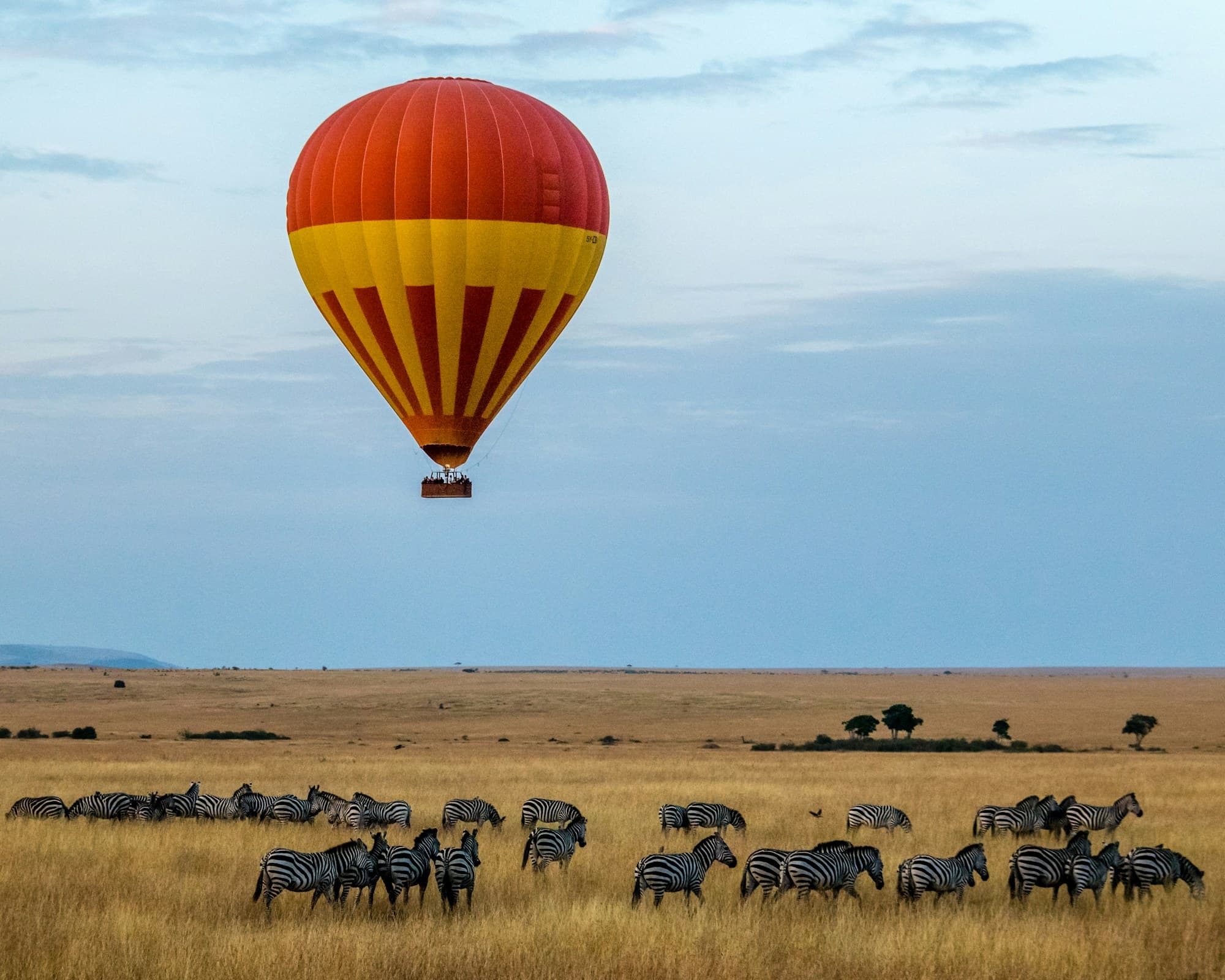
In the air
Serengeti Hot-Air Balloon Safari
Drift over the Serengeti at first light as the plains wake beneath you, then land for a champagne breakfast in the bush.
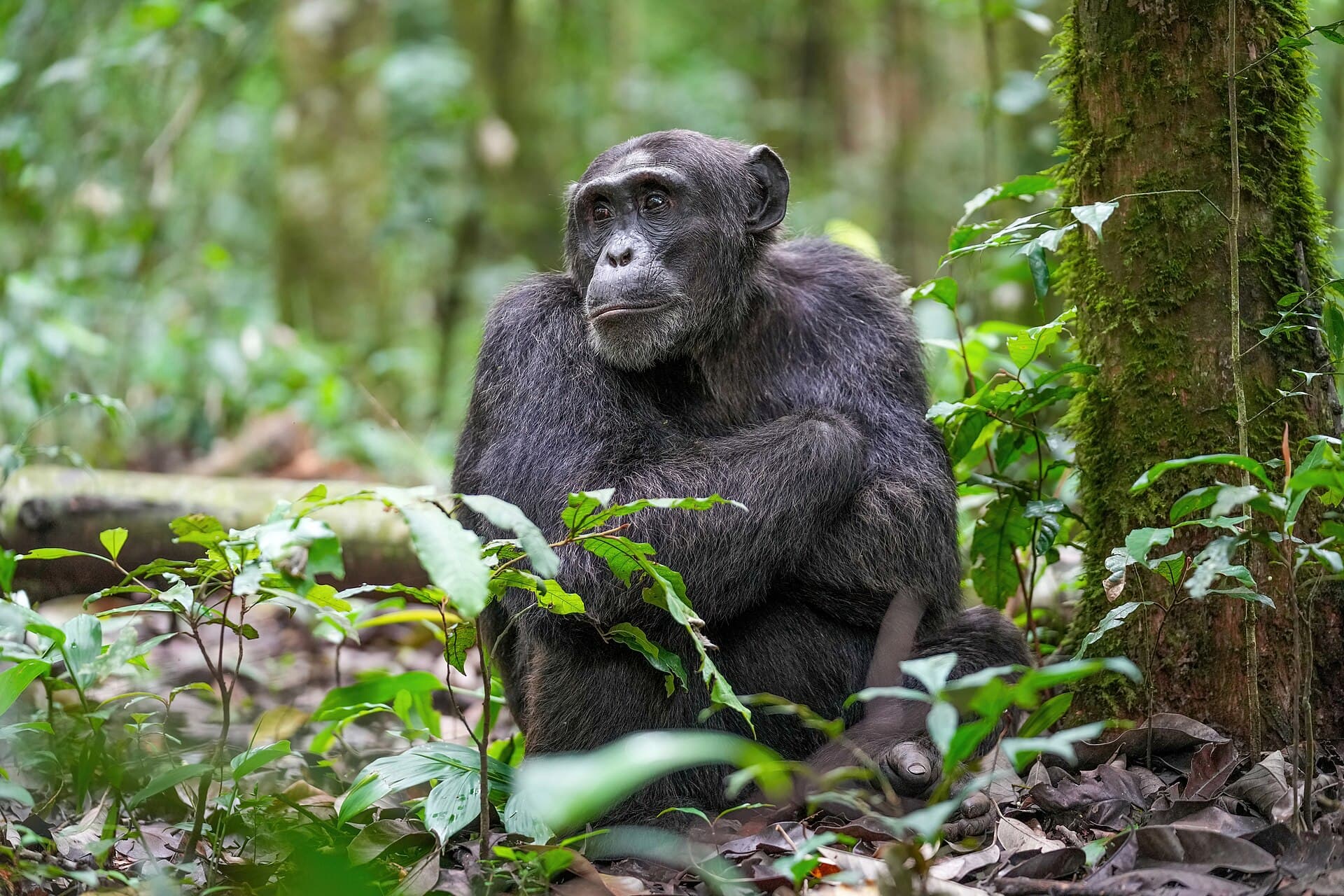
Primates
Forested mountains drop straight into a clear, deep lake, and somewhere on the slopes above you a chimpanzee community is calling, drumming and moving through the trees.
Far from the northern circuit, on the eastern shore of Lake Tanganyika, two parks offer some of Africa’s most intimate encounters with wild chimpanzees. Gombe, Tanzania’s smallest national park, is where Jane Goodall began her research in 1960. Mahale, larger and far more remote, has hosted long-term chimpanzee research since the 1960s and is reached by light aircraft and boat, with only a few places to stay.
Treks are genuine hikes. Trails climb steep, humid slopes, and reaching the chimps can take anything from under an hour to several hours. Once you find them, time is usually limited to about an hour, at a set distance and often with masks, to protect them from human illness. Unlike gorilla families, chimpanzees split into shifting parties and travel fast, so sightings are very likely in the better months but never certain.
Chimpanzee Trekking in Mahale & Gombe
We plan the route, flying in by light aircraft for Mahale or via Kigoma for Gombe.
Trackers set out early to locate the chimps and keep in touch with your guide.
You hike forest trails with your guide until the chimps are found.
You spend about an hour with them, keeping to the park’s distance and mask rules.
Afternoons are usually free for the lake: a boat trip along the shore or simply the view from camp.
Chimpanzee Trekking in Mahale & Gombe
Parks
Wild chimpanzees, forest-clad mountains and white-sand beaches on Lake Tanganyika, reached only by plane and boat.
Explore
The small, steep lakeside forest where Jane Goodall began studying wild chimpanzees in 1960, reached by boat from Kigoma.
ExploreGood to know
Mahale is wilder and more remote, with a larger park and a longer stay usually recommended. Gombe is smaller, easier to reach via Kigoma and steeped in the history of Jane Goodall’s research.
Usually about an hour once they are found, a limit set to reduce stress and disease risk. The trek to reach them can take far longer, depending on where the community is that day.
Reasonably fit. Trails are steep, humid and sometimes slippery, and you may hike for several hours; guides adjust the pace, but it is a genuine forest trek.
Gorillas move in cohesive family groups and are relatively easy to follow once located. Chimpanzees are faster, louder and split into shifting parties, which makes each encounter more dynamic and less predictable.
Experiences
In the air
Drift over the Serengeti at first light as the plains wake beneath you, then land for a champagne breakfast in the bush.
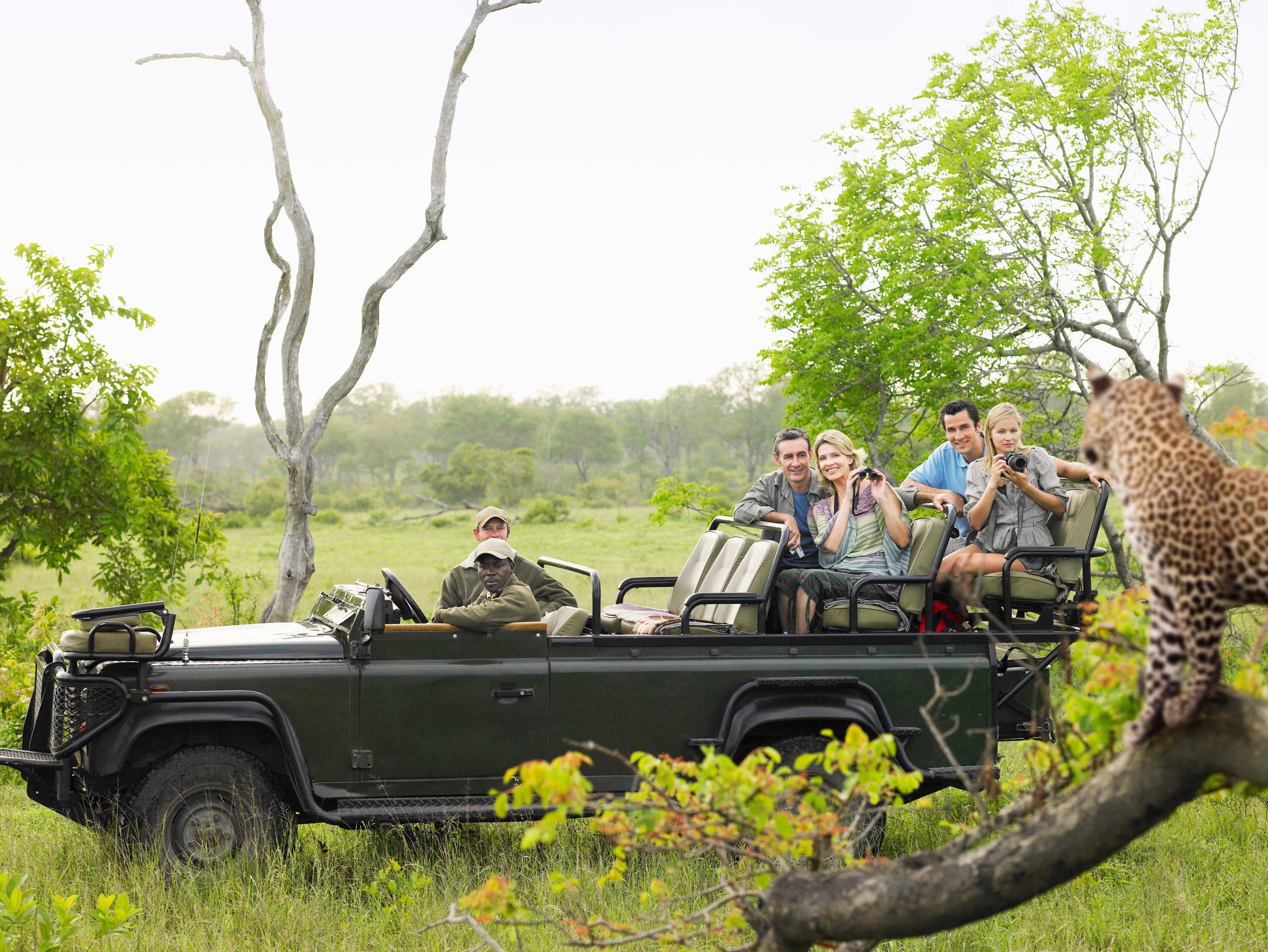
After dark
Head out after dark with a red-filtered spotlight to find the bush’s nocturnal cast — genets, bushbabies, hunting predators and, with luck, an aardvark.
On foot
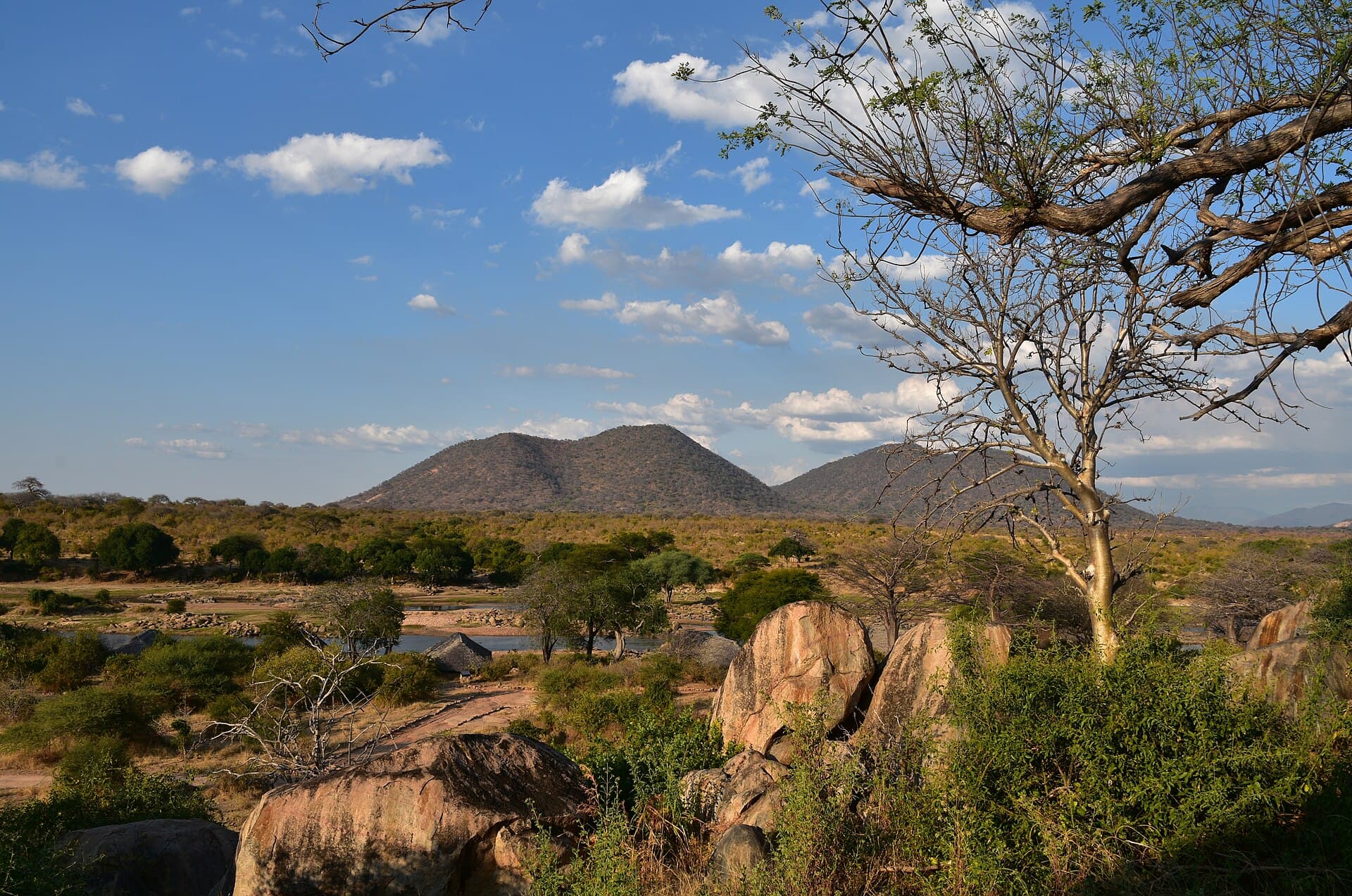
Leave the vehicle behind and read the bush up close with an armed ranger — tracks, birdcalls and the thrill of being on foot in big-game country.
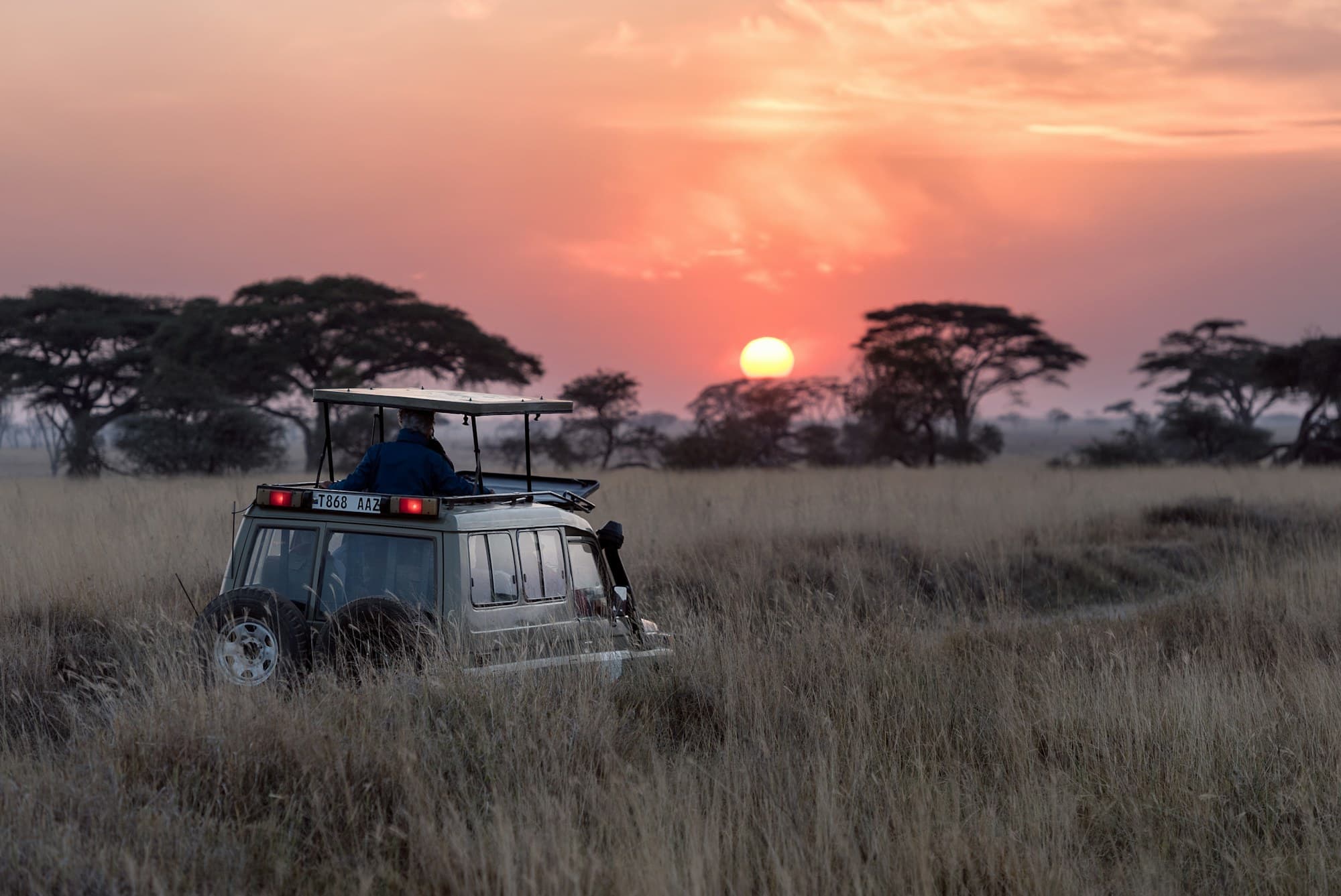
Share when you want to travel, who is coming and what you hope to see. A safari specialist will design a private Tanzania journey around you — no obligation, and nothing booked until you approve it.
Start Designing My Safari