
Primates
Chimpanzee Trekking in Mahale & Gombe
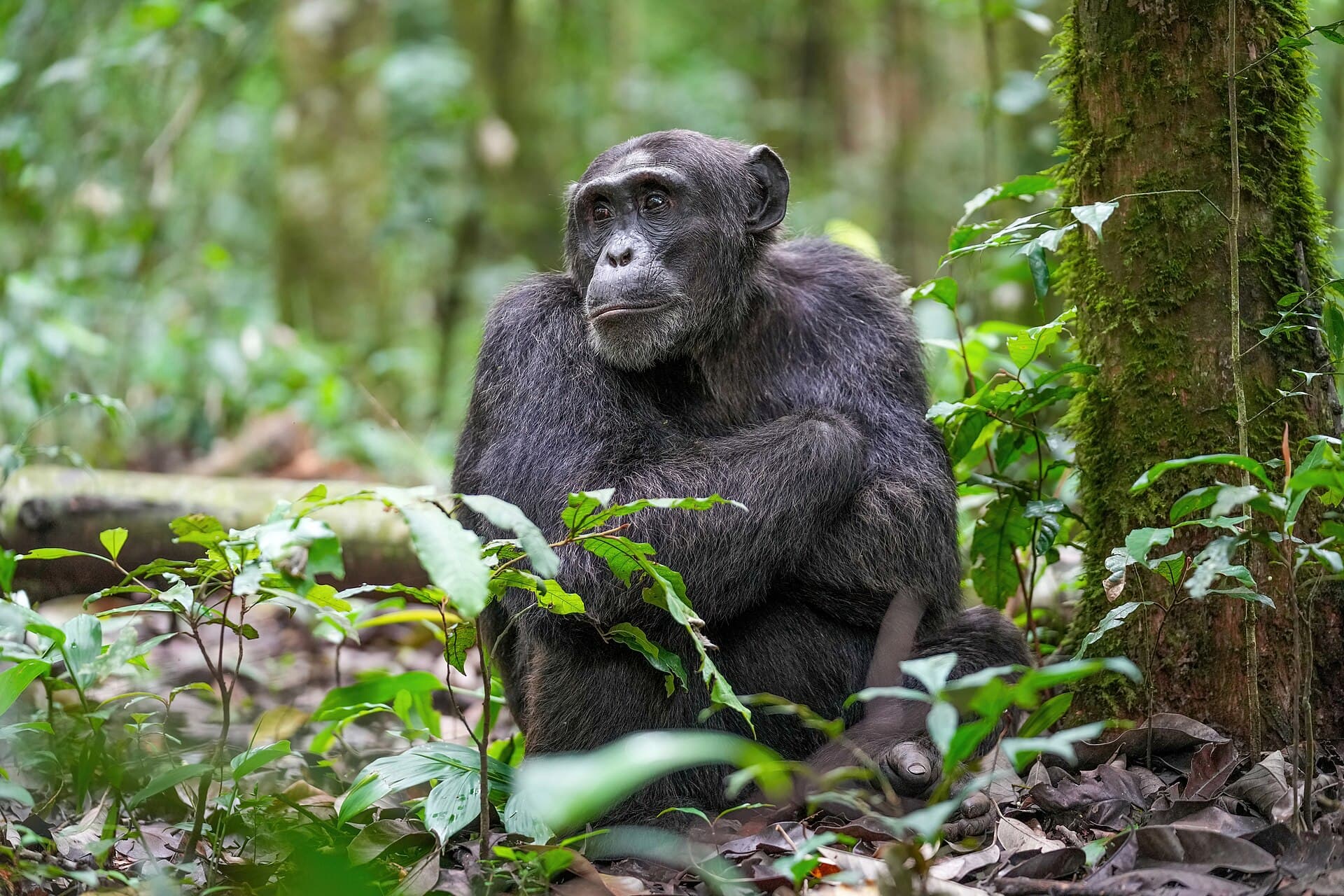
Trek through forest above Lake Tanganyika to spend time with wild chimpanzees in two of Africa’s most storied primate parks.
Tanzania park guide
Tanzania’s smallest national park and the forest where Jane Goodall’s chimpanzee research began in 1960 — a boat ride up the shore of Lake Tanganyika from Kigoma.
Gombe Stream National Park
Gombe is tiny — about 52 km², Tanzania’s smallest national park — yet few places carry more weight in the story of wildlife science. In 1960 a young Jane Goodall arrived on this shore to study chimpanzees, and the research she began here continues today, often described as one of the longest-running field studies of any wild animal.
The park is a narrow strip of forested valleys running down from the Rift escarpment to Lake Tanganyika. Streams cut steep ravines, and the chimpanzees of the Kasekela community — the group Goodall followed — move between the valleys, feeding on fruit and at times hunting red colobus monkeys. Treks are short in distance but steep, and time with the chimps is typically limited to about an hour. Olive baboons, several monkey species and rich birdlife share the forest.
Getting here is part of the character. You fly to Kigoma, then travel north by boat along the lakeshore, past fishing villages and pebble beaches. Most travelers stay one or two nights, often as an add-on to Mahale or Katavi. The lodging is basic and the logistics need care, but standing in the forest where so much of what we know about chimpanzees was first observed is quietly moving. Read how chimpanzee trekking works, and how Gombe compares with Mahale, before you decide.
Gombe Stream National Park
Season
| June–October | The drier months. Steep trails are firmer underfoot and the lake is often calm for the boat transfer. Chimps may range more widely at this time, so some treks are longer. |
|---|---|
| November–February | Short rains and warm, humid days. Visits continue and the forest greens up; trails can be slick after storms, but chimps may stay closer to the lower valleys. |
| March–May | The heaviest rains. Trails are muddy and slippery and boat crossings can be rough, but chimpanzee visits still run and you may have the forest almost to yourself. |
Gombe Stream National Park
Kasekela, on the shore near the park headquarters, is the hub of any visit: the rest house and visitor facilities are here, and it sits at the heart of the chimps’ range. Trails climb from the beach into steep valleys such as the Kakombe, with its waterfall, and up toward Jane’s Peak, the lookout where Goodall spent long hours watching for chimps. Distances are short, but gradients are steep and the footing uneven.
Best for: Chimp trekking and Goodall history
Gombe’s shoreline is a string of pebble-and-sand beaches between the valleys, backed by oil palms and forest. Baboons forage along the water’s edge, fishing boats pass offshore, and on clear evenings the light falls golden across the lake toward the mountains of the Democratic Republic of the Congo. Swimming or snorkeling among the lake’s cichlid fish may be possible where rangers confirm it is safe; ask before you go in.
Best for: Downtime between treks, baboons and sunsets
Gombe Stream National Park
Gombe is reached from Kigoma, the main town on Tanzania’s Lake Tanganyika shore. Scheduled domestic flights connect Kigoma with Dar es Salaam, and charters link it with Arusha, Katavi and Mahale; from Kigoma, a boat carries you north along the shore to the park in about 1–2 hours, depending on the boat. There is no road access into the park. Many travelers spend a night in Kigoma on the way in or out to fit flight times.
Fly to Kigoma; overland, the journey from anywhere else in Tanzania takes days. The real choice is how you cover the last stretch: a private motorboat is quickest at about an hour, while slower lake boats can take two hours or more but cost less. The lake is often calmest in the morning, which is why most transfers leave early, and an early start also gives you the best chance of trekking on arrival day.
Airstrips
Typical drive times
Stays
Accommodation at Gombe is simple and very limited: park-run rest house rooms and bandas at Kasekela and, at times, a small private tented camp by the beach. We do not list a standard stay style here; instead we arrange Gombe on request, often with a night at a comfortable lakeside hotel in Kigoma, and tell you honestly what to expect before you book.
Experiences
Primates
Trek through forest above Lake Tanganyika to spend time with wild chimpanzees in two of Africa’s most storied primate parks.
Getting around
Hop between parks by light aircraft, trading long drives for more time on the ground and a bird’s-eye view of the country in between.
Bush dining
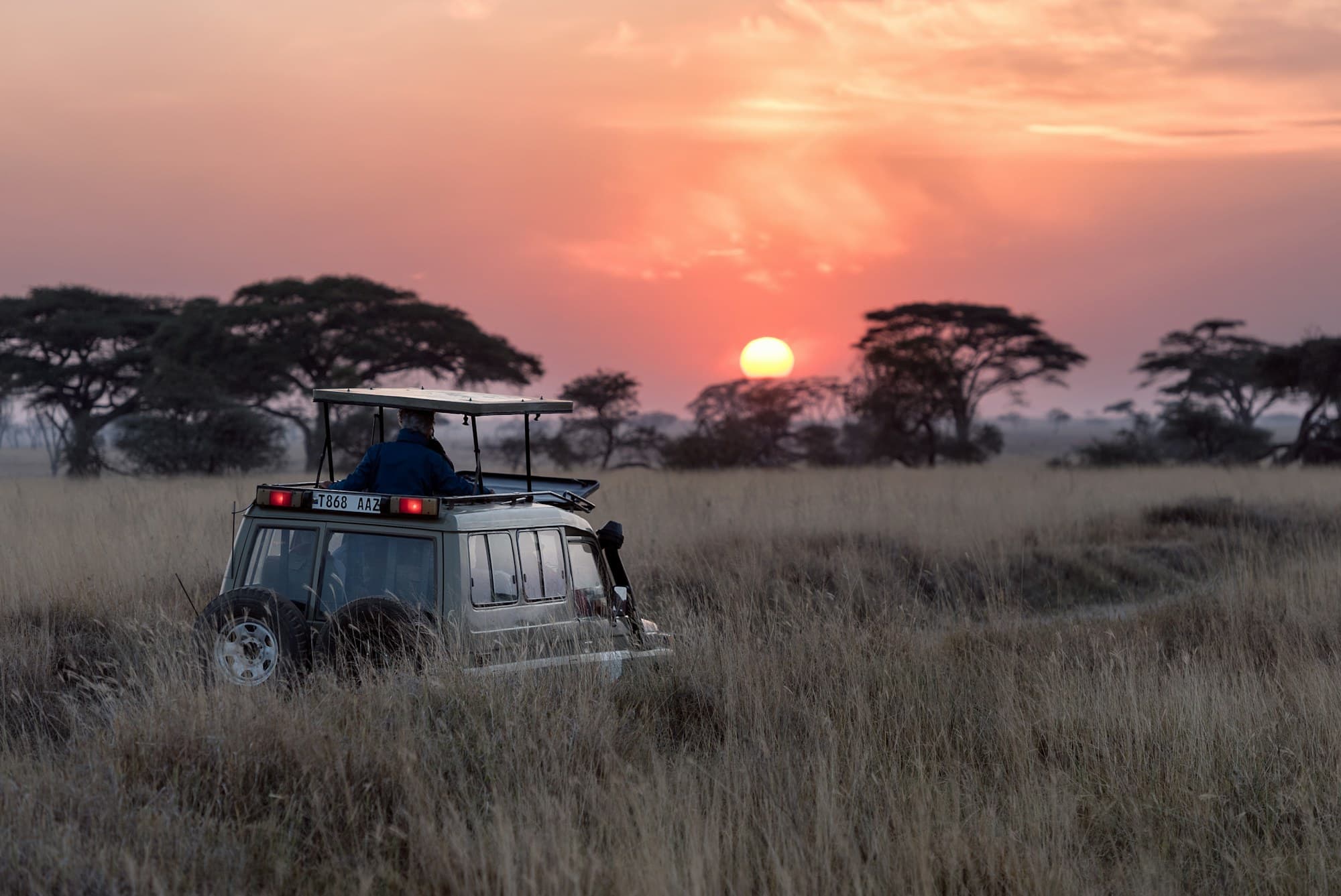
End the day parked on a kopje or riverbank with a cold drink in hand as the sun drops quickly over the bush.
Good to know
The park sets the rules and they change, so your guide briefs you on arrival. At the time of writing they typically include a minimum viewing distance of around 10 m (about 33 ft), a limit of about one hour with the chimps, wearing a face mask near them, and not visiting at all if you have a cold or other illness. Flash photography, eating near the chimps and leaving litter are not permitted.
It depends on your time and what draws you. Gombe is compact and historic: the boat ride from Kigoma is short, treks are brief though steep, and a night or two is enough. Mahale trades that convenience for scale — a far larger forest and chimp population, beach camps and a deeper sense of isolation — at the cost of more travel time and a higher overall spend. Some travelers visit both.
Reasonably fit. Distances are short, but the valleys are steep, rocky and slippery after rain, and you may need to scramble to keep up with moving chimps. Walking poles and boots with good grip make a real difference; if you have mobility concerns, talk to us before booking so we can set realistic expectations.
Yes. The research Jane Goodall began in 1960 continues, carried on largely by Tanzanian field staff and scientists who follow the chimps daily. Your guide can share the family histories of individual chimps that decades of observation have revealed, which adds real depth to a visit.
One night is possible but tight, since boat times and weather can eat into your trekking window. Two nights allow two chimp visits and a slower pace, and give you a buffer if the chimps are hard to find on the first day. Add a night in Kigoma if flight times demand it.
Yes, with some planning. Gombe is reached via Kigoma — by scheduled flight from Dar es Salaam or by charter from Arusha, Katavi or Mahale — so it works best as a two- or three-night add-on at the start or end of a trip. We route it around flight days so you are not left waiting for a connection.
Share when you want to travel, who is coming and what you hope to see. A safari specialist will design a private Tanzania journey around you — no obligation, and nothing booked until you approve it.
Plan a Gombe Stream National Park safari