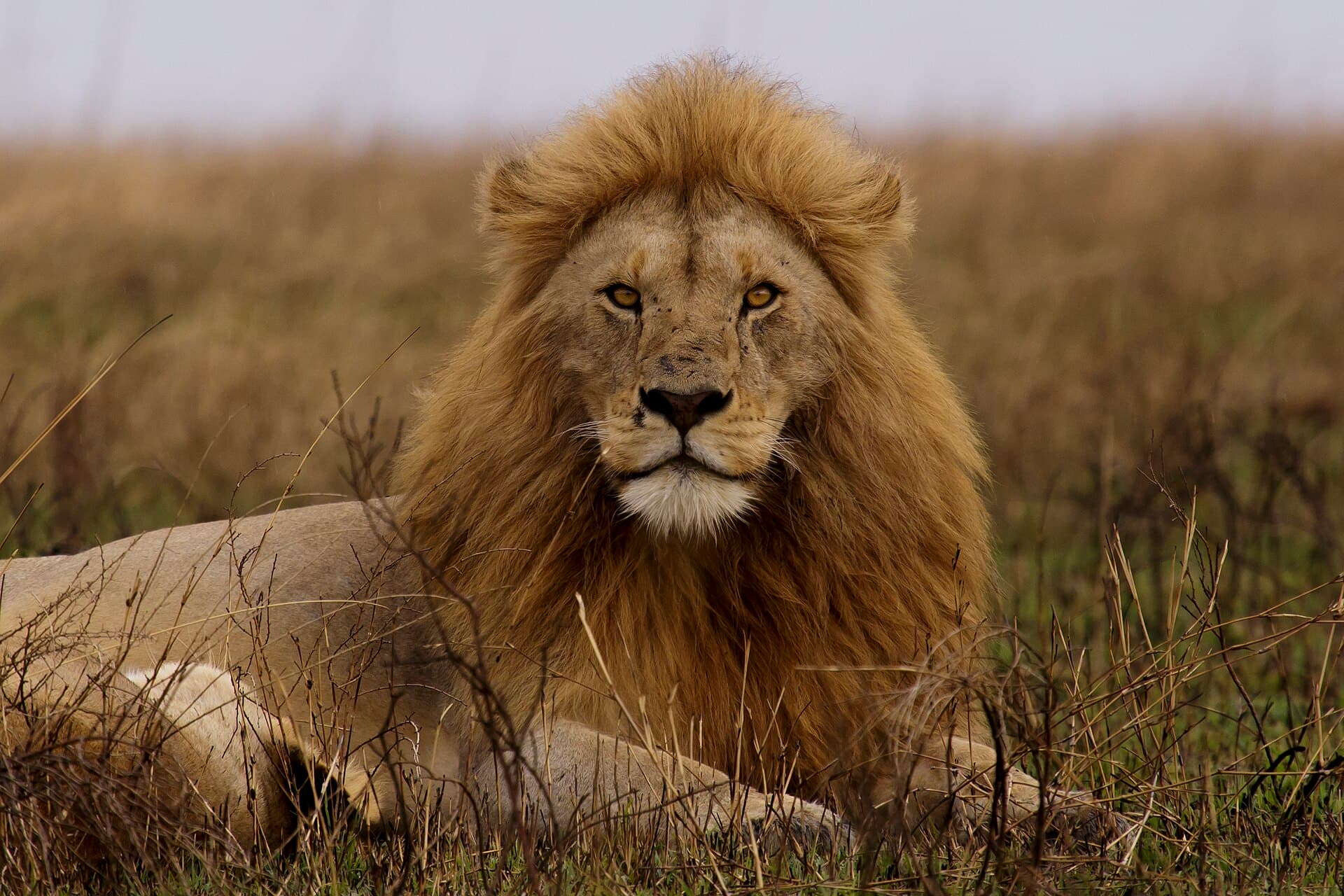
A male lion resting in golden grass in the Serengeti

Tanzania park guide

Serengeti National Park Safaris

About 14,750 km² of grass plains, granite kopjes and river woodland, where the Great Migration circles and big cats hunt in every month of the year.

SizeAbout 14,750 km² (roughly 5,700 sq mi)
Best timeYear-round; June–October for river crossings, January–February for calving
Recommended stay3–5 nights, split across two areas
Getting thereAbout 1–1.5 hours by light aircraft from Arusha, or a full day by road via the Ngorongoro highlands
Known forThe Great Migration, big cats and endless short-grass plains
Best forMigration seekers, big-cat lovers, photographers and first-time safari travelers

Serengeti National Park

Why Visit

The Serengeti is the reason many people come to Tanzania, and it rarely disappoints. Its name is usually traced to a Maa word for endless plains, and around Seronera the grass really does run to the horizon, broken only by granite kopjes where lions rest through the heat of the day. It is a UNESCO World Heritage Site of about 14,750 km² and the stage for the Great Migration: roughly 1.5 million wildebeest, with zebra and gazelle, moving in a loop driven by the rains.

What sets it apart is range. The Serengeti is not one landscape but several: the short-grass plains of the south, the kopje country and river woodland of the center, the Grumeti’s gallery forest in the west and the rolling hills along the Mara River in the north. Each has its season. The predators stay put, and the central valleys are some of the most productive big-cat country in East Africa.

On a private safari, the Serengeti rewards flexibility. With your own vehicle and guide, you set the hours — out at first light, back when the sightings end rather than when a group schedule says. Most travelers spend three to five nights here, split between Seronera and wherever the herds are likely to be that month, which is exactly how our 9-Day Great Migration Safari is built.

Best for

  • Seeing the Great Migration, from calving to river crossings
  • Big-cat viewing in every season
  • Photographers who want space, light and time at sightings
  • First-time travelers who want the classic East African plains
  • Pairing with the Ngorongoro Crater on a northern-circuit route

Serengeti National Park

Wildlife & Highlights

  • Roughly 1.5 million migrating wildebeest, with zebra and gazelle
  • Lion prides on the granite kopjes
  • Leopard in the sausage and acacia trees along the Seronera River
  • Cheetah on the open southern and eastern plains
  • Spotted hyena clans shadowing the herds
  • Nile crocodiles in the Grumeti and Mara rivers
  • Hippo pools along the Seronera and Mara rivers
  • Elephant and giraffe in the northern woodlands
  • Topi, Coke’s hartebeest, eland and Thomson’s gazelle
  • Serval, bat-eared fox and honey badger (with luck)
  • Vultures, secretarybirds and kori bustards on the plains

Season

Best Time to Visit

  1. January
  2. February
  3. March
  4. April
  5. May
  6. June
  7. July
  8. August
  9. September
  10. October
  11. November
  12. December
December–MarchThe herds typically graze the southern short-grass plains around Ndutu. Calving peaks roughly late January–February, drawing lion, cheetah and hyena. Warm, with brief afternoon showers.
April–MayThe long rains. Some southern and northern camps close, tracks can be muddy and the herds drift north and west. The central Serengeti stays open, green and very quiet.
June–OctoberDry season and peak demand. The herds usually pass through the Western Corridor around June, then reach the Mara River for crossings from roughly July. Resident game gathers near water.
NovemberThe short rains begin and the herds typically move south through the eastern and central Serengeti. Timing shifts with rainfall; a quieter, greener month with fewer vehicles.

Serengeti National Park

Areas to Know

Central Serengeti (Seronera)

The Seronera River valley is the Serengeti’s year-round heart. Permanent water, scattered kopjes and sausage-tree woodland hold resident prides, and the river’s trees are among the most productive places in the region to look for leopard. The Moru and Simba kopjes each deserve a full morning. The trade-off is traffic: word of a sighting travels fast here, so a private vehicle and early starts make a real difference.

Best for: Big cats in any month and a first Serengeti stay

Northern Serengeti (Kogatende & Lamai)

The north is rolling, greener country cut by the Mara River. From roughly July to October the herds gather on its banks and cross — sometimes several times a day, sometimes not for days. Kogatende is the hub, close to many of the main crossing points; the Lamai Triangle, between the river and the Kenyan border, is quieter still. Outside crossing season the north is remote and lightly visited, with resident elephant and lion and very few vehicles.

Best for: Mara River crossings, roughly July–October

Southern Serengeti (Ndutu & the short-grass plains)

When the short rains arrive, the herds spread across the treeless southern plains, where volcanic soils grow mineral-rich grass ideal for nursing mothers. Calving usually peaks around February, and predators follow closely. Ndutu itself, with its two soda lakes and acacia woodland, lies within the Ngorongoro Conservation Area rather than the national park, so different rules apply, including on off-road driving. Outside roughly December–March the plains empty and seasonal camps close.

Best for: Calving season and predator action, roughly December–March

Western Corridor (Grumeti)

A long arm of the park reaching toward Lake Victoria, the Western Corridor follows the Grumeti River through open plains and gallery forest. The herds typically pass through roughly May–July, and Grumeti crossings are possible around June — smaller and less predictable than the Mara’s, and watched by some very large Nile crocodiles. Private reserves bordering the corridor add walking, night drives and a degree of exclusivity the national park cannot offer.

Best for: Early dry-season migration and private-reserve activities

Serengeti National Park

Getting There

Most travelers arrive one of two ways: by road through the Ngorongoro highlands, entering at Naabi Hill Gate after crossing the southern plains, or by light aircraft from Arusha to one of several airstrips spread across the park. Scheduled light-aircraft services typically link the main airstrips daily, so you can fly between regions rather than repeat long drives. Luggage on these flights is typically limited to about 15 kg (33 lb) per person in soft-sided bags.

Drive or fly?

Driving in is part of the experience: the road climbs past the Ngorongoro Crater, crosses Maasai grazing land and drops onto plains that widen with every kilometer, with game viewing all the way. Your guide and vehicle stay with you throughout. Flying costs more and limits luggage, but it saves the better part of a day, and between Seronera and the north it turns a 4–5 hour drive into about an hour. Many of the best routes do both: drive in, fly out.

Airstrips

  • Seronera
  • Kogatende
  • Lobo
  • Grumeti/Kirawira
  • Ndutu

Typical drive times

Ngorongoro Crater rim to Seronera
About 3–4 hours with game viewing
Ngorongoro Crater rim to Ndutu
About 2–2.5 hours
Seronera to Kogatende
About 4–5 hours by road, about 1 hour by air
Arusha to Seronera
About 1–1.5 hours by light aircraft

Stays

Where to Stay

Serengeti stays range from permanent tented camps and lodges around Seronera to seasonal mobile camps that relocate with the herds — to the north for roughly July–October and to Ndutu for roughly December–March. In the west, private-reserve lodges add walking and night drives. The simplest rule: base one stay in the center, then place the second where the herds are likely to be in your travel month. We match specific camps to your dates and availability.

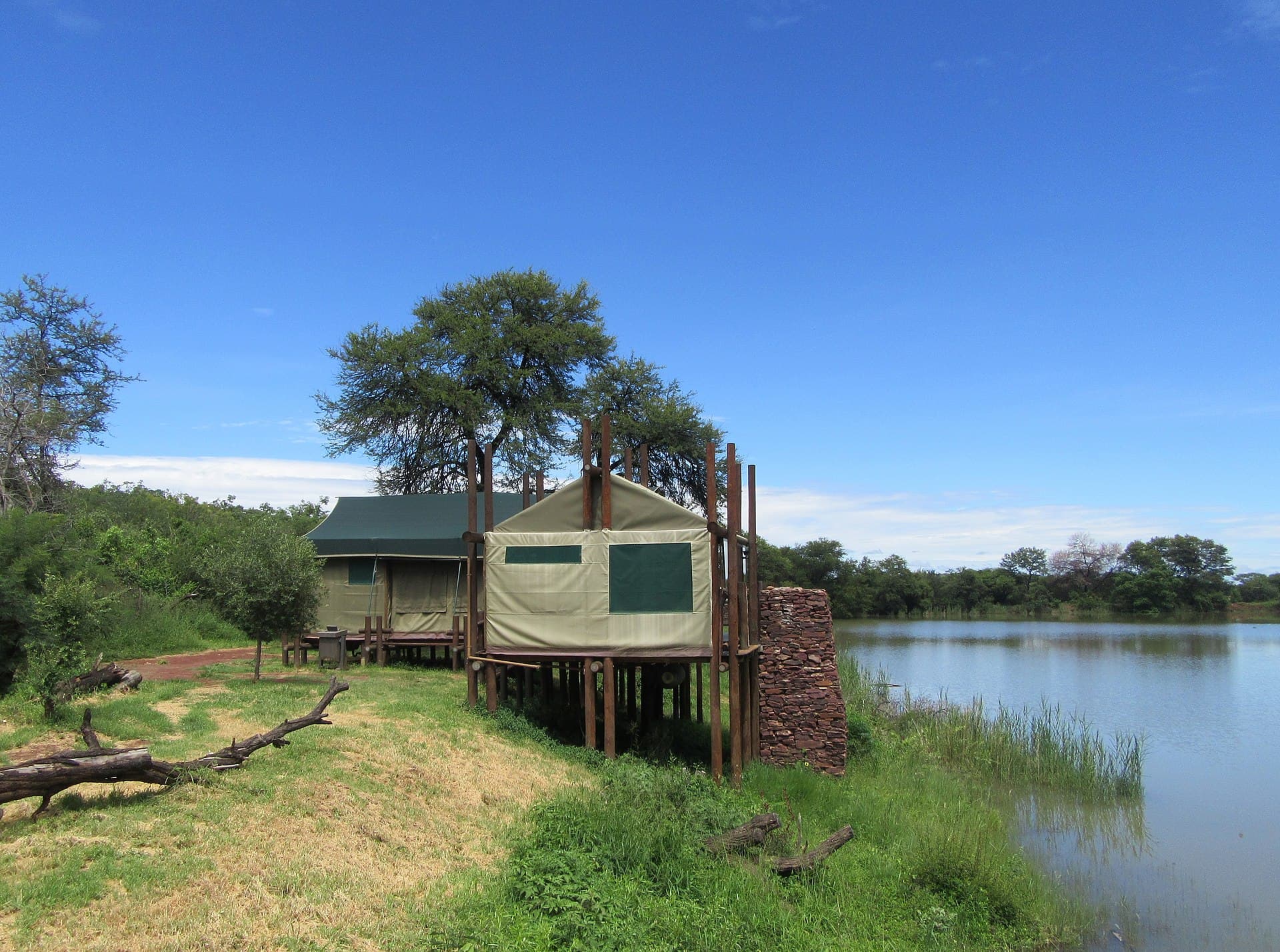
A canvas safari tent set among trees at a private tented campComfort

Central Serengeti · Seronera

Central Serengeti Tented Camp

Tented camp

You sleep in well-run canvas tents with proper beds and en-suite bathrooms close to Seronera, where resident lions, leopards and cheetahs are often found year-round. The whoop of hyenas carries through the canvas at night, but a hot shower and a hearty dinner are never far away.

  • En-suite tents with flush toilets and bucket or safari showers
  • Central location for full-day game drives
  • Communal dining tent and evening campfire
  • Family tents at some

Ideal for: Families and first-time travelers who want the heart of the Serengeti at a sensible price level
A canvas safari tent set among trees at a private tented campPremium

Central Serengeti · Seronera

Classic Seronera Tented Camp

Tented camp

Spacious tents, campaign-style furniture and an evening campfire among the acacias and granite kopjes give this style of camp its classic feel. From here your guide can reach the Seronera river valleys at first light, when cats are often most active and other vehicles are few.

  • Spacious en-suite tents with private verandas
  • Family tents with interconnecting rooms at some
  • Campfire drinks and dinners under the stars
  • Picnic lunches for full days on the plains

Ideal for: Photographers, families and first-timers who want an authentic camp feel close to the action

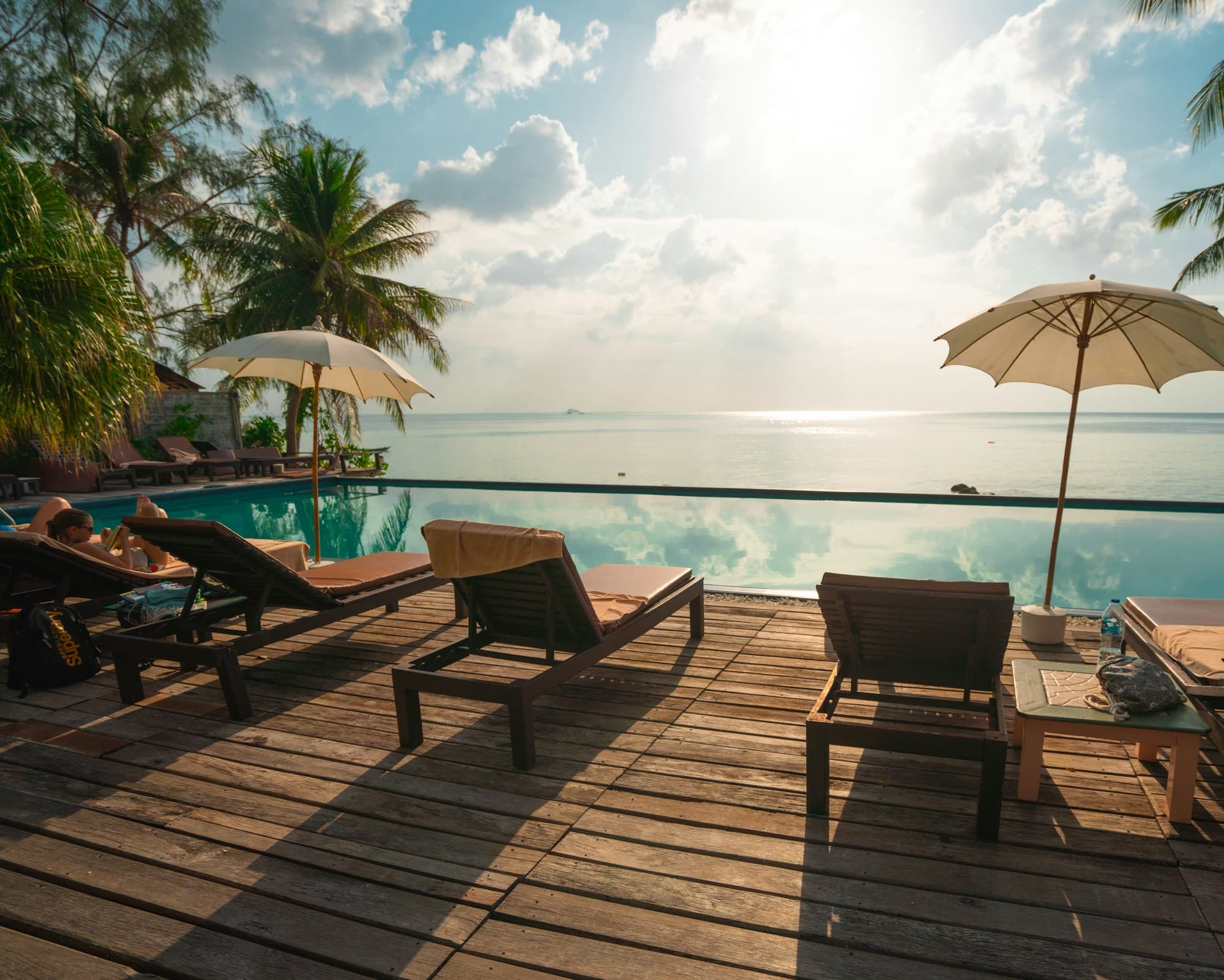
Luxury lodge deck with loungers and umbrellas at golden hourLuxury

Central Serengeti

Plains-View Luxury Lodge

Lodge

Built into a rise above the plains, this style of lodge pairs stone-and-thatch suites with a pool that looks out over miles of grassland. It gives you solid walls, polished service and a quiet afternoon by the water between long game drives in the heart of the park.

  • Spacious suites with private terraces
  • Pool with views across the plains
  • Spa treatments at some
  • Quick access to the Seronera river valleys

Ideal for: Couples and travelers who prefer solid walls, a pool and big views after a day on the plains

Luxury tented camp glowing at golden hour over rolling savanna hillsUltra-Luxury

Central Serengeti · kopje country

Ultra-Luxury Kopje Camp

Tented camp

A handful of expansive tented suites sit among granite kopjes, many with their own plunge pool and the plains stretching away on every side. Your private vehicle and guide shape each day around you, whether that means waiting patiently on a leopard or a late breakfast after a balloon flight.

  • Very few tented suites, often with private plunge pools
  • Private vehicle and guide throughout
  • Butler service, with a spa and wine cellar at some
  • Private bush breakfasts and dinners

Ideal for: Honeymooners and photographers who want the Serengeti’s big-cat country with complete privacy

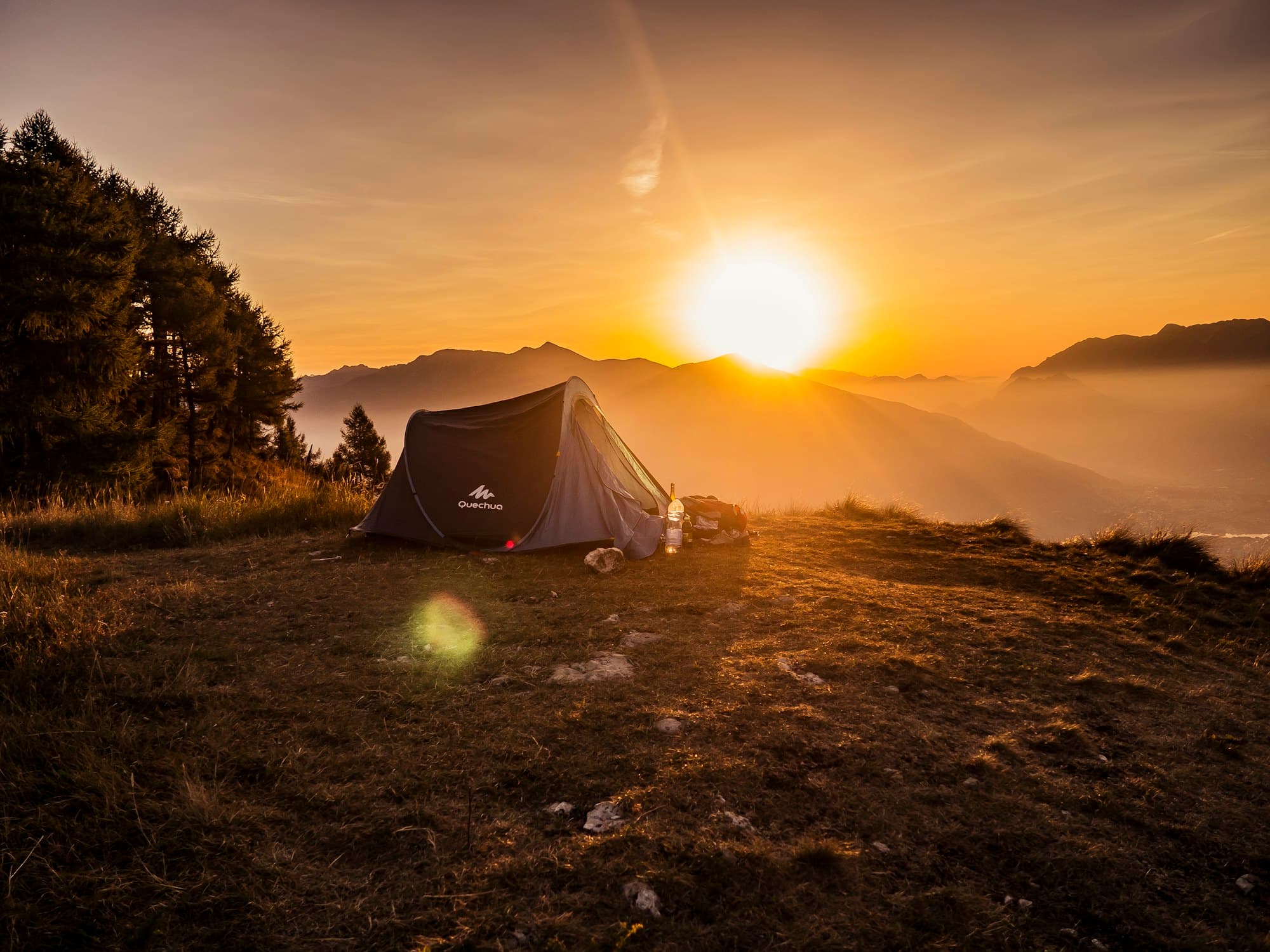
Tented camp glowing at sunrise over golden hillsPremium

Northern Serengeti · Kogatende

Seasonal Migration Camp

Seasonal mobile camp · Typically open around July–October

Mobile camps move with the season and are pitched within reach of the Mara River crossing points while the herds are typically in the north. Comforts are real but simple, and what you gain is time: short drives to the river and long, patient days waiting for a crossing.

  • En-suite tents with bucket showers and flush or eco toilets
  • Solar power and simple, generous camp meals
  • Short drives to the crossing points
  • Full-day picnic outings for patient river watches

Ideal for: Photographers and migration-focused travelers who want to be near the river in crossing season

A canvas safari tent set among trees at a private tented campLuxury

Northern Serengeti · Mara River

Far-North Luxury Camp

Tented camp

Large canvas suites look over the Mara River or the open country around it, in a permanent camp in the far north of the Serengeti. In crossing season, roughly July–October depending on the rains, you are close to the river; outside it, the north is often very quiet.

  • Spacious tented suites with river or plains views
  • Private decks, with plunge pools at some
  • Full-day river outings with picnic lunches
  • Lounge and campfire decks overlooking the bush

Ideal for: Couples and photographers who want comfort and style within reach of the Mara River crossings

Experiences

Experiences

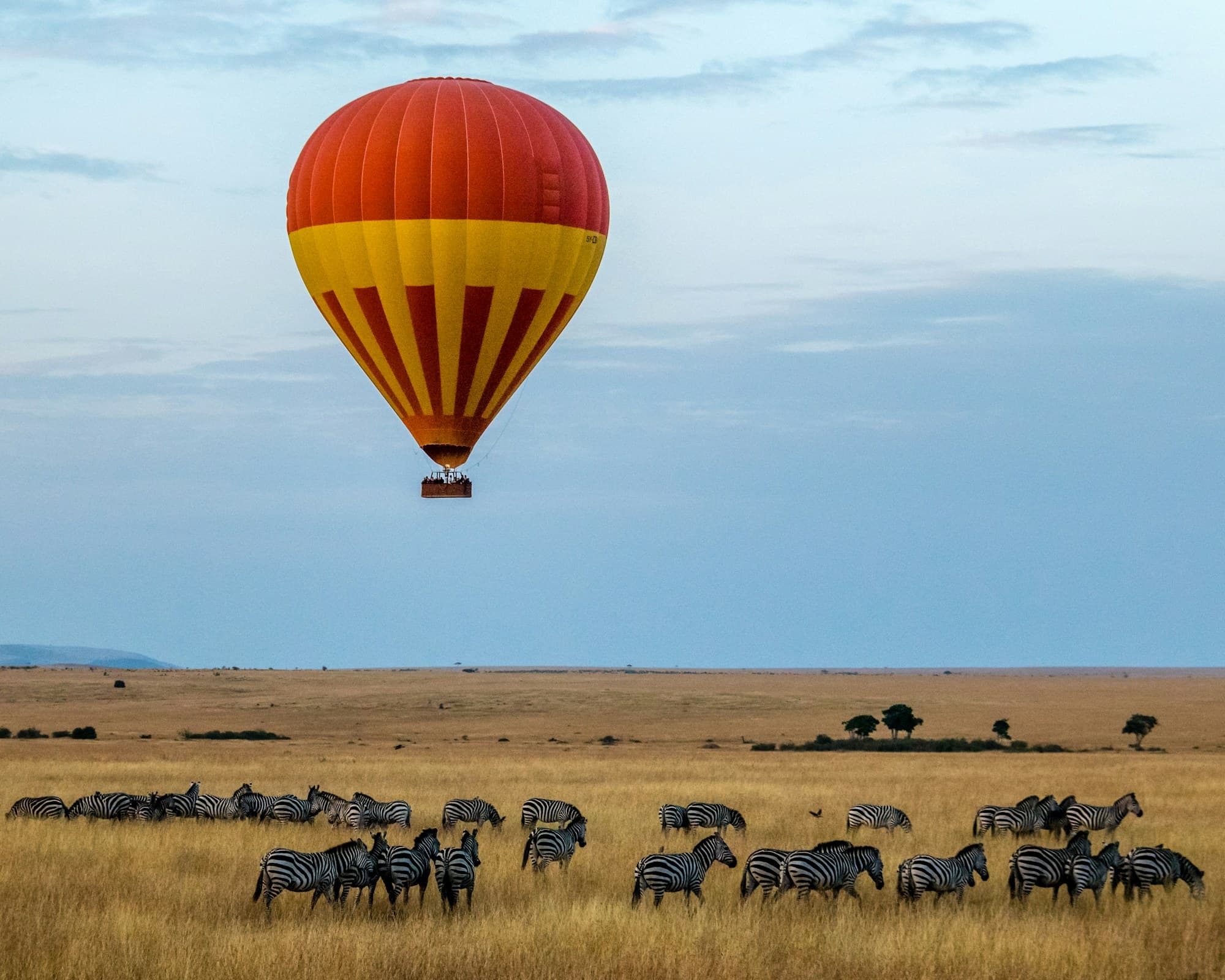
Aerial view over savanna herds from a hot-air balloon at first light

In the air

Serengeti Hot-Air Balloon Safari

Drift over the Serengeti at first light as the plains wake beneath you, then land for a champagne breakfast in the bush.

Getting around

Fly-In Safari

Hop between parks by light aircraft, trading long drives for more time on the ground and a bird’s-eye view of the country in between.

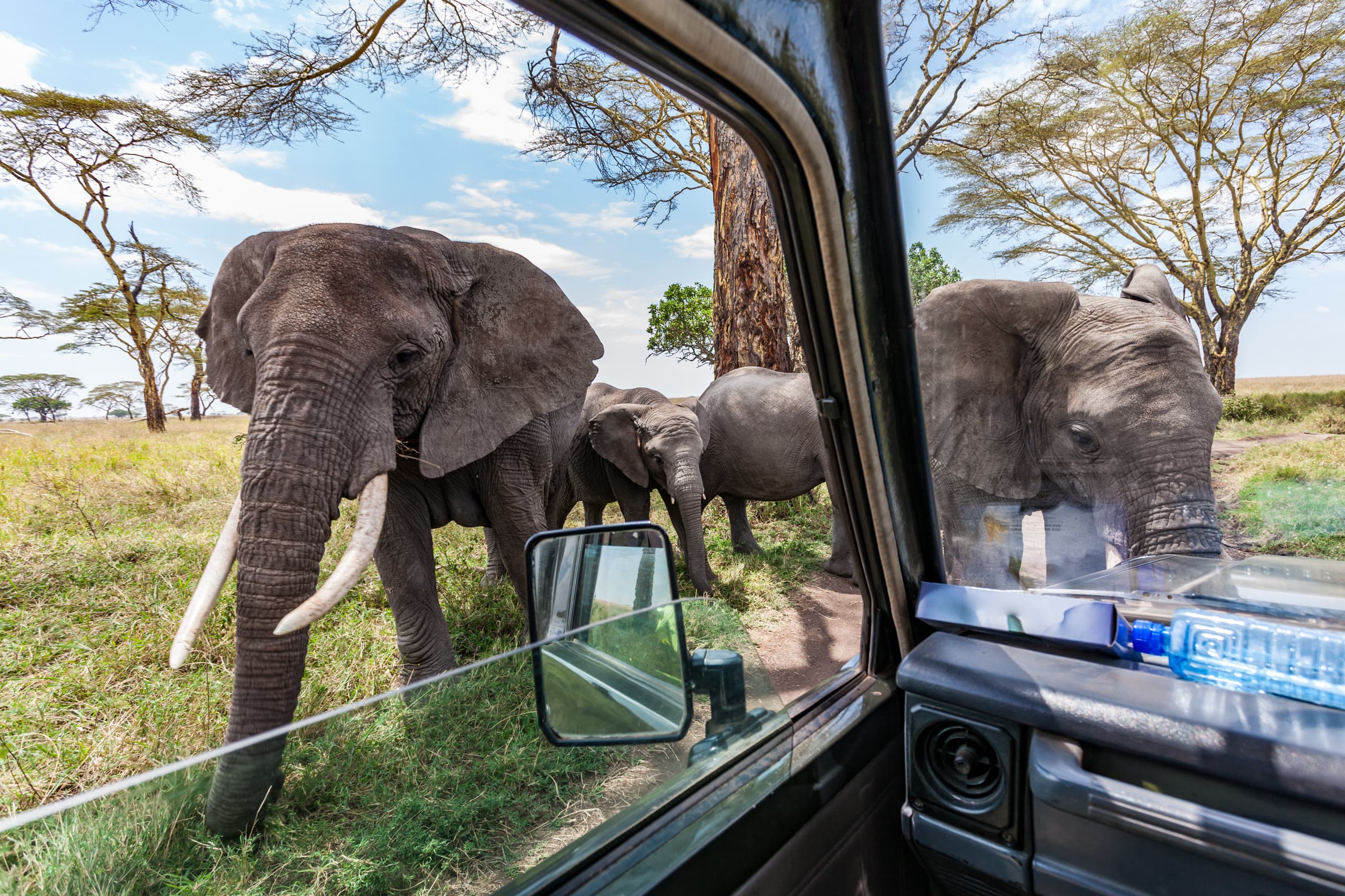
Elephants seen up close from inside a private safari vehicle

Photography

Private Photography Vehicle

A private vehicle set up for cameras — fewer guests, a window each, bean bags and a guide who thinks in light and angles.

Tented camp glowing at sunrise over golden hills

Bush dining

Bush Breakfast

After a dawn game drive, pull up to a table laid in the shade — fresh coffee, eggs cooked to order and a view with animals in it.

Luxury tented camp glowing at golden hour over rolling savanna hills

Bush dining

Bush Dinner

Dinner by lantern and firelight in the open bush, with the stars overhead and the night’s sounds for company.

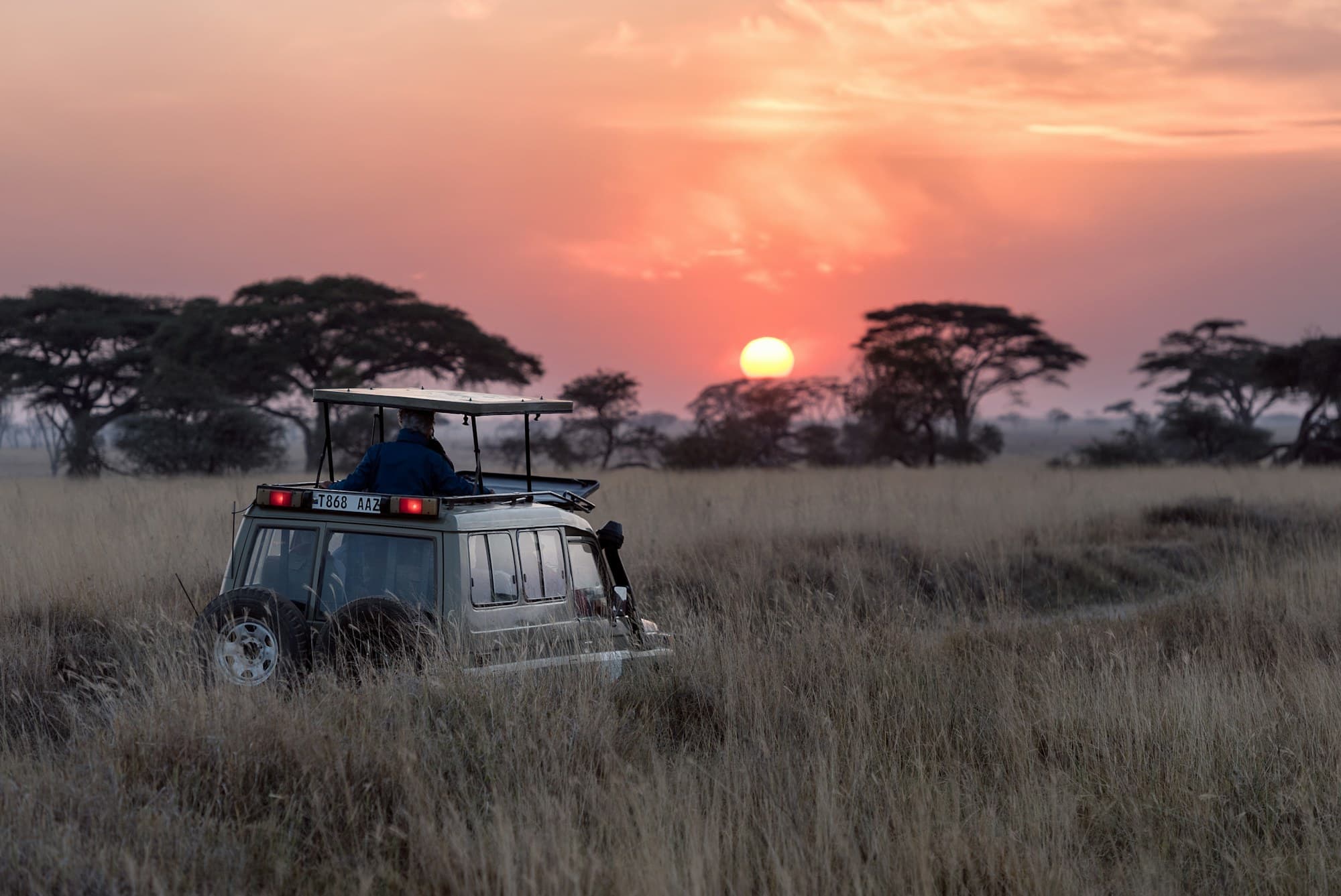
Open safari vehicle with guests on the savanna beneath a dramatic sunset

Bush dining

Sundowners

End the day parked on a kopje or riverbank with a cold drink in hand as the sun drops quickly over the bush.

Wild kopje-studded savanna of Ruaha National Park

On foot

Walking Safaris

Leave the vehicle behind and read the bush up close with an armed ranger — tracks, birdcalls and the thrill of being on foot in big-game country.

Safari guests in an open vehicle watching a leopard at close range on a private game drive

After dark

Night Game Drives

Head out after dark with a red-filtered spotlight to find the bush’s nocturnal cast — genets, bushbabies, hunting predators and, with luck, an aardvark.

Safaris

Safaris That Include Serengeti National Park

Safari guests in an open vehicle watching a leopard at close range on a private game drive
6 daysFirst safari

Tanzania Essential

Arusha · Tarangire · Ngorongoro Crater · Central Serengeti

First-time travelers with limited leave who want the northern circuit’s icons in under a week

Best months
Year-round except April – May
Comfort levels
Comfort · Premium · Luxury
Individually quoted
Elephants grazing beneath flat-topped acacia trees on golden grassland
8 daysMost popular

Serengeti & Ngorongoro Classic

Arusha · Lake Manyara · Central Serengeti · Olduvai Gorge · Ngorongoro Crater

First-time safari-goers and photographers who want real time in the Serengeti without flying

Best months
June – March, outside the long rains
Comfort levels
Comfort · Premium · Luxury · Ultra-Luxury
Individually quoted
View across the Ngorongoro Crater floor from the forested rim
9 daysComplete introduction

Tanzania Northern Circuit

Arusha · Tarangire · Ngorongoro Crater · Olduvai Gorge · Central Serengeti

First-time travelers who want the complete northern circuit, with room to breathe

Best months
June – March, routed to the season
Comfort levels
Comfort · Premium · Luxury · Ultra-Luxury
Individually quoted
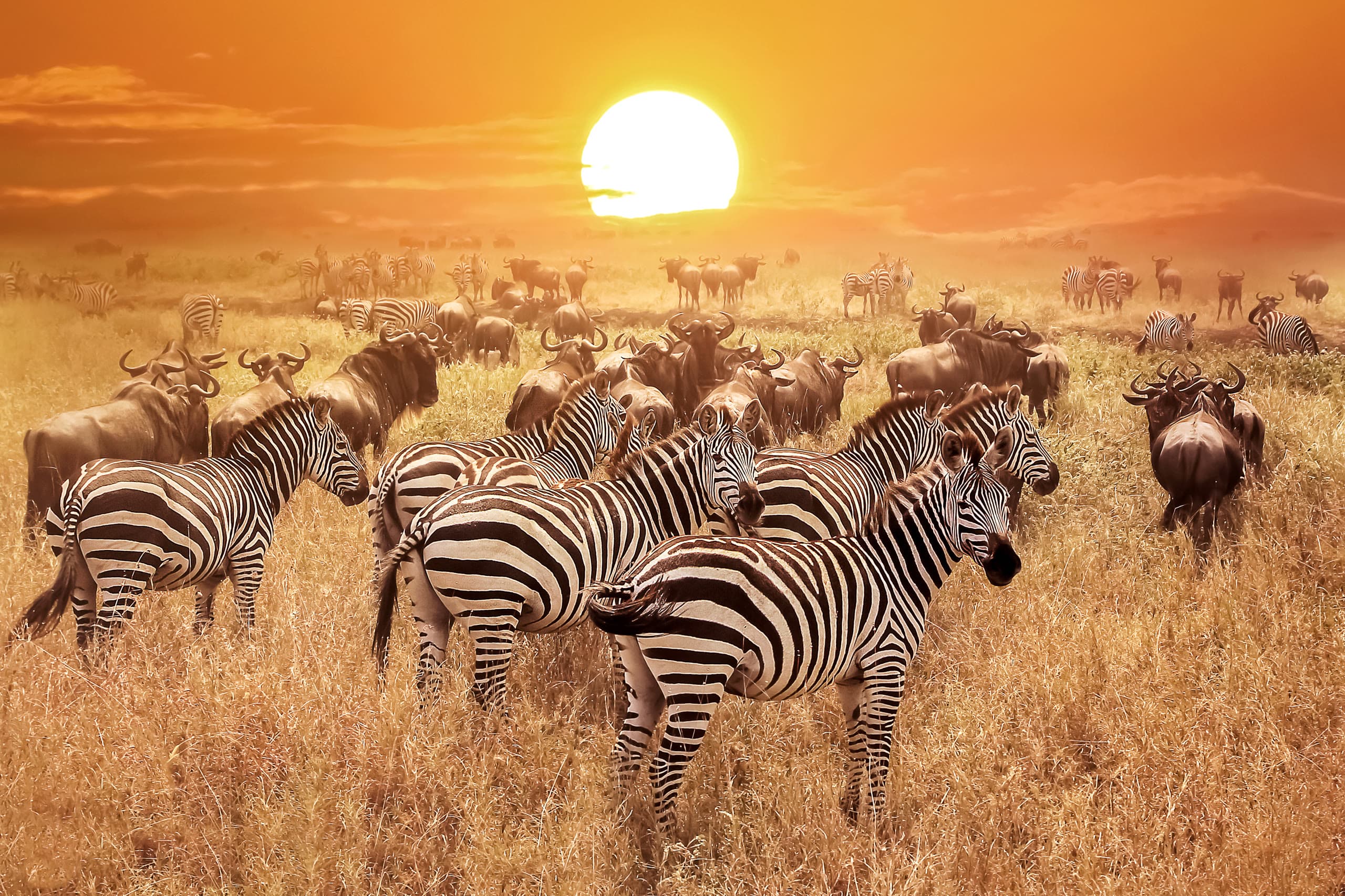
Zebra and wildebeest herds grazing at golden sunset during the Great Migration
9 daysMigration

Great Migration Safari

Arusha · Ngorongoro Crater · Central Serengeti · Northern Serengeti

Travelers who want the migration at the center of the trip, whatever month they can travel

Best months
Year-round — routed to the herds
Comfort levels
Premium · Luxury · Ultra-Luxury
Individually quoted
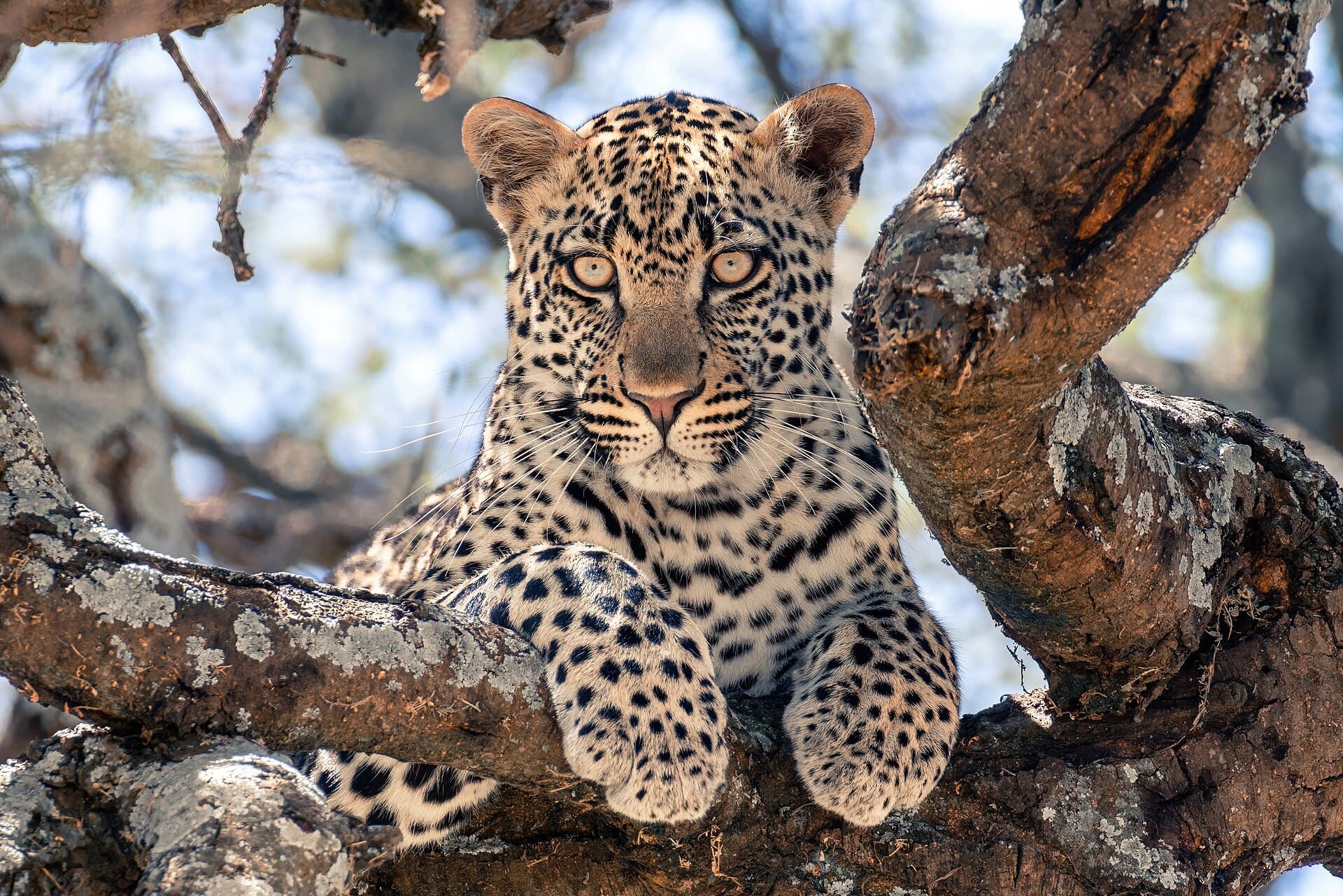
A leopard resting in the fork of a tree in the Serengeti
8 daysJan–Mar

Calving Season Safari

Arusha · Ngorongoro Crater · Olduvai Gorge · Ndutu

Wildlife photographers and returning travelers who want newborn calves and predator action

Best months
Late December – March (calving peaks around February)
Comfort levels
Comfort · Premium · Luxury
Individually quoted
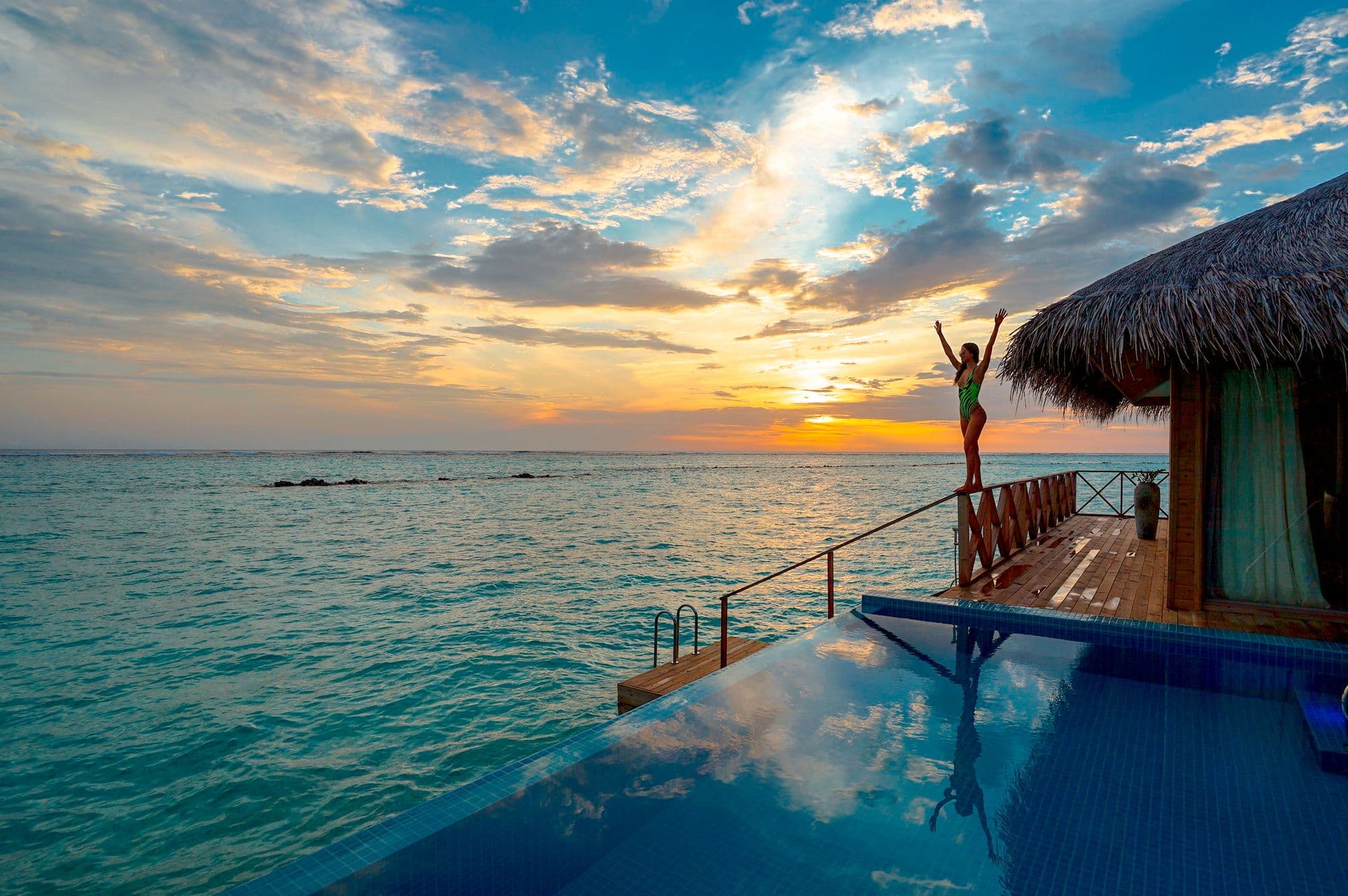
Traveler greeting the sunset from an infinity pool over the Indian Ocean
11 daysSafari + beach

Serengeti + Zanzibar

Arusha · Tarangire · Ngorongoro Crater · Central Serengeti · Zanzibar

Couples, honeymooners and first-timers who want a complete safari followed by real beach time

Best months
June – October and December – February
Comfort levels
Comfort · Premium · Luxury · Ultra-Luxury
Individually quoted

Good to know

Frequently asked questions

How many nights do I need in the Serengeti?

Plan on at least three nights; four or five lets you split your stay between two regions without feeling rushed. With only two nights, stay central, near Seronera, where game viewing is good in every month. If the migration is your priority, give the herds’ likely area at least three nights of its own — crossings and calving both reward patience.

When is the best time to see the Great Migration in the Serengeti?

It depends on what you want to see. Calving on the southern plains usually peaks around February, while Mara River crossings in the north typically run from about July into October. Rainfall can shift the herds by weeks in either direction, so we place your camps using recent movement reports rather than a fixed calendar.

Can I see the Mara River crossings without going to Kenya?

Yes. The Mara River flows through the northern Serengeti, and the herds cross at points near Kogatende and in the Lamai Triangle, typically from about July to October. Crossings are unpredictable — some days bring several, others none — so three nights in the north gives you a far better chance than one.

Is the Serengeti crowded?

It is a vast park, and most of it is quiet. Vehicles do gather around Seronera and at the river crossings in peak months, when a single leopard can draw a queue. A private vehicle, early starts and a guide willing to drive further are the best remedies, as is traveling in shoulder months such as November or early March.

Is the Serengeti worth visiting outside migration season?

Yes. The resident predators, elephants and plains game do not migrate, and the central Serengeti is productive in every month. The long rains of April and May bring green landscapes, dramatic skies and very few vehicles, though some camps close and tracks can be muddy. Many camps also offer lower green-season rates.

Can I take a balloon flight, walk or go on a night drive in the Serengeti?

Dawn balloon flights operate from the central Serengeti for most of the year and seasonally in the south, west and north, usually followed by a bush breakfast. Walking inside the park is limited to short, ranger-escorted outings in certain areas, and night drives are generally not permitted. Both are offered in the private reserves bordering the Western Corridor.

Open safari vehicle with guests on the savanna beneath a dramatic sunset

Tell Us Your Dates

Share when you want to travel, who is coming and what you hope to see. A safari specialist will design a private Tanzania journey around you — no obligation, and nothing booked until you approve it.

Plan a Serengeti National Park safari