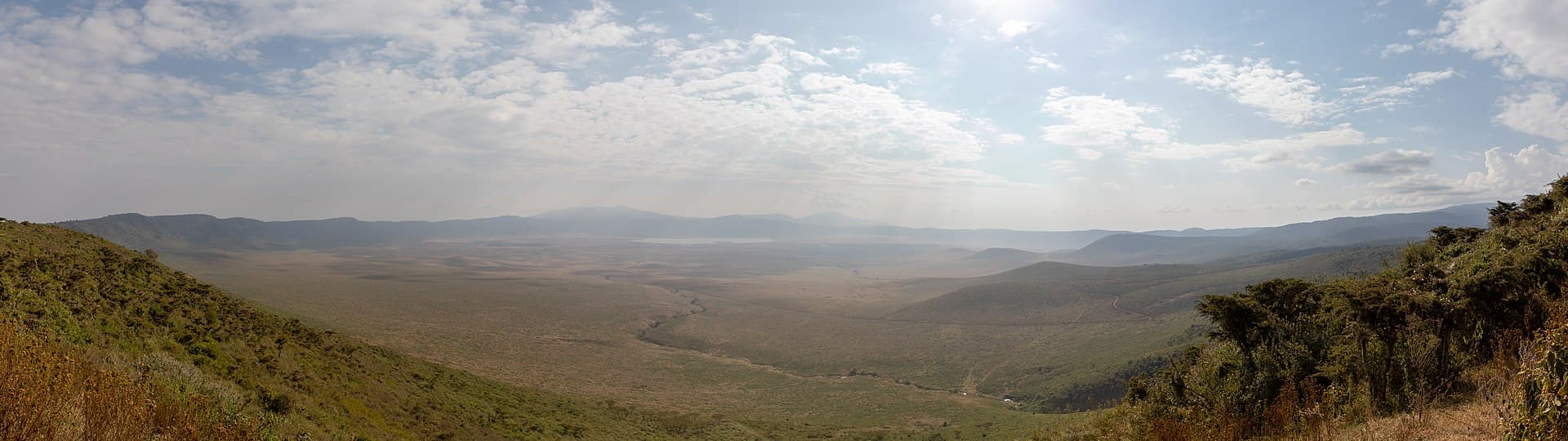
View across the Ngorongoro Crater floor from the forested rim

Tanzania park guide

Ngorongoro Crater Safaris

Descend about 600 meters into a collapsed volcano, where lion, buffalo, flamingo and a small population of black rhino share one enclosed floor.

SizeCrater floor about 260 km²; the wider Conservation Area about 8,300 km²
Best timeYear-round; driest June–October, quietest April–May
Recommended stay2 nights in the highlands for one unhurried descent
Getting thereAbout 3–3.5 hours by road from Arusha; nearest airstrip at Lake Manyara
Known forBlack rhino, big-tusked elephant bulls and dense game on an enclosed floor
Best forShort itineraries, families, photographers and rhino hopefuls

Ngorongoro Crater

Why Visit

Nothing quite prepares you for the first view from the rim. The Ngorongoro Crater is the collapsed caldera of an ancient volcano, its floor about 260 km² and roughly 600 meters below you, and the dark specks scattered across the grassland are buffalo, wildebeest and zebra. It sits at the heart of the Ngorongoro Conservation Area, a UNESCO World Heritage Site where Maasai herders still graze their cattle alongside the wildlife.

Most of the crater’s animals are resident, and the density shows. In a single morning you may pass lion on the open grass, hippo wallowing in spring-fed pools and old elephant bulls with long, heavy tusks feeding in the Lerai Forest. It is also the most dependable place on the northern circuit to look for black rhino — a small, closely protected population, often seen at a distance, and never assured.

On a private safari, the crater usually fills one full day between Tarangire or Lake Manyara and the Serengeti. Time on the floor is regulated, so you descend as the gates open, picnic beside a hippo pool and climb out by mid-afternoon. Pair it with Olduvai Gorge on the road west, and a highland walk if you have a second day.

Best for

  • Travelers with limited time who want dense game in a single day
  • Anyone hoping for a chance at black rhino
  • Families — short drives and constant activity on the floor
  • Photographers drawn to dramatic crater-wall backdrops
  • Pairing with calving season at Ndutu or a Serengeti stay

Ngorongoro Crater

Wildlife & Highlights

  • Black rhino (rare, usually at a distance on the open floor)
  • Elephant bulls with heavy tusks in the Lerai Forest
  • Lion prides on the open grassland
  • Spotted hyena and golden jackal
  • Serval hunting in the long grass (with luck)
  • Resident wildebeest, zebra and buffalo herds
  • Hippo at Ngoitokitok spring and in the Mandusi swamp
  • Flamingos on Lake Magadi (seasonal, water-dependent)
  • Grey crowned cranes, kori bustards and ostrich
  • Eland and bushbuck in the highlands and rim forest (with luck)

Season

Best Time to Visit

  1. January
  2. February
  3. March
  4. April
  5. May
  6. June
  7. July
  8. August
  9. September
  10. October
  11. November
  12. December
June–OctoberDry season. Short grass makes animals easy to spot, but this is also the busiest period, so an early descent matters. Rim mornings and evenings are cold — bring a warm layer.
November–MarchGreen season, with a drier spell in January–February. The crater’s resident wildebeest typically calve around the same time as the migrating herds, which are usually close by at Ndutu — a strong pairing.
April–MayThe long rains. Mist often wraps the rim and the steep roads can be slippery, but the floor is lush and vehicle numbers are at their lowest.

Ngorongoro Crater

Areas to Know

Crater floor

The floor is a mosaic of short grassland, the soda Lake Magadi, the Lerai Forest of yellow-barked fever trees and the reed beds of the Mandusi swamp. Game drives follow set tracks, and vehicles often converge on the best sightings, so your guide’s timing matters. Lunch is usually at a designated picnic site such as Ngoitokitok spring — eat inside the vehicle, as the resident black kites are expert at snatching sandwiches.

Best for: Rhino, lion and dense game in a single day

Crater rim

The forested rim sits above 2,200 meters, which means cold nights, fires in the evening and cloud that can pour over the edge like surf. Staying up here puts you closest to the descent roads, so you can be on the floor as the gates open. Buffalo and elephant sometimes wander past rim lodges after dark, which is why an escort to your room is standard practice.

Best for: Early descents, views and a sense of occasion

Highlands & Empakaai

Beyond the crater, the Ngorongoro highlands roll north past Olmoti to Empakaai, a smaller, deeper crater whose soda lake is at times fringed pink with flamingos. A steep, ranger-escorted walk leads down to the shore, and the rim looks out toward Ol Doinyo Lengai and, on very clear days, Kilimanjaro. Few vehicles make the trip, and Maasai herders and their cattle are part of the landscape.

Best for: Walking, solitude and Maasai culture

Olduvai Gorge & Ndutu edge

West of the crater, the road descends through drier country to Olduvai Gorge, where the Leakey family’s discoveries reshaped the story of human origins; a small site museum explains the finds. Nearby, the Shifting Sands — a crescent dune of black volcanic ash — creep slowly across the plain. Further west lies Ndutu, where the migrating herds typically calve from roughly December to March.

Best for: Human-origins history and calving season

Ngorongoro Crater

Getting There

The crater is reached by road via Mto wa Mbu and Karatu, on a paved highway as far as the Conservation Area gate, then on gravel up through montane forest to the rim. Descents are made in four-wheel-drive safari vehicles with a licensed guide, using designated roads down and back up the crater wall. Travelers arriving by air usually land at Lake Manyara airstrip and meet their guide there.

Drive or fly?

Almost everyone drives to the crater, and for good reason: the road from Arusha is paved to the gate, and you need a four-wheel-drive vehicle and guide for the descent regardless. Flying only saves time if you are coming from the Serengeti or Zanzibar — land at Lake Manyara airstrip and your guide collects you for the drive of roughly 1–1.5 hours up to the rim. On a full northern circuit, driving keeps one guide and vehicle with you from start to finish.

Airstrips

  • Lake Manyara airstrip

Typical drive times

Arusha to the crater rim
About 3–3.5 hours
Tarangire to Karatu
About 2 hours
Karatu to the crater rim
About 45 minutes
Crater rim to Seronera
About 3–4 hours with game viewing

Stays

Where to Stay

You have two choices of base. The rim puts you closest to the descent roads, with sweeping views and cold, fire-lit evenings — at a higher price level. The farm lodges and country hotels around Karatu, about 45 minutes away, are warmer, with gardens and pools, and make it easy to add a coffee-farm walk or a village visit. Either works well; the rim is the choice if an unhurried early start matters most.

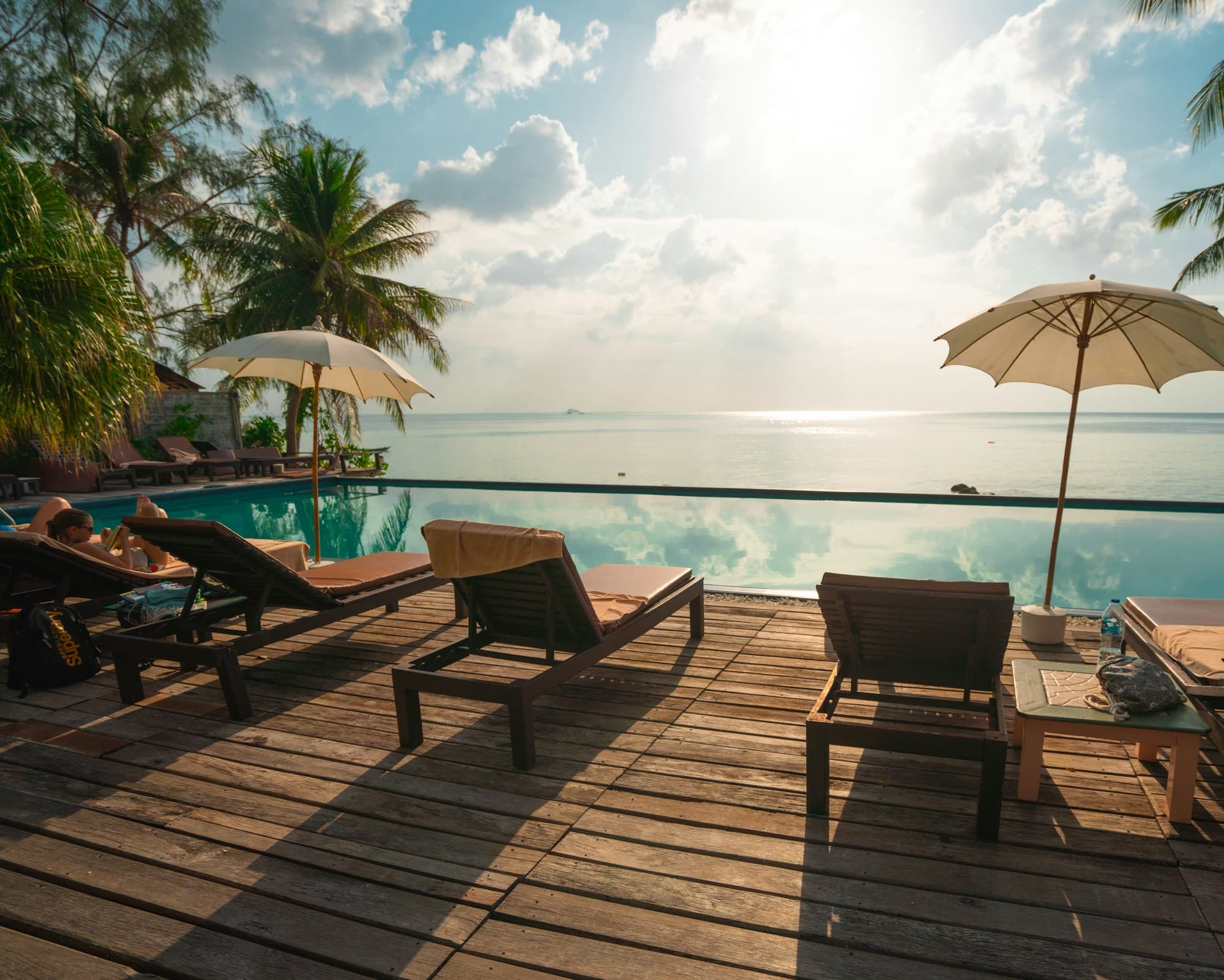
Luxury lodge deck with loungers and umbrellas at golden hourComfort

Ngorongoro highlands · Karatu

Karatu Garden Lodge

Lodge

This comfortable, good-value lodge sits in the farming country around Karatu, about 45 minutes from the crater rim, with gardens and a fire in the lounge by evening. Nights are milder here than up on the rim, and you are well placed for an early start into the crater.

  • Garden rooms or cottages with en-suite bathrooms
  • Pool at many, for warmer afternoons
  • Family rooms and flexible meal times
  • Village walks and coffee-farm visits nearby

Ideal for: Families and first-time travelers who want a relaxed, well-run base for the crater day
Premium

Ngorongoro highlands · Karatu farmland

Working Farm Lodge

Farm lodge

Cottages spread across a working farm on the slopes below the Ngorongoro forest, with kitchen gardens, coffee and open lawns where children can run. You can walk the farm or the forest edge with a guide, and the crater rim is about 45 minutes up the road.

  • Spacious cottages, often with fireplaces for cool evenings
  • Farm-to-table meals from the kitchen gardens
  • Guided walks on the farm and along the forest edge
  • Family cottages, with a pool or spa at some

Ideal for: Families and couples who want space, home-grown food and a walk before or after the crater

View across the Ngorongoro Crater floor from the forested rimLuxury

Ngorongoro Crater rim

Crater-Rim Lodge

Lodge

Rooms on the forested rim, at roughly 2,300 m, look straight down into the crater, often under drifting mist at first light. Nights are genuinely cold, so expect fireplaces and hot-water bottles, and a short drive to the descent road for an early start.

  • Rooms or suites with crater views
  • Fireplaces or heating for cold highland nights
  • Early breakfasts or picnic boxes for the first descent
  • Rim walks with an armed ranger at some

Ideal for: Couples and photographers who want the crater view from the room and an early start on the floor

View across the Ngorongoro Crater floor from the forested rimUltra-Luxury

Ngorongoro Crater rim

Exclusive Crater-Rim Suites

Lodge

You stay in one of only a handful of lavish suites on the rim, with a fire lit before you return and a butler who remembers how you take your morning coffee. Everything turns on the crater, from a private vehicle for the descent to the view from the bath.

  • Very few suites, each with crater views
  • Personal butler service and fires lit for cold rim nights
  • Private vehicle and guide for the crater floor
  • Spa treatments and fine dining at some

Ideal for: Honeymooners and discerning travelers who want the crater at its most exclusive

Experiences

Experiences

Culture

Olduvai Gorge

Stand above the gorge where the Leakeys uncovered early chapters of the human story, on the road between the crater and the Serengeti.

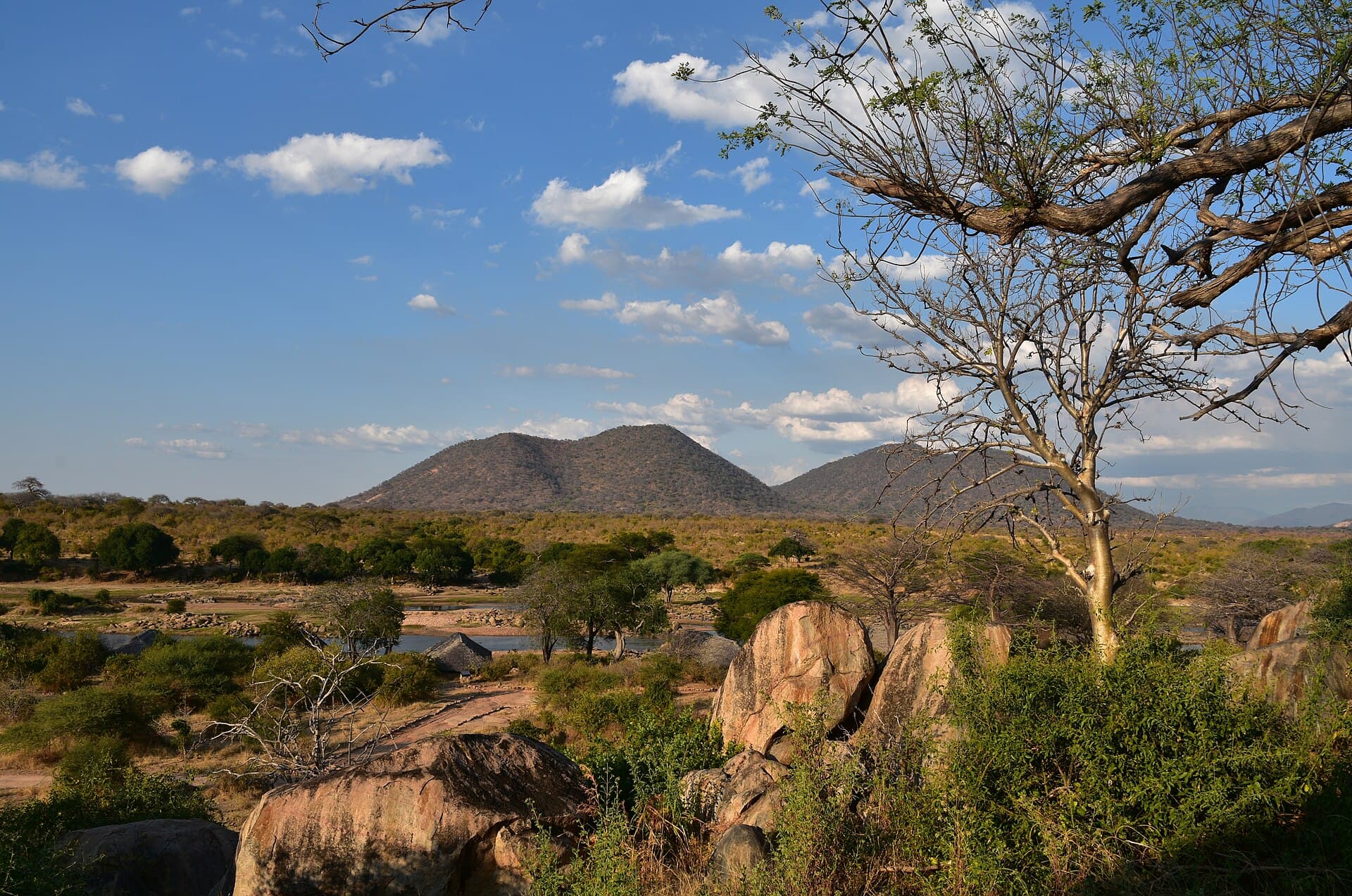
Wild kopje-studded savanna of Ruaha National Park

On foot

Walking Safaris

Leave the vehicle behind and read the bush up close with an armed ranger — tracks, birdcalls and the thrill of being on foot in big-game country.

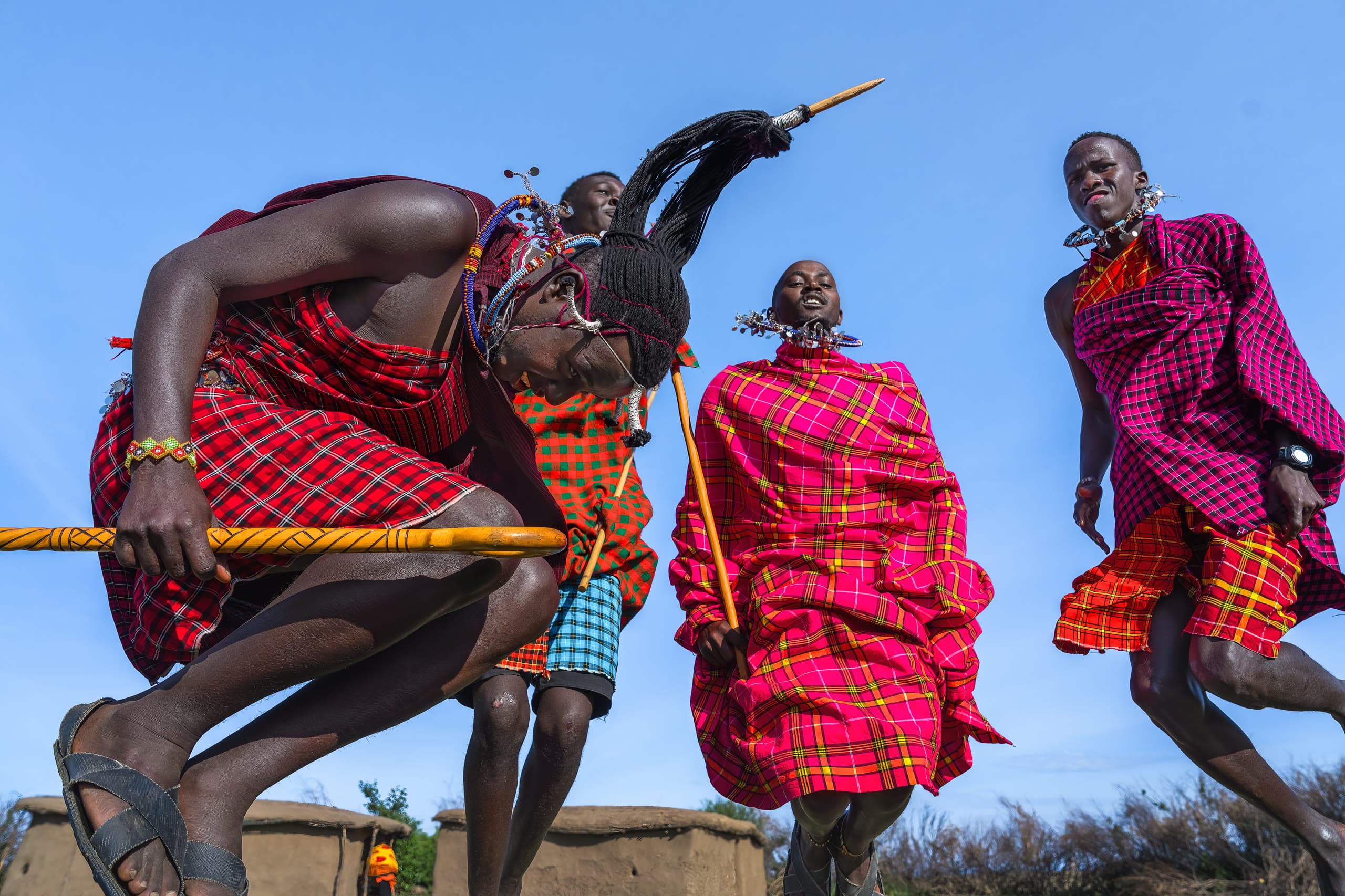
Maasai warriors performing a traditional jumping dance during a cultural visit

Culture

Maasai Cultural Experience

Spend unhurried time with a Maasai community on a visit they lead — homesteads, herding life and honest conversation rather than a staged show.

Culture

Coffee Farm Tour

Follow Tanzanian arabica from cherry to cup on the slopes of Mount Meru or in the Karatu highlands — a gentle, delicious half-day.

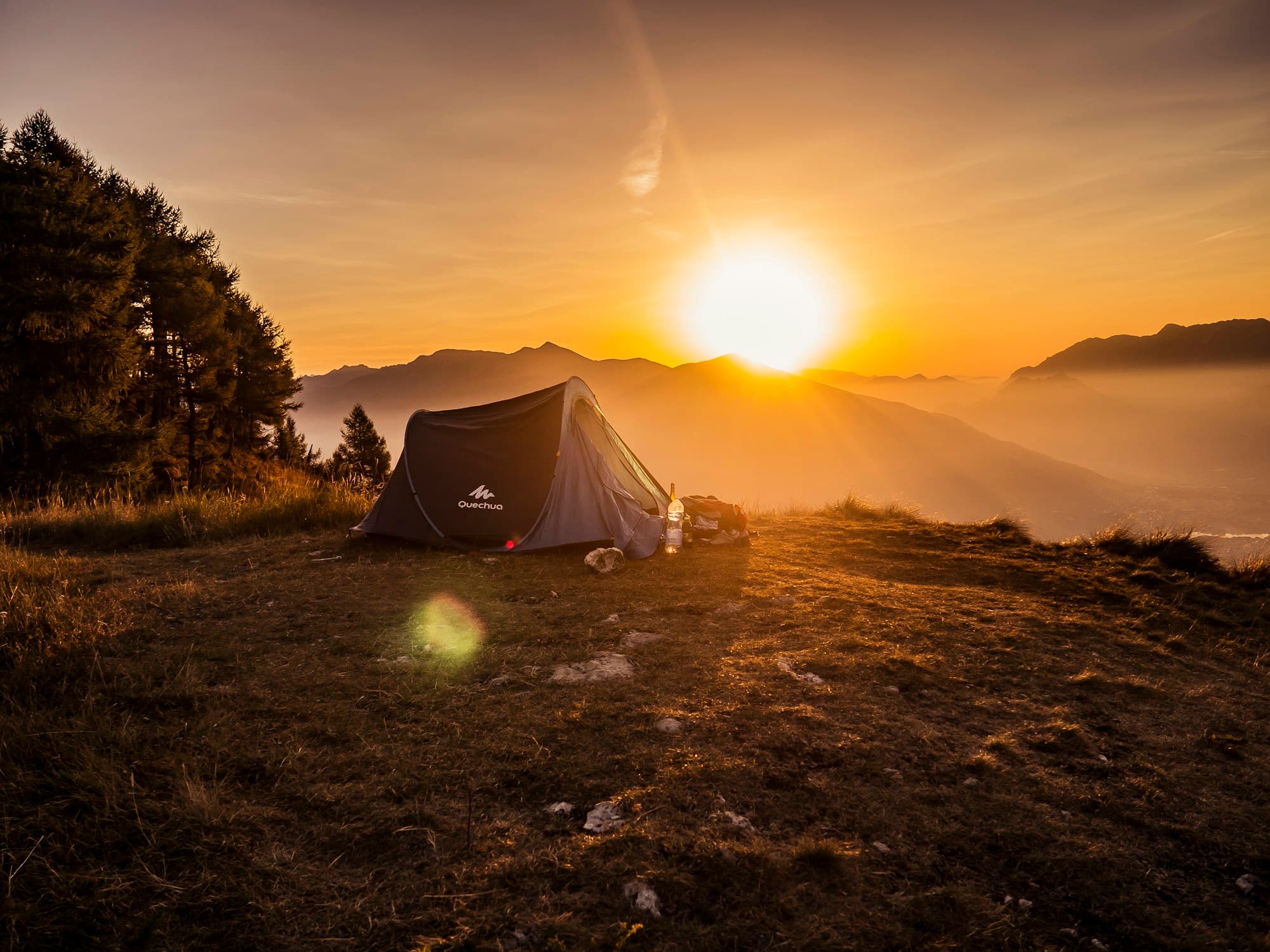
Tented camp glowing at sunrise over golden hills

Bush dining

Bush Breakfast

After a dawn game drive, pull up to a table laid in the shade — fresh coffee, eggs cooked to order and a view with animals in it.

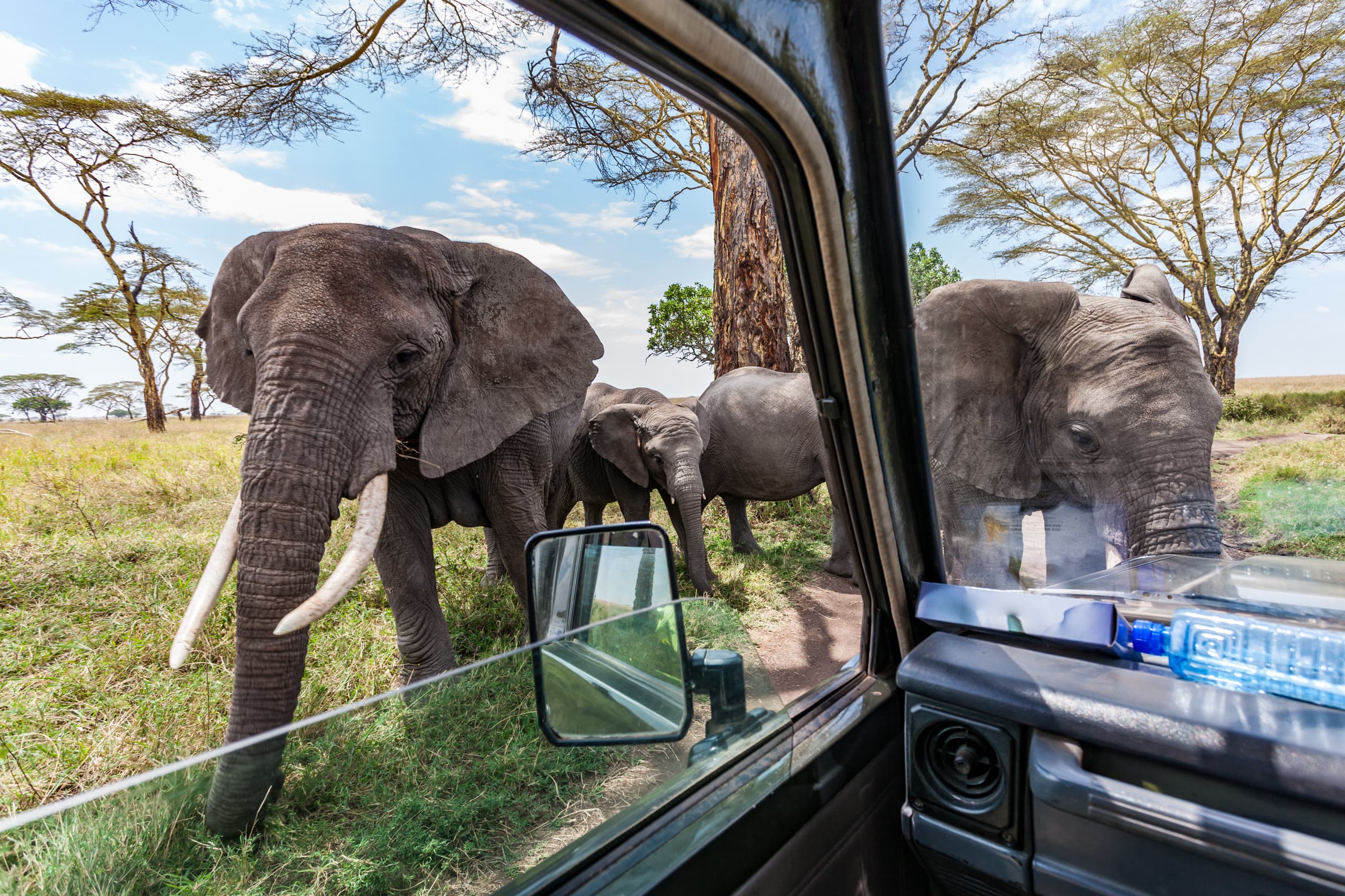
Elephants seen up close from inside a private safari vehicle

Photography

Private Photography Vehicle

A private vehicle set up for cameras — fewer guests, a window each, bean bags and a guide who thinks in light and angles.

Safaris

Safaris That Include Ngorongoro Crater

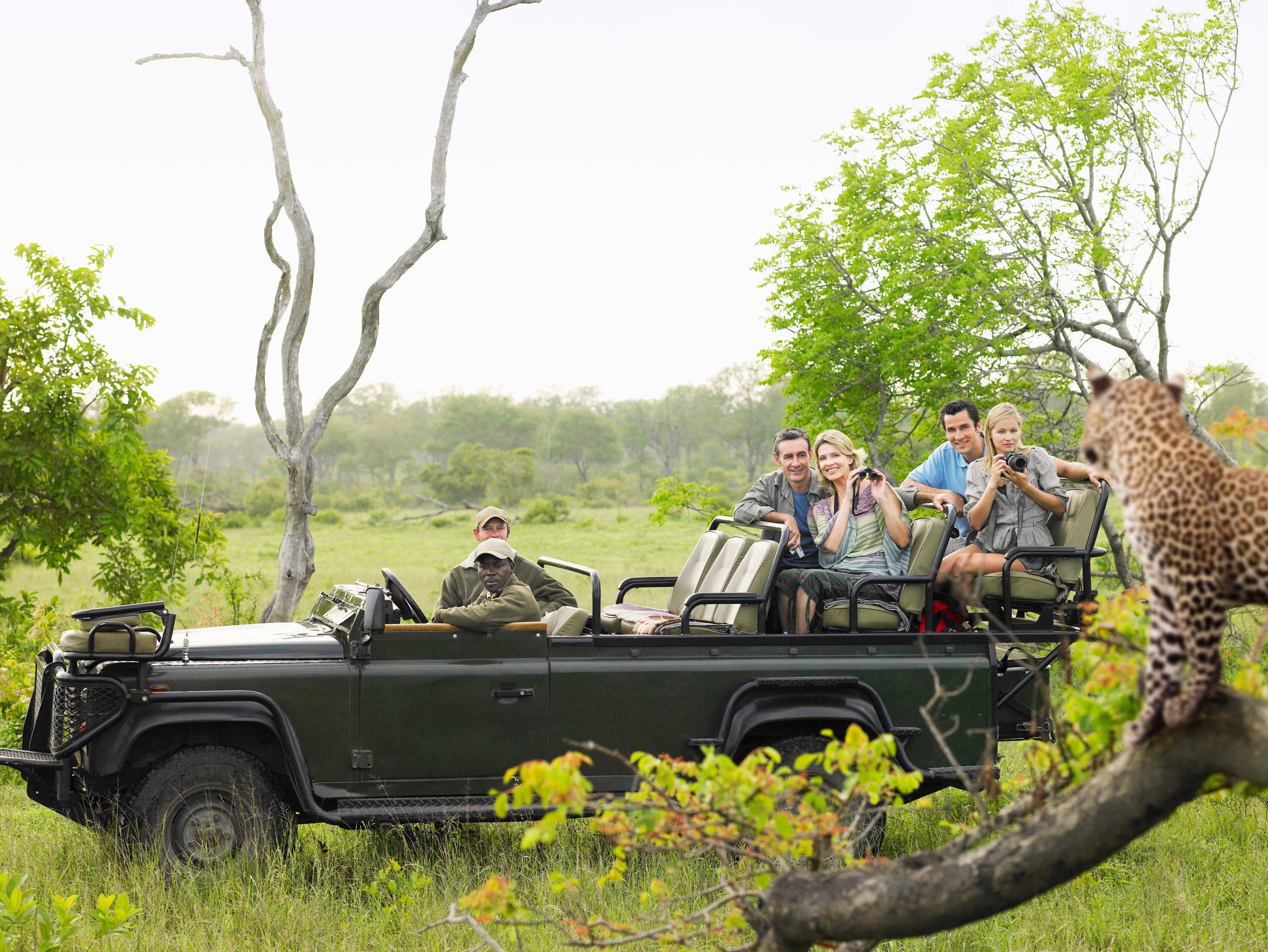
Safari guests in an open vehicle watching a leopard at close range on a private game drive
6 daysFirst safari

Tanzania Essential

Arusha · Tarangire · Ngorongoro Crater · Central Serengeti

First-time travelers with limited leave who want the northern circuit’s icons in under a week

Best months
Year-round except April – May
Comfort levels
Comfort · Premium · Luxury
Individually quoted
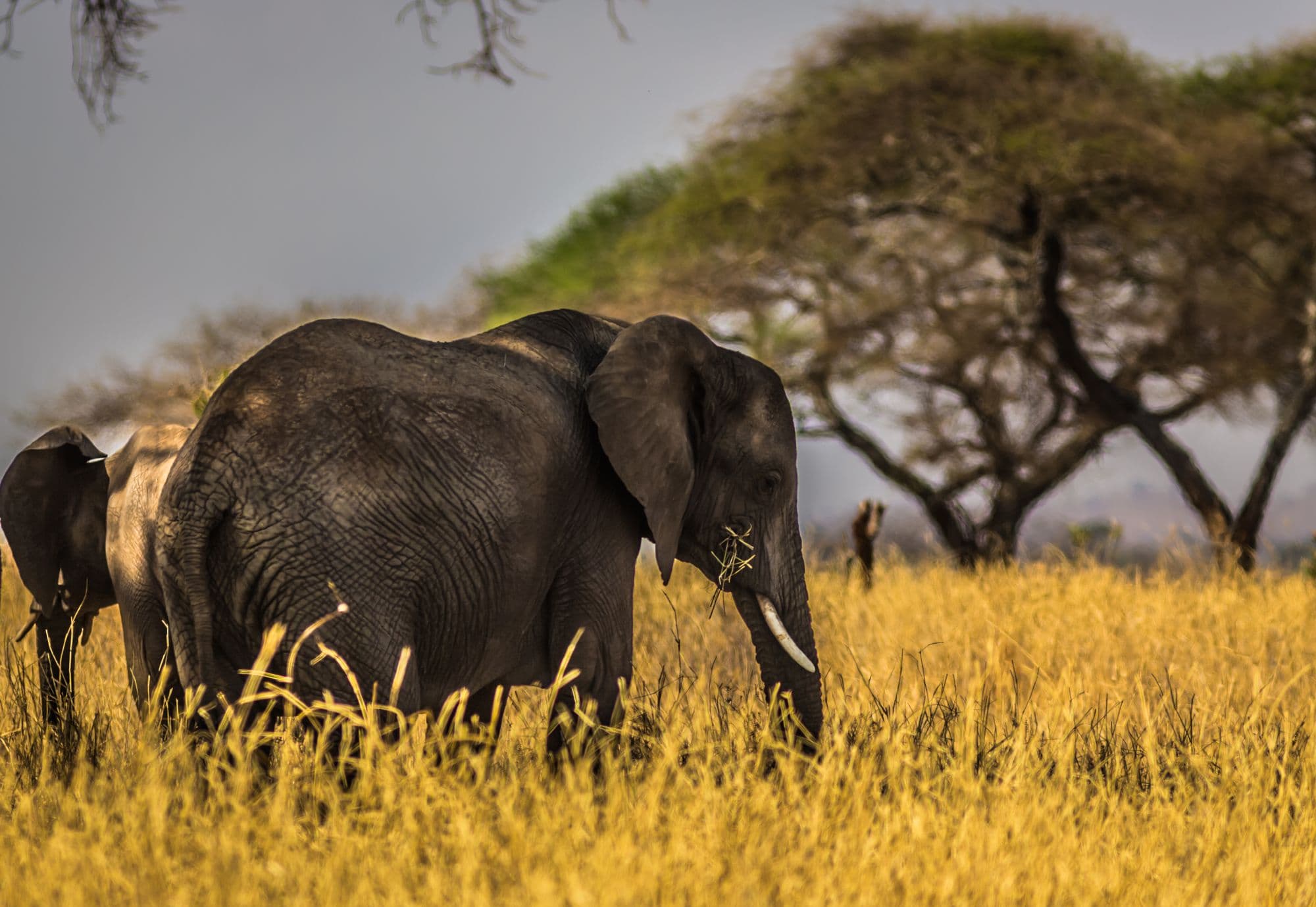
Elephants grazing beneath flat-topped acacia trees on golden grassland
8 daysMost popular

Serengeti & Ngorongoro Classic

Arusha · Lake Manyara · Central Serengeti · Olduvai Gorge · Ngorongoro Crater

First-time safari-goers and photographers who want real time in the Serengeti without flying

Best months
June – March, outside the long rains
Comfort levels
Comfort · Premium · Luxury · Ultra-Luxury
Individually quoted
View across the Ngorongoro Crater floor from the forested rim
9 daysComplete introduction

Tanzania Northern Circuit

Arusha · Tarangire · Ngorongoro Crater · Olduvai Gorge · Central Serengeti

First-time travelers who want the complete northern circuit, with room to breathe

Best months
June – March, routed to the season
Comfort levels
Comfort · Premium · Luxury · Ultra-Luxury
Individually quoted
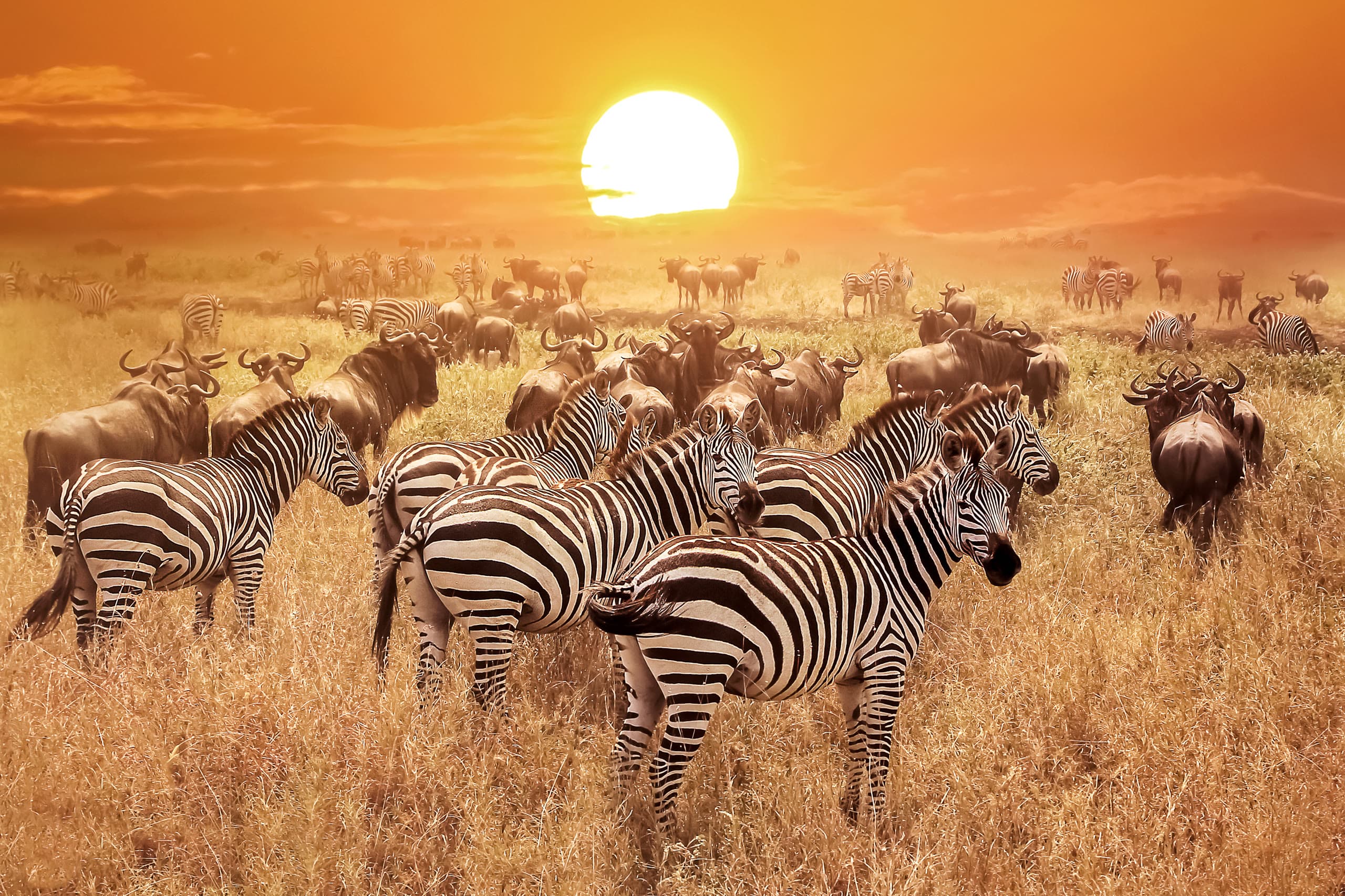
Zebra and wildebeest herds grazing at golden sunset during the Great Migration
9 daysMigration

Great Migration Safari

Arusha · Ngorongoro Crater · Central Serengeti · Northern Serengeti

Travelers who want the migration at the center of the trip, whatever month they can travel

Best months
Year-round — routed to the herds
Comfort levels
Premium · Luxury · Ultra-Luxury
Individually quoted
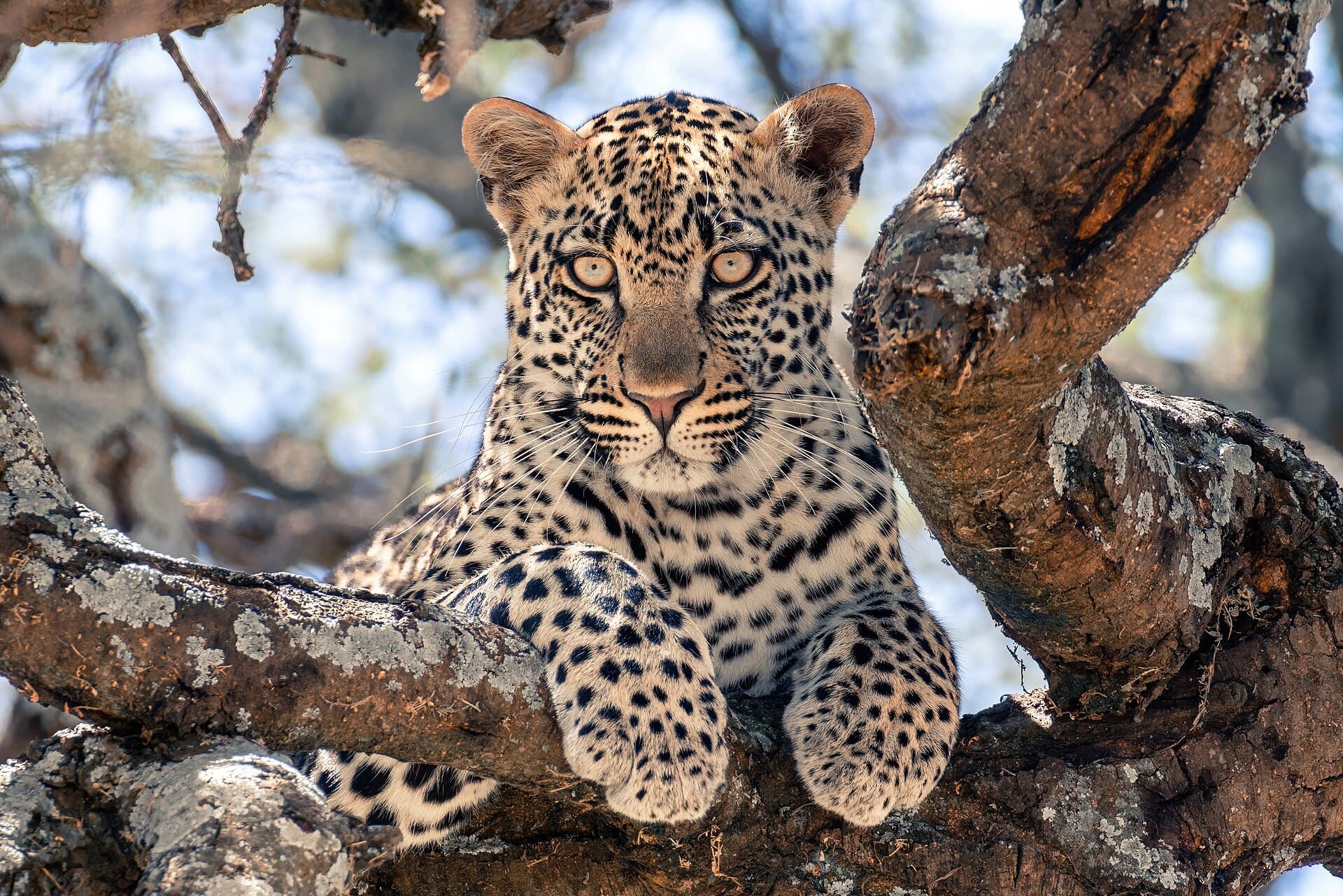
A leopard resting in the fork of a tree in the Serengeti
8 daysJan–Mar

Calving Season Safari

Arusha · Ngorongoro Crater · Olduvai Gorge · Ndutu

Wildlife photographers and returning travelers who want newborn calves and predator action

Best months
Late December – March (calving peaks around February)
Comfort levels
Comfort · Premium · Luxury
Individually quoted
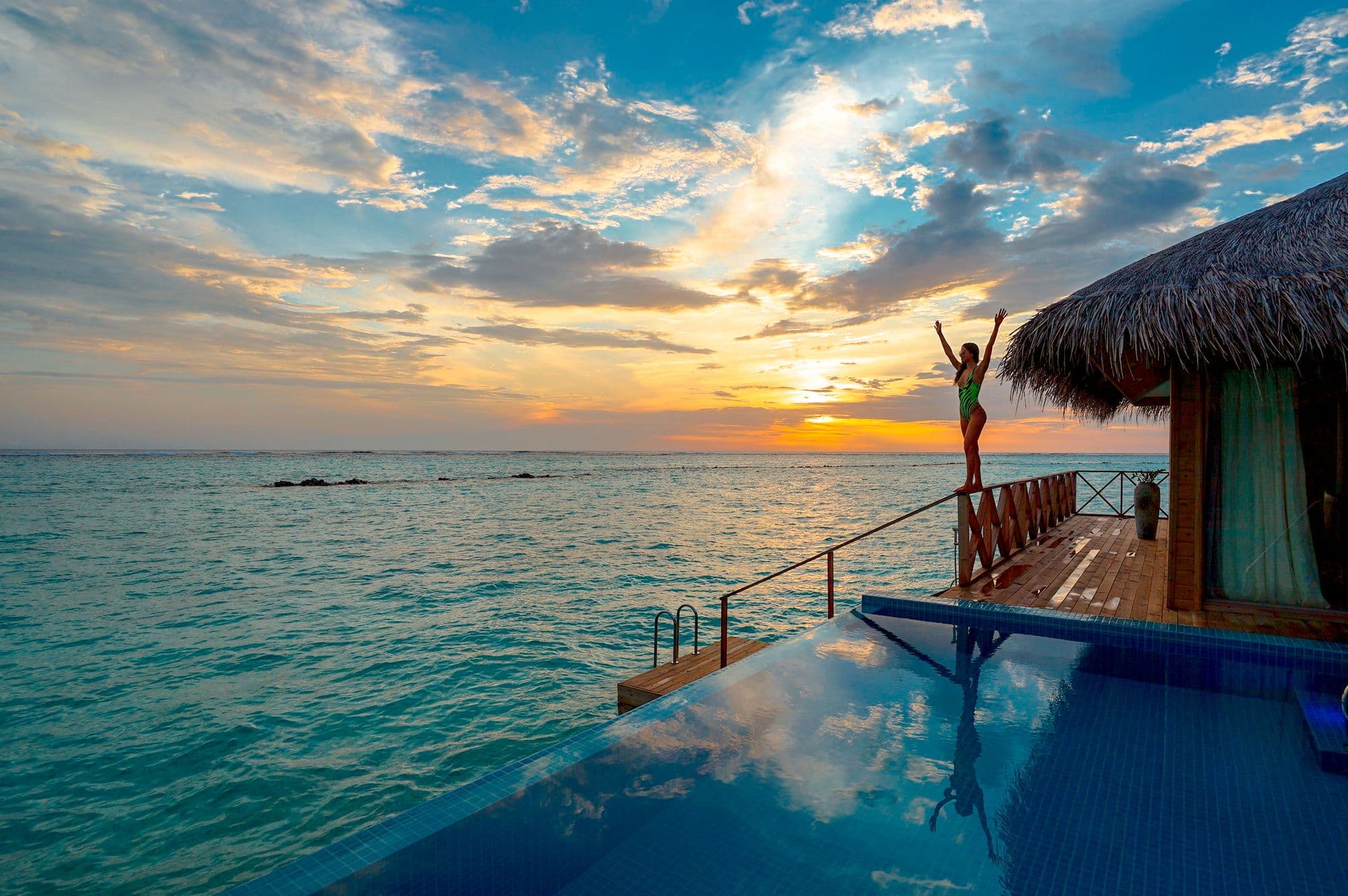
Traveler greeting the sunset from an infinity pool over the Indian Ocean
11 daysSafari + beach

Serengeti + Zanzibar

Arusha · Tarangire · Ngorongoro Crater · Central Serengeti · Zanzibar

Couples, honeymooners and first-timers who want a complete safari followed by real beach time

Best months
June – October and December – February
Comfort levels
Comfort · Premium · Luxury · Ultra-Luxury
Individually quoted

Good to know

Frequently asked questions

Is the Ngorongoro Crater worth it?

For most travelers, yes. Few places anywhere pack so much wildlife into one easily explored setting, and the rhino chance alone draws many visitors. The honest caveat is company: vehicles concentrate on the floor, especially June–October, and your time there is limited. If solitude matters more than density, a walk at Empakaai or an extra Serengeti night may suit you better.

How long can you spend on the crater floor?

Time on the floor is regulated — usually around six hours per visit — and the rules are reviewed from time to time. In practice, you descend as the gates open, stop for a picnic lunch and begin the climb out by early to mid-afternoon. That is plenty for most people, and the early hours are when predators tend to be most active.

Will I see a black rhino in the crater?

Your chances are better here than anywhere else on the northern circuit, but nothing is certain. The crater is home to a small, closely protected population, and sightings are often at a distance across open grass, so binoculars and a long lens help. Your guide will know where rhinos have been seen recently and will keep a respectful distance.

Should I stay on the crater rim or in Karatu?

Stay on the rim if an early descent and the view are priorities; you can be among the first vehicles on the floor and wake above the clouds. Choose Karatu for a milder climate, larger gardens and pools, and easy access to coffee farms and villages — the extra 45 minutes each way is the trade-off. Families often prefer Karatu; couples often prefer the rim.

How cold does it get on the crater rim?

Colder than most people expect. The rim sits above 2,200 meters, and early mornings and evenings are chilly year-round, especially June–August. Pack a fleece or light down jacket, a hat and layers — by midday on the crater floor it is usually warm enough for short sleeves.

Can I walk in the Ngorongoro highlands?

Yes. Walking is not allowed on the crater floor, but ranger-escorted walks are possible in the highlands, most memorably down to the soda lake in Empakaai Crater. Longer highland treks with Maasai guides and pack donkeys can also be arranged. Minimum ages and fitness requirements apply, so tell us who is traveling and we will match the walk to your group.

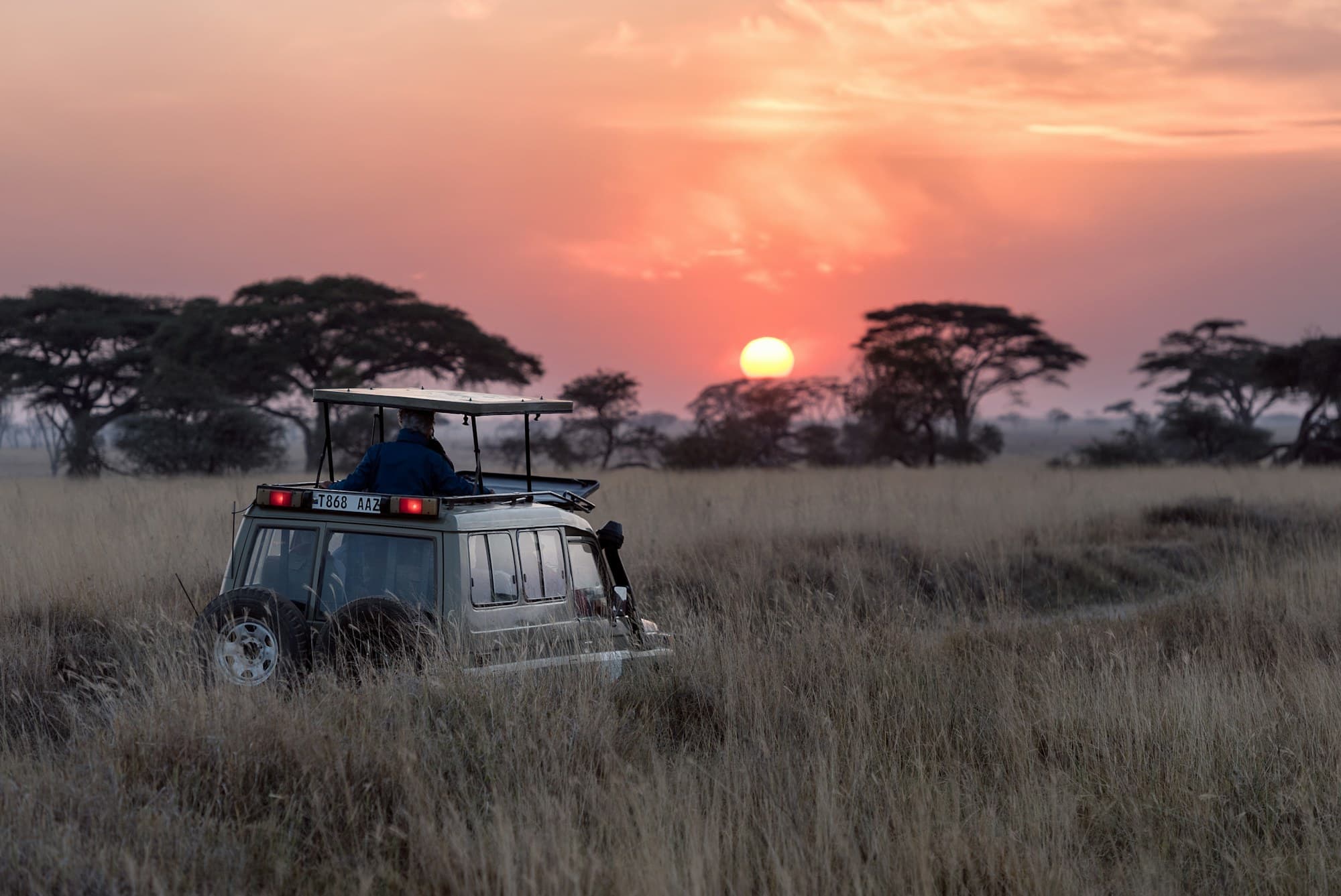
Open safari vehicle with guests on the savanna beneath a dramatic sunset

Tell Us Your Dates

Share when you want to travel, who is coming and what you hope to see. A safari specialist will design a private Tanzania journey around you — no obligation, and nothing booked until you approve it.

Plan a Ngorongoro Crater safari