Getting around

Fly-In Safari

An hour in a light aircraft can replace most of a day on the road — and the view from the window, over crater walls, rivers and open plains, is a game drive of its own.

SeasonYear-round, though some routes and airstrips run reduced schedules during the long rains, roughly March–May.
DurationMost legs take about 45 minutes to 2 hours, sometimes with stops en route
WhereSerengeti · Ruaha · Nyerere · Mahale
Best forTravelers with limited time · Combining distant parks in one trip · Anyone who prefers to avoid long drives · Remote parks such as Ruaha, Nyerere and Mahale

Tanzania is big, and its greatest parks lie far apart. Flying between them turns long road transfers into short hops, so your days go to game viewing rather than transit. The difference is sharpest in the Serengeti: the road from Seronera to Kogatende in the north takes roughly 4–5 hours, while the flight takes about one. In the south and west — Ruaha, Nyerere, Mahale — flying is often the only practical way in.

Scheduled light-aircraft services link most airstrips, and private charters add flexibility. When you land, you pair with a guide and vehicle: either the camp’s own guides, or your private guide, who has driven ahead to meet you. Many of the routes in our itineraries mix the two, driving the shorter northern legs and flying the long ones.

Fly-In Safari

How It Works

  1. We design the route and book seats on scheduled services or a private charter.

  2. You are driven to the airstrip, where luggage and passengers are weighed.

  3. The aircraft may stop at other airstrips to drop off or collect passengers.

  4. You land, meet your guide and vehicle, and often start game viewing on the drive to camp.

  5. At the end, you fly back to Arusha, Kilimanjaro or Dar es Salaam — or on to Zanzibar.

Fly-In Safari

Where You Can Do It

Serengeti
Airstrips such as Seronera, Kogatende and Ndutu connect with Arusha and each other — the usual way to reach the far north.
Ruaha
Remote enough that most visitors fly in, often combined with Nyerere on the same trip.
Nyerere
About 45 minutes by air from Dar es Salaam, with camp vehicles meeting flights at the airstrip.
Mahale
Reached by light aircraft on limited days of the week, followed by a boat along the Lake Tanganyika shore.

Good to know

  • Luggage is typically limited to about 15 kg (33 lb) per person in soft-sided bags, often including hand luggage; our safari packing list is built around it.
  • Schedules are set by the airline and can change, so a little flexibility on the day helps.
  • Some operators ask for passengers’ body weight in advance for balance and safety.
  • Extra bags can often be stored in Arusha or Dar es Salaam until you return.
  • Afternoon heat can make flights bumpy; morning departures are usually smoother.

Safaris

Safaris Featuring This Experience

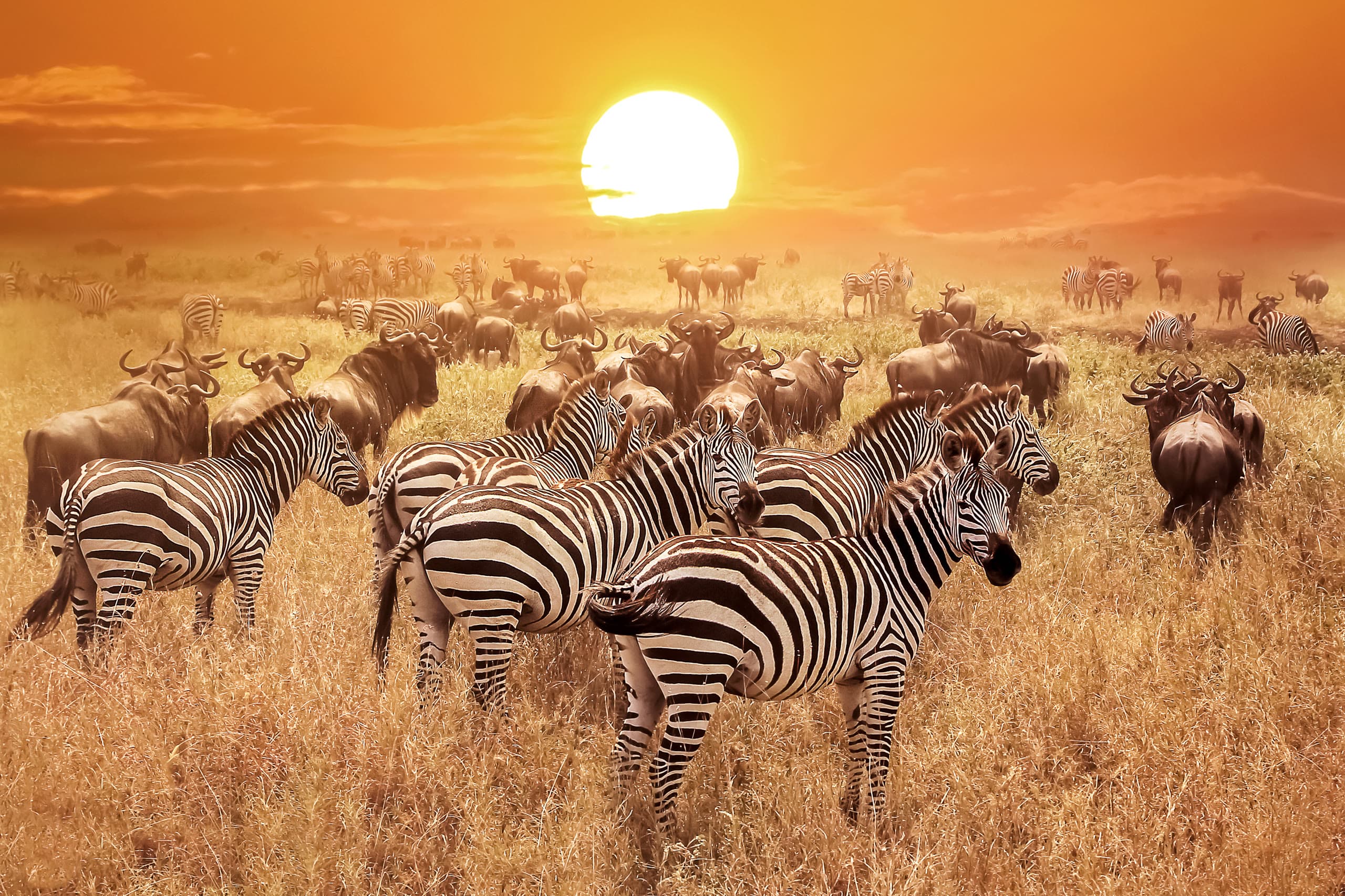
Zebra and wildebeest herds grazing at golden sunset during the Great Migration
9 daysMigration

Great Migration Safari

Arusha · Ngorongoro Crater · Central Serengeti · Northern Serengeti

Travelers who want the migration at the center of the trip, whatever month they can travel

Best months
Year-round — routed to the herds
Comfort levels
Premium · Luxury · Ultra-Luxury
Individually quoted
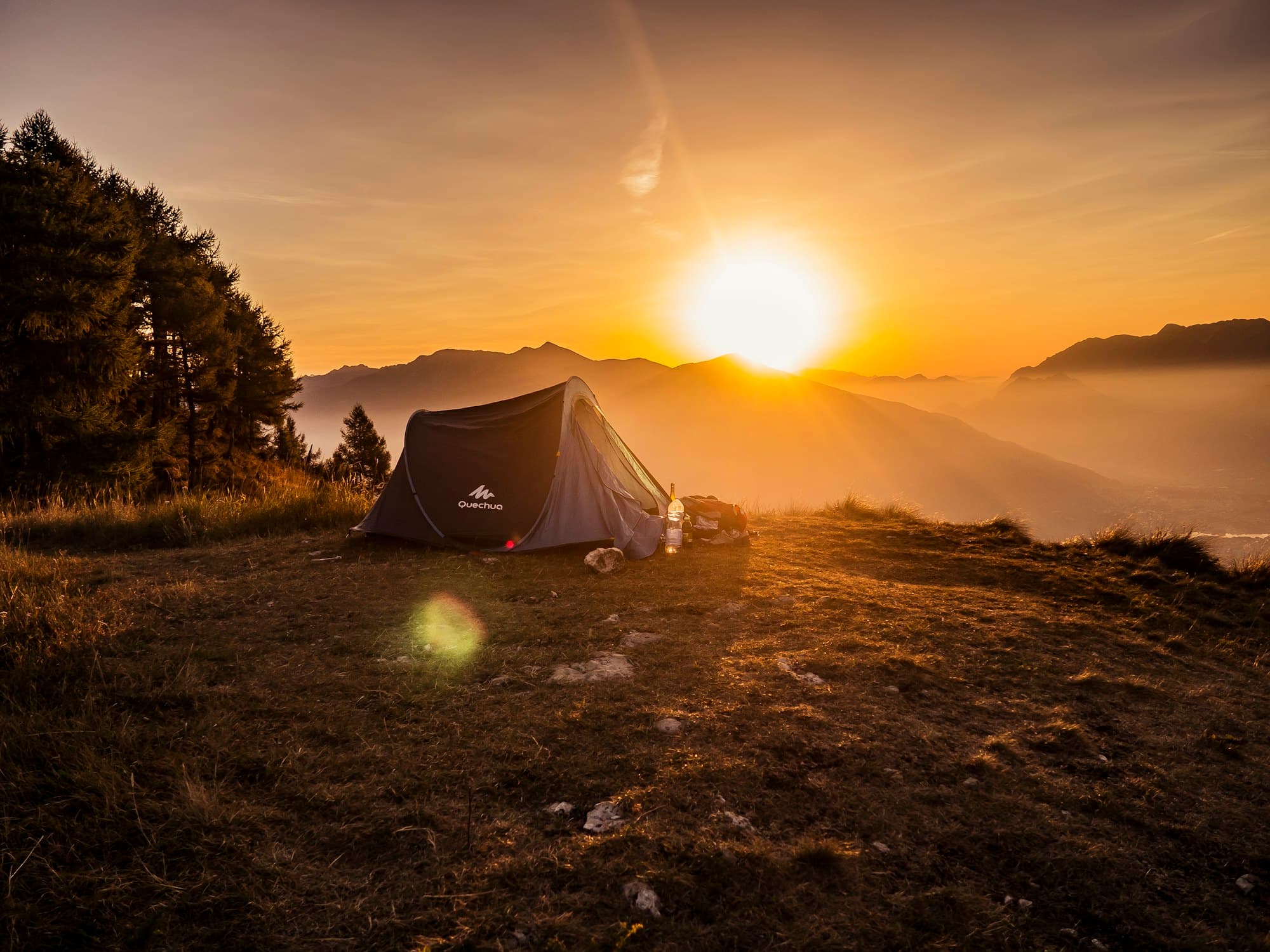
Luxury tented camp glowing at golden hour over rolling savanna hills
9 daysLuxury

Luxury Tanzania

Arusha · Western Serengeti · Central Serengeti · Ngorongoro Crater

Travelers who value space, privacy and expert guiding over a long list of parks

Best months
June – October and December – February
Comfort levels
Luxury · Ultra-Luxury
Individually quoted
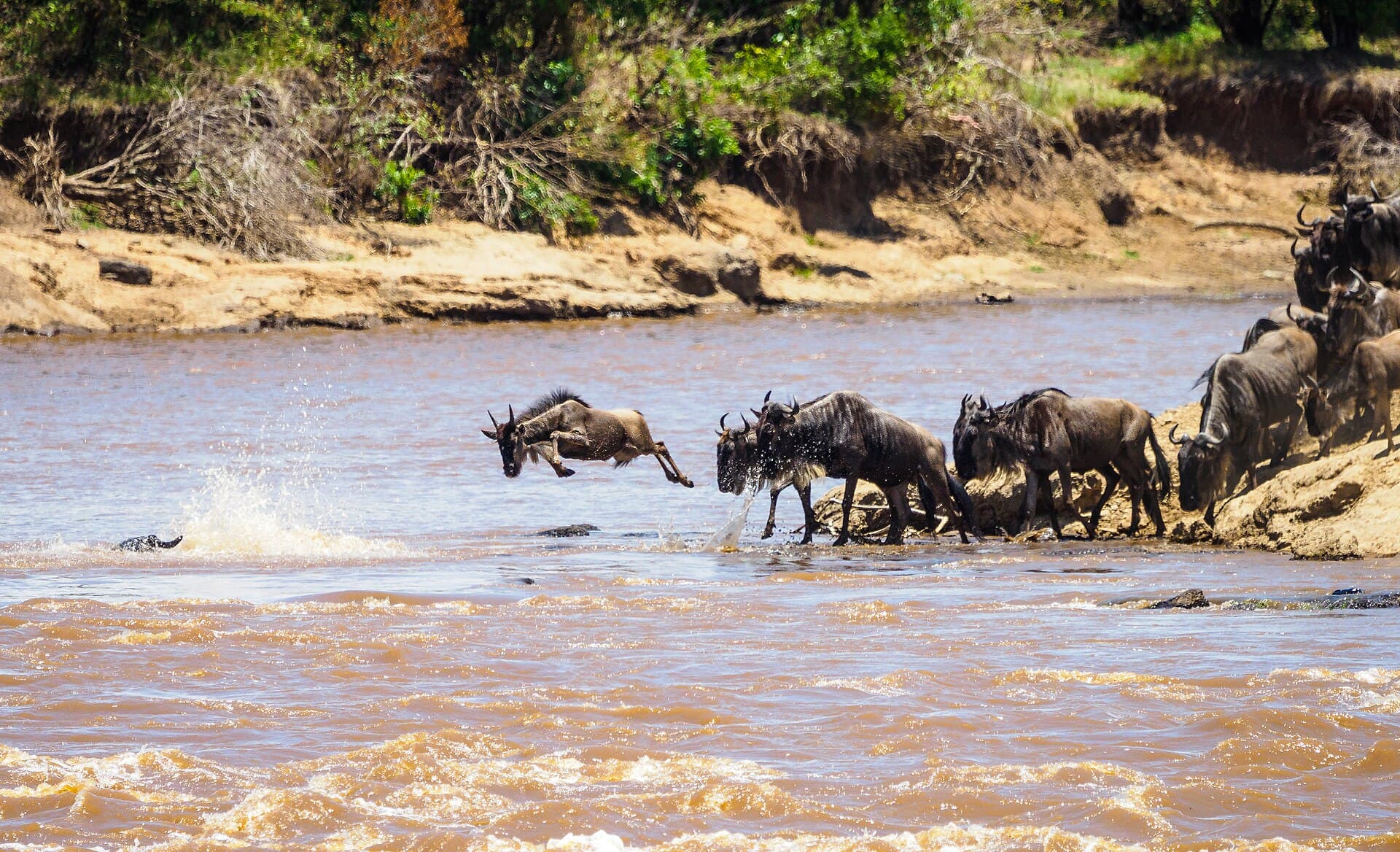
Wildebeest leaping into the Mara River during the Great Migration crossing
10 daysJul–Oct

Northern Serengeti River Crossing

Arusha · Tarangire · Ngorongoro Crater · Central Serengeti · Northern Serengeti

Travelers set on seeing a river crossing, with the patience to wait for one

Best months
July – October
Comfort levels
Premium · Luxury · Ultra-Luxury
Individually quoted
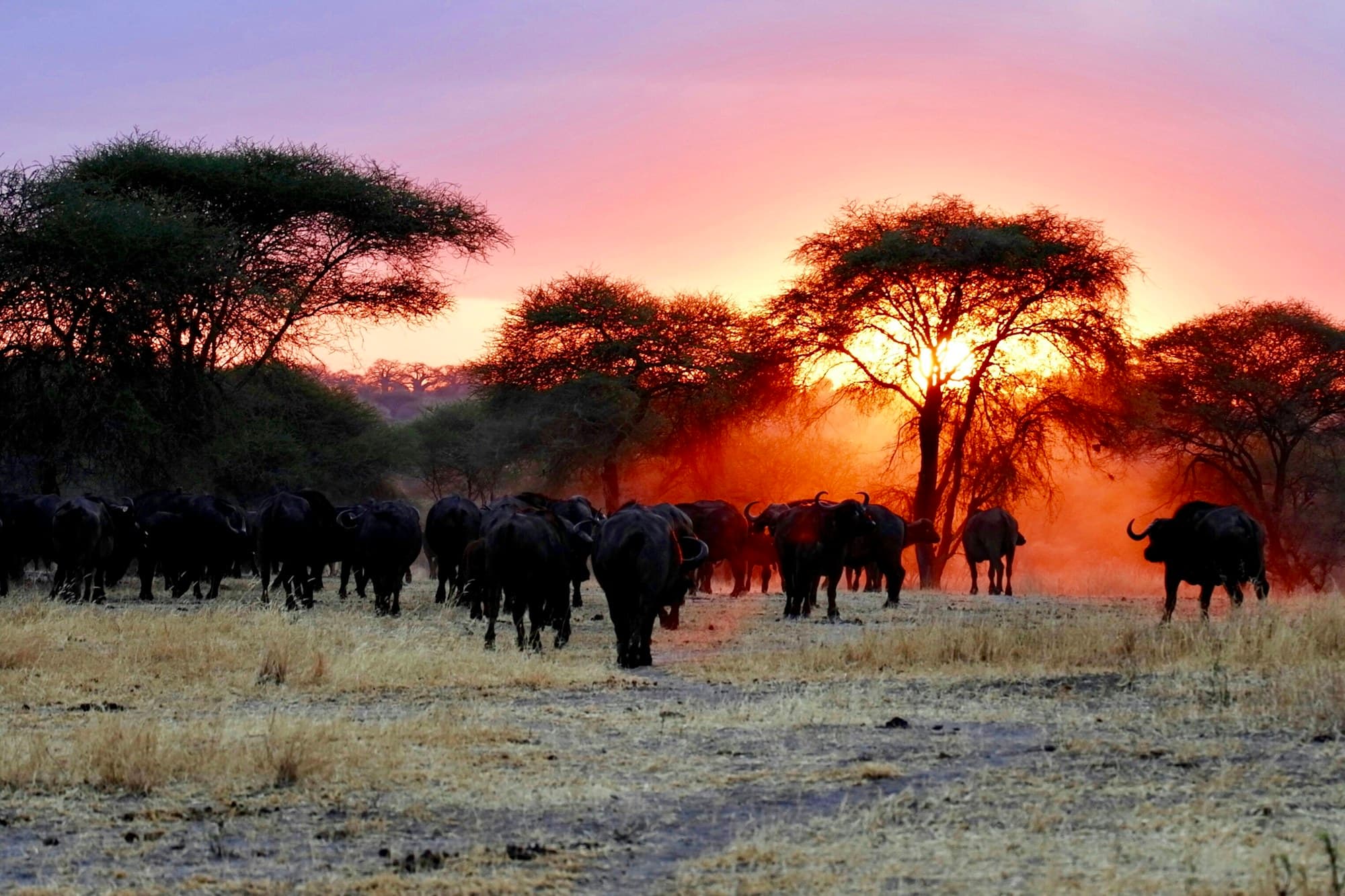
Wild kopje-studded savanna of Ruaha National Park
9 daysRemote safari

Ruaha & Nyerere Wilderness

Dar es Salaam · Nyerere · Ruaha

Second-time safari travelers and anyone who wants wilderness without crowds

Best months
June – October
Comfort levels
Premium · Luxury
Individually quoted
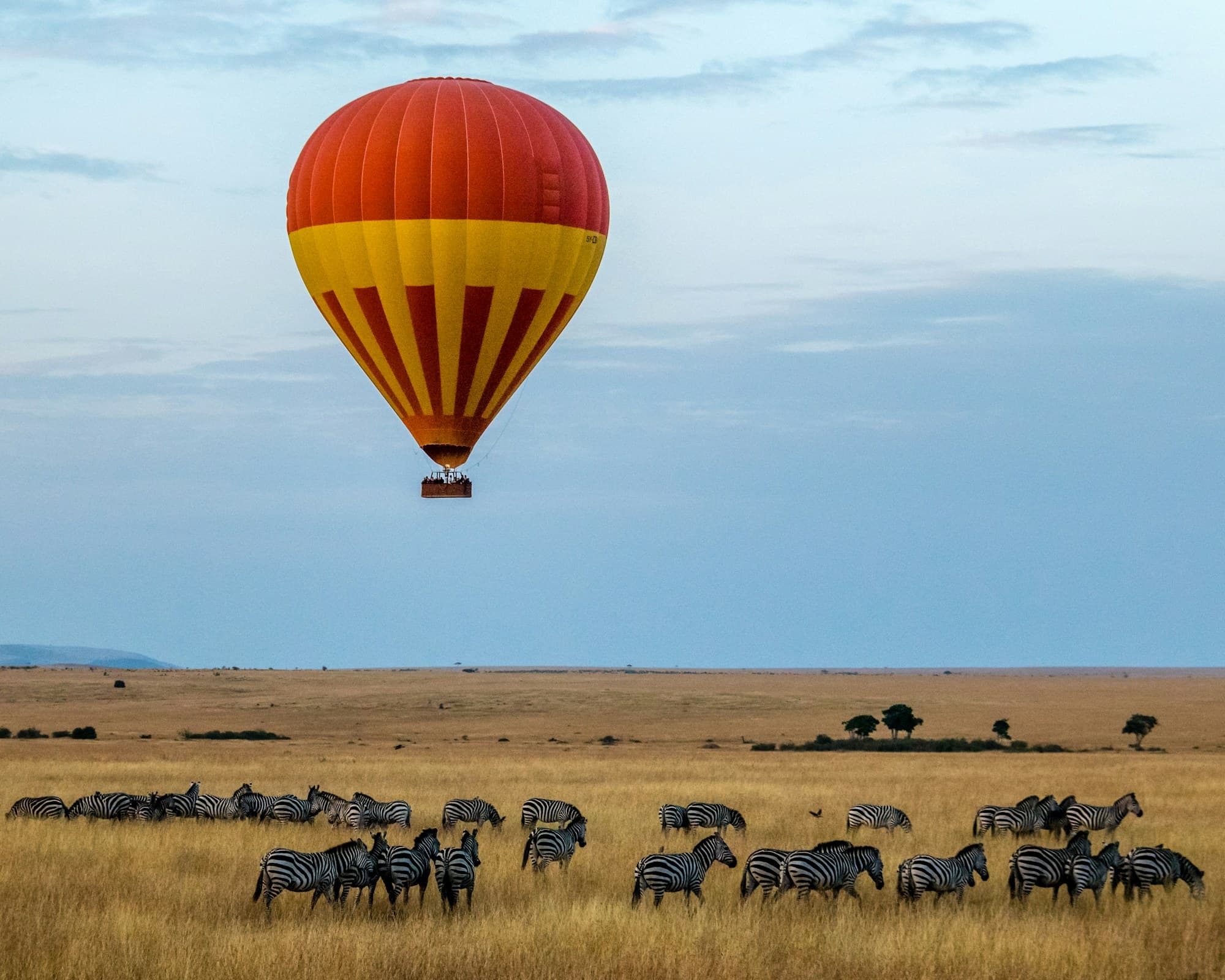
Herds moving through golden dust at a fiery Masai Mara sunset
13 daysTwo countries

Tanzania + Kenya

Nairobi · Masai Mara · Kilimanjaro Airport · Arusha · Tarangire · Ngorongoro Crater · Central Serengeti

Travelers who want the Mara and the Serengeti in one well-connected trip

Best months
June – October and December – February
Comfort levels
Premium · Luxury · Ultra-Luxury
Individually quoted
Good to know

Frequently asked questions

Is a fly-in safari worth it?

If time is short or your parks are far apart, usually yes, because it trades long road days for more time in the field. On compact northern routes, a mix of driving and flying often gives the best balance of scenery and ease.

Do I lose my private guide on a fly-in safari?

Not necessarily. You can use the camps’ guides in each area, or have your private guide and vehicle drive ahead to meet you. We explain the trade-offs when we plan your route.

What if my luggage is over the limit?

Some operators can carry excess weight at extra cost or if you book an additional seat, depending on the flight load. It is usually simpler to store extra bags and travel light.

What are the flights like?

Aircraft are small, usually single- or twin-engine planes flown by pilots experienced in bush conditions, with seats close to the windows. Expect a few bumps on warm afternoons and occasional weather delays, which are part of sound safety practice.

Experiences

Related experiences

Aerial view over savanna herds from a hot-air balloon at first light

In the air

Serengeti Hot-Air Balloon Safari

Drift over the Serengeti at first light as the plains wake beneath you, then land for a champagne breakfast in the bush.

Safari guests in an open vehicle watching a leopard at close range on a private game drive

After dark

Night Game Drives

Head out after dark with a red-filtered spotlight to find the bush’s nocturnal cast — genets, bushbabies, hunting predators and, with luck, an aardvark.

Wild kopje-studded savanna of Ruaha National Park

On foot

Walking Safaris

Leave the vehicle behind and read the bush up close with an armed ranger — tracks, birdcalls and the thrill of being on foot in big-game country.

Open safari vehicle with guests on the savanna beneath a dramatic sunset

Tell Us Your Dates

Share when you want to travel, who is coming and what you hope to see. A safari specialist will design a private Tanzania journey around you — no obligation, and nothing booked until you approve it.

Start Designing My Safari