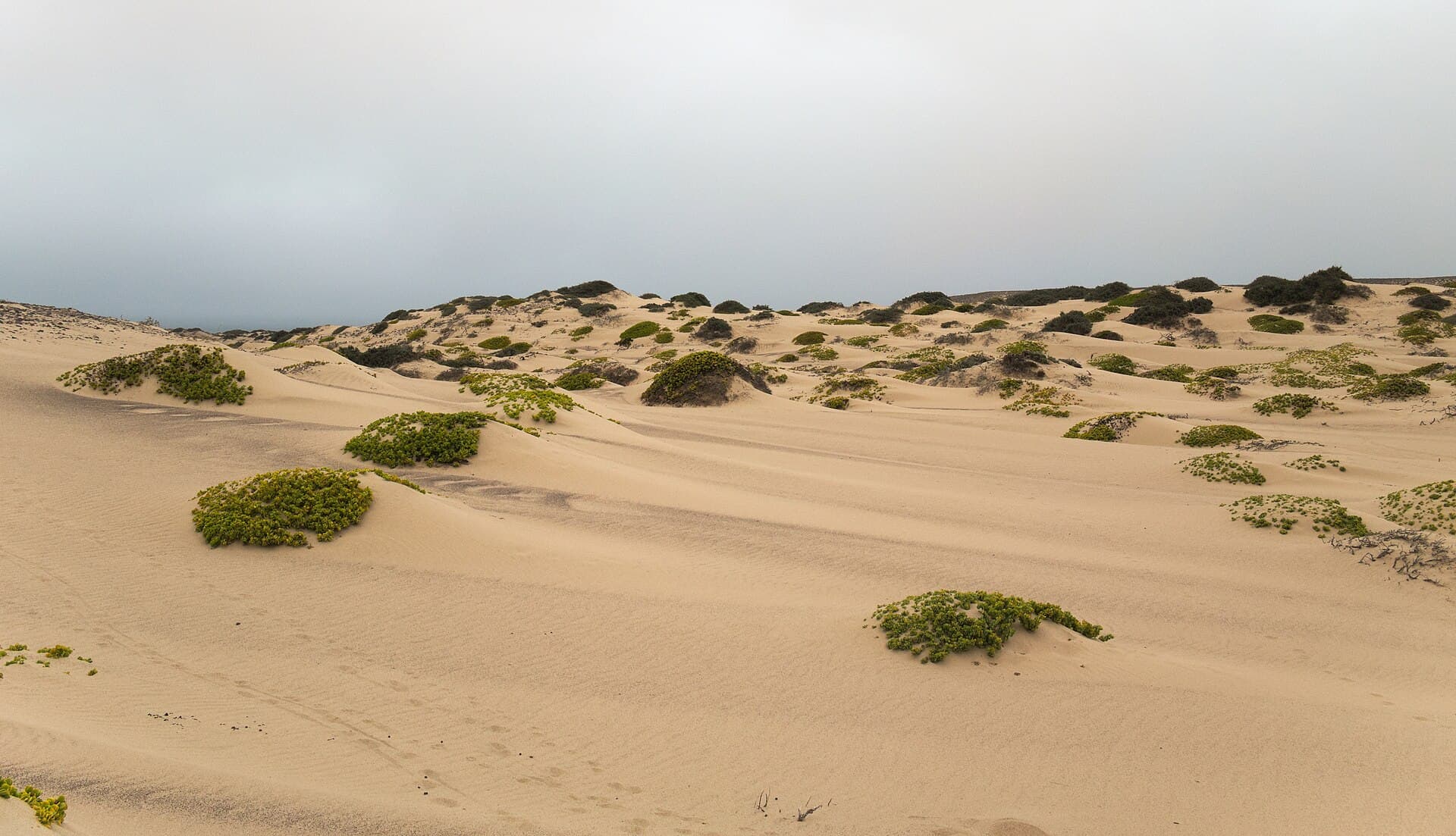
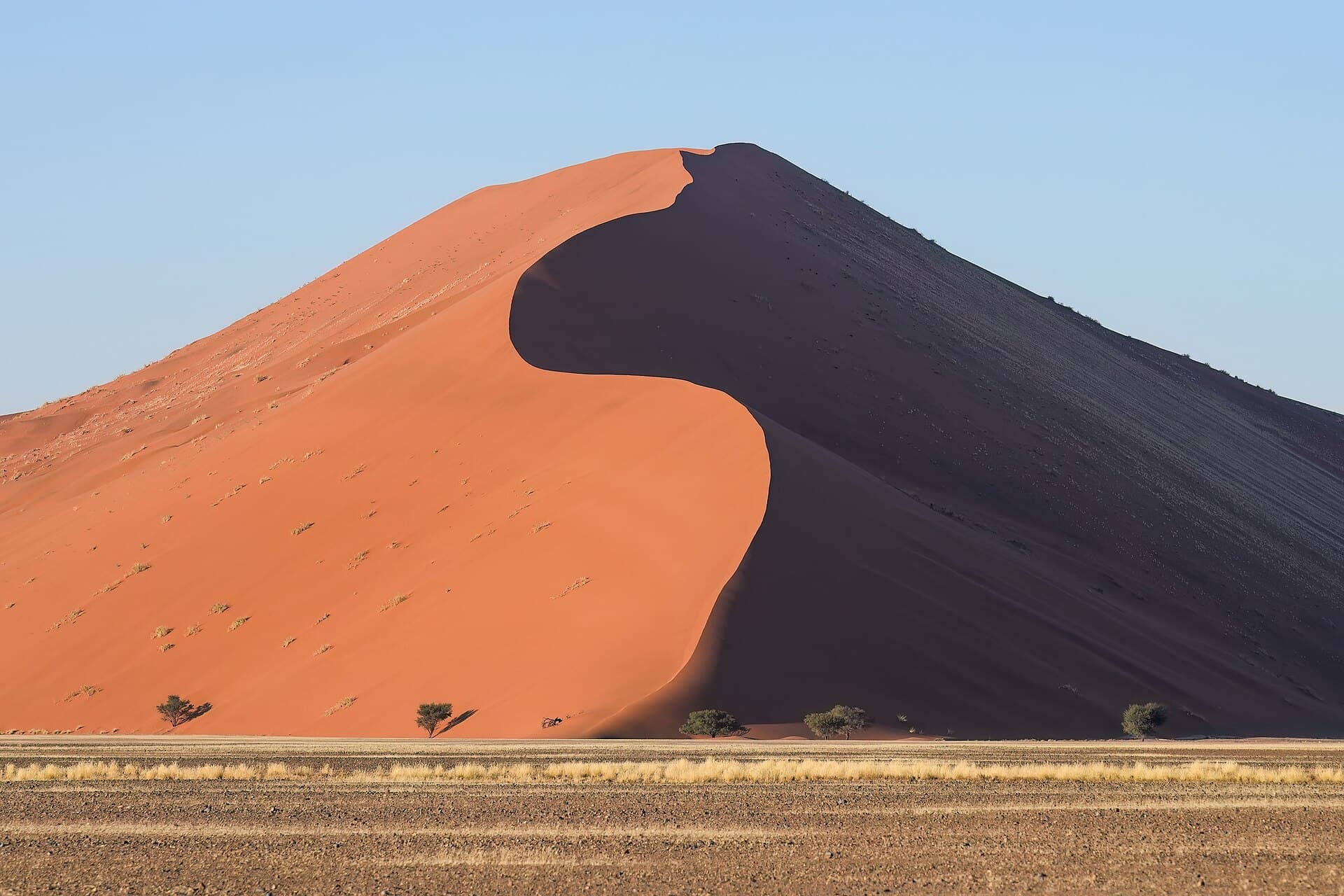
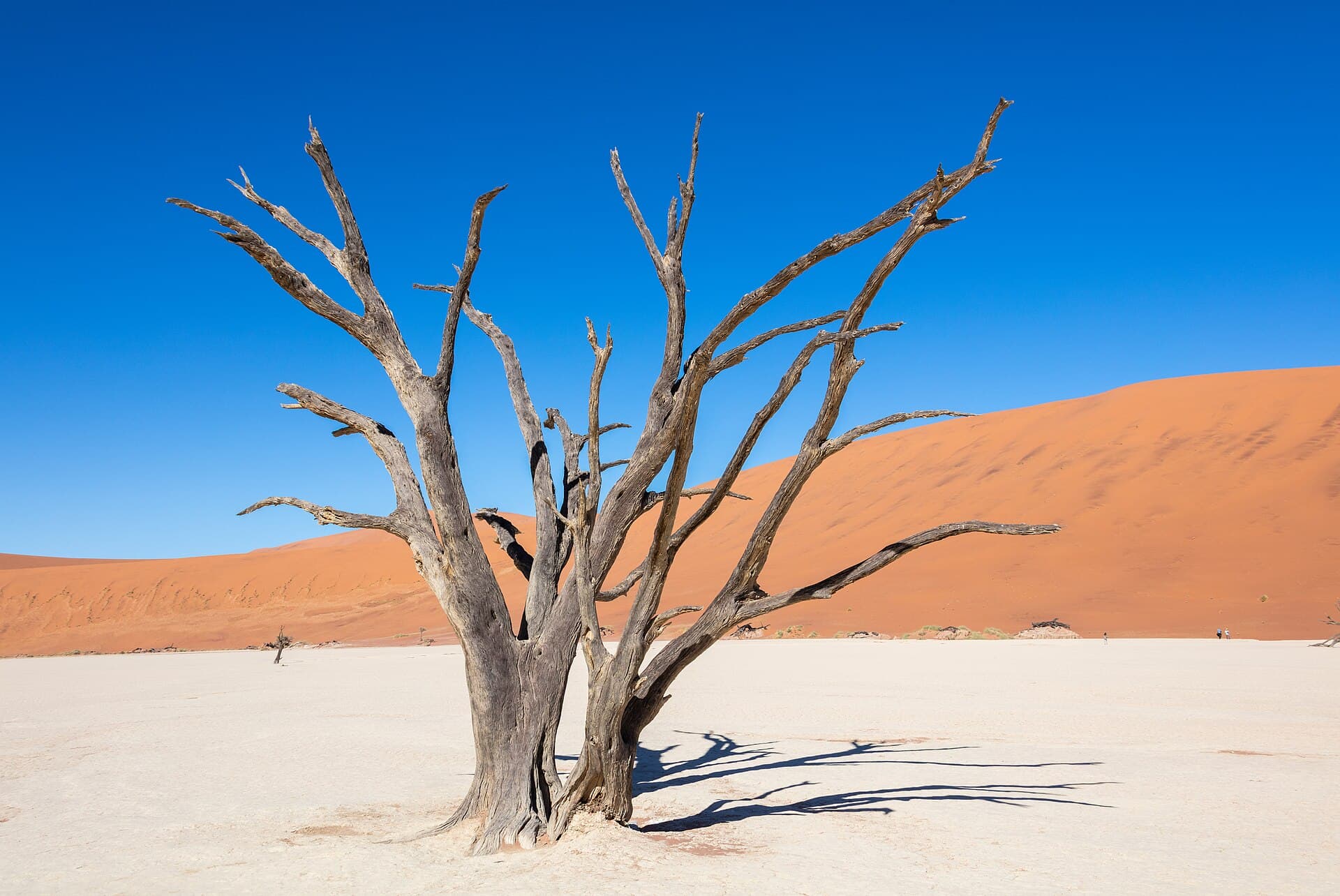
A Namibia fly-in safari solves the country’s biggest planning problem, which is distance. By road, Sossusvlei and Etosha lie about 756 km apart, and the northern Skeleton Coast cannot be reached by road at all. On this ten-day route, small aircraft carry you between three very different worlds — the Sossusvlei dune sea, the fog-bound northern Skeleton Coast and the waterholes of Etosha — so your days are spent on the ground rather than on gravel roads.
At each stop, the camp’s resident guides take over, and we plan private activities wherever the camp can offer them. The flights are part of the experience: the long coastal leg on day 5 follows the edge of the Namib Sand Sea, where dunes run straight into the Atlantic surf. The route suits couples and small groups who are comfortable with early starts, small planes and soft luggage, and who prize silence, scale and light over a crowded sighting.
Why this route works
Namibia’s headline landscapes form a rough arc from the southern Namib up the Atlantic coast and inland to Etosha, and this route flies that arc in order, so you never double back. Windhoek comes first because there are no nonstop flights from the US: after a connection in Johannesburg, Cape Town, Frankfurt or Addis Ababa, a night on the ground resets you before the first small-plane hop. Three desert nights give you one unhurried sunrise at the dunes plus a spare morning for the balloon, which wind can cancel. The long coastal flight comes next because it is the only way into the northern Skeleton Coast, and three nights there repay the effort. Etosha comes last: two nights on a private reserve allow a full day in the park and a night drive, and the short hop back to Windhoek lines up with evening departures. If you are weighing flying against a guided road trip, this comparison of self-drive, private guiding and fly-in travel sets out the trade-offs.