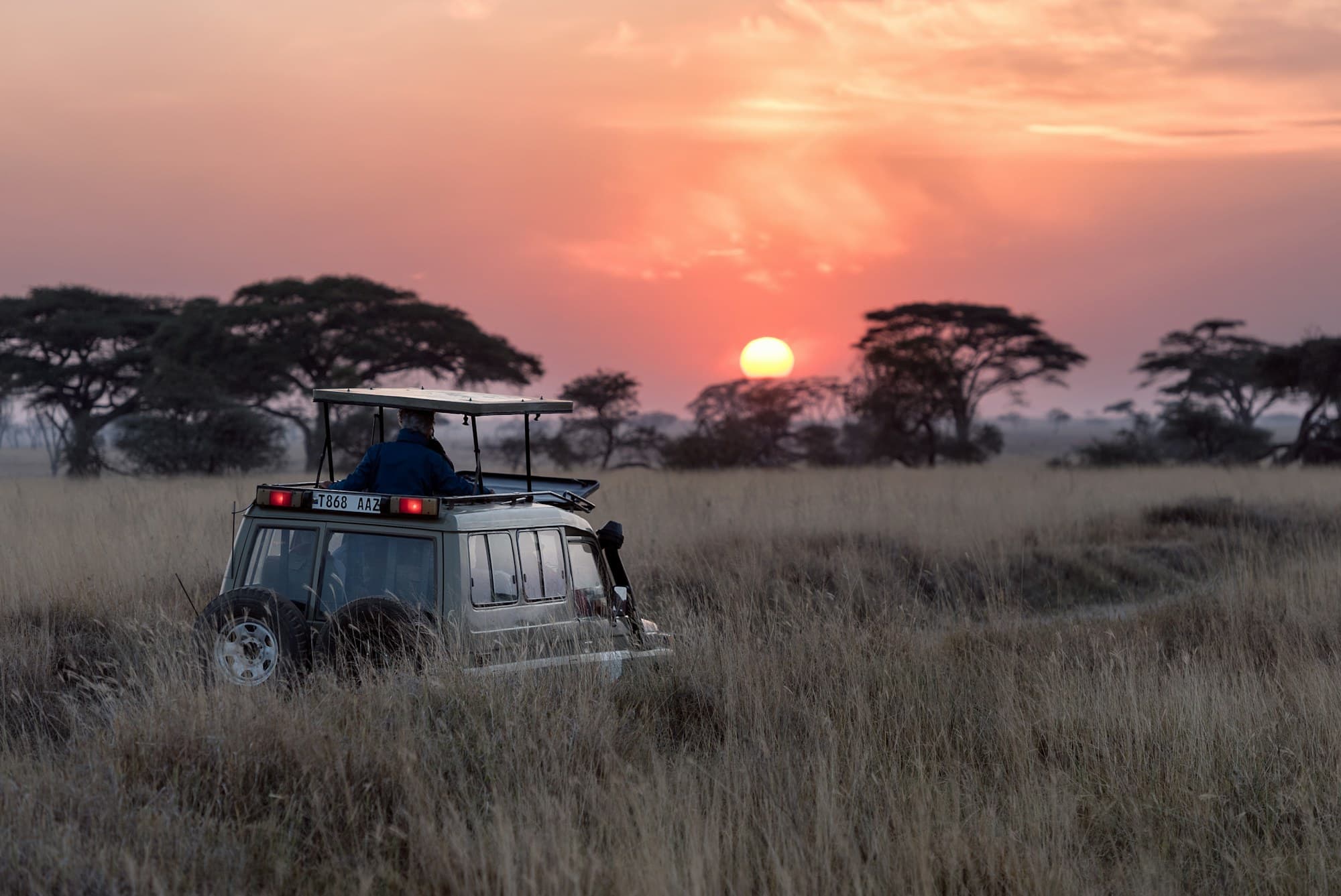
Open safari vehicle with guests on the savanna beneath a dramatic sunset

Namibia planning

Self-Drive, Private Guide or Fly-In? How to Travel Namibia

The biggest decision in planning Namibia isn’t which lodge but how you move. An honest look at all three ways, from a company that doesn’t rent cars.

Namibia is one of the few safari countries where driving yourself is a mainstream choice, and whether to self-drive or travel with a guide is the first question most travelers ask. The main roads are well signposted and quiet, and fuel, rest camps and campsites are spread along the classic circuit. It is also a country of long gravel distances, isolated stretches and wildlife that is easy to drive past without a trained eye.

We should declare our position. Most journeys African Safari Reserve plans use a private guide or light aircraft through vetted partners. We don’t rent vehicles ourselves, but for travelers it suits we can help plan a self-drive route, the stays along it and sensible daily distances, and we will be straight about all three options, including when self-drive is the better fit for you and when it is not.

Below are the three ways compared side by side, what each really involves, where each one doesn’t work, and the combination that suits most first-time visitors.

At a glance

Self-Drive, Private Guide and Fly-In Compared

Self-drivePrivate guideFly-in
Who drivesYou, usually in a rented 4×4 or high-clearance vehicleA professional guide in a private vehicleA pilot between regions; camp guides on the ground
Long transfer daysYours to drive, often on gravelDriven for you, with stops chosen by your guideReplaced by short flights
Wildlife interpretationYour field guide book and your own eyesA guide who tracks, identifies and explainsA different specialist guide at each camp
FlexibilityComplete, within park gate timesHigh; the guide shapes each day around youSet by flight times, flexible at each camp
ReachAreas with road access onlyRoad-accessible areas, with local knowledge of rougher tracksIncludes fly-in-only areas such as the northern Skeleton Coast
LuggageWhatever fits the carGenerousSoft bags within a weight limit
Relative costLowestMiddle, and efficient for families and groupsHighest per day
Best forConfident drivers with time and a sense of adventureFirst-time visitors, wildlife-focused travelers, familiesTravelers short on time, wilderness seekers, anyone wanting aerial views

A generalization: every trip is different, and many of the best itineraries mix two or all three.

Self-drive

The Real Case for Driving Yourself

Self-drive gives you something no guided trip quite matches: the whole day is yours. You can sit at an Etosha waterhole for three hours with a flask of coffee, stop at every dune and viewpoint, and change plans on a whim. Etosha suits it well, since visitors drive themselves on designated roads, stay inside their vehicles and move between the rest camps from sunrise to sunset.

It is also the lowest-cost way to travel, especially with a rooftop tent and campsites. And for travelers who enjoy driving for its own sake, the empty roads through the Namib and Damaraland are part of the attraction. People who have driven the remote American West or the Australian outback often adapt quickly.

Honest risks

What Self-Drive Really Asks of You

The main risks of self-driving in Namibia aren’t crime; they are the roads, the distances and fatigue. The UK Foreign Office’s travel advice, the most detailed official source on the subject, highlights several points:

  • Accidents are common on gravel, often single-vehicle rollovers caused by loose surfaces, corrugations and soft sand at speeds that feel safe. The FCDO advises staying under 80 km/h on gravel.
  • Distances are long and fatigue builds. Namibia Wildlife Resorts lists 756 km between Sossusvlei and Etosha, and several consecutive days of four to six hours at the wheel take a toll that is easy to underestimate.
  • Tyres and fuel need planning. The FCDO recommends carrying two spare tyres, and it pays to fill the tank whenever you can, because filling stations can be far apart in the north-west.
  • Driving after dark outside towns is dangerous. Livestock and wildlife wander onto unfenced roads, and the FCDO advises against it.
  • The rains change the roads. From about January to April, gravel can wash away or turn soft, and river crossings in the north can flood.
  • Read the insurance small print. The FCDO notes that hire-car insurance often excludes accidents that involve neither another vehicle nor an animal, which describes the most common kind of crash.
  • Check licence rules before you go. Requirements for foreign licences and International Driving Permits are set by Namibia and by each car-hire company, so confirm both before you travel.
  • Remote areas are genuinely remote. Mobile signal disappears for long stretches, traffic can be very sparse and help may be hours away, so carry extra water, download offline maps and tell your next lodge when to expect you.
  • Wildlife and livestock share the roads. Elephants cross in Damaraland and the north-east, and kudu, warthog and cattle can step out without warning; in Etosha you stay inside the vehicle and give elephants plenty of room.
  • Choose the vehicle for the route. A high-clearance 4×4 with two full-size spares suits most of the classic circuit, a rooftop-tent camper only makes sense if you plan to camp, and Kaokoland’s remote tracks call for expedition vehicles traveling in convoy.

Private guide

What a Private Guide Adds

A Namibian guide on a private trip is driver, naturalist, navigator and fixer in one. You never check a map, change a tyre or worry about fuel, and the long road days become part of the safari: your guide stops for a lappet-faced vulture on a pylon, explains the welwitschia plants of the gravel plains, or pulls over where desert-adapted elephants crossed the road that morning.

The difference shows most at the waterholes. A good guide reads the arrivals: the zebra that won’t drink because something is in the reeds, the black rhino that usually waits for dusk, the elephant herd whose approach means the smaller animals will move off. In Damaraland and the north-west, a guide also opens doors that self-drivers can’t, arranging tracking with community rangers and introductions in villages that expect visitors to come with a local guide.

A private guide sets the pace around you, too. If a cheetah is on a kill, you stay; if the heat is building, you head for shade. For travelers who want the wildlife explained as well as seen, and for families who would rather not have a parent at the wheel for a thousand kilometers, it is the approach we recommend most. See how it works on our 14-day private guided journey.

Fly-in

How a Namibia Fly-In Safari Works

A fly-in safari replaces the long road days with light aircraft and bases you at camps whose own guides take you out on the ground. Our 10-day fly-in journey shows the full shape.

  1. Scheduled seat or private charter

    Scheduled safari services sell seats on regular routes from Windhoek to airstrips serving Sossusvlei, Damaraland and the Etosha area. A private charter from Windhoek’s Eros Airport runs to your timetable and can reach more remote strips.

  2. Pack soft and light

    Small aircraft carry soft bags only, within a weight limit that is typically around 20 kg per person; the flight operator confirms the exact allowance. Hard suitcases stay behind, so plan on a single soft duffel.

  3. Meet a new guide at each airstrip

    Each camp’s guide meets your flight and takes you out in the camp’s vehicles. You gain specialists who know one area intimately, in exchange for the continuity of a single guide.

  4. Leave room for fog and weather

    Coastal fog can hold up take-offs on the Skeleton Coast and at Swakopmund, and summer storms can shift flight times inland. Well-planned itineraries build in a margin rather than tight connections.

  5. Enjoy the view

    The flights are part of the trip. The dune sea, the shipwreck coast and the canyons of the Kunene are best understood from the air, and many travelers remember the flight up the Skeleton Coast as a highlight in its own right.

Limits

Where Each Mode Doesn’t Work

Some parts of Namibia make the decision for you.

The northern Skeleton Coast

The park’s northern section can only be reached on a fly-in safari. Self-drivers can visit the southern section through the Ugabmund and Springbokwasser gates, a very different and more open landscape.

Explore

Kaokoland’s remote valleys

The routes into the Marienfluss and Hartmann’s valleys, including the notorious Van Zyl’s Pass, are expedition terrain for experienced off-road drivers traveling in convoy, not for a rented 4×4 on a first visit. A guided expedition or a flight to a Kunene River camp are the realistic options.

Explore

Etosha after dark

Nobody drives themselves in Etosha between sunset and sunrise. Night drives run only with the park’s own resorts or on the private reserves along the boundary, one reason many itineraries include at least one private-reserve night.

Explore

Flying where the road is the point

Some stretches deserve to be driven: the passes that drop from the escarpment into the Namib, or the road from the coast past Spitzkoppe into Damaraland. A trip that flies every leg misses that sense of scale, which is why we rarely suggest it.

The hybrid

The Combination Most Travelers Choose

For most first-time visitors, the best answer is a mix: a private guide for the wildlife and landscape days, and one flight across the longest or least interesting stretch. A typical shape flies from Windhoek into the desert, then continues by road with a guide through Damaraland to Etosha, saving a transit day without losing the feel of the land.

Hybrids also let you put the investment where it counts: a fly-in stay on the northern Skeleton Coast or at a Kunene River camp, framed by guided road days elsewhere. The 12-day Namibia and Botswana journey applies the same logic across a border, driving where the road rewards you and flying where it doesn’t.

If you are unsure how many days each approach needs, the distances and drive times are set out in how many days you need in Namibia.

Safaris

Recommended safaris

Red curve of Dune 45 at sunrise in Sossusvlei, Namibia
14 daysPrivate guide

Namibia Grand Loop

Windhoek · Sossusvlei · Swakopmund · Spitzkoppe · Damaraland · Etosha National Park · Eastern Etosha · Okonjima

First-time visitors to Namibia who want to see the whole country properly, with time to stop, walk and ask questions

Best months
April–November
Comfort levels
Comfort · Premium · Luxury
Individually quoted
Wind-sculpted dunes meeting the Skeleton Coast
10 daysFly-in

Namibia by Air

Windhoek · Sossusvlei · Skeleton Coast · Etosha National Park

Travelers who would rather fly than drive, and who value remote wilderness and photography over a long species list

Best months
April–November
Comfort levels
Premium · Luxury · Ultra-Luxury
Individually quoted
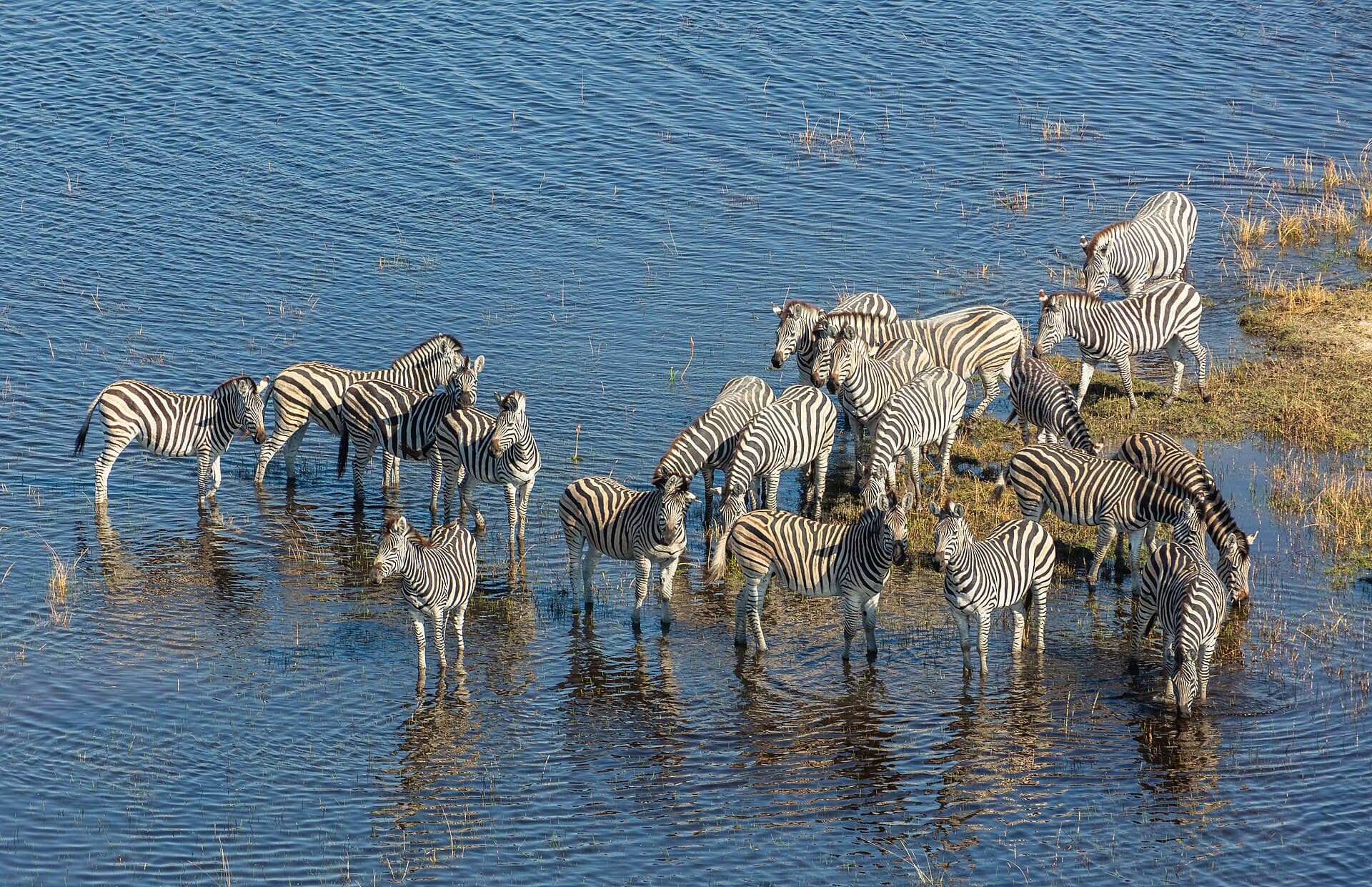
Zebra herd wading through shallow delta water
12 daysDesert & Delta

Desert, Zambezi & Delta

Windhoek · Sossusvlei · Etosha National Park · Zambezi Region · Kasane · Okavango Delta · Maun

Travelers who want Namibia’s landscapes and Botswana’s water safari in a single trip, without backtracking

Best months
May–October
Comfort levels
Premium · Luxury · Ultra-Luxury
Individually quoted

Good to know

Frequently asked questions

What does a private guide do that a self-driver can’t?

Beyond the driving and navigation, a guide interprets what you are looking at: the behavior at a waterhole, the animals you would otherwise pass, and the geology, plants and people of each region. In Damaraland and Kaokoland, a guide can also set up rhino tracking with community trackers and visits to villages that prefer guests to arrive with a local guide.

Do I need a 4×4 to drive in Namibia?

Not on every road, but most visitors choose one. Much of the classic circuit is gravel, the final stretch to Sossusvlei’s pans is soft sand that needs a 4×4 or the park shuttle, and the north-west demands serious off-road capability. A 4×4 also brings better clearance and tougher tyres for long gravel days.

Can you drive yourself in Etosha National Park?

Yes. Visitors drive their own vehicles on the park’s designated roads between sunrise and sunset, stay inside the vehicle, and sleep at the rest camps or at lodges outside the gates. Night drives are only possible with the park’s resorts or on the private reserves that border Etosha.

Do we keep the same guide for the whole trip?

On a privately guided road journey, yes: one guide usually stays with you from the first morning to the last and gets to know your interests and pace. On a fly-in safari, each camp’s own guides take you out, so you meet a new specialist at every stop. Hybrid trips combine the two, with your guide on the road sections and camp guides where you fly in.

Is a fly-in safari only for luxury travelers?

No, although it is the higher-priced way to travel. Flying is often the only practical way to reach remote areas such as the northern Skeleton Coast, and one well-placed flight can save a full day of driving on a trip otherwise done by road. Many mid-range itineraries include a single flight for exactly that reason.

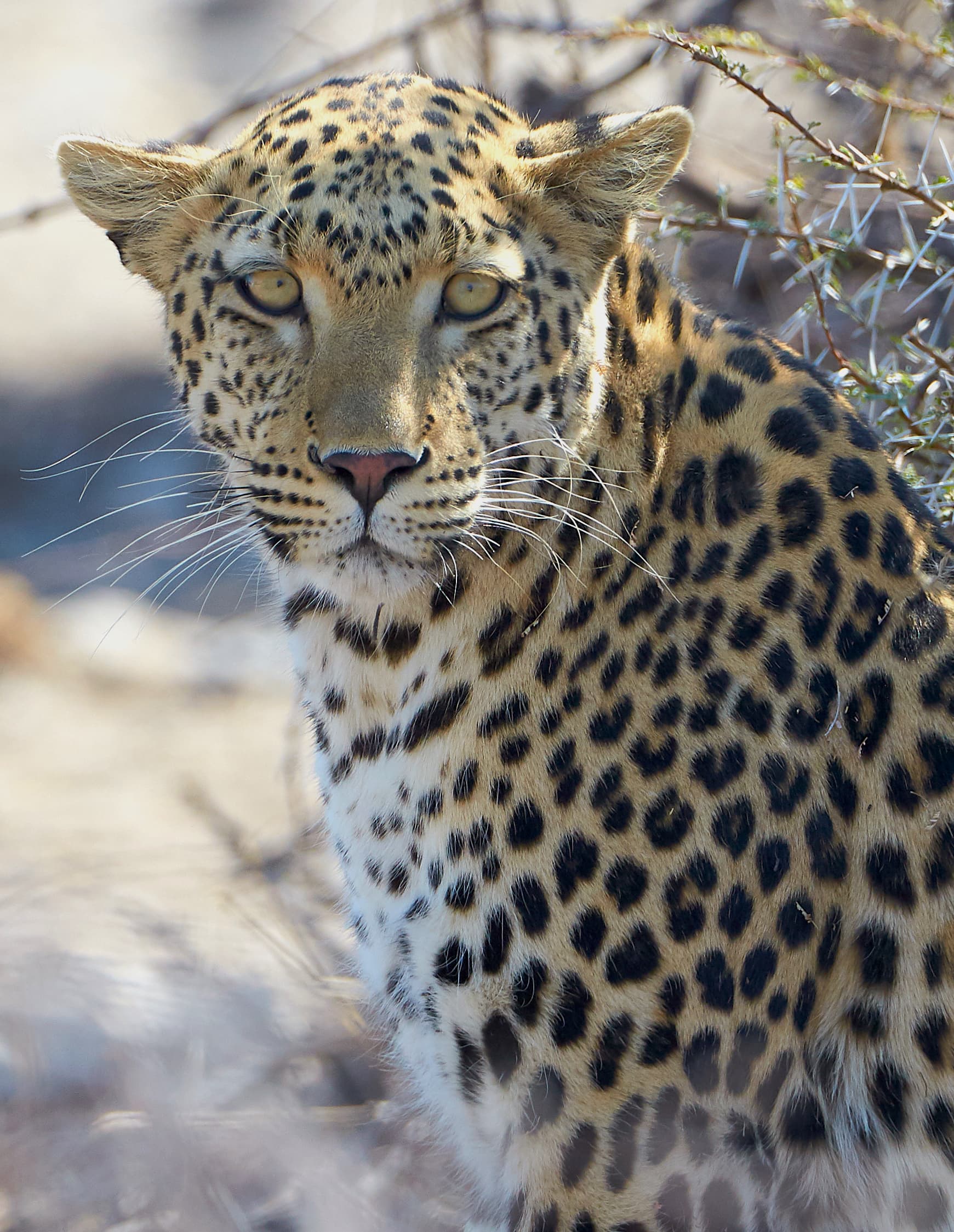
Close leopard portrait in golden light

Tell Us How You Picture Namibia

Share your dates, who is traveling and whether you imagine dunes at dawn, rhino tracks in Damaraland or a waterhole at night. We’ll shape a private route around those ideas and talk you through every choice before anything is confirmed.

Plan My Namibia Safari