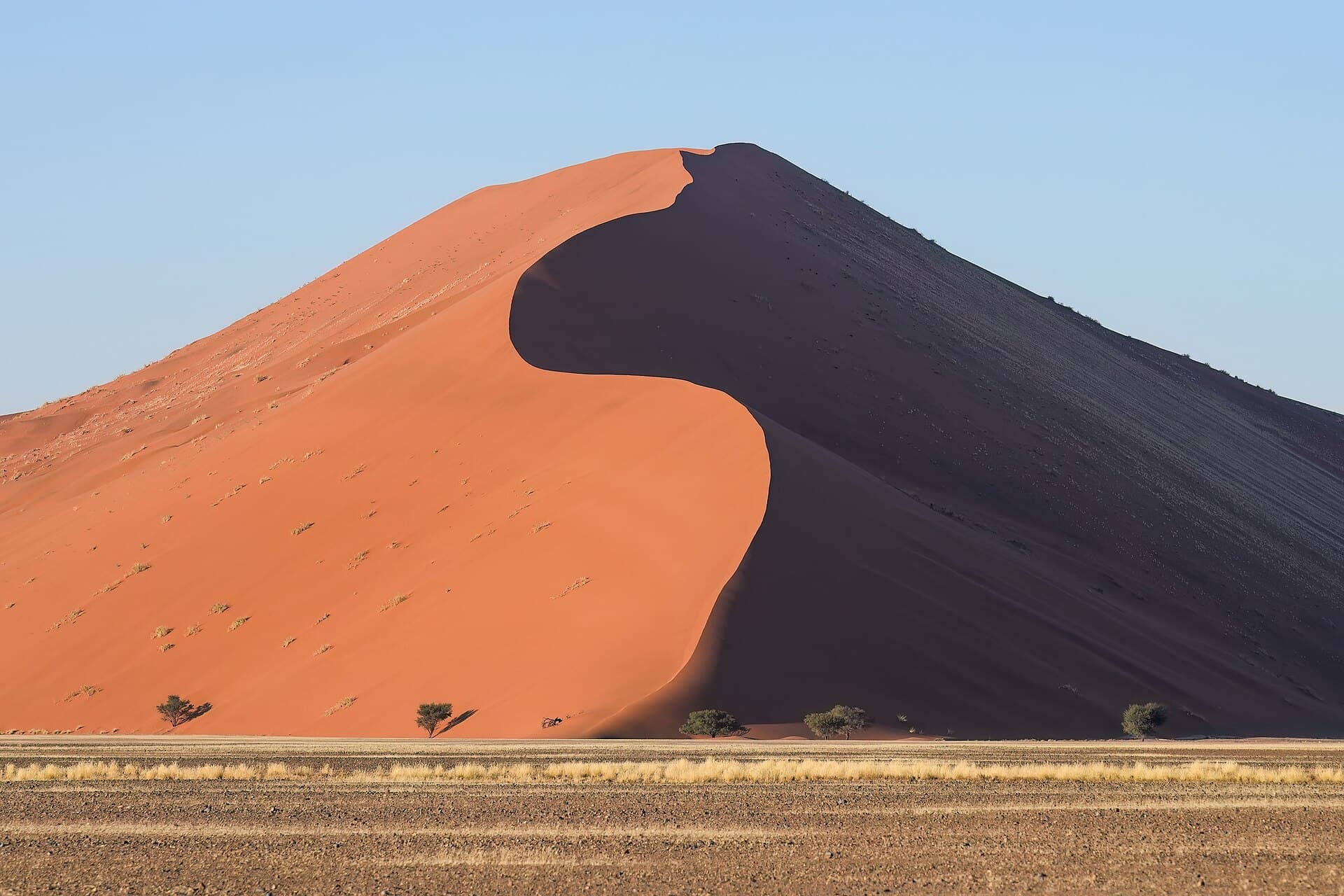
Red curve of Dune 45 at sunrise in Sossusvlei, Namibia

Destination guide

Sossusvlei, Deadvlei & the Namib Sand Sea

Apricot-red dunes, a white clay pan of long-dead camelthorns and a sunrise that depends more on where you sleep than on when you set the alarm.

SizeNamib-Naukluft Park, 49,768 km² (MEFT); the World Heritage sand sea covers about 30,800 km²
Best timeMay–September for cool mornings on the dunes; summer middays are fierce
Recommended stay2 nights minimum; 3 with a NamibRand base
Access340 km by road from Windhoek, or about 1–1.5 hours by light aircraft
Known forDeadvlei, Big Daddy, Dune 45, Sesriem Canyon and dark skies next door
Park feesAt the time of writing (September 2026), Namib-Naukluft is in MEFT’s premium category, charged per person per day, under a schedule reported to have changed in April 2026

Sossusvlei & the Namib Desert

Why Visit

Sossusvlei is the image that sells Namibia: red dunes, a white clay floor and dead trees black against a hard blue sky. Strictly, the name belongs to one pan, roughly “dead-end marsh”, where the Tsauchab River runs out of strength among the dunes. In everyday use it covers a whole cluster of sights inside the Namib-Naukluft Park, which Namibia’s Ministry of Environment, Forestry and Tourism (MEFT) puts at 49,768 km². Since 2013 the dune field has also been part of the Namib Sand Sea World Heritage Site, which UNESCO describes as the only coastal desert with extensive dune fields influenced by fog.

The planning detail that matters most is the gate. The Sesriem gate opens at sunrise and closes at sunset, and the main dunes lie about 60 km beyond it. Only guests staying inside the gate, at a state-run lodge and the Sesriem campsite, may drive in before sunrise and stay after sunset, which is how photographers reach Deadvlei in soft first light while everyone else is still queuing outside. Where you sleep decides your sunrise. For a view from above instead, a sunrise balloon flight launches near Sesriem on calm mornings.

Stay at least two nights, and three if you base yourself in the NamibRand Nature Reserve to the south, where the trade is reversed: a longer drive to the dunes in return for silence, space and exceptionally dark skies. One night rarely works, because you arrive in the afternoon heat, see the dunes once at dawn and leave. Both the 10-Day Namibia Fly-In Private Safari and the 14-Day Namibia Private Guided Safari give the desert three nights.

Best for

  • Photographers who want Deadvlei in the first light
  • Couples looking for star beds and silence in NamibRand
  • Active travelers keen to climb a 300 m dune
  • First-time visitors pairing the desert with Etosha

Sossusvlei & the Namib Desert

Wildlife & Highlights

  • Oryx (gemsbok) crossing the dune streets and resting in the shade of camelthorns
  • Springbok and ostrich on the gravel plains around Sesriem
  • Brown hyena and bat-eared fox, mostly on private-reserve drives at dusk
  • Hartmann’s mountain zebra in the Naukluft mountains to the north-east
  • The dune lark, a small bird found nowhere but the Namib
  • Around 348 bird species recorded across Namib-Naukluft, according to MEFT
  • Fog-drinking beetles, geckos and lizards on the dune slopes at first light
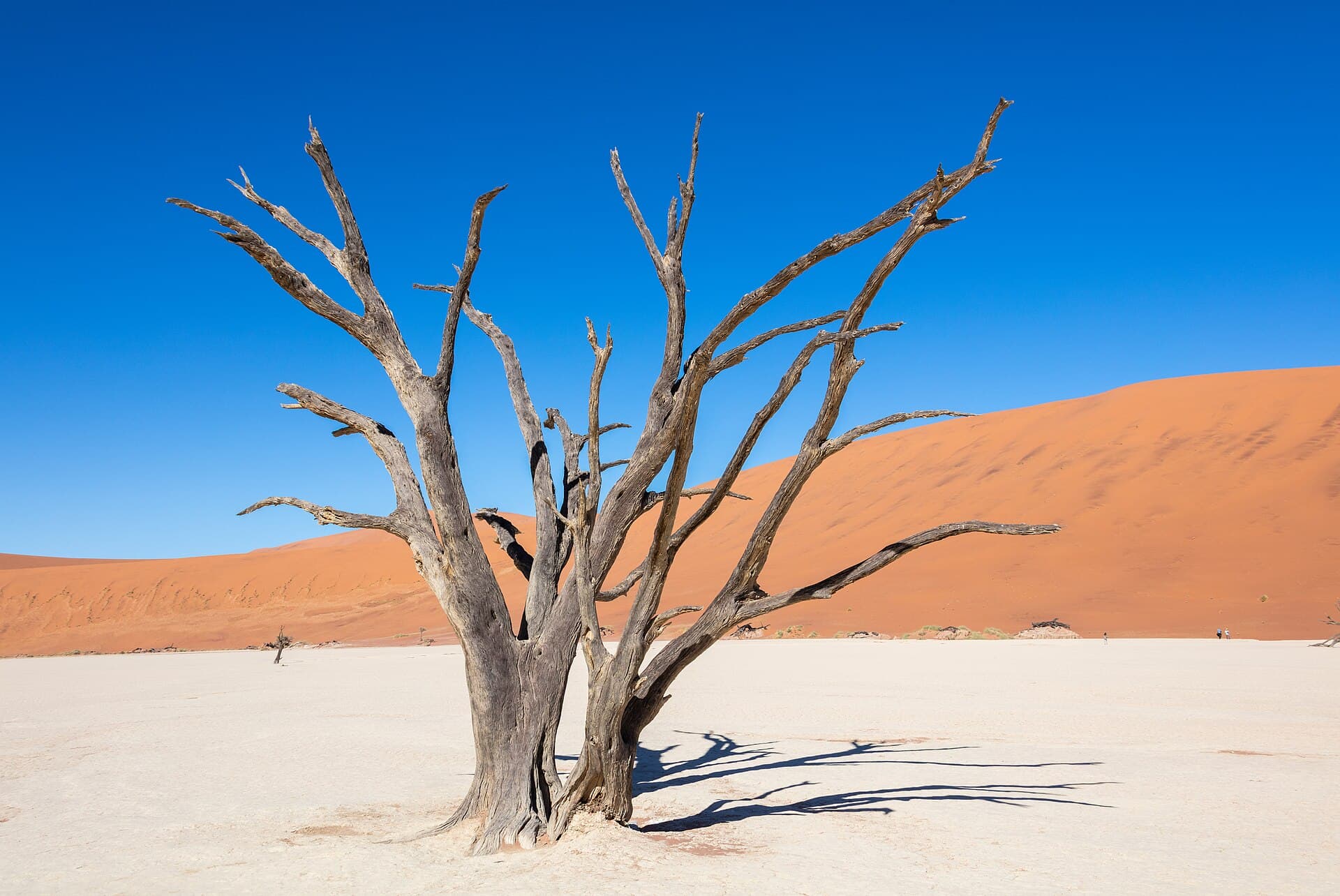
  • Deadvlei’s camelthorn skeletons, believed to have died some 600–700 years ago
  • Big Daddy, roughly 325 m high and among the tallest dunes in the Namib

Season

Best Time to Visit

  1. January
  2. February
  3. March
  4. April
  5. May
  6. June
  7. July
  8. August
  9. September
  10. October
  11. November
  12. December
May–SeptemberWinter brings clear, cool days that make dune climbs comfortable, and cold desert nights, so pack a warm layer for dawn starts and open-vehicle drives. July–October is the busiest stretch, and the handful of rooms inside the Sesriem gate book out early.
October–NovemberHeat builds quickly. Plan to be on the sand at first light and back in the shade by late morning, then use the afternoon for Sesriem Canyon or a nature drive once the temperature drops.
December–AprilSummer means hot middays and a chance of thunderstorms. In an unusually wet year the Tsauchab can flow all the way to Sossusvlei and briefly flood the pan, a rare sight worth chasing if it happens. The month-by-month guide to Namibia sets the desert against the rest of the country.

Sossusvlei & the Namib Desert

Areas to Know

Sossusvlei pan & Big Daddy

The road ends among the tallest dunes, where the Tsauchab’s last floodwater once pooled. Sossusvlei itself is a cracked clay pan, usually dry, ringed by dunes that rise well over 200 m. Big Daddy, at roughly 325 m, is the giant: the walk along its crest takes an hour or more of hard going in soft sand, and the reward is a view across the sand sea and a fast run down the slip face into Deadvlei.

Best for: Fit walkers who want the big climb

Deadvlei

A short, sandy walk from the parking area brings you to Deadvlei, a white clay pan where camelthorn trees still stand where they grew. They are believed to have died some 600–700 years ago, when the dunes cut off the river, and the air is too dry for them to rot. Photographers come early for the moment when the sun lights the dune behind while the pan is still in shade. Keep off any marked crust, and never touch, climb or lean on the trees.

Best for: Photography in the first two hours of light

Dune 45 & the dune road

The tar road from Sesriem runs roughly 60 km up a corridor of dunes, red sand rising on both sides. Dune 45, named for its position at kilometer 45 and standing more than 170 m high, is the classic climb for anyone who wants a summit without Big Daddy’s effort, and its sharp crest line makes it one of the most photographed dunes in the Namib.

Best for: An easier climb and roadside photographs

Sesriem Canyon

Near the gate, the Tsauchab has cut a narrow canyon about 1 km long and up to 30 m deep through layered gravel and conglomerate. The name comes, the story goes, from the six lengths of leather rope (ses riems in Afrikaans) that early travelers needed to haul water up from its pools. It is cool and shaded, which makes it a good late-afternoon walk after a dawn on the dunes.

Best for: A gentle afternoon walk close to the gate

NamibRand & the private reserves

South of the park, the NamibRand Nature Reserve covers more than 200,000 ha and shares about 100 km of boundary with Namib-Naukluft. Tourism is capped at one bed per 1,000 ha, and the reserve has been an International Dark Sky Reserve (Gold Tier) since 2012 and Africa’s first Wilderness Quiet Park since 2024; stargazing in Namibia explains what that means after dark. The cost is distance: allow about 1.5–2 hours to the Sesriem gate. Closer in, a private reserve of about 27,000 ha borders the park and has its own airstrip.

Best for: Couples, stargazers and anyone who values silence

Sossusvlei & the Namib Desert

Getting There

By road, Sesriem is 340 km from Windhoek, much of it on gravel over the escarpment passes, so it fills a travel day with your private guide at the wheel. From Swakopmund the route climbs through the Kuiseb and Gaub passes and past the roadside stop at Solitaire, about 5–6 hours. By air, light aircraft reach airstrips near Sesriem and on the private reserves in about 1–1.5 hours from Windhoek, crossing the escarpment as thornveld gives way to sand. However you arrive, the last stretch is the same: 60 km of tar from the gate, then about 5 km of soft sand covered by 4x4 or the park shuttle.

Drive or fly?

Both work, and the right answer depends on the rest of your trip. Driving in with a private guide shows you how the country changes, from the Khomas Highland over the escarpment to the first red sand, and suits a longer road journey that continues to the coast. Flying saves most of a day each way and shows you the dune sea from above, which is why fly-in circuits use it; self-drive, private guide or fly-in weighs the three honestly. What doesn’t work is squeezing Sossusvlei into a single night between two long drives.

Airstrips & airports

  • Airstrips near Sesriem used by scheduled light-aircraft services
  • Private airstrips on reserves bordering the park
  • NamibRand Nature Reserve airstrips

Typical travel times

Windhoek to Sesriem (340 km)
About 5–6 hours with stops
Swakopmund to Sesriem via Solitaire
About 5–6 hours
Sesriem gate to the Sossusvlei parking area
About 1 hour on tar, then about 5 km of sand
NamibRand to the Sesriem gate
About 1.5–2 hours
Sossusvlei to Etosha (756 km by road)
Two long road days, or a flight of about 2 hours

Stays

Where to Stay

Stays around Sossusvlei fall into three styles, and each changes your morning. Inside the gate, a state-run desert lodge puts you first in line at dawn and lets you linger after sunset: the photographer’s choice, with simpler finishes. Along the road outside the gate, comfortable lodges with pools sit a short drive from the entrance but wait for opening time with everyone else. On the private reserves and in NamibRand, luxury tented camps and a few exclusive desert lodges trade dawn access for guided nature drives, walks, star beds and near-total quiet. We match specific properties to your dates and priorities.

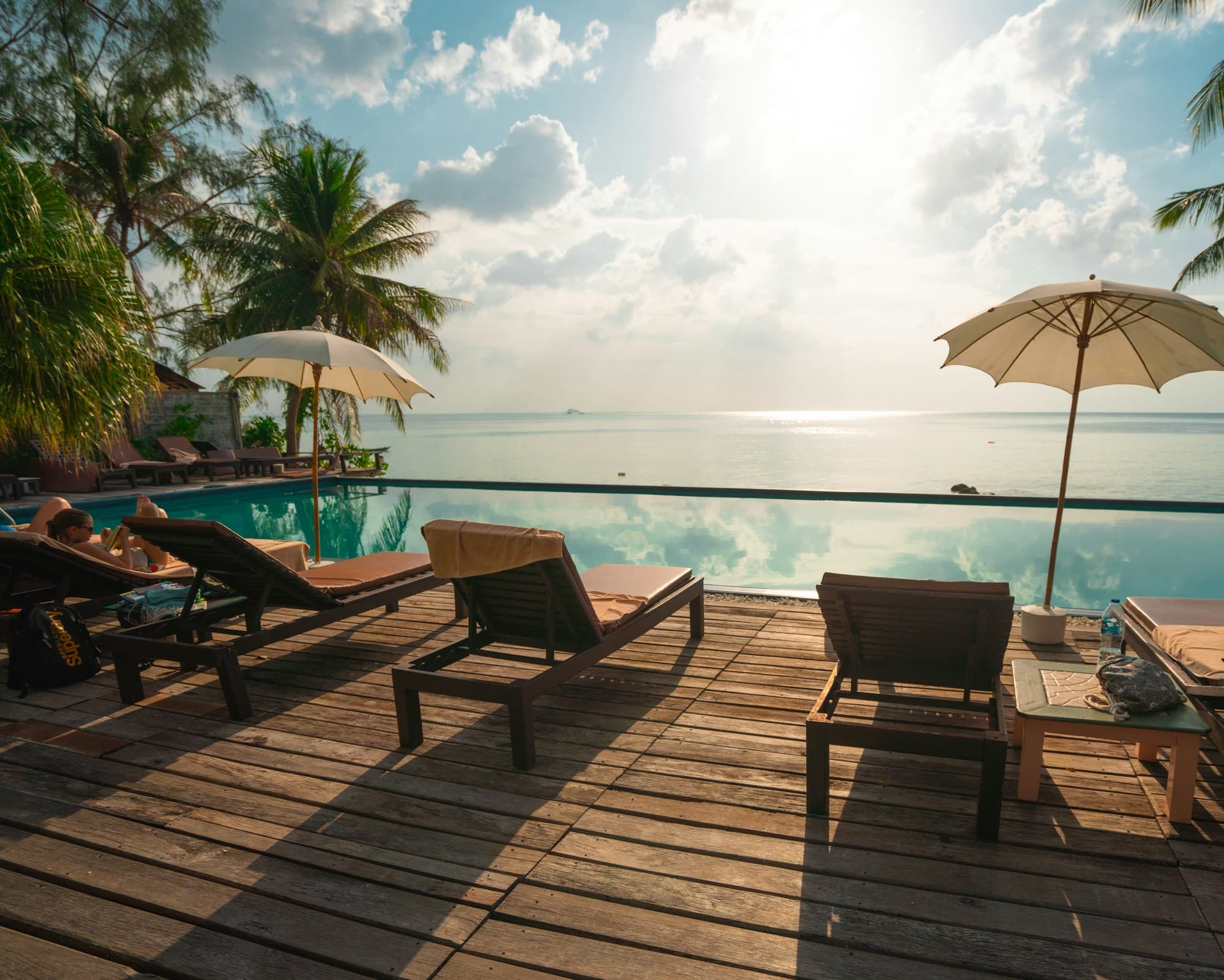
Luxury lodge deck with loungers and umbrellas at golden hourComfort

Sossusvlei · Outside the Sesriem gate

Outside-the-Gate Desert Lodge · Sesriem

Lodge

Lodges just outside the Sesriem gate sit on open gravel plains within a short drive of the park entrance, with simple chalets or rooms, a pool and a kitchen that handles early breakfasts well. You join other visitors when the gate opens at sunrise, but the practicality and the pool make this style a good fit for families.

  • Chalets or rooms, some sized for families
  • Pool for hot desert afternoons
  • Packed breakfasts for sunrise starts
  • Short drive to the Sesriem gate

Ideal for: Families and first-time visitors who want a comfortable, practical base for the dunes
Premium

Sossusvlei · Inside the Sesriem gate

Inside-the-Gate Dune Chalets

Desert lodge

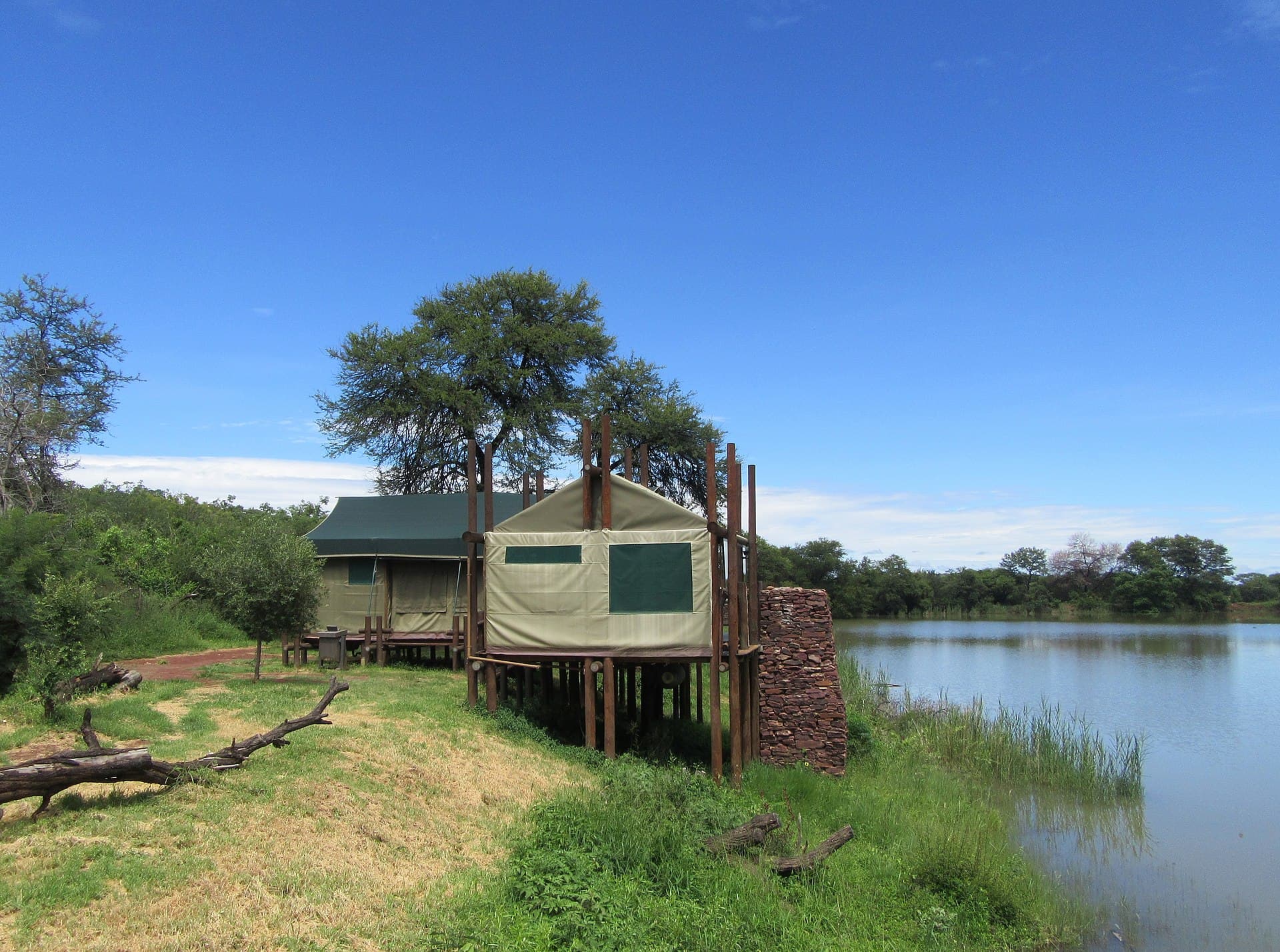
Accommodation inside the Sesriem gate is limited to a small state-run lodge and campsite, and their great advantage is time: guests can drive to the dunes before sunrise and stay after sunset, when day visitors must leave. Chalets on raised walkways look across the plains toward the dunes and mountains, and the style is comfortable rather than lavish.

  • Access to the dunes before sunrise and after sunset
  • Chalets linked by raised walkways
  • Books out early for July–October
  • Restaurant terrace facing the plains

Ideal for: Photographers and anyone who wants Deadvlei in soft light before the day visitors arrive

Luxury

Sossusvlei · Private reserve bordering the park

Private-Reserve Dune Lodge · Sossusvlei

Desert lodge

Private reserves bordering the national park give this style its sense of space: a small number of suites facing the dunes, the reserve’s own drives and walks, and at some a private airstrip for fly-in guests. Rooftop or deck beds invite a night in the open, and the Sesriem gate is close enough for an early start.

  • Dune-facing suites, often with a plunge pool
  • Rooftop or deck sleep-outs at some
  • Guided drives and walks on the reserve
  • Private airstrip at some reserves

Ideal for: Couples and photographers who want privacy and a sunrise start without a long drive

A canvas safari tent set among trees at a private tented campLuxury

Sossusvlei · NamibRand Nature Reserve

Dark-Sky Tented Camp · NamibRand

Tented camp

A handful of canvas suites on a remote corner of the NamibRand Nature Reserve, where tourism is capped at one bed for every 1,000 hectares and the loudest sound after dark may be a barking gecko. Days bring guided walks across red sand and gravel plains, and the sky overhead belongs to an International Dark Sky Reserve.

  • A few widely spaced tents
  • Guided walks among dunes and fairy circles
  • Star beds or sky talks on clear nights
  • Drives to viewpoints across the reserve

Ideal for: Couples who want silence, walking and extraordinary night skies more than a packed schedule

Ultra-Luxury

Sossusvlei · NamibRand Nature Reserve

Sand-Sea Signature Villas · NamibRand

Desert lodge

The most exclusive stays in NamibRand take the form of a few large villas or suites built from stone, glass and steel, each with its own terrace, plunge pool and uninterrupted views across the dunes to distant mountains. Private guiding, in-villa dining and an observatory or star deck turn the reserve’s silence into a very private luxury.

  • Private villas with plunge pools
  • Dedicated guide and vehicle
  • Observatory or telescope sessions
  • Spa treatments and in-villa dining

Ideal for: Honeymooners and milestone travelers who want the desert almost to themselves

Experiences

Experiences

Red curve of Dune 45 at sunrise in Sossusvlei, Namibia

In the air

Hot-Air Balloon Flight over the Namib

Lift off near Sesriem at first light and drift above the dune fringe and gravel plains of the Namib, then land for breakfast in the desert.

After dark

Stargazing & Dark Skies

Sleep under some of the darkest skies on earth, with the Milky Way overhead, the Magellanic Clouds rising and the southern constellations explained.

Safaris

Safaris That Go Here

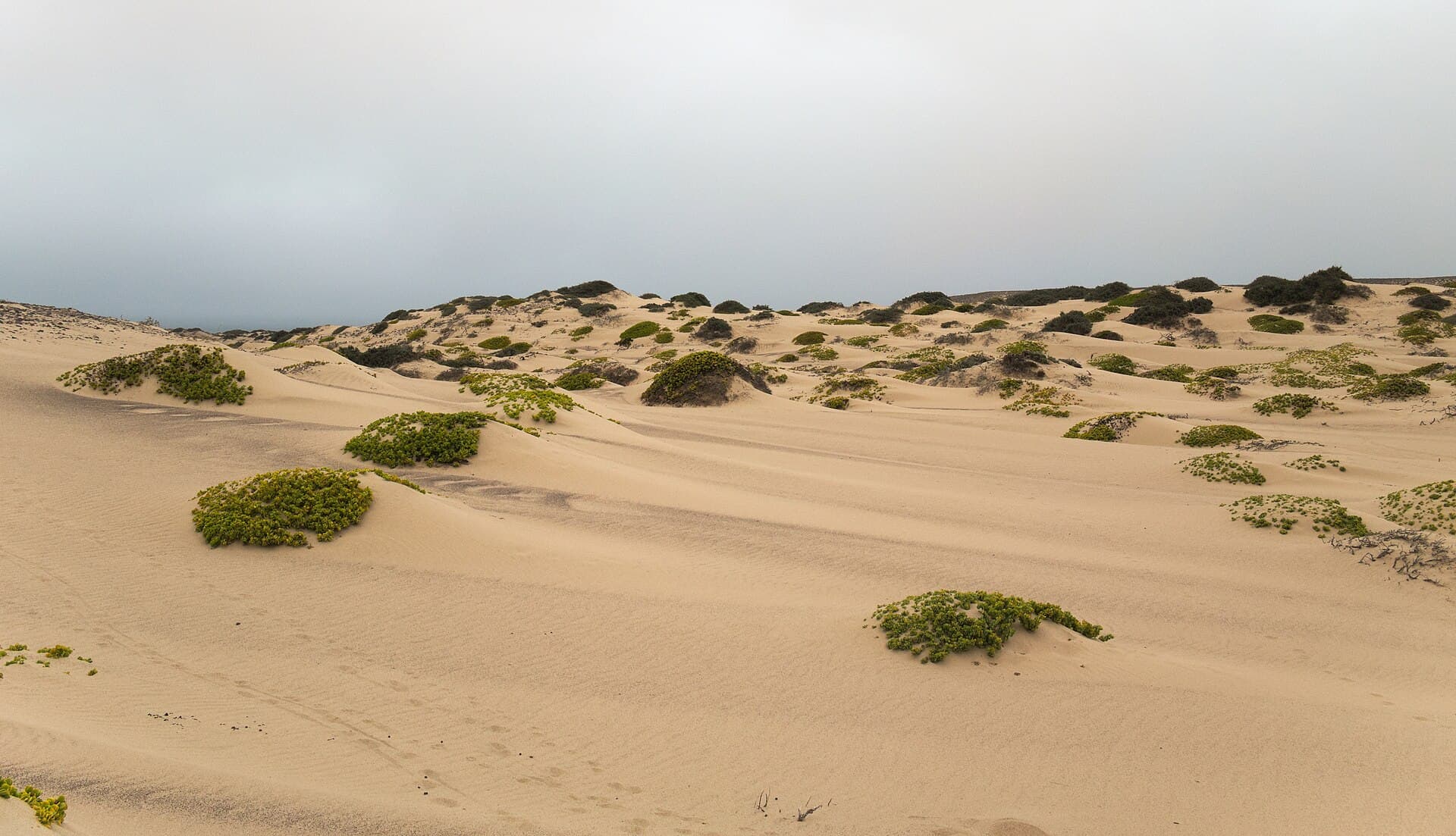
Wind-sculpted dunes meeting the Skeleton Coast
10 daysFly-in

Namibia by Air

Windhoek · Sossusvlei · Skeleton Coast · Etosha National Park

Travelers who would rather fly than drive, and who value remote wilderness and photography over a long species list

Best months
April–November
Comfort levels
Premium · Luxury · Ultra-Luxury
Individually quoted
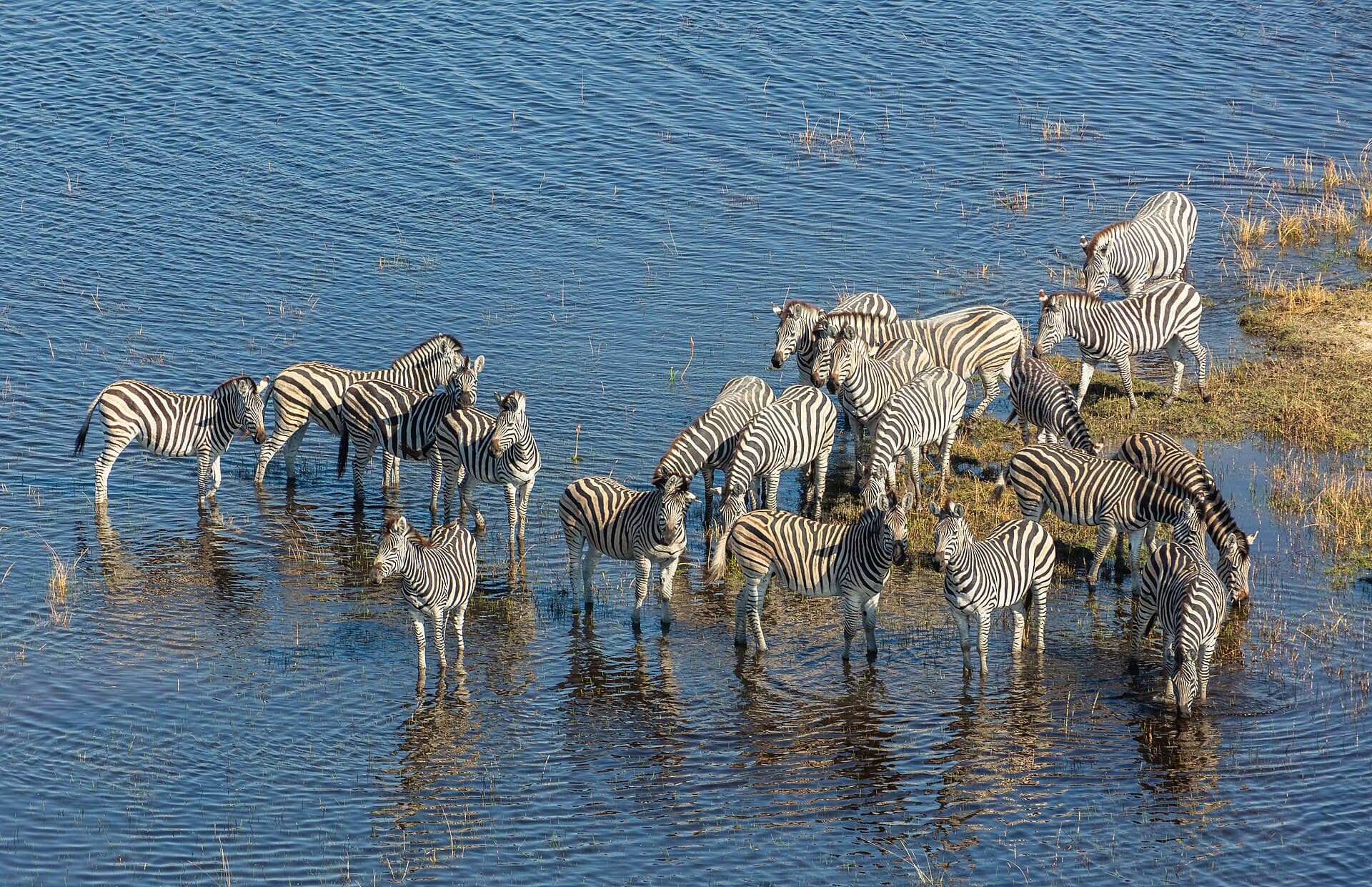
Zebra herd wading through shallow delta water
12 daysDesert & Delta

Desert, Zambezi & Delta

Windhoek · Sossusvlei · Etosha National Park · Zambezi Region · Kasane · Okavango Delta · Maun

Travelers who want Namibia’s landscapes and Botswana’s water safari in a single trip, without backtracking

Best months
May–October
Comfort levels
Premium · Luxury · Ultra-Luxury
Individually quoted
Red curve of Dune 45 at sunrise in Sossusvlei, Namibia
14 daysPrivate guide

Namibia Grand Loop

Windhoek · Sossusvlei · Swakopmund · Spitzkoppe · Damaraland · Etosha National Park · Eastern Etosha · Okonjima

First-time visitors to Namibia who want to see the whole country properly, with time to stop, walk and ask questions

Best months
April–November
Comfort levels
Comfort · Premium · Luxury
Individually quoted
Ancient camelthorn tree on the white clay pan of Deadvlei
10 daysHoneymoon

Dunes, Stars & the Cape

Windhoek · NamibRand · Sossusvlei · Damaraland · Cape Town

Couples who want space, silence and striking landscapes, then a stylish city finale

Best months
March–May and September–November
Comfort levels
Premium · Luxury · Ultra-Luxury
Individually quoted

Good to know

Frequently asked questions

What is the difference between Sossusvlei and Deadvlei?

Sossusvlei is the clay pan where the Tsauchab River ends among the dunes. Deadvlei is a separate, smaller pan a short walk away, known for its dead camelthorn trees. Both sit at the end of the same road from Sesriem, beside Big Daddy, so most people see them on the same morning.

What time does the Sesriem gate open?

The gate opens at sunrise and closes at sunset, so the times shift through the year. Guests staying inside the gate may pass the inner gate before sunrise and remain after sunset, which is the only way to be at the dunes for first light. The park authorities set the times, so check them for your travel dates.

Can you drive an ordinary car all the way to Sossusvlei?

Only as far as the parking area at the end of the tar, about 60 km from the gate. The final 5 km or so to Sossusvlei and Deadvlei is deep, soft sand that needs a 4x4 and some experience, and a park shuttle runs for visitors without one. On a private guided trip the sand stretch is simply part of the drive.

How long does it take to climb Big Daddy?

Allow an hour or more to reach the top, depending on your fitness and how soft the sand is, and start at first light while it is cool. Carry at least a liter of water each, wear a hat and closed shoes, and aim to be off the sand before the late-morning heat. The descent into Deadvlei takes only minutes.

Is NamibRand worth it if it is farther from the dunes?

It depends on what you value. NamibRand gives you silence, very dark skies and space, but you give up being first at the dunes and spend about 1.5–2 hours each way on the road. Many travelers split their nights: one or two inside or near the gate for sunrise, then a final night in the reserve.

Can I fly a drone at Sossusvlei?

Plan on leaving it at home. Drones are restricted in Namibia’s national parks and generally need prior authorization, and the rules change, so check the current position with the authorities before you pack one. Private reserves set their own policies too.

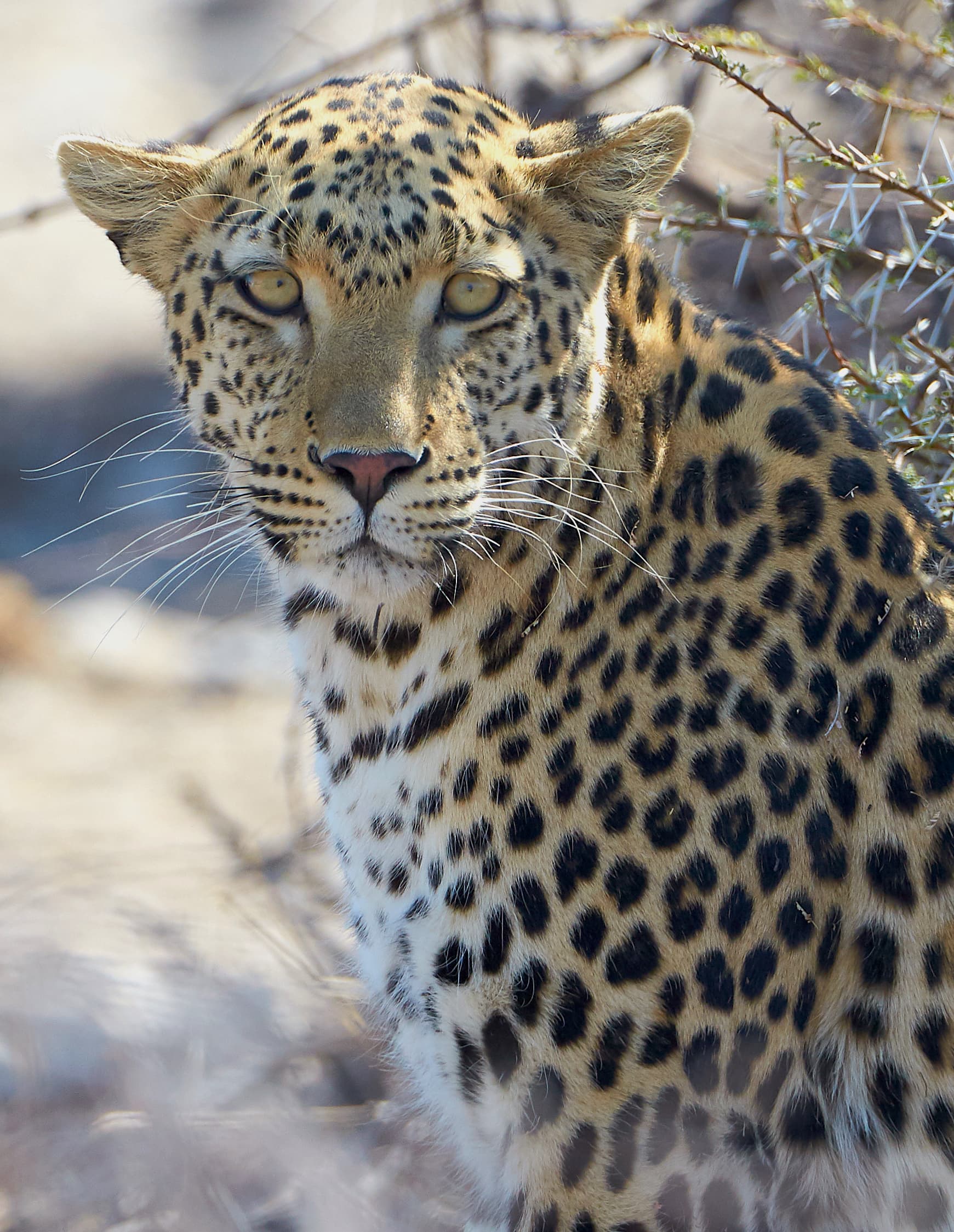
Close leopard portrait in golden light

Tell Us How You Picture Namibia

Share your dates, who is traveling and whether you imagine dunes at dawn, rhino tracks in Damaraland or a waterhole at night. We’ll shape a private route around those ideas and talk you through every choice before anything is confirmed.

Plan my safari here