Granite domes of Spitzkoppe rising from the Damaraland plains

On foot

Desert Rhino Tracking on Foot

No fences, no road to the rhino and no certainty: just tracks in the gravel, a team who knows this land, and the chance to stand quietly in the presence of a black rhino.

SeasonYear-round. May–September brings cool mornings for walking; from October the heat builds quickly, so starts are earlier and walks shorter.
DurationMost of a day: an early departure, several hours of searching by vehicle and on foot, and a short, quiet walk if a rhino is found
WhereDamaraland’s conservancies and concessions · Private reserves on Etosha’s boundary · Okonjima Nature Reserve · The Huab, Aba-Huab and Ugab riverbeds
Best forTravelers drawn to conservation stories · Fit walkers comfortable on loose, rocky ground · Photographers who accept distance for authenticity · Second-time safari-goers looking for something rarer

Rhino tracking in Namibia is unlike rhino viewing almost anywhere else, because the animals you search for live outside national parks. In the rugged communal land of Damaraland, spread across the Kunene and Erongo regions, black rhino roam free among basalt hills, euphorbia-dotted slopes and dry riverbeds. Save the Rhino Trust has monitored them since 1982 with trackers recruited from the communities that share this land. The Trust calls them the last free-roaming population of black rhino in the world, and it uses carefully managed tourism as a conservation tool: paying visitors give living rhino a value that local people see and share.

A tracking day is part search, part apprenticeship. You learn to read a three-toed print in loose gravel, to judge the age of dung and to spot a freshly browsed shrub, while the trackers quietly narrow down where an animal might be. If a rhino is found, the team decides whether and how to approach, and you walk the final stretch with them. Tracking is included on journeys through Damaraland such as our 14-day private guided safari, usually paired with a desert-elephant drive.

Desert Rhino Tracking on Foot

How It Works

  1. You leave camp soon after first light with your guide and a tracking team, scanning tracks, riverbeds and ridgelines for fresh signs.

  2. When the trackers pick up a promising trail, some follow it on foot while you wait with the vehicle or move ahead to a vantage point.

  3. Once a rhino is located, the team checks the wind, the terrain and the animal’s mood before deciding whether an approach is appropriate.

  4. You walk the last stretch in single file and in silence, stopping where the lead tracker indicates, ideally far enough away that the rhino carries on browsing.

  5. After a few minutes you withdraw the way you came, and the trackers record the animal’s identity and condition as part of the monitoring log.

  6. Afternoons are for rest, the rock engravings at Twyfelfontein or a drive along the riverbeds in search of desert elephants.

Desert Rhino Tracking on Foot

Where You Can Do It

Damaraland’s conservancies and concessions
The heart of it: vast communal and concession land in the Kunene and Erongo regions, where some camps track with community trackers alongside the conservation monitors. Exact rhino areas are never published.
Private reserves on Etosha’s boundary
Fenced reserves bordering the national park run rhino-focused walks and drives with their own guides: easier terrain, shorter searches and a more managed setting.
Okonjima Nature Reserve
Home of the AfriCat Foundation, about three hours north of Windhoek, where rhino tracking is one of several guided activities on a fenced private reserve.
The Huab, Aba-Huab and Ugab riverbeds
The companion activity: drives along these dry rivers look for desert-adapted elephants, which can walk around 70 km between water sources in a single night.

Good to know

  • Sightings are never certain. Some days end with nothing but fresh tracks, and what you pay still supports the monitoring and the community jobs behind it.
  • Each camp sets its own minimum age for tracking, and the on-foot approach may carry a higher limit than the vehicle search; we confirm the rule for your camp before booking.
  • Expect uneven basalt scree and heat later in the morning. Wear sturdy closed shoes, neutral colors and a hat, carry water, and leave bright jackets and rustling fabrics behind.
  • Switch off location services before you photograph a rhino, and never share where a sighting happened. Geotagged images can help poachers find animals, which is why the trackers ask.
  • Follow the lead tracker’s hand signals at once, whether to stop, crouch or back away, and leave drones at home.

Safaris

Safaris Featuring This Experience

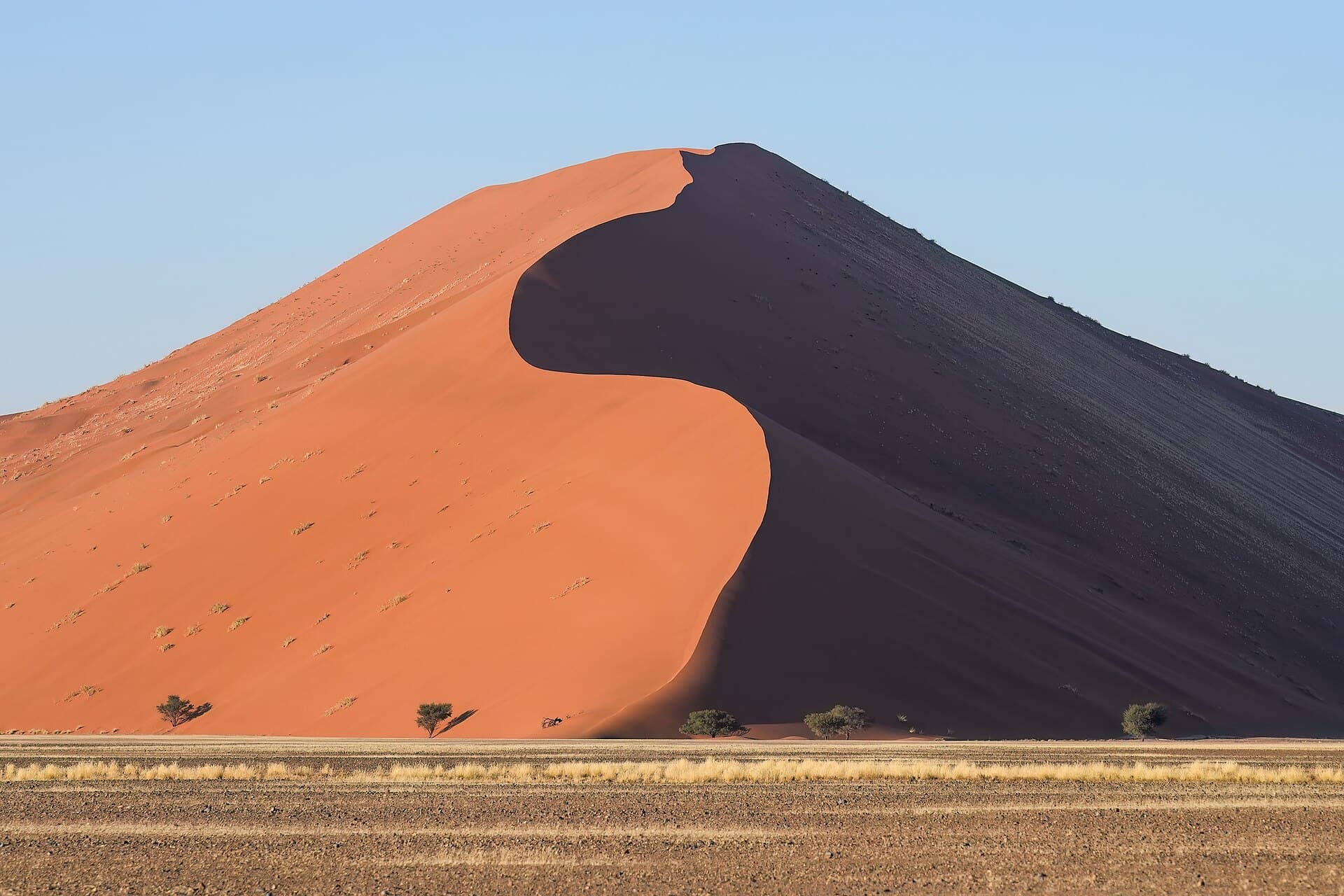
Red curve of Dune 45 at sunrise in Sossusvlei, Namibia
14 daysPrivate guide

Namibia Grand Loop

Windhoek · Sossusvlei · Swakopmund · Spitzkoppe · Damaraland · Etosha National Park · Eastern Etosha · Okonjima

First-time visitors to Namibia who want to see the whole country properly, with time to stop, walk and ask questions

Best months
April–November
Comfort levels
Comfort · Premium · Luxury
Individually quoted
Granite domes of Spitzkoppe rising from the Damaraland plains
8 daysRemote

Desert Rhino & the Kunene

Windhoek · Damaraland · Kaokoland

Seasoned safari travelers who value wilderness, conservation and silence over a long species list

Best months
April–September, before the heat builds
Comfort levels
Premium · Luxury · Ultra-Luxury
Individually quoted
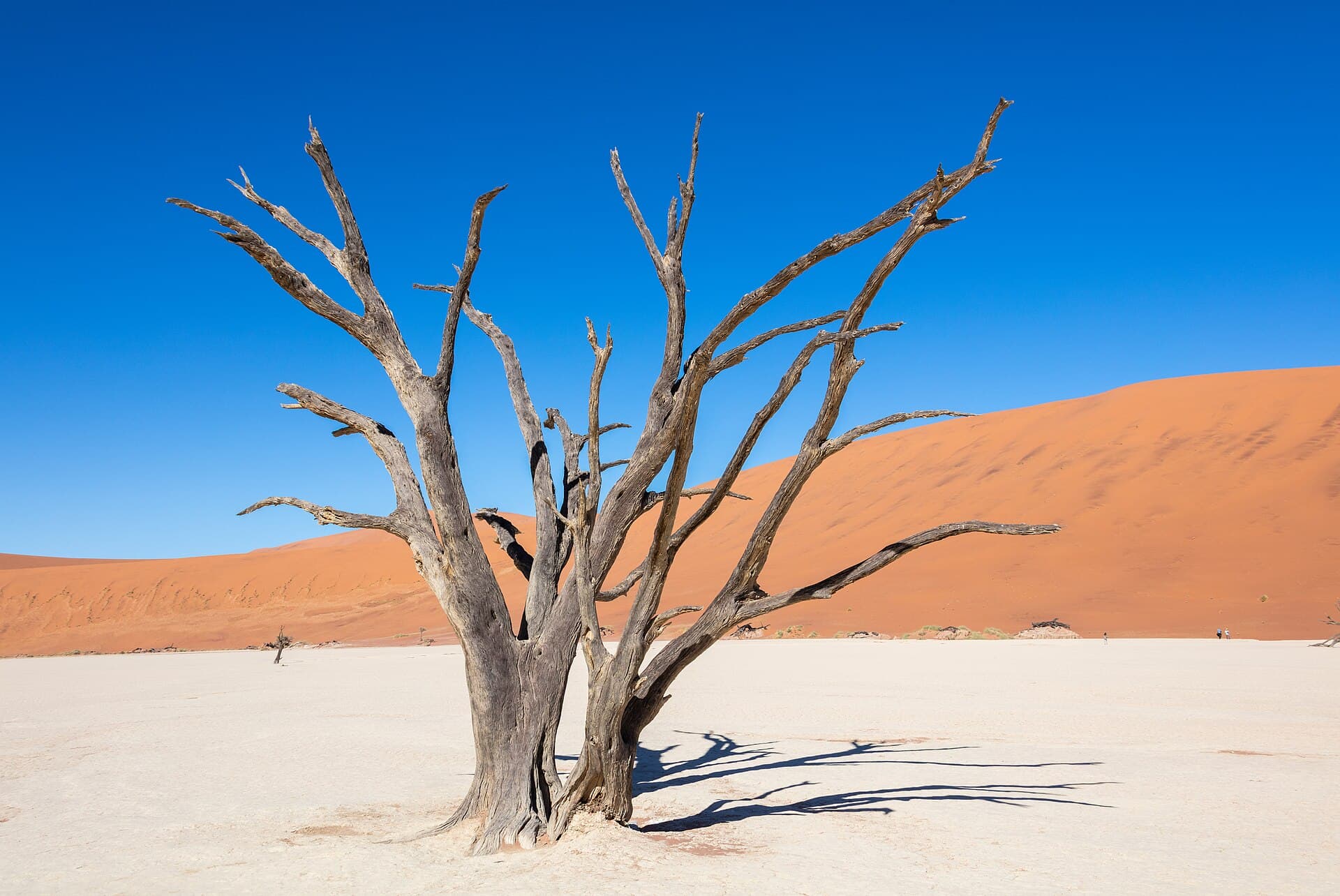
Ancient camelthorn tree on the white clay pan of Deadvlei
10 daysHoneymoon

Dunes, Stars & the Cape

Windhoek · NamibRand · Sossusvlei · Damaraland · Cape Town

Couples who want space, silence and striking landscapes, then a stylish city finale

Best months
March–May and September–November
Comfort levels
Premium · Luxury · Ultra-Luxury
Individually quoted

Good to know

Frequently asked questions

Can you track rhino on foot in Namibia?

Yes. In Damaraland, trackers search by vehicle and on foot for free-roaming black rhino, and guests walk the final approach with them when conditions allow. Fenced private reserves near Etosha and at Okonjima also offer rhino walks in a more managed setting.

How close do you get to a black rhino?

The lead tracker decides on the day, based on wind, cover and the animal’s behavior. The aim is to watch without the rhino reacting to you, so the approach stops well short of disturbing it; binoculars and a telephoto lens make the most of the moment.

Is rhino tracking on foot safe?

Black rhino can charge, which is exactly why the approach is so controlled. The team keeps you downwind and in single file and decides when to stop and when to retreat, and following their instructions keeps the risk low for you and the stress low for the rhino.

How fit do I need to be for rhino tracking?

Reasonably fit rather than athletic. Most of the day is spent in the vehicle, but the final walk can cross loose rock and soft sand in rising heat, sometimes for a kilometer or more. If walking on uneven ground is difficult for you, tell us, and we can arrange a vehicle-based alternative.

Experiences

Related experiences

Red curve of Dune 45 at sunrise in Sossusvlei, Namibia

In the air

Hot-Air Balloon Flight over the Namib

Lift off near Sesriem at first light and drift above the dune fringe and gravel plains of the Namib, then land for breakfast in the desert.

Ocean & reef

Sandwich Harbour & Walvis Bay Marine Cruise

Cruise Walvis Bay for dolphins, pelicans and seals in the morning, then drive the shoreline at low tide to where towering dunes drop into the Atlantic.

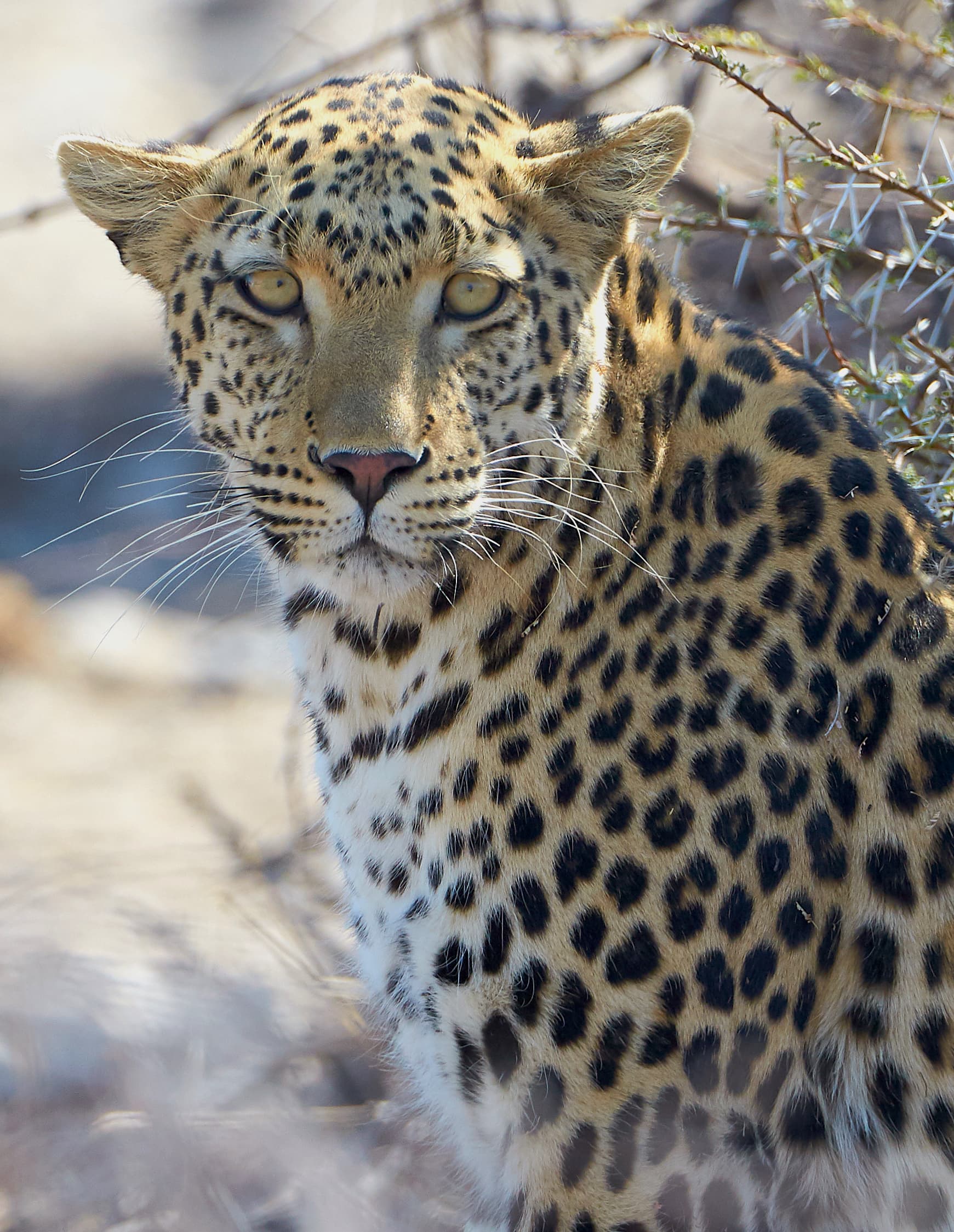
Close leopard portrait in golden light

Tell Us How You Picture Namibia

Share your dates, who is traveling and whether you imagine dunes at dawn, rhino tracks in Damaraland or a waterhole at night. We’ll shape a private route around those ideas and talk you through every choice before anything is confirmed.

Plan My Namibia Safari