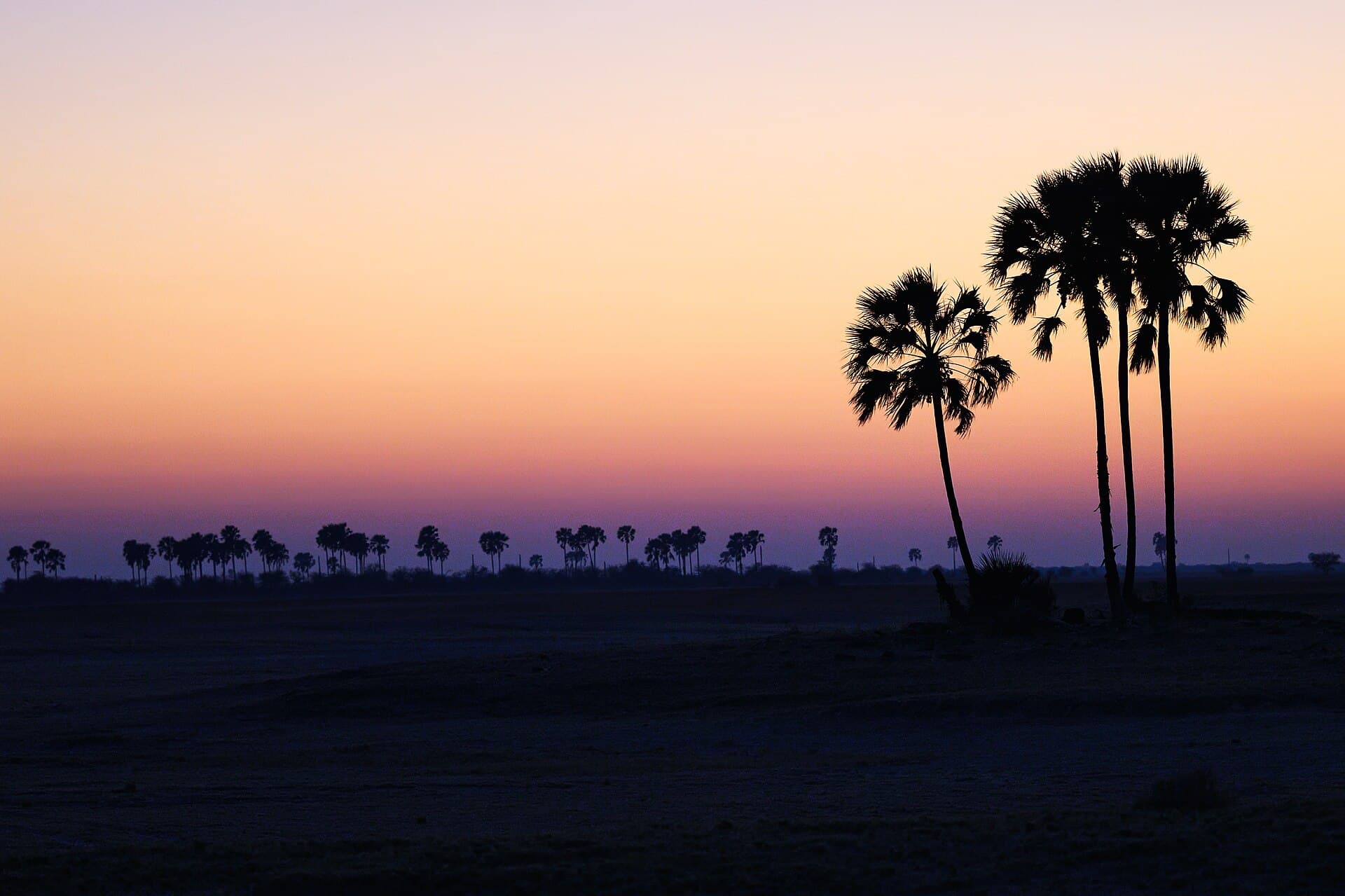
Palm islands silhouetted at dusk on the Makgadikgadi pans

Destination guide

Makgadikgadi Pans & Nxai Pan Safaris

The salt floor of an ancient lake, where zebra herds, meerkats and bare white horizons show you a completely different Botswana from the Delta.

SizePans roughly 12,000–16,000 km² (sources differ); national park about 3,900 km²; Nxai Pan roughly 2,100–2,600 km²
Best timeDecember–April for green-season herds; May–October for the Boteti and the dry pans
Recommended stay2–3 nights
AccessAbout 2 hours by road from Maun, or a short light-aircraft flight
Known forZebra migration, habituated meerkats, pan sleep-outs and Baines’ Baobabs
HealthMalaria area (the CDC lists Boteti district) — take precautions

Makgadikgadi & Nxai Pan

Why Visit

The Makgadikgadi Pans are the floor of an ancient lake that once covered much of northern Botswana, and today they form one of the largest salt-pan systems on Earth. The two main pans, Sowa (Sua) to the east and Ntwetwe to the west, spread across roughly 12,000–16,000 km², depending on which source you read. Around their edges lie grasslands scattered with palms and baobabs, the Boteti River and two national parks: Makgadikgadi Pans National Park, about 3,900 km², and Nxai Pan National Park, separated from it by the Nata–Maun road.

This is a place of two seasons, and they feel like two different destinations. After good summer rains the grasslands turn green, and zebra and wildebeest spread across them and into Nxai Pan with lion and cheetah close behind. In the dry months the herds move west to the Boteti River, the pans harden into a white crust and the draw becomes meerkats, quad bikes and nights sleeping out beneath an enormous sky.

Research published in 2014 showed just how far some of these zebra travel. Animals fitted with tracking collars on the Namibia–Botswana border crossed the Chobe River in December, walked due south to Nxai Pan, stayed about ten weeks and walked back — a round trip of roughly 500 km in a straight line, at the time the longest recorded large-mammal migration in Africa, according to the study in the journal Oryx. That migration is the headline of the 9-day green-season safari, which pairs the pans with the Central Kalahari.

Best for

  • Green-season travelers from December to April
  • Families, with meerkats and wide-open space
  • A dry, silent contrast after the Delta’s water
  • Photographers after big skies, stars and zebra herds
  • Walking, riding and San cultural experiences

Makgadikgadi & Nxai Pan

Wildlife & Highlights

  • Zebra and wildebeest on the grasslands after good rains
  • Zebra gathering along the Boteti River in the dry season
  • Habituated meerkat colonies on the pan fringes
  • Springbok, gemsbok, red hartebeest and eland
  • Lion and cheetah following the herds
  • Brown hyena, one of Africa’s least-seen predators
  • Bat-eared fox and, occasionally, African wild dog in Nxai Pan
  • Greater and lesser flamingos on Sowa Pan in good rain years

Season

Best Time to Visit

  1. January
  2. February
  3. March
  4. April
  5. May
  6. June
  7. July
  8. August
  9. September
  10. October
  11. November
  12. December
December–AprilIf the rains are good, the grasslands and Nxai Pan fill with zebra, wildebeest and springbok, and predators follow. Flamingos may gather on Sowa Pan when it floods. The pans themselves are often wet, so quad biking and sleep-outs are usually off the menu. Everything depends on rainfall, which varies widely from year to year.
May–AugustThe herds move west to the Boteti River, the grass turns gold and the pans dry to a hard white crust. Days are mild and nights can be properly cold, especially on a sleep-out. Meerkat visits, walks and pan excursions are in full swing.
September–NovemberHeat builds and the Boteti becomes the focus for zebra and other game coming to drink. October is the hottest month, often in the high 30s °C. The first storms may arrive in November, and the herds begin to drift back toward the grasslands.

Makgadikgadi & Nxai Pan

Areas to Know

Ntwetwe Pan and the grasslands

The western pan and the grasslands along its edge make up much of Makgadikgadi Pans National Park and its surroundings. In the green season this is where zebra and wildebeest spread out; in the dry season the pan becomes the setting for quad-bike excursions and sleep-outs on the crust, far from any light. The crust is fragile, so responsible operators keep to established tracks and ride only when the pan is dry and firm. Meerkat colonies used to people live on the fringes, and pan-edge camps run morning visits, San cultural walks and, in the dry season, riding on the pans.

Best for: Sleep-outs, meerkats and wet-season herds

The Boteti River

The Boteti forms the national park’s western boundary and, in the dry months, its lifeline. As the pans and grasslands dry out, zebra and other game move to the river to drink, often in large numbers, and predators follow. Camps along the riverbank make this the easiest part of the Makgadikgadi to reach by road from Maun, and some camps overlook stretches where the herds come down to drink.

Best for: Dry-season zebra and road access from Maun

Nxai Pan and Baines’ Baobabs

North of the Nata–Maun road, Nxai Pan National Park protects a cluster of fossil pans — Nxai, Kgama-Kgama and Kudiakam — on grassland that draws zebra, springbok and gemsbok after good rains, followed by lion and cheetah. It is the southern end of the zebra migration from the Chobe. Beside Kudiakam Pan, about 30 km from the park entrance, stand Baines’ Baobabs, seven trees painted by the artist Thomas Baines in the 1860s. Artificial waterholes keep some game here through the dry months.

Best for: Wet-season herds and baobab scenery

Sowa Pan and Nata

Sowa (Sua) Pan, in the east, is known for flamingos, which gather in their thousands — sometimes tens of thousands — when good rains flood the pan. The Nata Bird Sanctuary on its northern edge is a community project of about 250 km², set up in 1993. Soda ash has been extracted from part of the pan since 1991, so the eastern side feels less wild than Ntwetwe.

Best for: Flamingos and birding in good rain years

Makgadikgadi & Nxai Pan

Getting There

The Boteti side of the Makgadikgadi is about 2 hours by road from Maun, and camps near Gweta and on the pans’ edge are reached from the Nata–Maun road and sand tracks, or by light aircraft from Maun in roughly 40–70 minutes. Nxai Pan is entered from the same highway, followed by a sandy track to the gate. Much of the area lies in malaria districts listed by the CDC, including Boteti, so read the Botswana malaria and health guide before you go.

Drive or fly?

Road access is a real strength here. From Maun, the drive to the Boteti is short and straightforward, which makes the Makgadikgadi an easy addition to a Delta trip without another flight. Flying in makes sense for the more remote pan-edge camps, or when you are arriving from the Central Kalahari or heading straight on to a Delta airstrip. Many itineraries mix the two, as the 9-day Botswana family safari can: fly in from the Delta, then drive out to Maun if your camp is on the Boteti.

Airstrips & airports

  • Camp airstrips on the edge of Ntwetwe Pan
  • Maun (MUB), about 2 hours by road

Typical travel times

Maun to the Boteti River
About 2 hours by road
Maun to a pan-edge camp
About 40–70 minutes by light aircraft
Nxai Pan entrance to Baines’ Baobabs
About 30 km on a sandy track

Stays

Where to Stay

Stays range from comfortable lodges near Gweta to tented camps on the Boteti River and a small number of luxury camps on the edge of Ntwetwe Pan, several of which offer dry-season sleep-outs on the pan. Some camps close or change their programme in the wettest months, and some focus more on the river herds than on the pans, so the right camp depends on when you travel and what you most want to do.

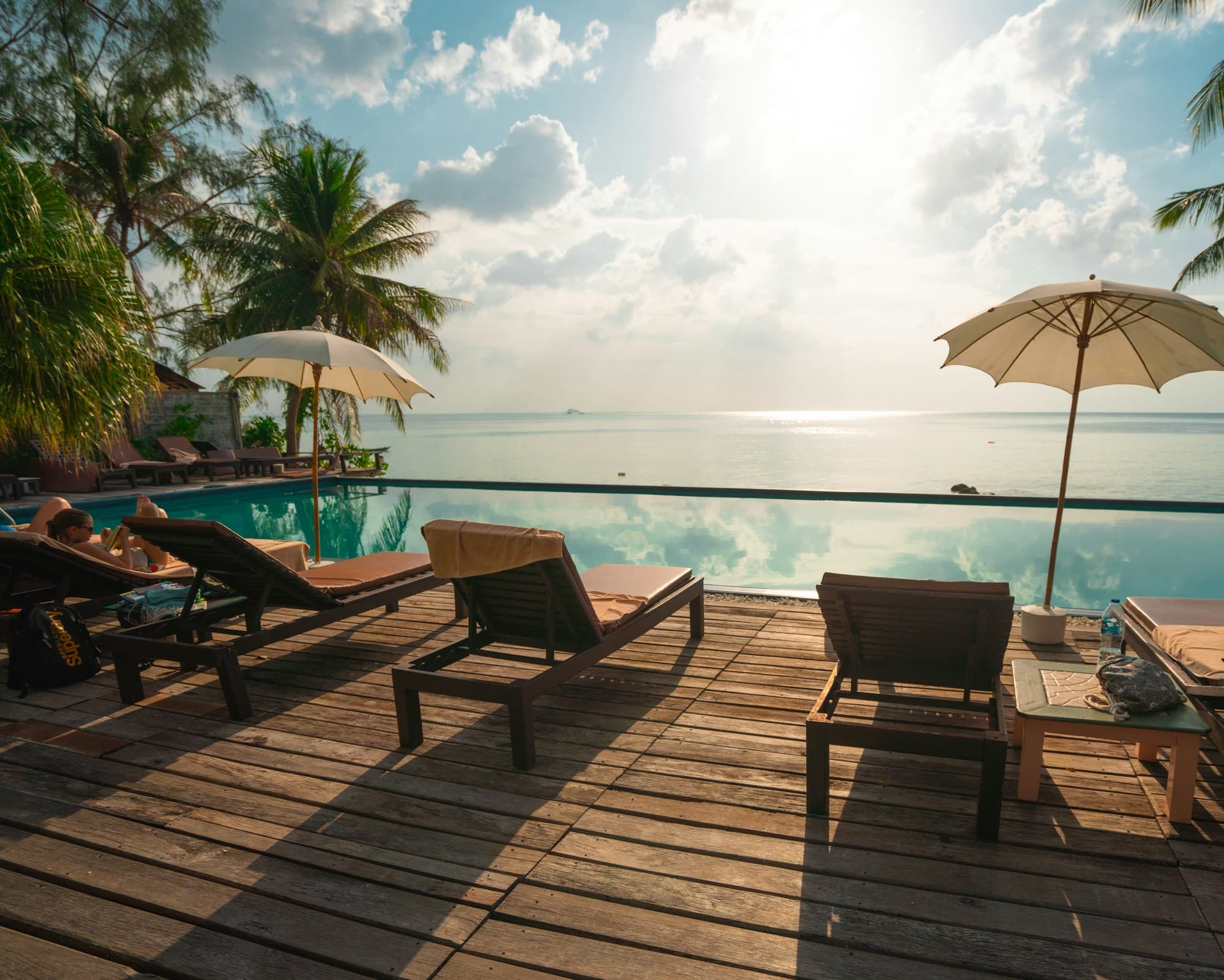
Luxury lodge deck with loungers and umbrellas at golden hourComfort

Makgadikgadi · Gweta & the pans' edge

Palm-Grove Lodge · Gweta

Lodge

Near the village of Gweta, on the northern side of the pans, relaxed lodges among palms and baobabs make an easy base for meerkat visits, quad-bike trips onto the dry salt and walks with San guides. Rooms and chalets are simple and full of character, and a pool takes the edge off hot Kalahari afternoons.

  • Chalets or rooms with en-suite bathrooms
  • Meerkat and quad-bike outings in the dry season
  • Pool and bar beneath the palms
  • Easy access from the Nata–Maun road

Ideal for: Families and road-trippers who want the pans’ activities at a relaxed price level
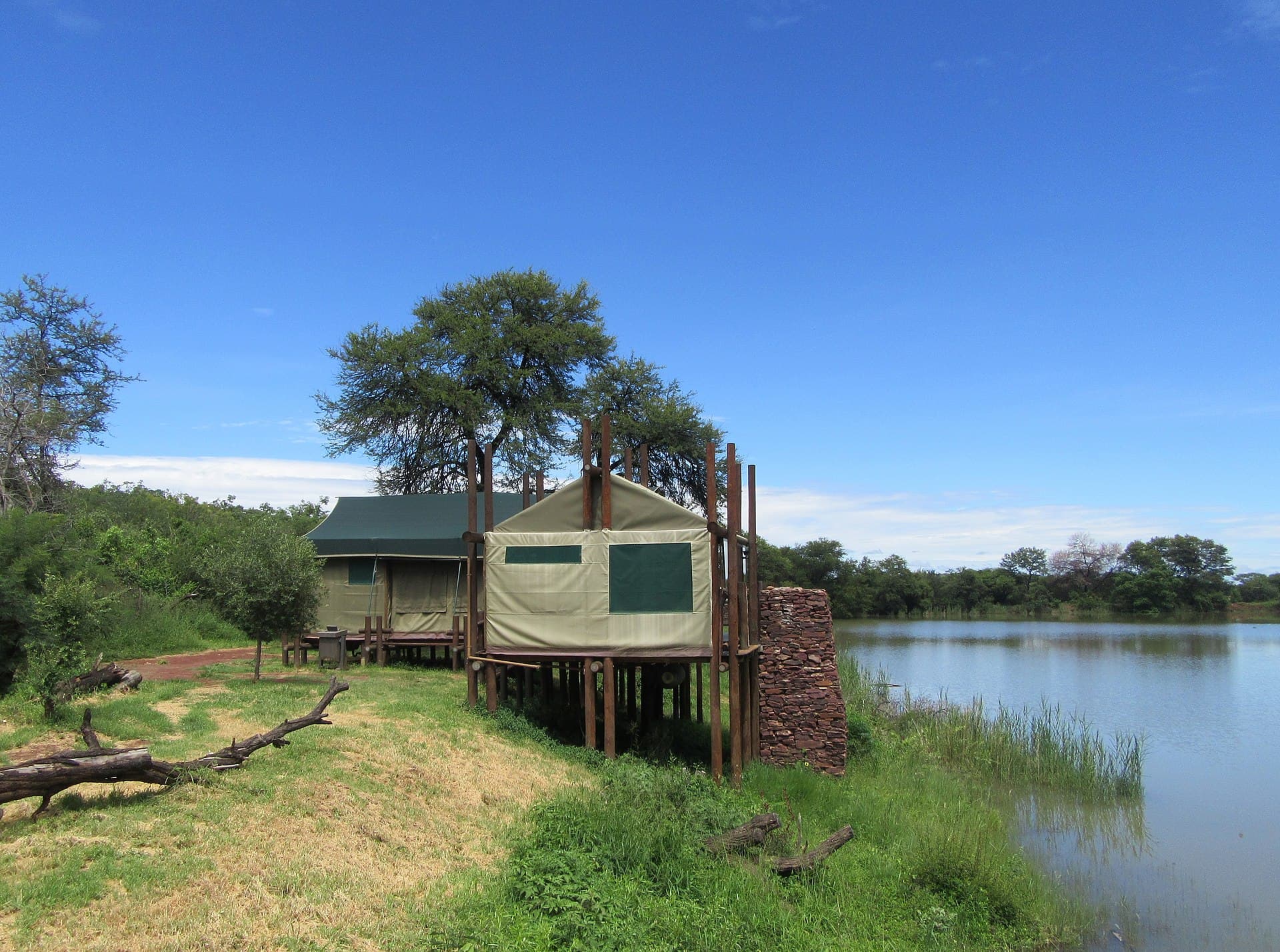
A canvas safari tent set among trees at a private tented campPremium

Makgadikgadi · Boteti River

Boteti Riverbank Zebra Camp

Tented camp

On the banks of the Boteti River, the western boundary of Makgadikgadi Pans National Park, tented camps face one of the dry season’s great spectacles: large herds of zebra coming down to drink once the grasslands dry out. A pool on the deck makes the hot months easy, and outings to the meerkats and the open pans are usually on offer.

  • River-view tents with outdoor showers
  • Ground-level hide at the waterline at some
  • Excursions to meerkats and the pans
  • Pool overlooking the river

Ideal for: Photographers and dry-season travelers who want the zebra from a comfortable, pool-cooled camp

A canvas safari tent set among trees at a private tented campLuxury

Makgadikgadi · edge of Ntwetwe Pan

Ntwetwe Pan-Edge Luxury Camp

Tented camp

On the grassy fringe of Ntwetwe Pan, a small number of luxury camps pair old-school safari style, all rugs, campaign furniture and canvas, with the pans’ signature activities: habituated meerkats, walks with San guides, quad bikes onto the salt and nights sleeping out beneath the sky. The emptiness is the luxury, above all in the dry winter, when the pans are white and firm.

  • Large tents with period furnishings
  • San-guided walks and meerkat mornings
  • Quad biking and sleep-outs in the dry season
  • Pool or shaded cooling areas for hot afternoons

Ideal for: Couples and families who want the full pans experience with exceptional comfort

Experiences

Experiences

Aerial view over the winding channels and islands of the Okavango Delta

In the air

Helicopter & Scenic Flights over the Delta

See the Okavango’s channels, islands and wading herds from the air, on a doors-off helicopter flight or a fixed-wing scenic flight from Maun.

On foot

Walking Safaris in Botswana

Follow a qualified walking guide across Delta islands, Linyanti floodplains or Kalahari sand, and read the bush from ground level.

On horseback

Horseback Safaris

Ride among zebra, giraffe and lechwe on horses schooled for big-game country, splashing across Delta floodplains or cantering over the Kalahari pans.

Culture

San Cultural Walks in the Kalahari

Walk with San guides in the Kalahari as they share tracking, plant knowledge and fire-making skills handed down through many generations.

Safaris

Safaris That Go Here

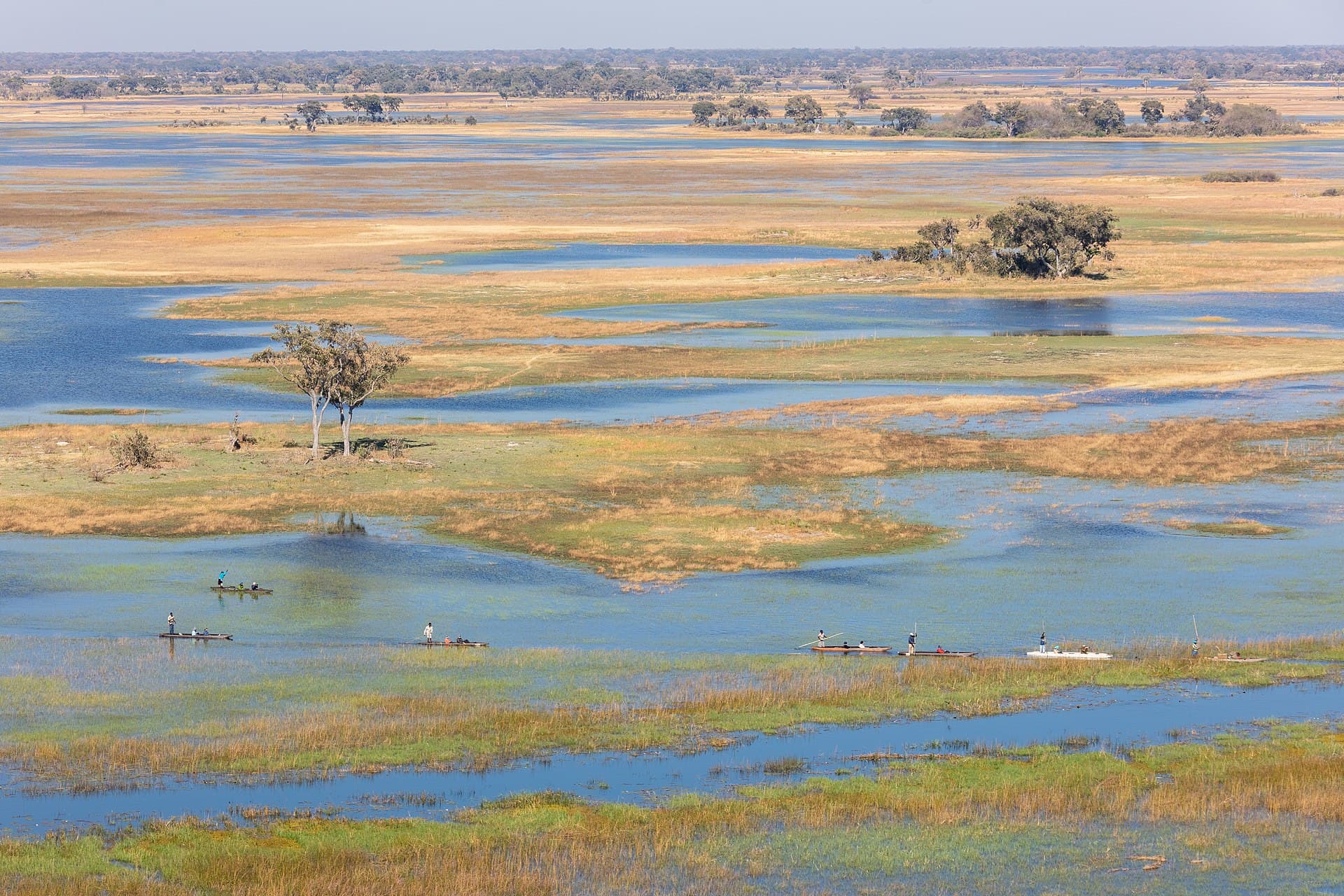
Palm islands silhouetted at dusk on the Makgadikgadi pans
9 daysDec–Apr

Green Season: Kalahari & Pans

Maun · Makgadikgadi Pans · Nxai Pan · Central Kalahari · Okavango Delta

Return visitors, photographers and the Kalahari-curious, happy to trade some certainty for solitude

Best months
December–April, in the rains
Comfort levels
Premium · Luxury
Individually quoted
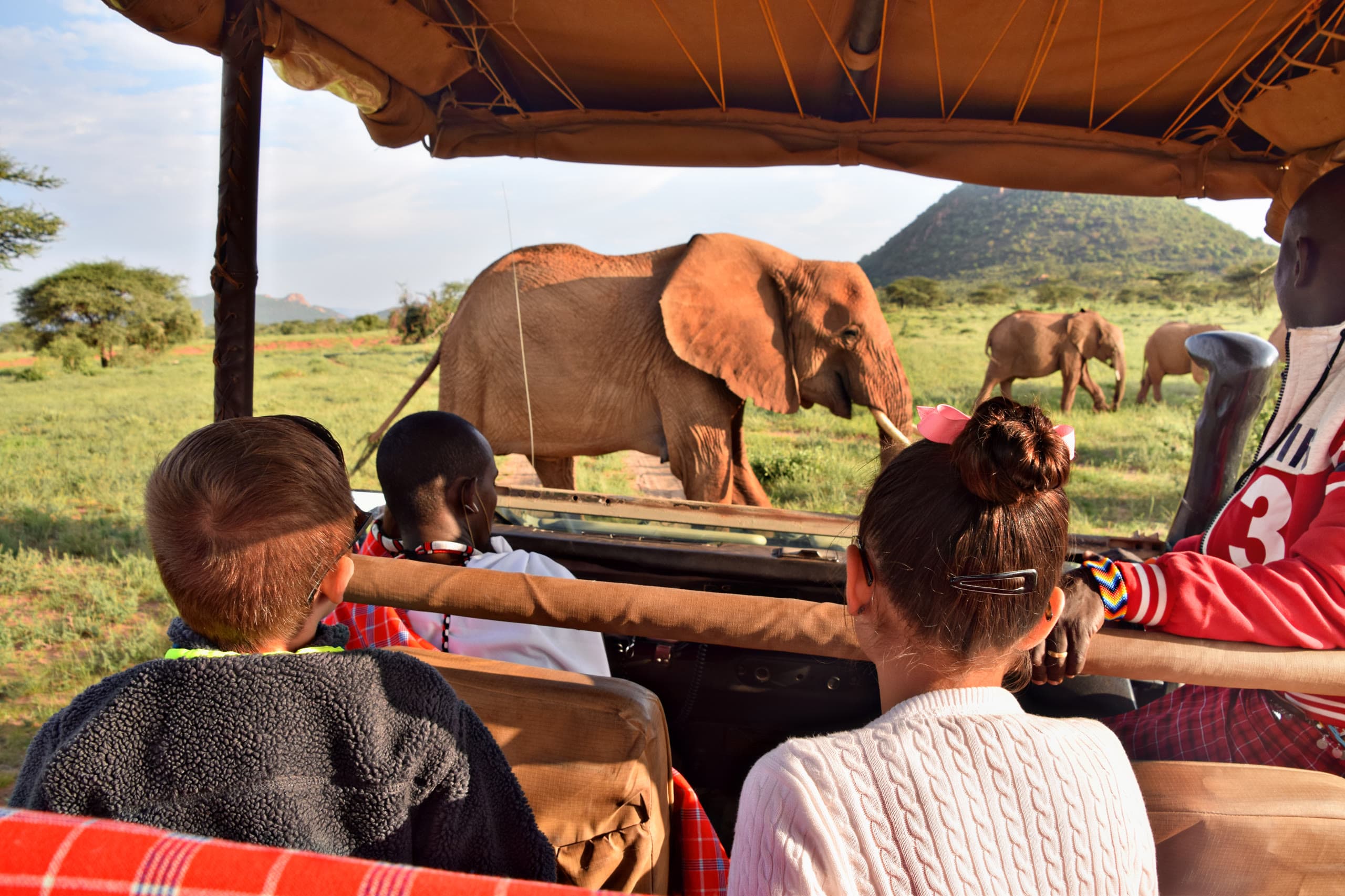
Safari guests watching a herd of elephants from an open vehicle on a family game drive
9 daysFamilies with teens

Botswana Family Adventure

Kasane · Chobe Riverfront · Okavango Delta · Makgadikgadi Pans · Maun

Families with children roughly 12 and older who want variety, activity and a little adrenaline

Best months
April–October (book school-holiday dates early)
Comfort levels
Comfort · Premium · Luxury
Individually quoted
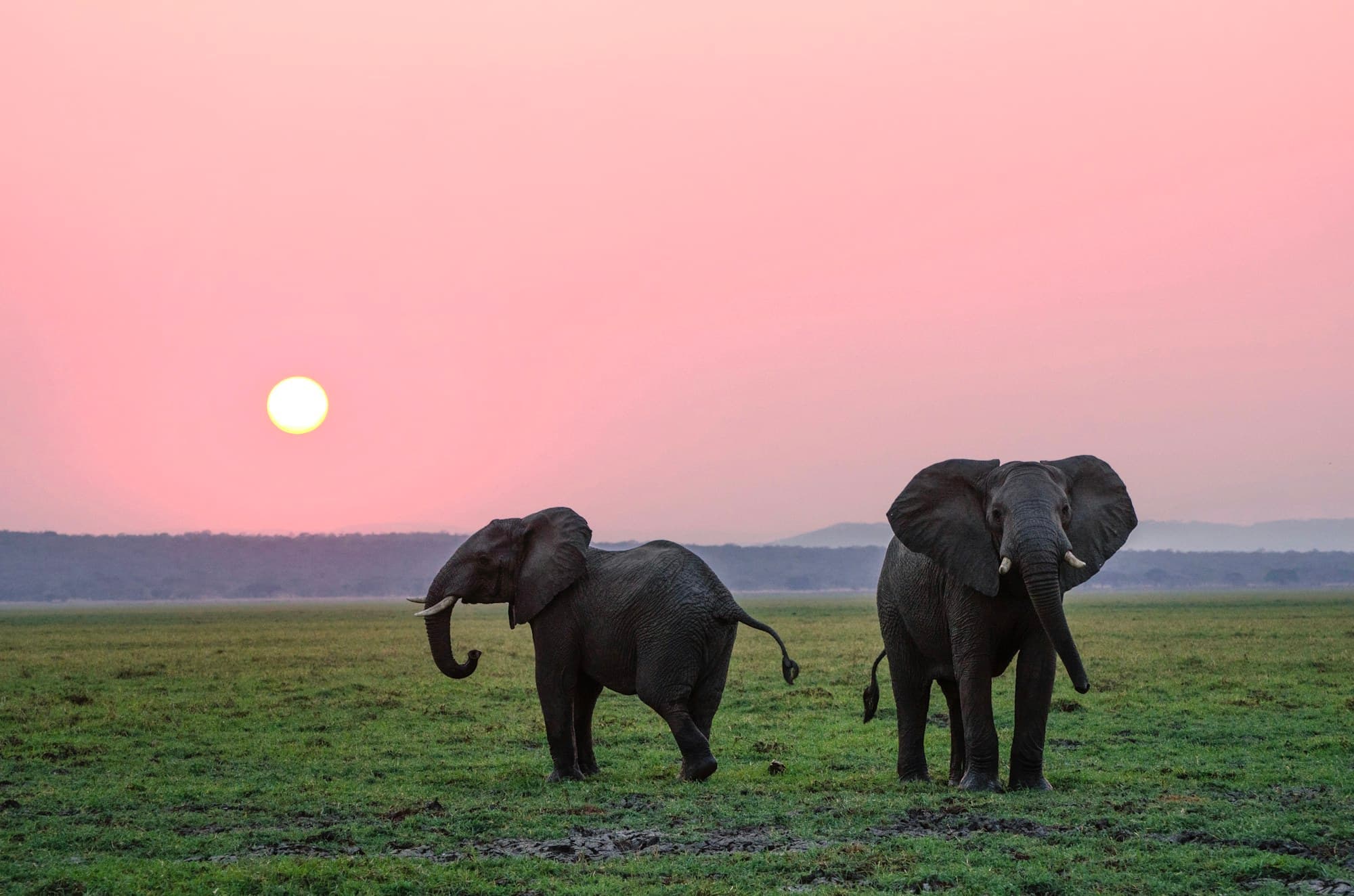
Two elephants together beneath a soft pink dusk sky
10 daysCouples

Botswana Honeymoon

Maun · Okavango Delta · Northern Delta concessions · Makgadikgadi Pans

Couples who want privacy, water and wilderness rather than a resort-style honeymoon

Best months
April–October
Comfort levels
Premium · Luxury · Ultra-Luxury
Individually quoted

Good to know

Frequently asked questions

When do the zebra arrive at the Makgadikgadi and Nxai Pan?

It follows the rain. After good summer rains, typically from about December, zebra and wildebeest spread across the grasslands and Nxai Pan and stay while the grazing lasts, often into April. As the pans dry they move west to the Boteti River, where they gather through the dry season.

Is Chapman’s Baobab still standing?

No. Chapman’s Baobab, a famous landmark on the edge of Ntwetwe Pan, was widely reported to have collapsed in early 2016, although some older guides still describe it. Baines’ Baobabs in Nxai Pan National Park are still standing and make a rewarding excursion.

Can you sleep out on the Makgadikgadi Pans?

Yes, in the dry season, when the crust is firm. Several camps offer a night on the pan in a simple bedroll, usually with a guide, a small fire and a vast view of the stars. It depends on the weather and the state of the pan, so it is usually offered from about May to October.

Is quad biking on the pans harmful?

It can be if done carelessly, since the crust is fragile and tyre tracks can scar the surface. Responsible operators use only established routes, ride when the pan is dry and firm, and keep groups small. Ask how your camp manages its quad-bike trips before you book.

What is the difference between Makgadikgadi Pans and Nxai Pan?

They are two national parks on either side of the Nata–Maun road. Makgadikgadi Pans National Park includes part of Ntwetwe Pan and the Boteti River and has something to offer year-round; Nxai Pan National Park, to the north, is at its best after good rains. Many travelers base themselves near the Boteti or the pans and visit Nxai Pan on a day or overnight trip.

Wetland channels of Moremi Game Reserve

Tell Us Your Month

Share when you can travel, who is coming and what you most hope to see in Botswana. A specialist will shape a private route around it and walk you through every choice before anything is booked.

Plan my safari here