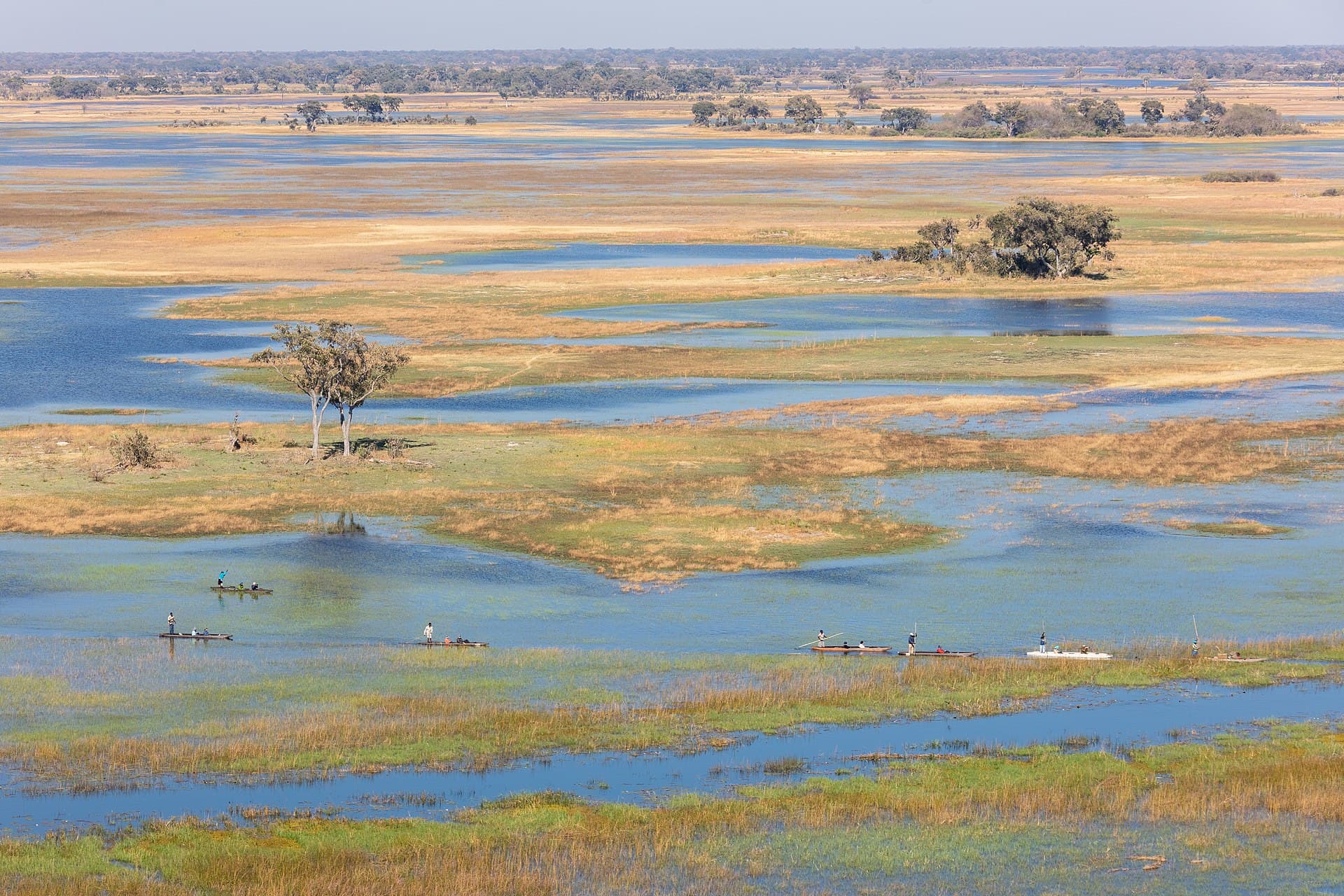
Aerial view over the winding channels and islands of the Okavango Delta

Compare & combine

Namibia vs Botswana: Which Safari Suits You, and How to Combine Them

One is a journey through desert, dunes and waterholes; the other a water-and-wildlife safari in a few remote camps. Choosing is easier once you know what a day in each looks like, and combining them is simpler than most people think.

Namibia and Botswana share a border, a dry season and a reputation for space, but they offer very different safaris. Namibia is a journey: desert, coast and savanna linked by long roads or light aircraft, with wildlife adapted to extraordinary dryness and Etosha’s waterholes as the big-game centerpiece. Botswana is immersion: a few remote camps in the Okavango Delta, the Linyanti and Chobe, where water draws dense wildlife and you explore by vehicle, boat and mokoro.

If you want landscapes and photography as much as animals, Namibia usually wins. If you want the greatest density of wildlife and the feeling of being deep in wilderness, Botswana usually does. And if you want both, the two combine well in about twelve days, which is the shape of our 12-day Namibia and Botswana journey.

Side by side

Namibia vs Botswana at a Glance

NamibiaBotswana
LandscapeRed dunes, gravel plains, granite mountains, a fog-bound Atlantic coast and Etosha’s white salt panThe Okavango’s channels and floodplains, riverine forest along the Chobe and Linyanti, and the Kalahari’s salt pans
Signature wildlifeDesert-adapted elephant and black rhino, cheetah, oryx, Etosha’s waterhole gatherings, and seals and flamingos on the coastBig herds of elephant and buffalo, lion, leopard and wild dog, hippo and crocodile, and exceptional water birds
Wildlife densityConcentrated at Etosha’s waterholes in the dry season; thinly spread in the desert, where every sighting is earnedHigh, especially along the rivers and floodplains in the dry season
How you travelPrivately guided road journeys, fly-in circuits or a mix of the twoMostly light aircraft between remote camps, each with its own guides
Camp style & price levelA wide range, from state rest camps and guest farms to exclusive desert lodgesA deliberate high-value, low-volume model: small camps in private concessions, priced to match
MalariaVery low in the desert, on the coast and in Windhoek; seasonal in the north; high all year in the Zambezi RegionPresent in the northern safari areas, including the Delta and Chobe
Best monthsJune–October for Etosha, May–September for the desert, the coast all yearThe dry season, roughly May–October; the Delta’s flood usually peaks around June–August
Visa for US travelersRequired since 1 April 2025 (e-visa or on arrival)Not required at the time of writing; check before you travel

General patterns only. Each region within both countries has its own seasons and character.

A day in each

What a Day Looks Like

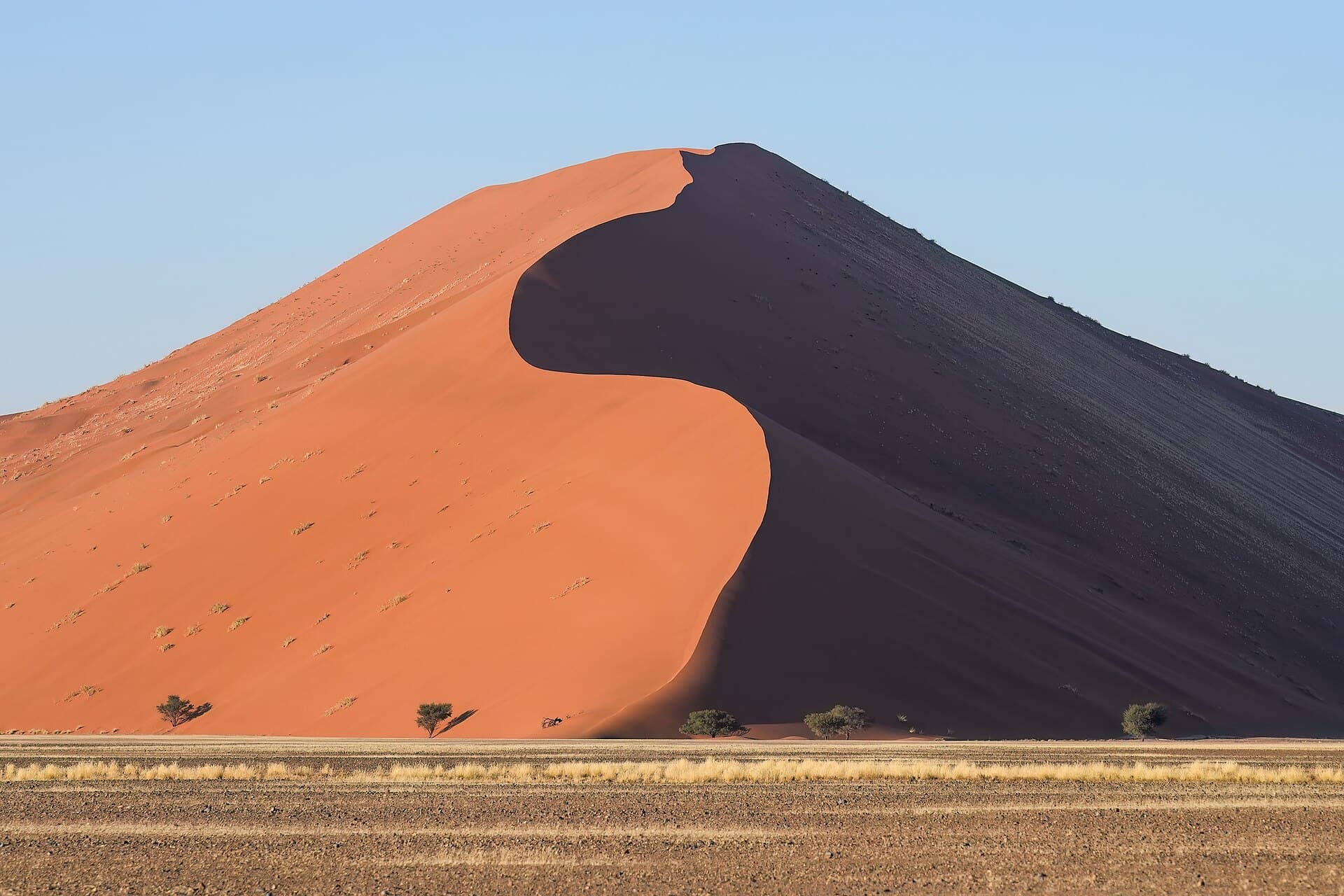
In Namibia, a day often starts in the dark. At Sossusvlei you drive to the dunes for first light, climb before the sand heats up and walk into Deadvlei, whose camelthorn trees are believed to have died some 600–700 years ago. In Etosha, you spend the morning at waterholes watching springbok, zebra and elephant arrive in turns, and the evening beside a floodlit waterhole where black rhino often come to drink. Many days include a scenic transfer, because in Namibia the country itself is part of the experience.

In Botswana, a day revolves around your camp. You head out at dawn in an open vehicle across a private concession, perhaps following lions from the night’s calls, return for brunch and a quiet midday, then glide through papyrus channels in a mokoro or take a boat along the river as the light fades. Where concession rules allow, night drives and walks add another layer. You rarely travel between camps by road; the plane is how you move.

Neither is better; they reward different travelers. Photographers and first-time visitors who love variety often lean toward Namibia, while wildlife purists and returning safari-goers often lean toward Botswana. For Botswana itself, start with the Okavango Delta and Chobe National Park.

On the map

Where Namibia Meets Botswana

Namibia’s regions spread across the west of the subcontinent, while the long Zambezi Region, once called the Caprivi Strip, reaches east between Angola, Zambia and Botswana. That panhandle is the natural bridge: its eastern tip faces Kasane and Chobe across the river, and the Okavango crosses the strip’s western end before flowing south into Botswana’s Delta.

Map: NamibiaNamibiaBotswanaSossusvleiEtosha National ParkDamaralandSkeleton CoastSwakopmundKaokolandZambezi Region

Approximate locations — not for navigation.

Choosing

Which One Suits You?

Choose Namibia if…

You want variety and scale: dunes, coast, mountains and savanna in one trip. You love photography and dark skies, you are curious about how elephants and rhino survive in the desert, or you would like to keep malaria risk very low by focusing on the desert and coast.

Choose Botswana if…

Your priority is big game at close quarters, you like the idea of staying put in two or three remote camps, and exploring by boat and mokoro appeals. It also suits returning safari-goers who want walking and night drives in private concessions.

Explore

Combine them if…

You have ten days or more and want contrast: the desert first, then the water. The two countries share a border, a dry season and direct regional flights, so a combined trip adds relatively little transit time.

Explore

Want water without a border?

Namibia’s Zambezi Region has hippo, buffalo and floodplains along the Kwando, the same river that becomes the Linyanti and feeds Botswana’s Linyanti, Selinda and Kwando concessions downstream.

Explore

Combining

How to Combine Namibia and Botswana

The route matters more than the distance. These are the building blocks we plan with.

  1. Start in the desert, end on the water

    Most combinations begin in Windhoek with Sossusvlei and Etosha, then finish in Botswana. Dry desert first and green Delta last makes a satisfying arc, and it puts your final nights somewhere lush and restful after days of dust and early starts.

  2. Fly between the two gateways

    Scheduled regional flights link Windhoek with Maun, the gateway to the Delta, and with Kasane, the gateway to Chobe. From either town, light aircraft reach most camps in well under an hour.

  3. Or cross overland through the Zambezi Region

    By road, the Ngoma border post leads from the Zambezi Region to Chobe and Kasane, Mohembo at the top of the Okavango panhandle leads into the Delta’s western side, and from Impalila Island a short boat crossing reaches Kasane. All three can issue Namibian visas on arrival if you travel the other way.

  4. Add Victoria Falls as a finale

    Kasane is only about 80 km from Victoria Falls by road, so the falls make a natural two-night ending after Chobe or the Delta; see Victoria Falls.

  5. Allow enough nights

    Plan three or four nights in Botswana on top of your Namibia itinerary, ideally split between two contrasting camps, and two more if you add Victoria Falls.

Health & seasons

Malaria, Seasons and Families

Malaria is one of the clearest differences. Much of Namibia’s classic route, including Sossusvlei, Swakopmund and Windhoek, is very low risk, and the northern regions around Etosha are low risk from May to November. Botswana’s northern safari areas, the Delta and Chobe among them, lie in malaria transmission areas, as does Namibia’s own Zambezi Region all year. A travel clinic can advise on your exact route, and our Namibia malaria guide maps the risk area by area.

The seasons line up well. Both countries are at their best in the dry season, roughly May to October. The Okavango’s flood, fed by rain that fell months earlier in the Angolan highlands, usually peaks around June to August in the heart of the dry winter, so a July or August combination brings Etosha’s waterholes and the Delta at high water into one trip. From November to April, Namibia’s desert and coast still work well while Botswana’s green season suits birders and travelers happy to trade some convenience for quieter camps.

For families, Namibia’s low-risk desert and coast, private vehicles and flexible pace usually make it the easier choice with younger children. Many Botswana camps set minimum ages, particularly for mokoro trips and walking, so check the rules before you choose a camp.

Price & paperwork

Price Levels and Entry Rules

Botswana’s tourism policy has long favored high-value, low-volume travel: small camps, limited beds and access mostly by air, which keeps the wilderness quiet and the rates high. Namibia offers a wider spread, from characterful guest farms and state rest camps to some of Africa’s most exclusive desert lodges, so the same number of nights can cost considerably less. Our Namibia safari cost guide explains what moves the price.

On paperwork, US travelers have needed a Namibian visa since 1 April 2025, applied for online or bought on arrival, and the Namibia visa guide explains the process. At the time of writing, US citizens do not need a visa for Botswana. The KAZA UNIVISA, which covers Zambia and Zimbabwe, does not include Namibia.

Safaris

Recommended safaris

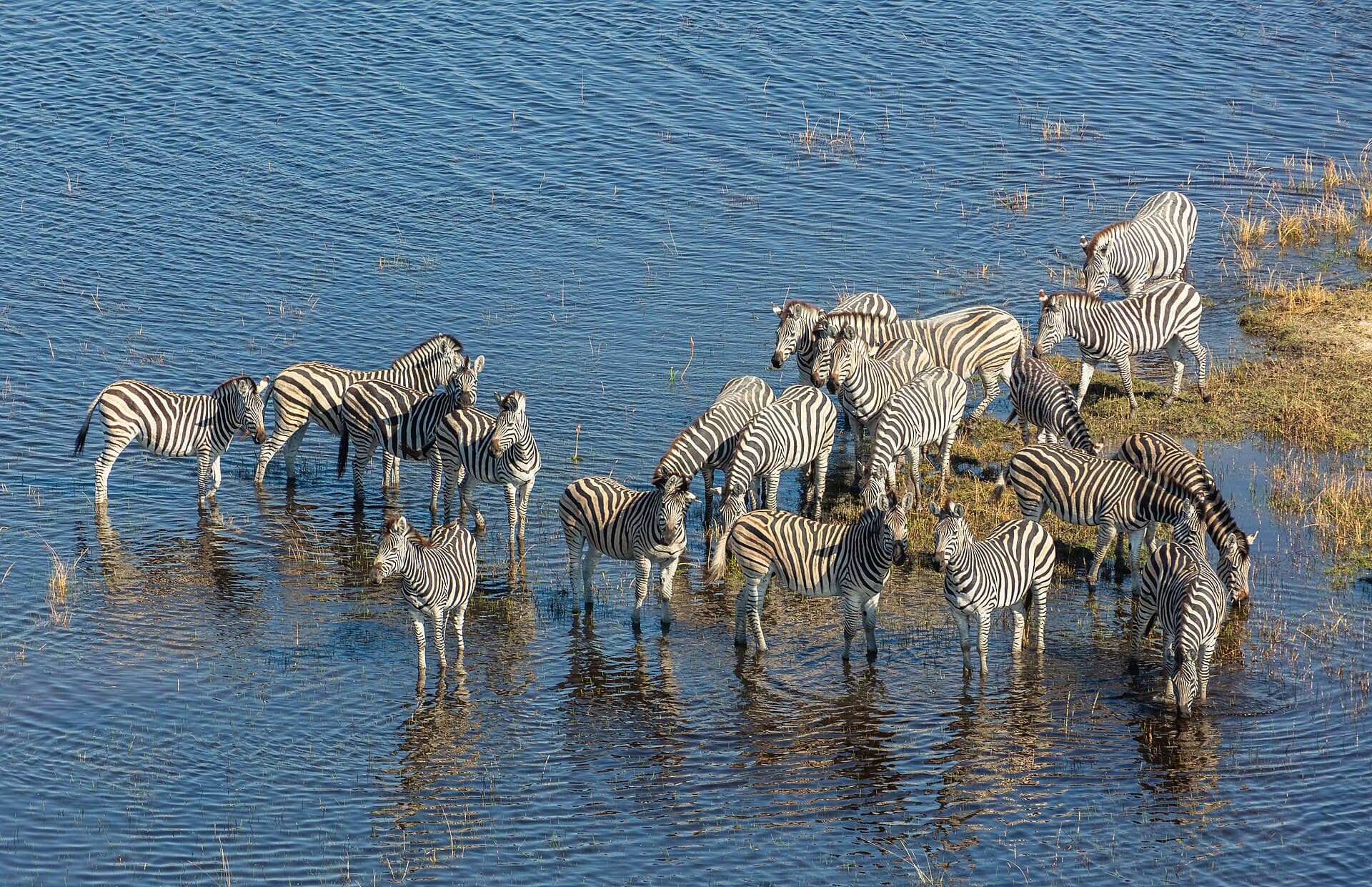
Zebra herd wading through shallow delta water
12 daysDesert & Delta

Desert, Zambezi & Delta

Windhoek · Sossusvlei · Etosha National Park · Zambezi Region · Kasane · Okavango Delta · Maun

Travelers who want Namibia’s landscapes and Botswana’s water safari in a single trip, without backtracking

Best months
May–October
Comfort levels
Premium · Luxury · Ultra-Luxury
Individually quoted
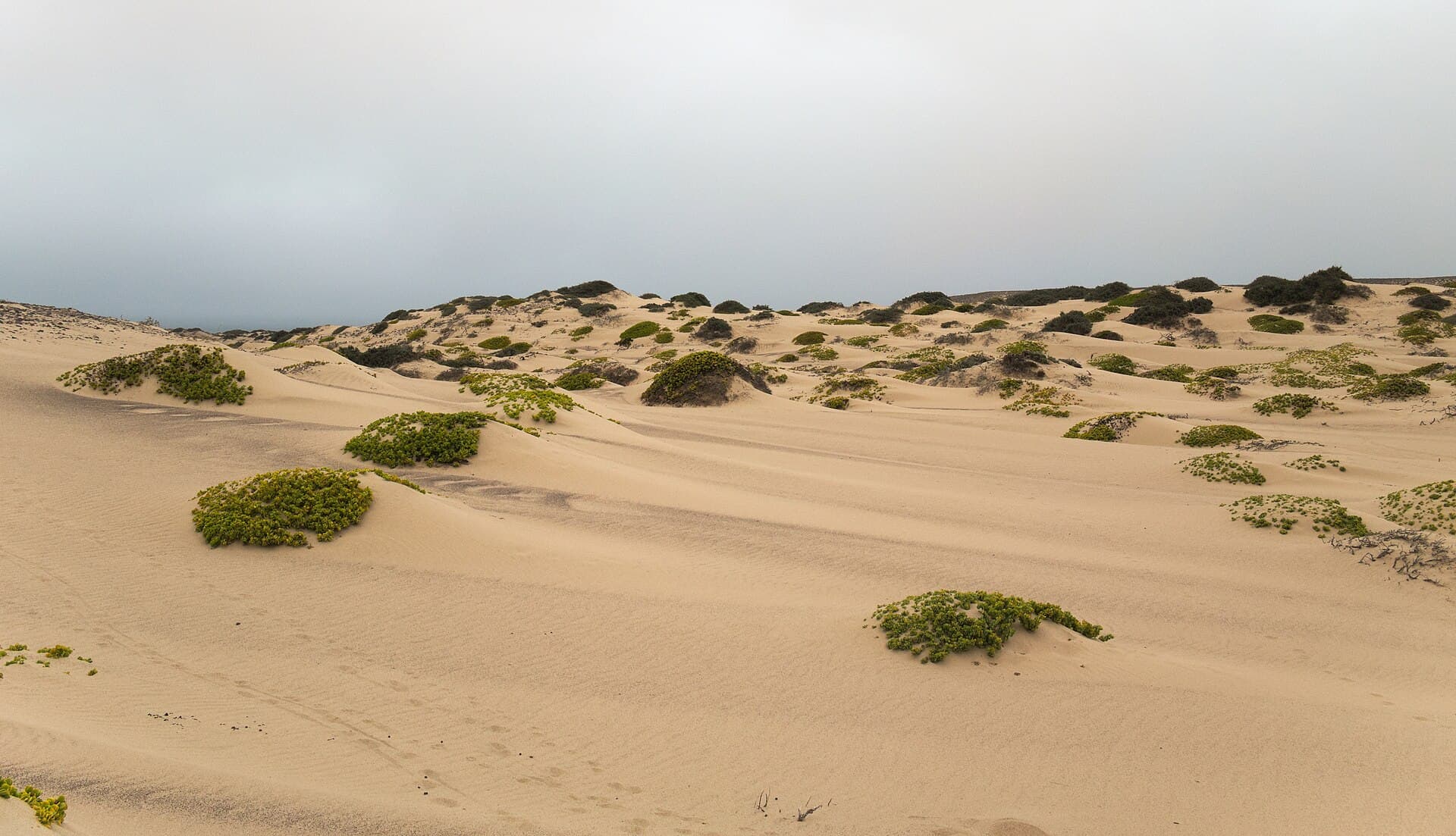
Wind-sculpted dunes meeting the Skeleton Coast
10 daysFly-in

Namibia by Air

Windhoek · Sossusvlei · Skeleton Coast · Etosha National Park

Travelers who would rather fly than drive, and who value remote wilderness and photography over a long species list

Best months
April–November
Comfort levels
Premium · Luxury · Ultra-Luxury
Individually quoted
Good to know

Frequently asked questions

Is Namibia or Botswana better for a first safari?

Both work, for different reasons. Namibia gives first-time visitors enormous variety at a gentler price level, with Etosha’s waterholes providing dependable big-game viewing in the dry season. Botswana delivers more intense wildlife encounters from remote camps. If you can, combine them, because the contrast is part of the appeal.

Is a Namibia safari less expensive than Botswana?

Usually, night for night, because Namibia has a far wider range of accommodation and more of the trip can be done by road. Botswana’s remote camps in private concessions are among Africa’s higher-priced safaris. At the very top end the gap narrows, since Namibia’s exclusive fly-in camps are priced at a similar level.

Should I visit Namibia or Botswana first?

Namibia first, in most cases. Ending in the Delta or at Victoria Falls gives the trip a restful finish after the desert’s early starts and long days, and flights home from Maun, Kasane or Victoria Falls are straightforward. Reversing the order works too if your flights make it easier.

Which has better wildlife, Namibia or Botswana?

For sheer density, Botswana usually comes out ahead: its rivers and floodplains support big herds of elephant and buffalo and busy predator populations. Namibia’s strengths are different, from Etosha’s dry-season waterholes to desert-adapted elephant and black rhino living in country that looks far too dry to support them. Many travelers find the two complement each other on a single trip.

Which is better for a family safari, Namibia or Botswana?

Namibia is often easier with younger children: large parts of it are very low malaria risk, a private vehicle lets you set the pace, and the variety runs from dunes to seals. Botswana tends to suit families with older children, as many camps set age limits for some activities and malaria is present in the northern safari areas.

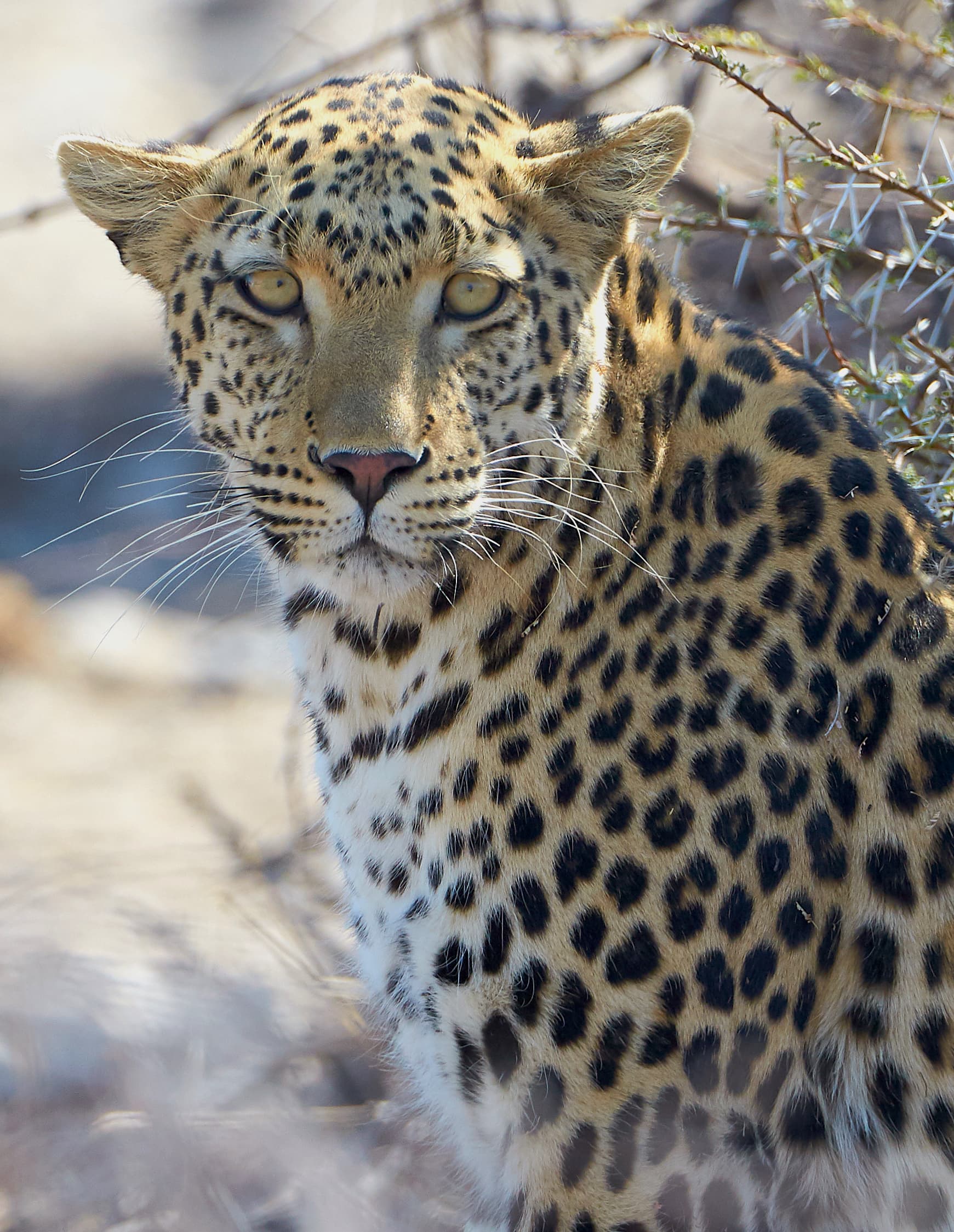
Close leopard portrait in golden light

Tell Us How You Picture Namibia

Share your dates, who is traveling and whether you imagine dunes at dawn, rhino tracks in Damaraland or a waterhole at night. We’ll shape a private route around those ideas and talk you through every choice before anything is confirmed.

Plan My Namibia Safari