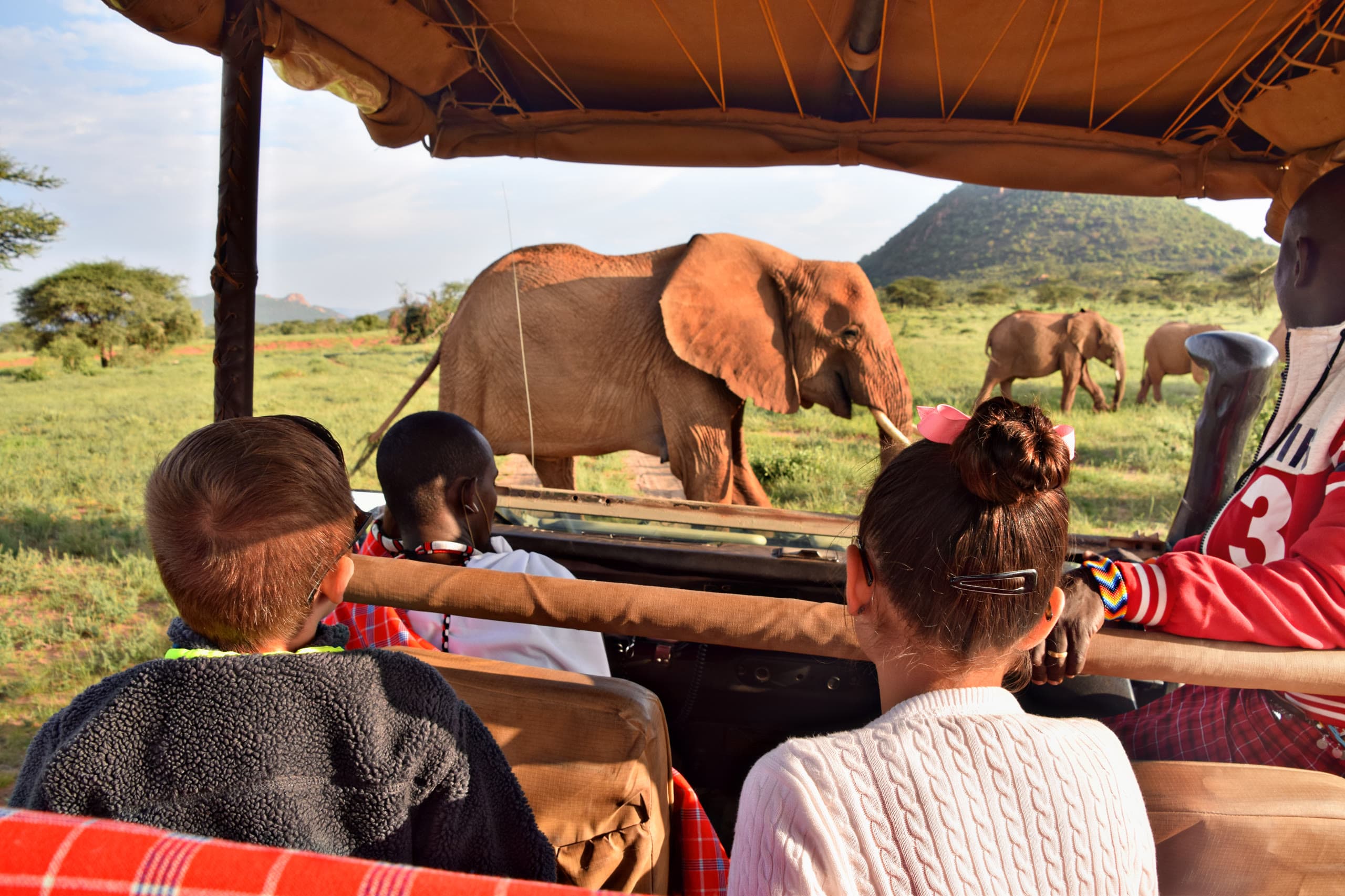
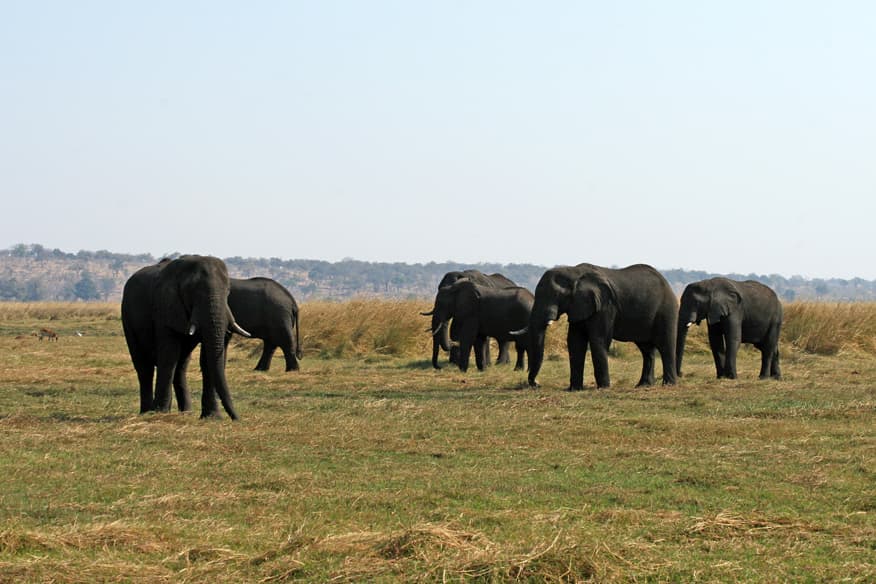
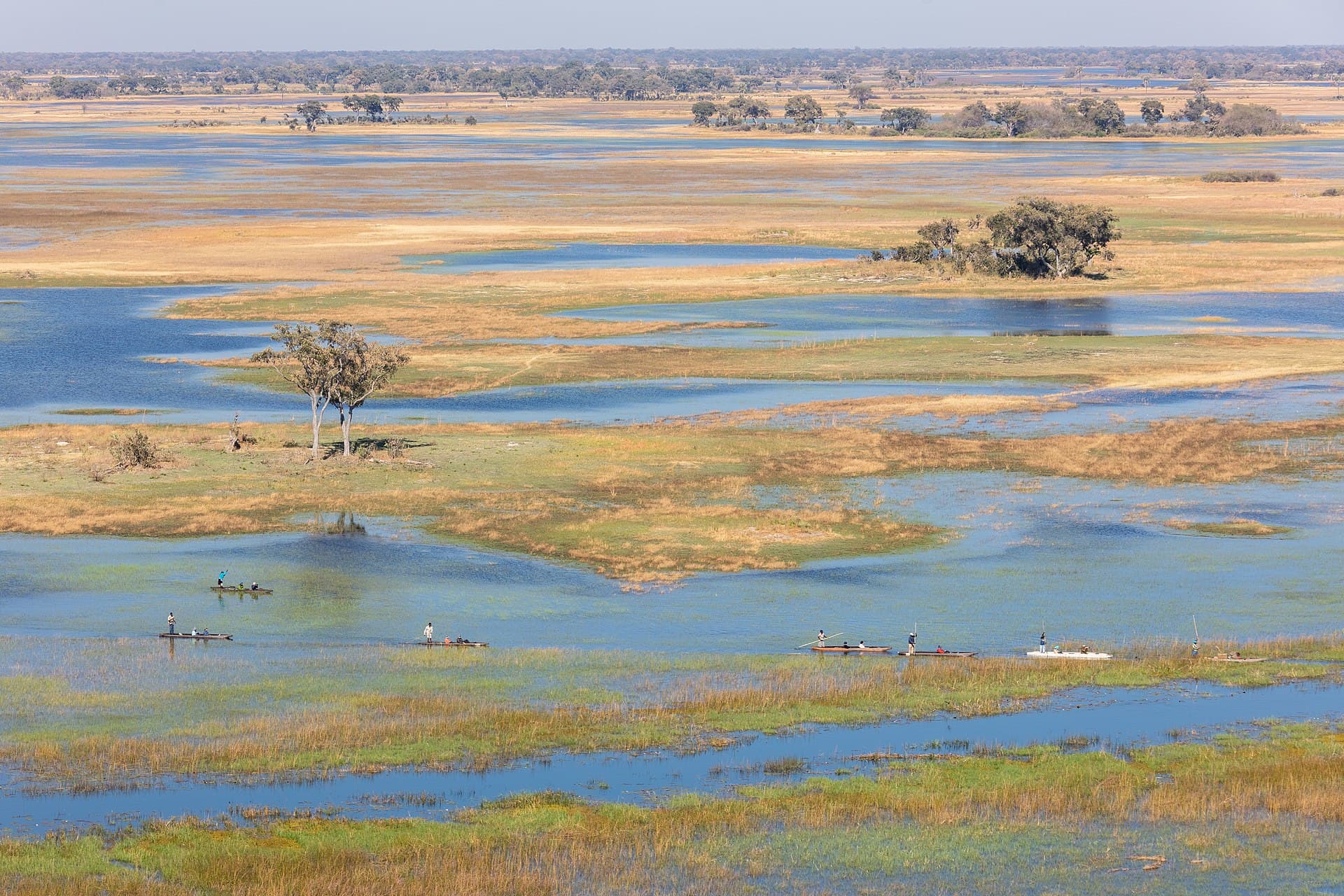
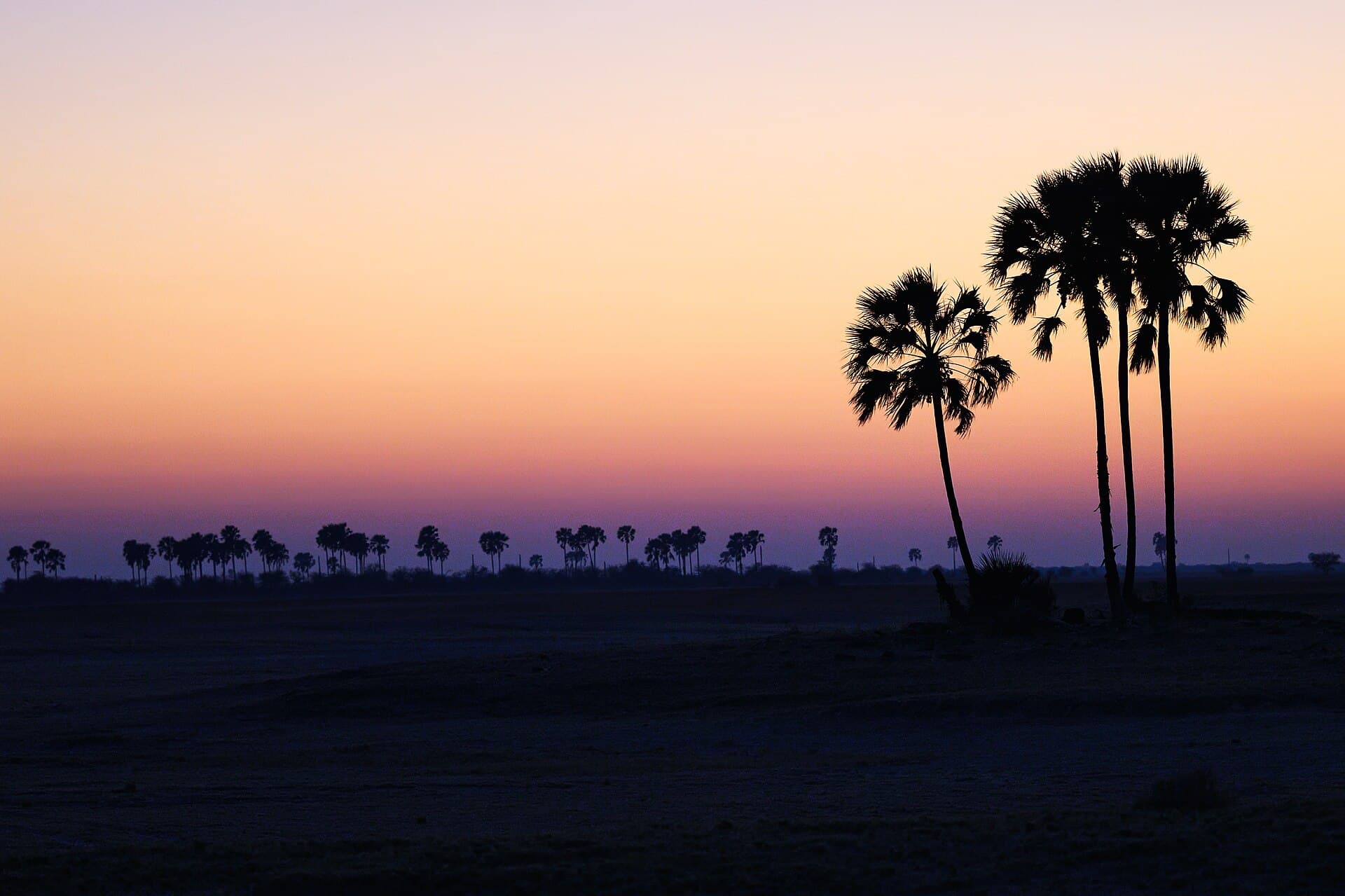
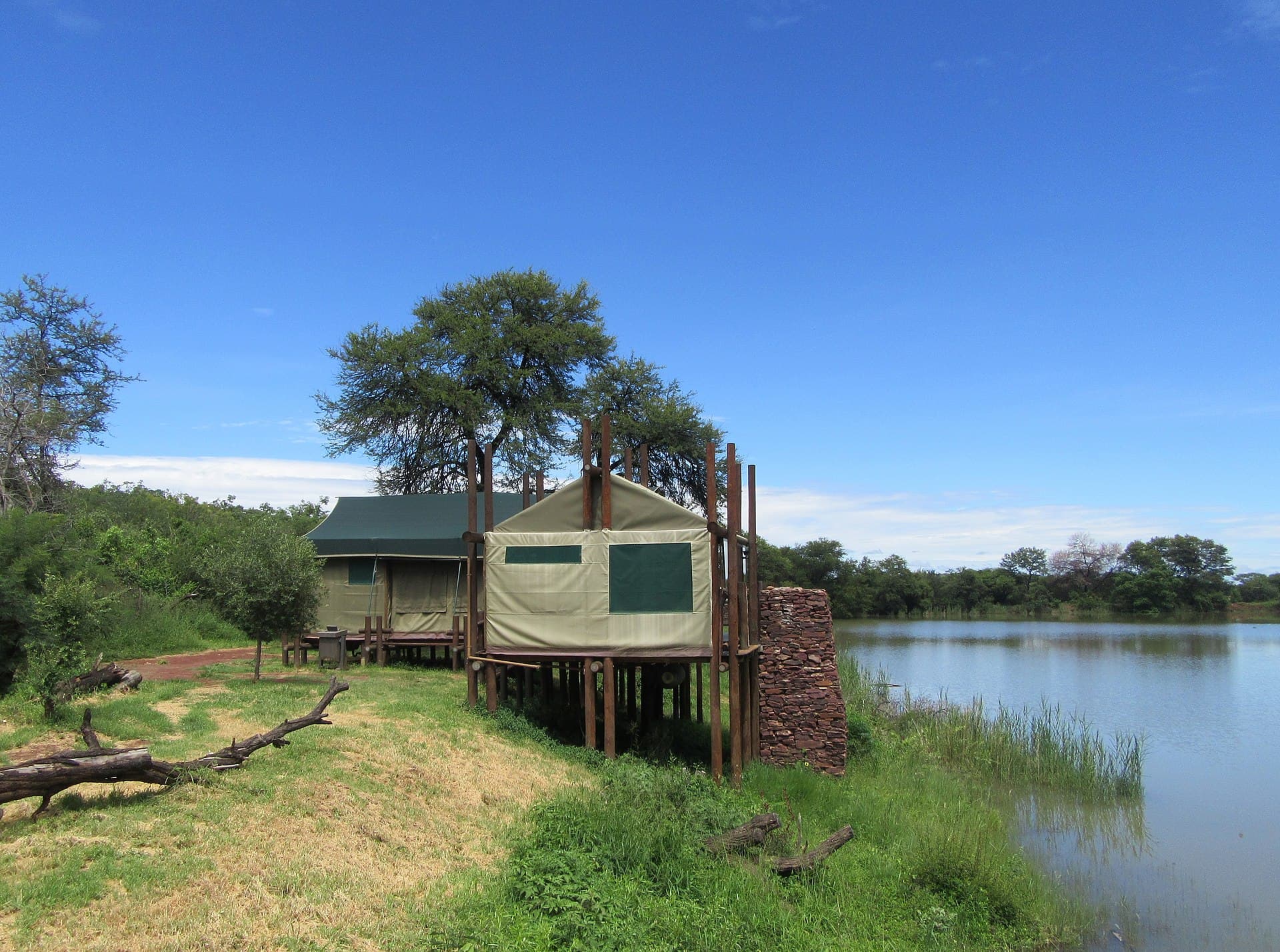
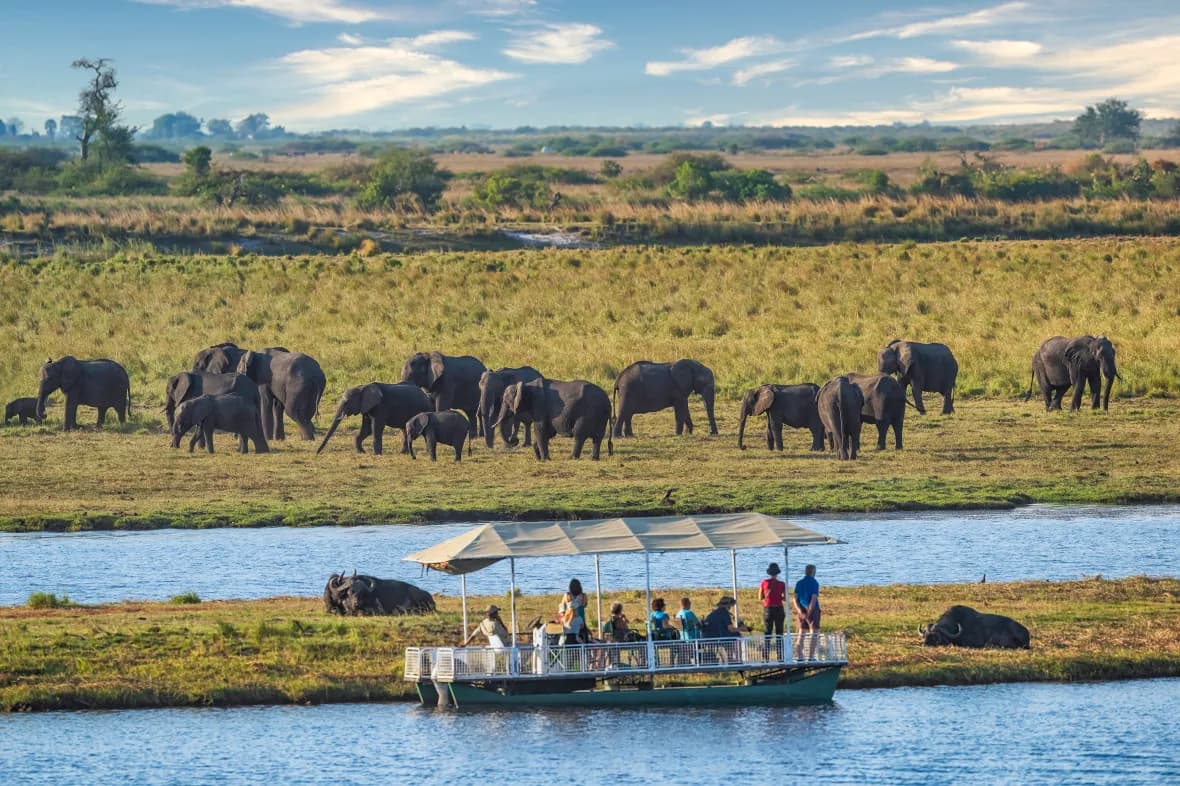
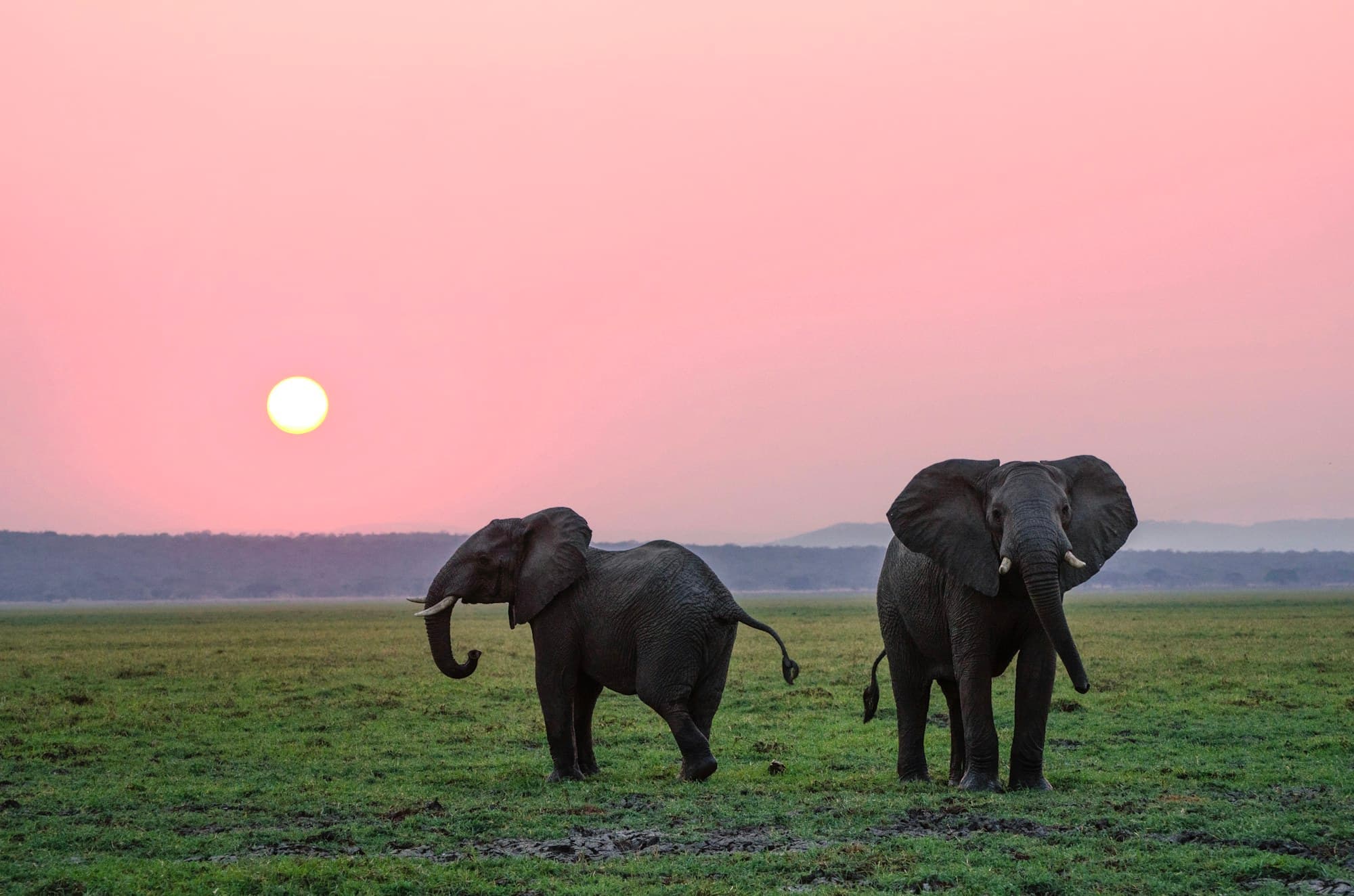
A Botswana family safari with teenagers works best when the trip keeps changing pace, and this one changes it three times. You start on the Chobe River, where elephants drink and swim a few metres from the boat, move to an Okavango Delta camp that runs both game drives and mokoro trips, and finish on the edge of the Makgadikgadi salt pans with meerkats, quad bikes and a walk led by San guides. Stays of three, three and two nights mean just two camp changes, and each one is a short light-aircraft flight.
Ages shape a Botswana trip more than most parents expect. Many Delta camps set minimum ages for their activities, often 6 for game drives and 12 for mokoro trips and walks, and some ask families with younger children to take a private vehicle. With teenagers nearly everything opens up, which is why this journey is built around them. For younger children, age policies and malaria-free alternatives, start with our Botswana family safari guide.
Why this route works
Kasane is the natural first stop. Regional flights from Johannesburg land a few kilometres from town, the Chobe National Park gate is roughly 10 km away, and the riverfront lodges have pools and their own jetties, so the first afternoon needs no effort at all. Three nights there balance morning drives with afternoon boats before a light aircraft takes you south-west into the Okavango Delta, which is best met once everyone is over the jet lag. The Makgadikgadi pans come last because they are the most active part of the trip and sit close to Maun, where regular flights connect back to Johannesburg. Flying every leg spares the family the long, sandy road between Kasane and Maun.