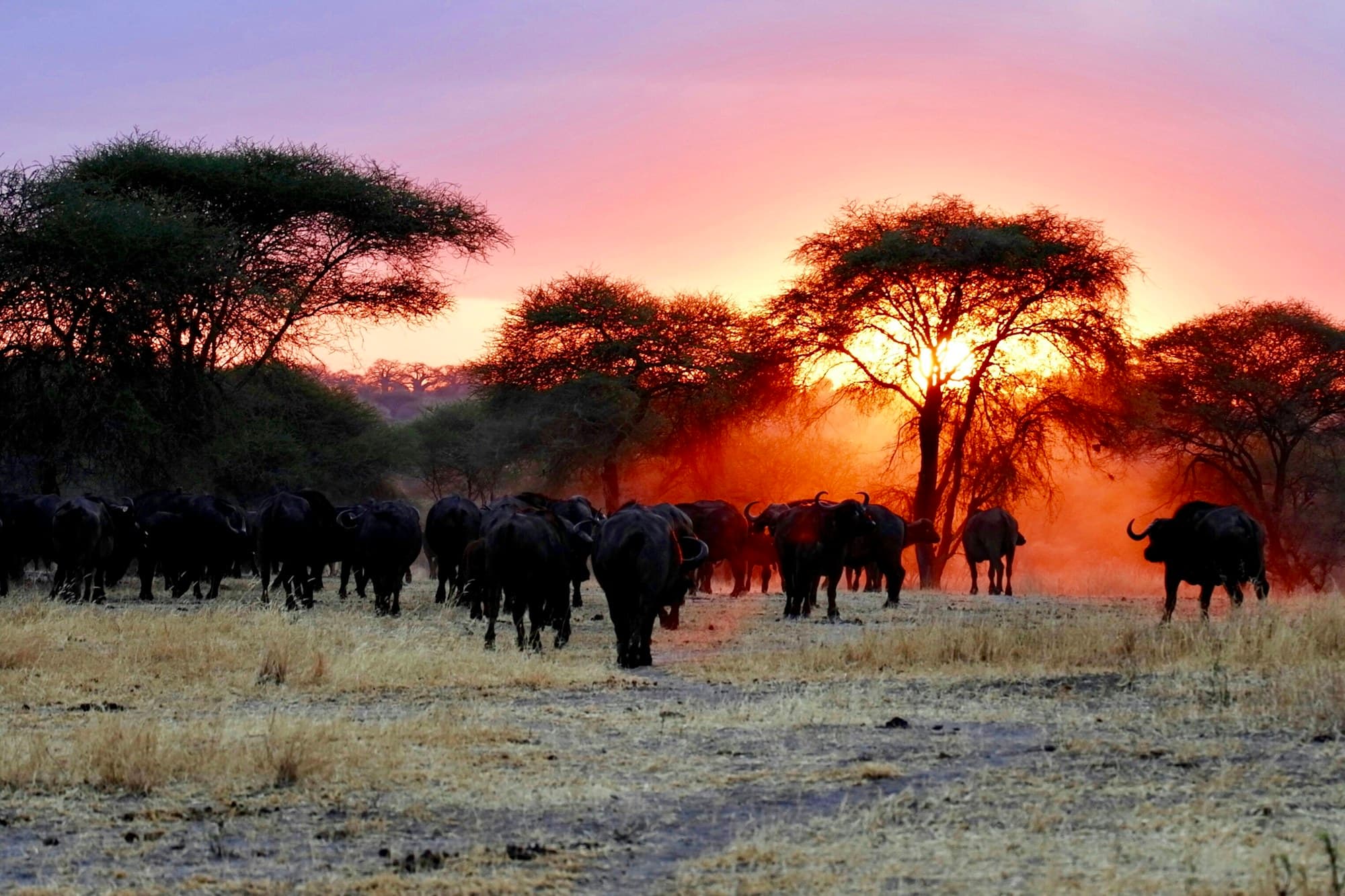
Herds moving through golden dust at a fiery Masai Mara sunset

Private Tanzania safari

13-Day Tanzania & Kenya Private Safari: Masai Mara & Serengeti

13 daysPrivate safariTanzaniaIndividually quoted

Walk and night-drive in a Kenyan conservancy, fly south past Kilimanjaro, then trade the Mara’s rolling grassland for the Serengeti’s open plains on the far side of the same ecosystem.

Customize This Journey
Duration13 days · 12 nights
Best monthsJune – October and December – February
Comfort levelsPremium · Luxury · Ultra-Luxury
RouteNairobi · Masai Mara · Kilimanjaro Airport · Arusha · Tarangire · Ngorongoro Crater · Central Serengeti
Best forTravelers who want the Mara and the Serengeti in one well-connected trip
Trip typePrivate safari

The Masai Mara and the Serengeti are two halves of one ecosystem, divided by a border the wildebeest ignore and a normal safari drive cannot simply cross. This journey links the two by air: a light aircraft from the Mara to Nairobi, then a short flight to Kilimanjaro. When a seasonal flight-and-road connection via Migori and Tarime is operating, it can replace that routing, and we check for your dates. It is the most efficient way to combine Kenya’s great reserve and Tanzania’s northern circuit on one private trip.

You begin in a private Mara conservancy, where vehicle numbers are limited and walks and night drives are part of the rhythm. Tanzania then brings variety: Tarangire’s elephants, the Ngorongoro Crater and four nights in the Central Serengeti, long enough to explore deeply or to shift a night towards the herds when the season suits.

Why this route works

Starting in Kenya keeps the logistics clean. Nairobi has wide international connections, the Mara is under an hour away by light aircraft, and the move south happens mid-trip, in one travel day via Nairobi and Kilimanjaro. Tanzania then unfolds by road in short stages: about two hours to Tarangire, two more to the highlands, and a game drive into the Serengeti. Four nights at the end let you slow down after the border day, and a flight from Seronera to Arusha spares you the long drive back.

Itinerary

Day by Day

A suggested flow — every day can be reshaped around you.

  1. Day 1 · Nairobi

    Arrival in Nairobi’s Green Suburbs

    Drive · Jomo Kenyatta International AirportKaren, Nairobi · about 45 minutes–1.5 hours, depending on traffic

    You are met at Jomo Kenyatta International Airport and driven to Karen, Nairobi’s leafy, low-rise suburb at the foot of the Ngong Hills, a trip that can take under an hour or considerably longer depending on traffic. Your garden hotel is a calm place to recover from the flight. If you land early, an optional visit to a giraffe sanctuary or an orphanage for elephant calves makes a gentle introduction to Kenya’s conservation story. Karen is also close to Wilson Airport, so tomorrow’s light-aircraft flight is only a short drive away.

    • Private airport meet and transfer
    • Afternoon at a garden hotel in Karen
    • Optional giraffe sanctuary or elephant orphanage visit
    Overnight
    Nairobi (Karen)
    Meals
    Dinner
  2. Herds moving through golden dust at a fiery Masai Mara sunset

    Day 2 · Masai Mara

    Into the Masai Mara

    Flight · Wilson Airport, NairobiMasai Mara airstrip · about 45 minutes–1 hourSome flights stop at more than one Mara airstrip.

    The flight from Wilson Airport takes under an hour and drops you onto a dirt strip in the Mara, where your guide waits with the vehicle. Your camp sits in a private conservancy on the edge of the national reserve, on land leased from Maasai landowners, where camps agree to limit vehicles at each sighting. The afternoon drive is your first taste of the Mara’s rolling red-oat grassland, dotted with lone desert-date trees, where lions, cheetahs and leopards are often seen. Sundowners on a ridge close the first day in Kenya.

    • Light-aircraft flight to the Mara
    • Afternoon game drive in the conservancy
    • Sundowners on the grassland
    Overnight
    Masai Mara conservancy
    Meals
    Breakfast, lunch & dinner
  3. Day 3–4 · Masai Mara

    Conservancy Days in the Mara

    Conservancy rules usually allow what the national reserve does not: guided walks with Maasai guides, night drives and, in some cases, off-road driving to reach a sighting. Mornings may start with a lion pride on the move or a cheetah scanning from a termite mound. Between roughly July and October, depending on the rains, the migration may fill the plains, and a day trip into the reserve to the Mara River crossing points can be arranged. After dark, a spotlight may pick out hyenas on patrol, a porcupine or, with luck, a leopard slipping through the croton thickets.

    • Morning and afternoon game drives
    • Guided walk with Maasai guides
    • Night drive where conservancy rules allow
    • Optional day trip into the national reserve
    Overnight
    Masai Mara conservancy
    Meals
    Breakfast, lunch & dinner
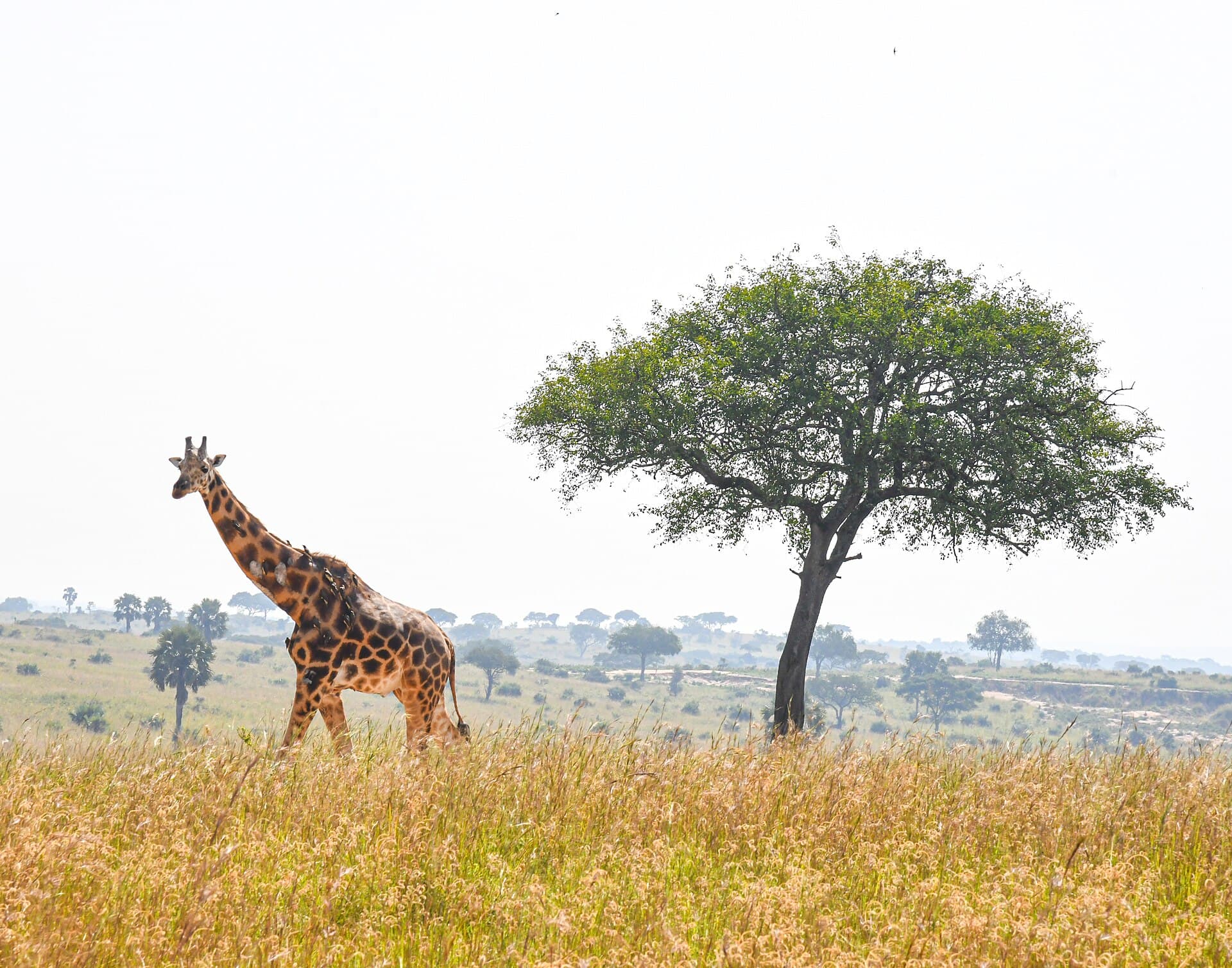
  4. A giraffe beside a lone acacia tree on the open savanna

    Day 5 · Arusha

    Across the Border by Air

    Flight · Masai MaraKilimanjaro, via Nairobi · about 5–7 hours door to door, including connectionsMara to Nairobi by light aircraft, then a scheduled flight to Kilimanjaro and a drive to Arusha.

    Today is a travel day, planned so that it feels like one smooth line. A light aircraft returns you to Nairobi, and where it lands at Wilson Airport, a driver takes you across town to Jomo Kenyatta International for the short flight to Kilimanjaro. On a clear day, the mountain may appear above the clouds as you fly south. At Kilimanjaro International Airport you complete Tanzanian immigration, and your Tanzanian guide meets you for the drive of about an hour to Arusha. Dinner is early; the second half of the safari begins tomorrow.

    • Morning game drive if flight times allow
    • Flights via Nairobi to Kilimanjaro
    • Tanzania arrival formalities and drive to Arusha
    Overnight
    Arusha
    Meals
    Breakfast, lunch & dinner
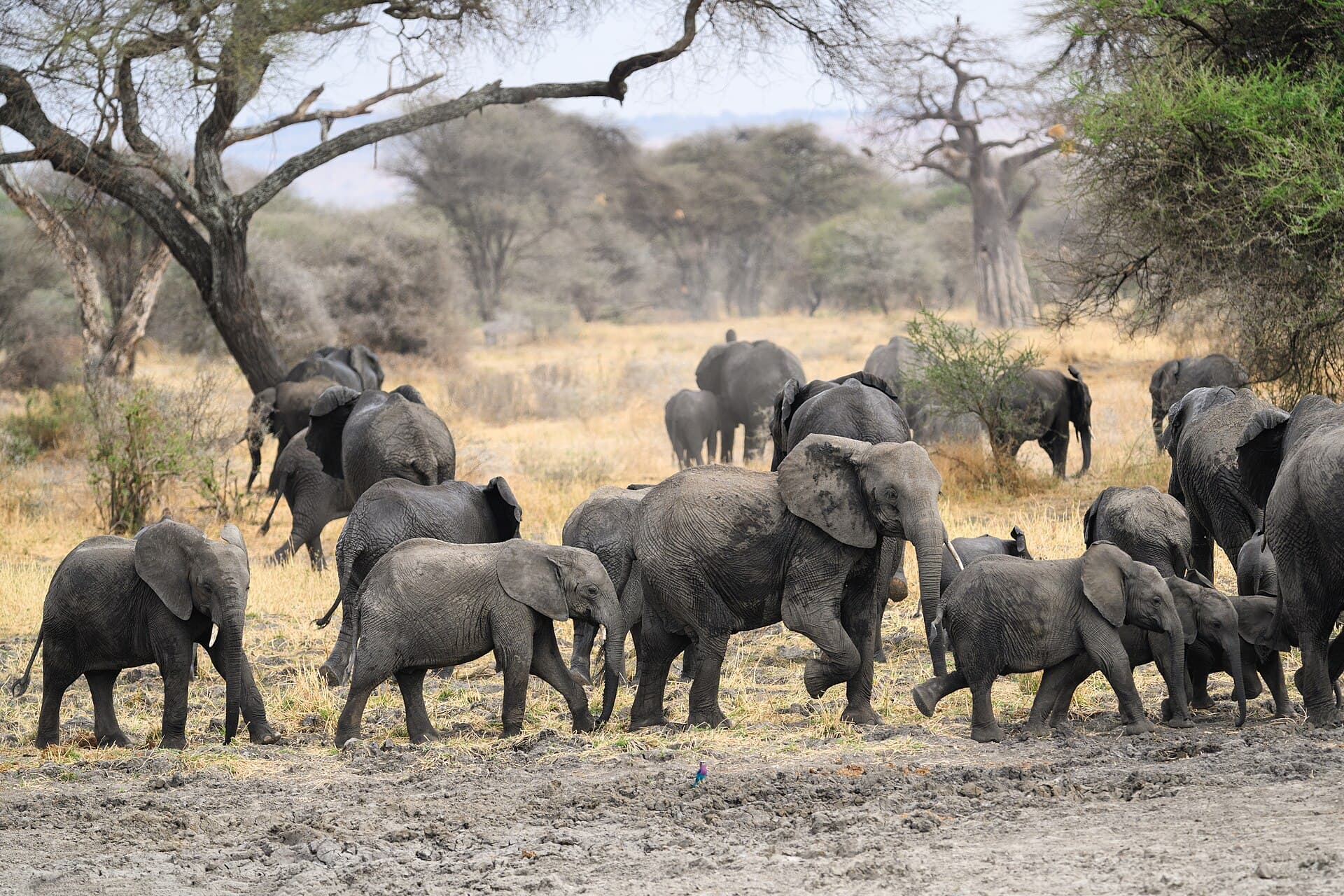
  5. Elephant herd gathered beneath acacia woodland in Tarangire

    Day 6 · Tarangire

    Tarangire’s Ancient Baobabs

    Drive · ArushaTarangire National Park · about 2–2.5 hours

    Tarangire makes a striking contrast to the Mara. Instead of open grassland, you drive among massive baobabs, acacia woodland and the curving Tarangire River, whose water sustains the park’s animals through the dry season. Elephants are the headline, often in large family groups, and the park is a good place for species you are unlikely to meet in the Mara, such as fringe-eared oryx and lesser kudu. Your afternoon drive follows the river, and the evening is spent at a camp where the loudest sound may be an elephant stripping bark nearby.

    • Drive to Tarangire
    • Afternoon river-circuit game drive
    • Evening at camp
    Overnight
    Tarangire
    Meals
    Breakfast, lunch & dinner
  6. Day 7 · Tarangire

    Tarangire at Leisure

    A full day lets you explore beyond the river circuit. Your guide might head to the open plains in search of cheetah, or towards the swamps where buffalo and elephant feed on green growth long after the rest of the park has dried. Tarangire is also one of Tanzania’s richest birding parks, with hundreds of species recorded, from ostriches to tiny, jewel-bright sunbirds. In the luxury and ultra tiers, the private concession may allow a morning walk with an armed ranger. Midday is for rest; the late-afternoon drive often brings the best light.

    • Morning drive to the southern swamps
    • Picnic lunch
    • Optional walk on concession land
    • Late-afternoon drive
    Overnight
    Tarangire
    Meals
    Breakfast, lunch & dinner
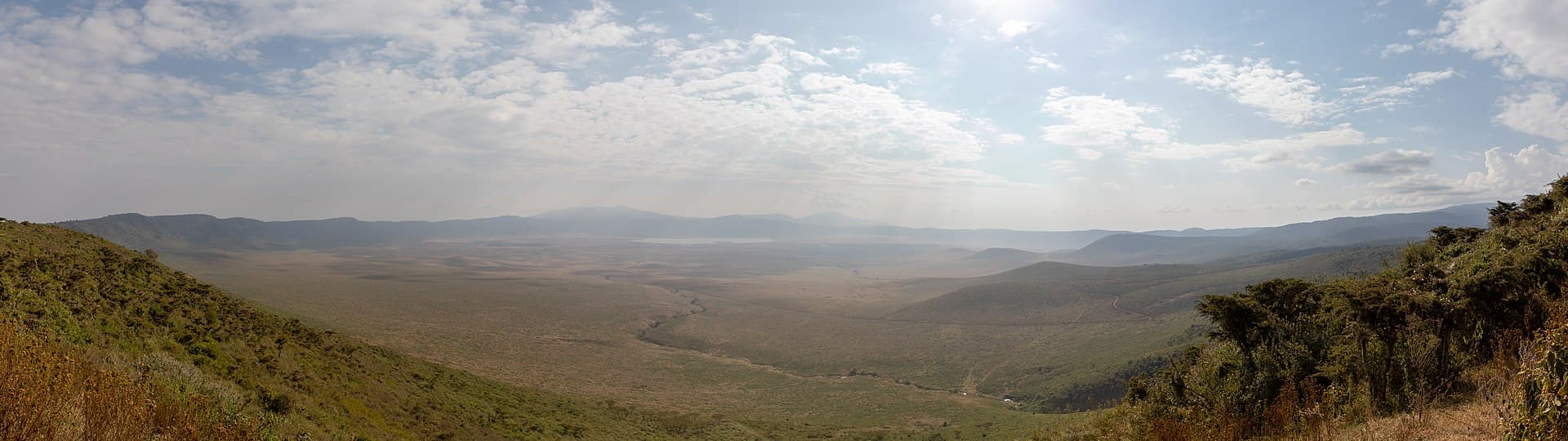
  7. View across the Ngorongoro Crater floor from the forested rim

    Day 8 · Ngorongoro Crater

    Up to the Crater Highlands

    Drive · TarangireNgorongoro highlands · about 2 hours

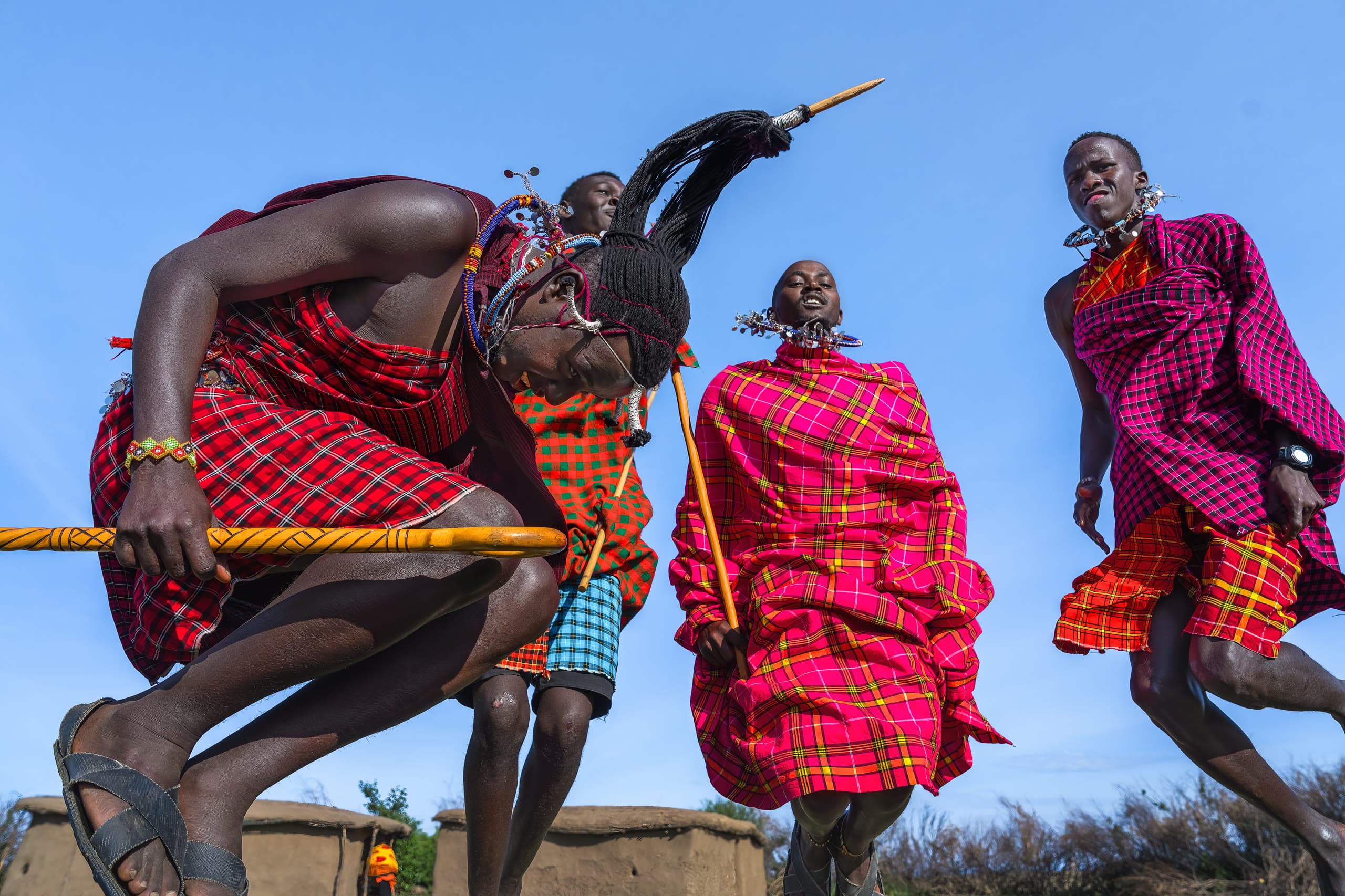
    The morning road runs past the market town of Mto wa Mbu and up the Rift Valley escarpment, with Lake Manyara spread out below. At the top, the air turns cool and green, and farms give way to montane forest near the crater. In the afternoon, an optional visit to a Maasai homestead offers a Tanzanian perspective on a culture that spans both countries on this journey, a thoughtful counterpoint to your conservancy days in Kenya. Dinner is by the fire, with an early start ahead.

    • Drive via Mto wa Mbu and the escarpment
    • Optional Maasai homestead visit
    • Evening in the highlands
    Overnight
    Ngorongoro highlands
    Meals
    Breakfast, lunch & dinner
  8. Day 9 · Ngorongoro Crater

    Crater Floor to Serengeti Plains

    Drive · Ngorongoro CraterCentral Serengeti (Seronera) · about 3–4 hours with game viewing

    The crater is a world of its own: a collapsed volcano whose walls enclose grassland, swamp and a shallow soda lake. You descend early to find lions and hyenas still active and to scan for black rhino, which the crater protects more reliably than almost anywhere in East Africa, though sightings are never certain. Golden jackals trot along the tracks and grey crowned cranes stalk the wet grass. After a picnic, you climb out and drive west into the Serengeti, crossing the short-grass plains to reach camp by late afternoon.

    • Early descent into the Ngorongoro Crater
    • Picnic lunch on the crater floor
    • Afternoon drive into the Serengeti
    Overnight
    Central Serengeti
    Meals
    Breakfast, lunch & dinner
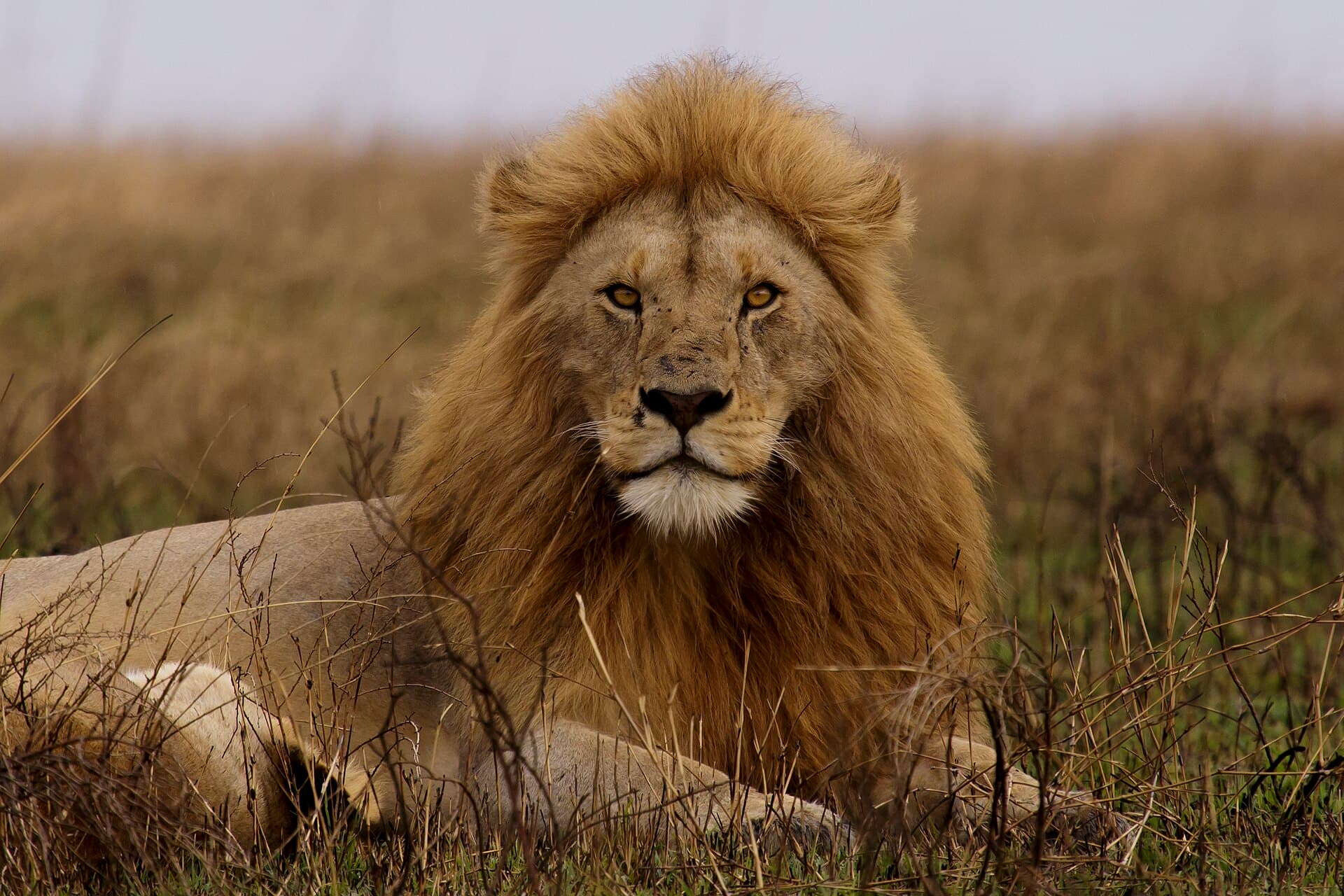
  9. A male lion resting in golden grass in the Serengeti

    Day 10–12 · Central Serengeti

    The Serengeti, Unhurried

    Three full days in the Central Serengeti let you settle into its rhythm. The Seronera valley’s resident predators give you a strong base, and with this much time your guide can range further: south to the Moru kopjes, or west towards the Western Corridor when the herds pass through around June. From December to February, a night can be shifted to Ndutu for the calving season. Having seen the Mara, you will notice the scale here: the Serengeti covers roughly 14,750 square kilometres, and the horizon seems to keep going.

    • Morning and afternoon game drives
    • Full-day excursion with picnic lunch
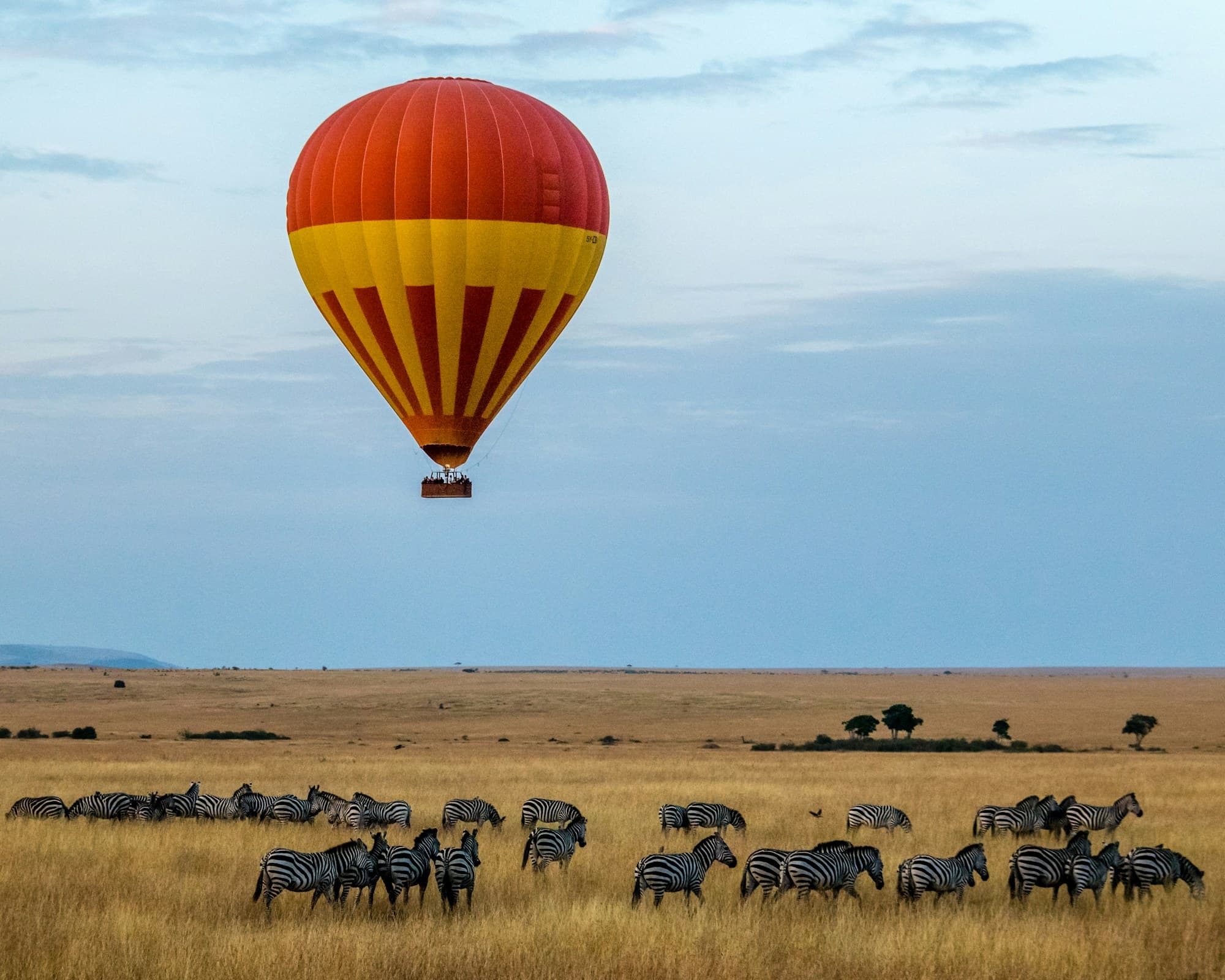
    • Optional dawn balloon flight
    • Time at camp between drives
    Overnight
    Central Serengeti
    Meals
    Breakfast, lunch & dinner
  10. Day 13 · Central Serengeti

    Farewell Flight from Seronera

    Flight · Seronera airstripArusha · about 1–1.5 hours

    One last early drive, then the flight east over the Ngorongoro highlands to Arusha, with the country you crossed by road laid out beneath you. From Arusha, a driver takes you to Kilimanjaro International Airport, about an hour away, for your international flight, or you can continue to Zanzibar for a beach finish. If your flight leaves late in the evening, a day room in Arusha gives you time to shower, repack and rest. Two countries, two halves of one ecosystem, and far fewer hours on the road than a single overland loop would take.

    • Final morning game drive
    • Scheduled light-aircraft flight to Arusha
    • Transfer to Kilimanjaro International Airport
    Meals
    Breakfast

Lodges

Where You’ll Stay

Choose a comfort level to see the stay style for each part of the journey. We match specific camps to your dates and availability.

Refined camps and lodges — often with plunge pools, fine dining and the very best positions.

  1. 1 night · Nairobi

    Premium

    Nairobi · Karen

    Karen Boutique Retreat

    Boutique hotel

    • Garden rooms or cottages, often with fireplaces
    • Relaxed dining in the gardens
    • Close to Wilson Airport for Mara flights
  2. 3 nights · Masai Mara

    Herds moving through golden dust at a fiery Masai Mara sunsetLuxury

    Masai Mara · private conservancy

    Mara Private Conservancy Camp

    Tented camp

    • Spacious en-suite tents, often with private verandas
    • Guided walks with Maasai guides at many
    • Night drives and off-road viewing within conservancy rules
  3. 1 night · Arusha

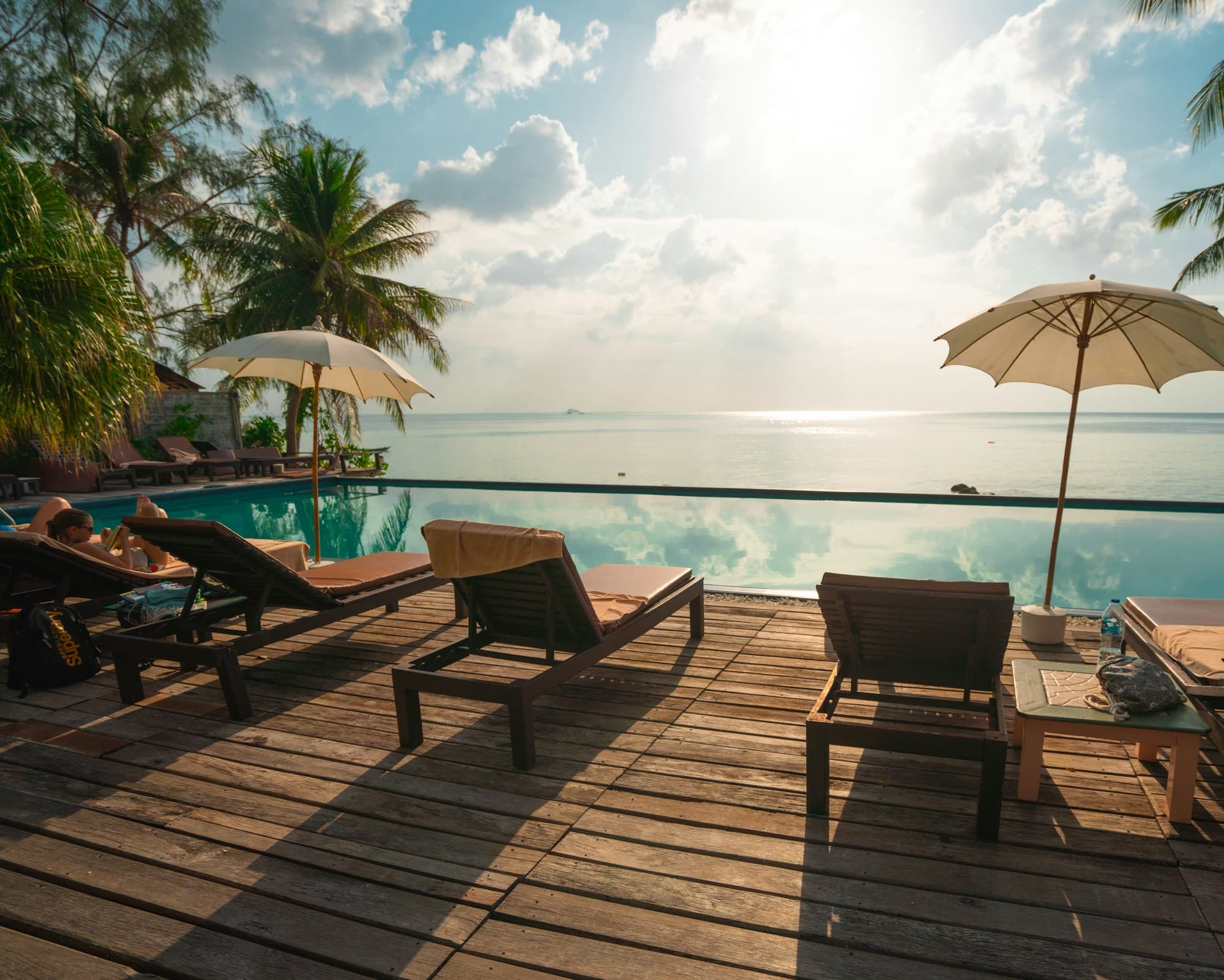
    Luxury lodge deck with loungers and umbrellas at golden hourLuxury

    Arusha · foothills of Mount Meru

    Foothills Luxury Estate

    Lodge

    • Large suites with verandas and often a fireplace
    • Spa and pool at many, for the day after a long flight
    • Estate walks, with canoeing or horse riding nearby at some
  4. 2 nights · Tarangire

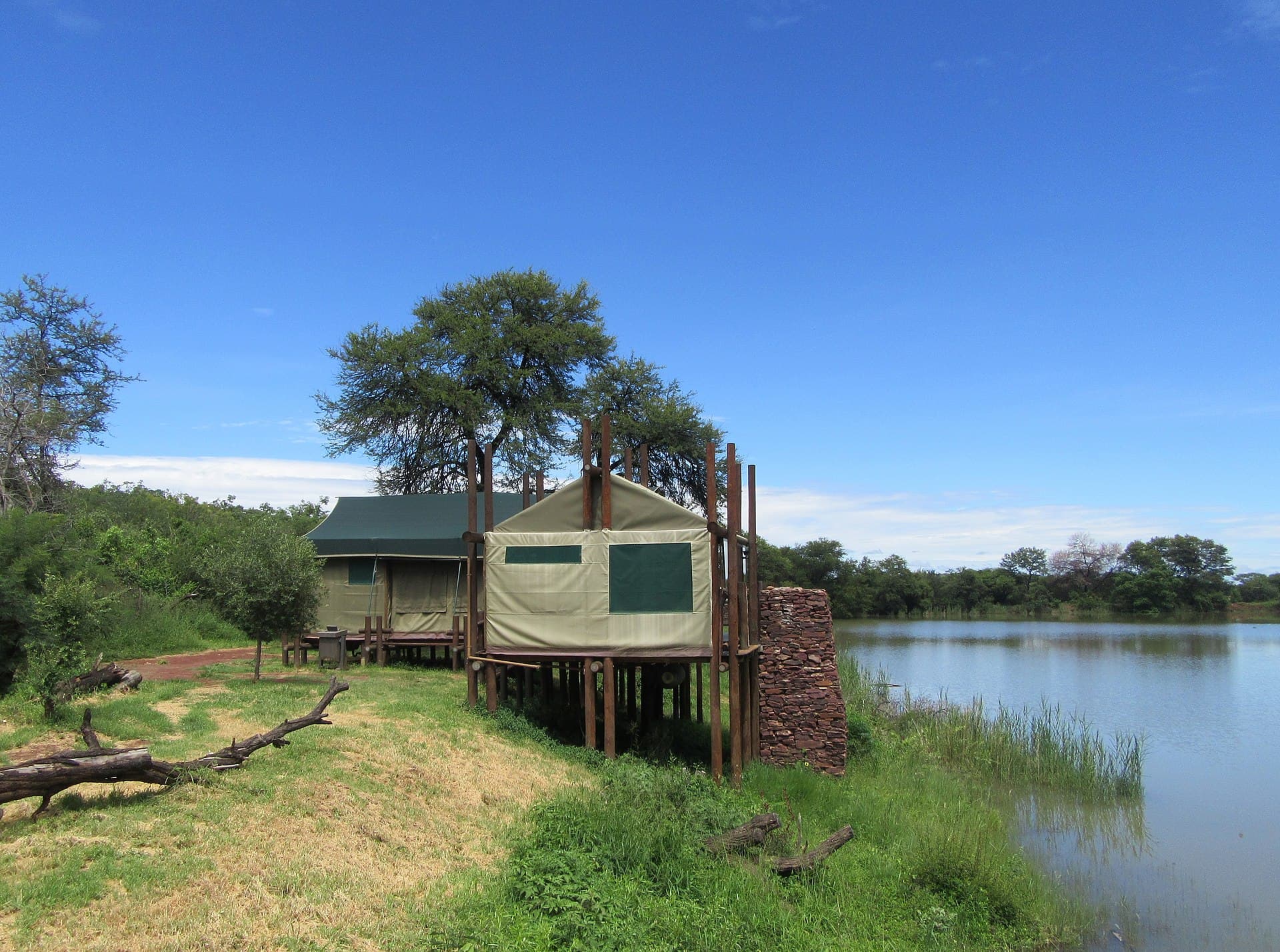
    A canvas safari tent set among trees at a private tented campLuxury

    Tarangire · private concession

    Private Concession Tented Camp

    Tented camp

    • A handful of large tents, with outdoor showers at some
    • Walks with an armed ranger and your guide
    • Night drives where the concession permits
  5. 1 night · Ngorongoro

    View across the Ngorongoro Crater floor from the forested rimLuxury

    Ngorongoro Crater rim

    Crater-Rim Lodge

    Lodge

    • Rooms or suites with crater views
    • Fireplaces or heating for cold highland nights
    • Early breakfasts or picnic boxes for the first descent
  6. 4 nights · Central Serengeti

    Luxury lodge deck with loungers and umbrellas at golden hourLuxury

    Central Serengeti

    Plains-View Luxury Lodge

    Lodge

    • Spacious suites with private terraces
    • Pool with views across the plains
    • Spa treatments at some

Price

Price

Every private safari is priced for your dates, party and choices — here is what moves the number.

Individually quoted

Custom pricing based on your dates, comfort level, party size and routing.

  • SeasonPeak months (July–October, the festive season) sit at the top of the range; the green season (April–May) is noticeably softer.
  • Party sizeYour private vehicle and guide are shared across your party — the per-person cost typically falls as your group grows from two to four or six.
  • Comfort levelMoving from Comfort to Ultra-Luxury changes the nightly rate more than any other choice.
  • RoutingFlying the long legs saves hours on the road and adds light-aircraft fares; driving keeps costs lower.

What’s Included

  • Private 4×4 safari vehicle with pop-up roof and a professional driver-guide
  • Accommodation at your chosen comfort level
  • Meals as listed day by day
  • Park, conservation and crater fees for the itinerary
  • Airport meet-and-greet and all road transfers
  • Drinking water on game drives
  • On-the-ground support from our Tanzania team
  • Light-aircraft flights between Nairobi and the Masai Mara
  • Scheduled flight from Nairobi to Kilimanjaro
  • Scheduled light-aircraft flight from Seronera to Arusha
  • Conservancy activities in the Mara, including walks and night drives where offered
  • Airport-to-airport transfer in Nairobi where your connection requires it

Not Included

  • International flights
  • Visa fees
  • Travel and medical insurance (strongly recommended)
  • Gratuities for guides and camp staff
  • Premium drinks and personal expenses
  • Optional day trip from the conservancy into the Masai Mara National Reserve
  • Optional balloon flight and Maasai homestead visit
  • Zanzibar extension

A typical inclusion list — your written proposal itemizes exactly what is and isn’t included.

Activities

Activities & Add-Ons

Included experiences and optional upgrades for this journey.

Included

Getting around

Fly-In Safari

Mara, Nairobi and Kilimanjaro linked by air, plus Seronera to Arusha.

Map

Route Map

Route map: Nairobi · Masai Mara · Kilimanjaro Airport · Arusha · Tarangire · Ngorongoro Crater · Central Serengeti1Nairobi2Masai Mara3Kilimanjaro Airport4Arusha5Tarangire6Ngorongoro Crater7Central Serengeti
By roadBy air

Approximate locations — not for navigation.

How This Journey Changes Through the Year

July – October
The migration is usually in the northern Serengeti and the Mara, so your conservancy nights may coincide with the herds. Consider moving two Serengeti nights to the north.
December – February
The herds typically graze the southern Serengeti, with calving from around late January. Shifting Serengeti nights to Ndutu brings them within reach, while the Mara offers strong resident game.
June
A month of transition: herds are often moving through the western and central Serengeti, and the Mara’s grass is long and green before the migration arrives.

Make It Yours

  • Move two Serengeti nights to the north in July–October for river crossings
  • Shift a night to Ndutu in January–February for the calving season
  • Add a Zanzibar beach finish, flying straight from Seronera
  • Add a Nairobi day for the elephant orphanage and giraffe sanctuary
  • Reverse the route, starting in Tanzania and ending in Kenya

Good to know

Frequently asked questions

Can we cross directly from the Serengeti into the Masai Mara?

Not on a normal safari drive, because there is no straightforward road transfer between the two reserves. Scheduled or seasonal connections may operate via Migori in Kenya and Tarime in Tanzania, combining flights with a road transfer through the official border post, and we check whether one is running for your dates. Otherwise travelers route via Nairobi and Kilimanjaro, which this journey does in a single travel day.

What entry documents do we need for Kenya and Tanzania?

At the time of writing, most visitors to Kenya need an Electronic Travel Authorisation (eTA) applied for online before travel, and most also need a separate visa for Tanzania, often available as an e-visa. Because you arrive in Tanzania from Kenya, you may be asked for a yellow fever vaccination certificate, so check with a travel-health clinic too. Rules change, so confirm on each government’s official portal and read our Tanzania visa guide before you travel.

Is the travel day between Kenya and Tanzania tiring?

It is the longest transit day of the trip, usually taking the morning and early afternoon with connections, but every step is arranged, from the Mara airstrip to your Arusha lodge. Keep to the light-aircraft luggage limit, typically about 15 kg per person in soft-sided bags. You arrive in Arusha in time for an early dinner and a full night’s sleep.

When is the best time for a Kenya and Tanzania safari?

July to October often puts the migration in the Mara and the northern Serengeti, while December to February brings the herds to the southern Serengeti for calving. Both work on this route with small adjustments to where the Serengeti nights are spent. Resident wildlife in both countries is strong throughout these months, and we avoid the long rains of roughly April–May.

Are the Kenyan and Tanzanian camps a similar standard?

Yes. The Mara conservancy camp is a luxury tented camp at every level, because conservancy camps tend to be small and high-end, while the Tanzanian stays scale from premium tented camps to ultra-luxury lodges. We match the styles so the two halves feel like one journey.

Safaris

Similar Tanzania Safaris

View across the Ngorongoro Crater floor from the forested rim
9 daysComplete introduction

Tanzania Northern Circuit

Arusha · Tarangire · Ngorongoro Crater · Olduvai Gorge · Central Serengeti

First-time travelers who want the complete northern circuit, with room to breathe

Best months
June – March, routed to the season
Comfort levels
Comfort · Premium · Luxury · Ultra-Luxury
Individually quoted
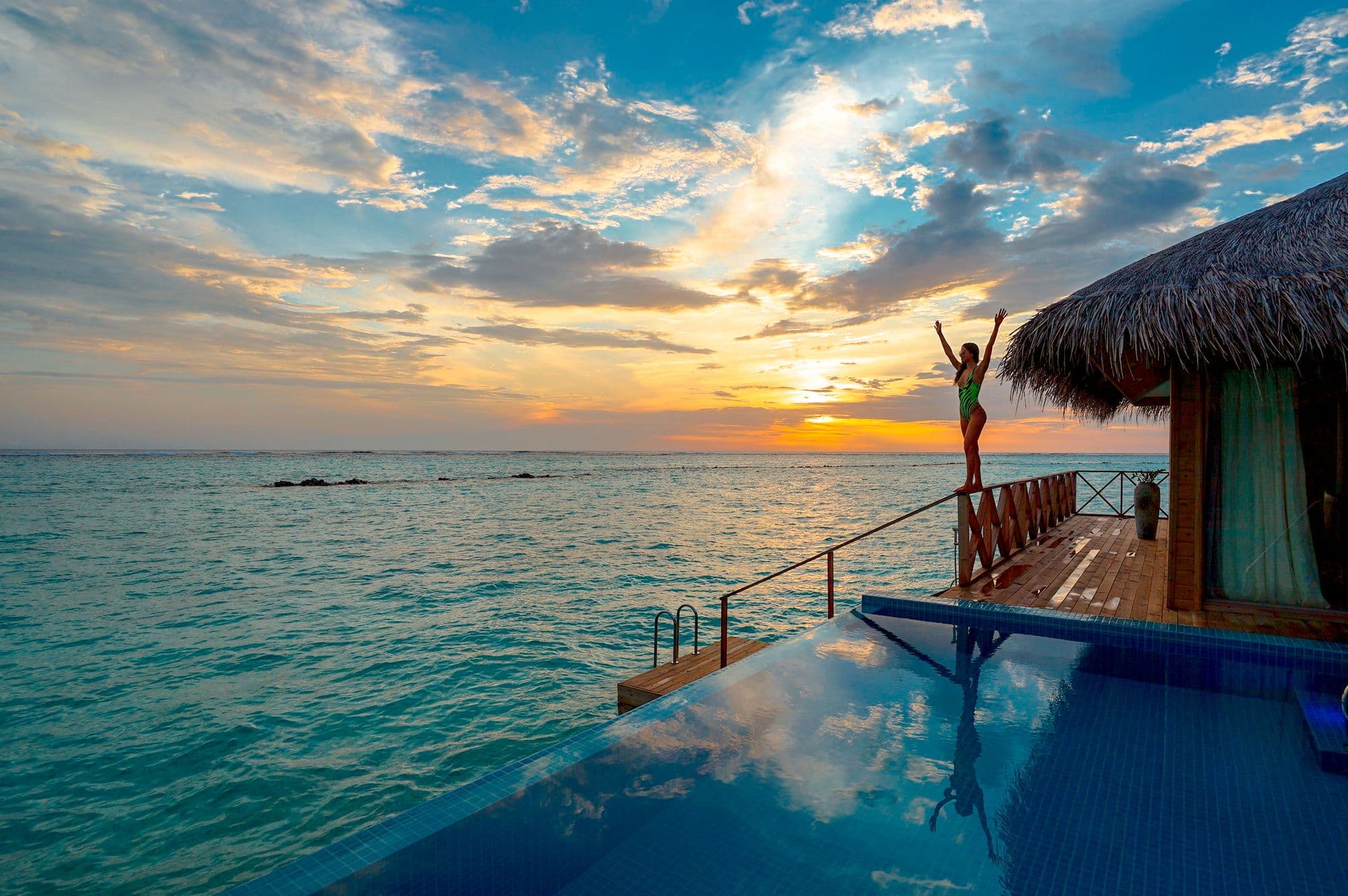
Traveler greeting the sunset from an infinity pool over the Indian Ocean
11 daysSafari + beach

Serengeti + Zanzibar

Arusha · Tarangire · Ngorongoro Crater · Central Serengeti · Zanzibar

Couples, honeymooners and first-timers who want a complete safari followed by real beach time

Best months
June – October and December – February
Comfort levels
Comfort · Premium · Luxury · Ultra-Luxury
Individually quoted
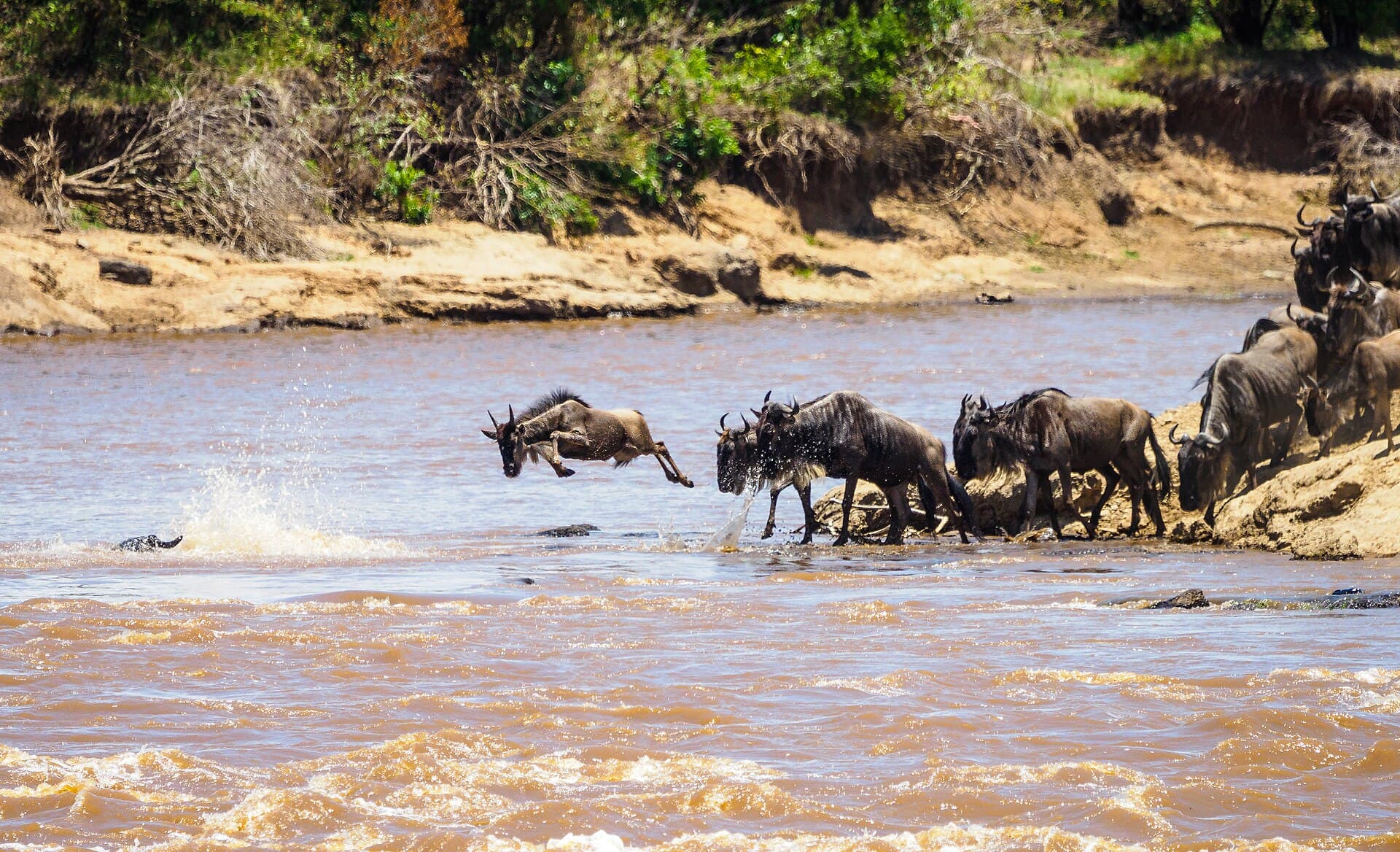
Wildebeest leaping into the Mara River during the Great Migration crossing
10 daysJul–Oct

Northern Serengeti River Crossing

Arusha · Tarangire · Ngorongoro Crater · Central Serengeti · Northern Serengeti

Travelers set on seeing a river crossing, with the patience to wait for one

Best months
July – October
Comfort levels
Premium · Luxury · Ultra-Luxury
Individually quoted
Herds moving through golden dust at a fiery Masai Mara sunset

Customize This Journey

Tell us your dates, who is traveling and your preferred comfort level. A safari specialist will tailor this route around you — nothing is booked until you approve every detail.

Customize This Journey