Twelve short notes for twelve very different months. Conditions vary with each year’s rain and flood, so treat these as a typical pattern rather than a timetable.
January
Hot, humid and green, with heavy afternoon storms. The Kalahari and the pans are excellent after good rains, while game in the north is dispersed. A few Delta camps close for maintenance, and the first days of the month can still carry festive supplements.
February
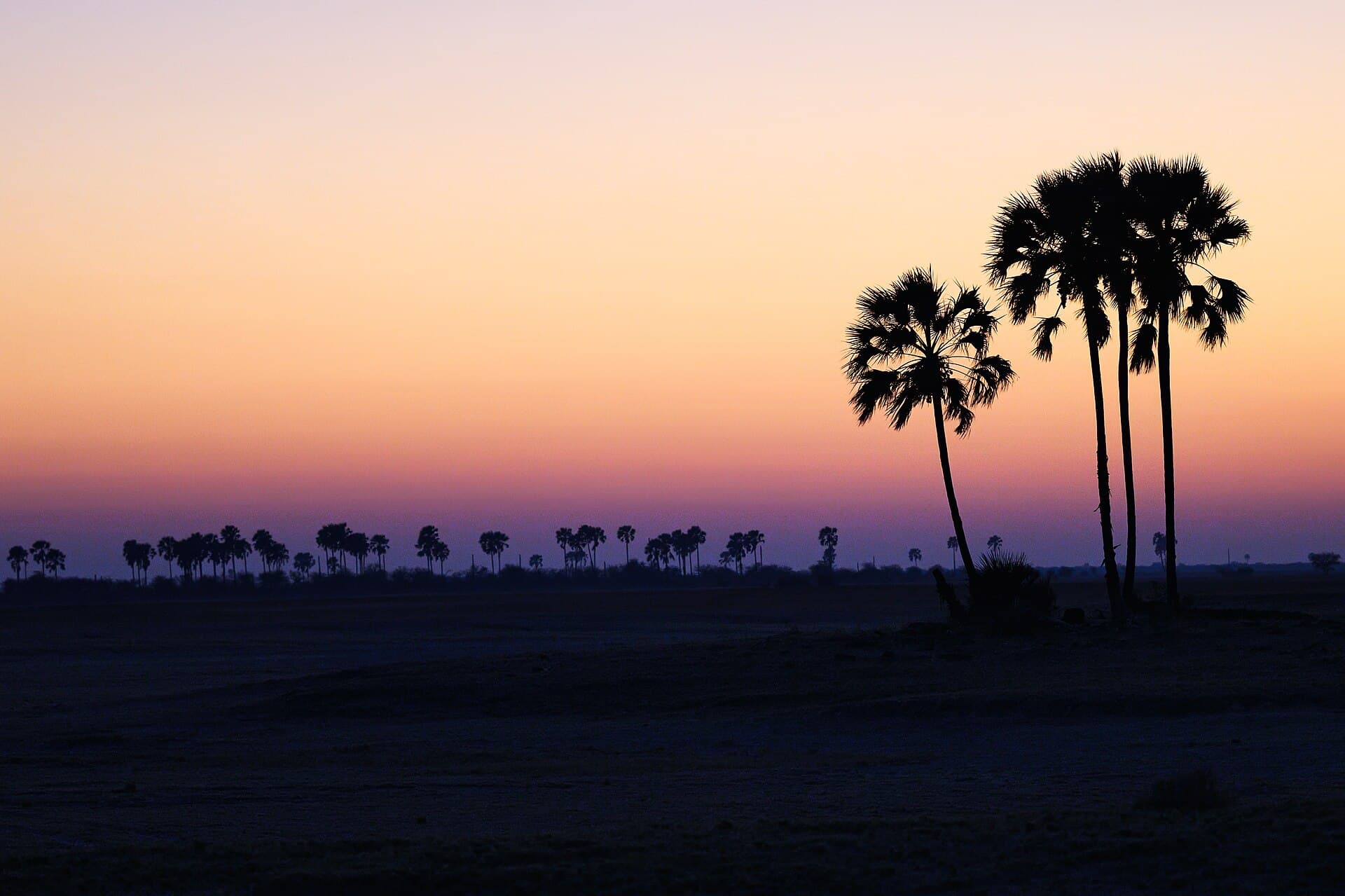
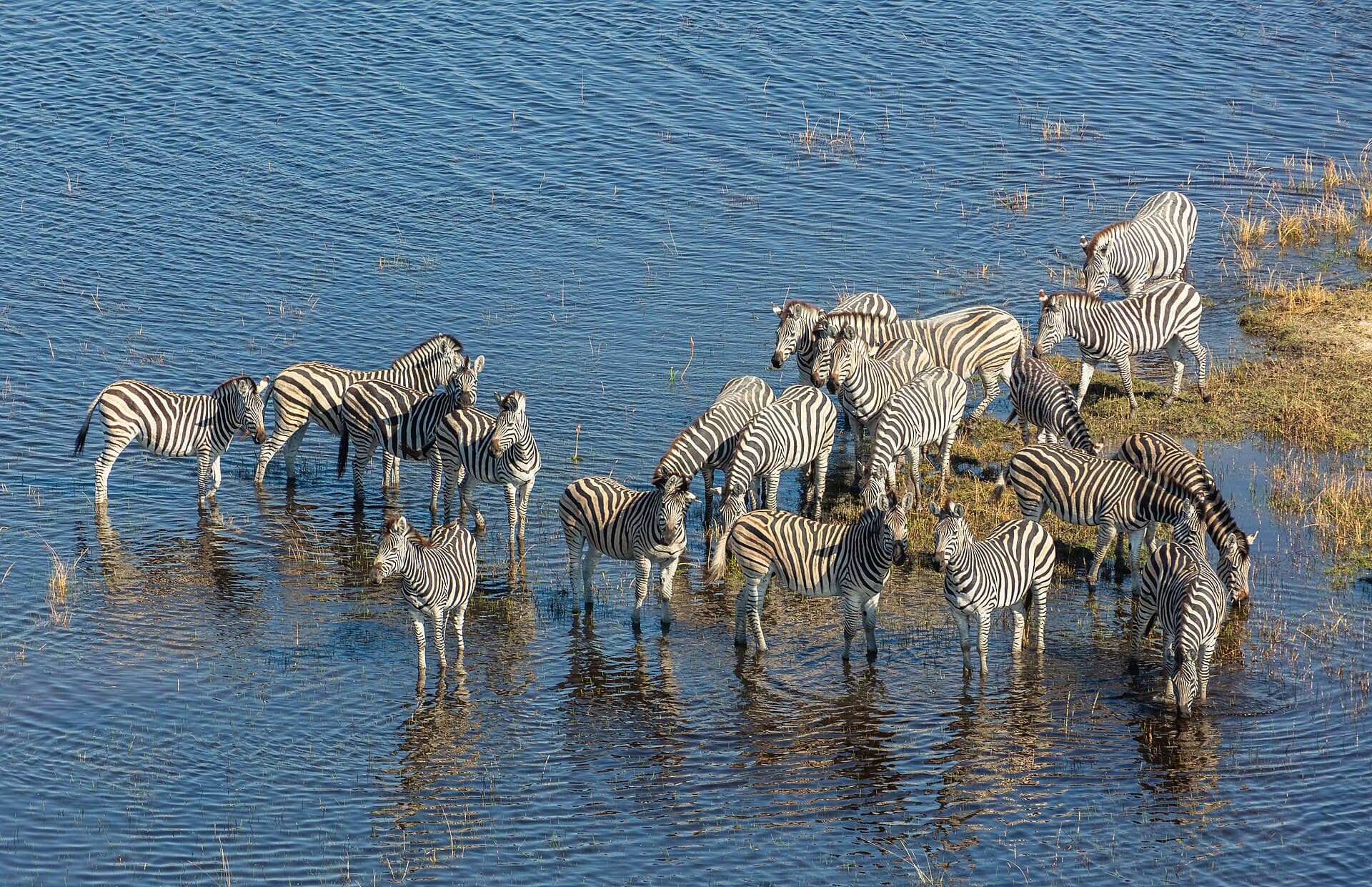
Often the wettest month. Zebra and wildebeest graze the Makgadikgadi and Nxai Pan grasslands, and the Central Kalahari’s fossil valleys can hold large herds. Few visitors, green landscapes and towering skies suit photographers who do not mind storms, and in good years flamingos may gather on the flooded pans.
March
The rains begin to taper. The Kalahari remains strong, and the Angolan floodwater is starting its slow journey into the upper Delta. A quiet month with some of the year’s lowest camp rates where camps are open.
April
Warm days, cooler nights and fading rain. Water is arriving in the Delta’s northern channels, the bush is lush, and the pans can still hold wet-season game. Shoulder rates and few vehicles make it a quietly excellent choice.
May
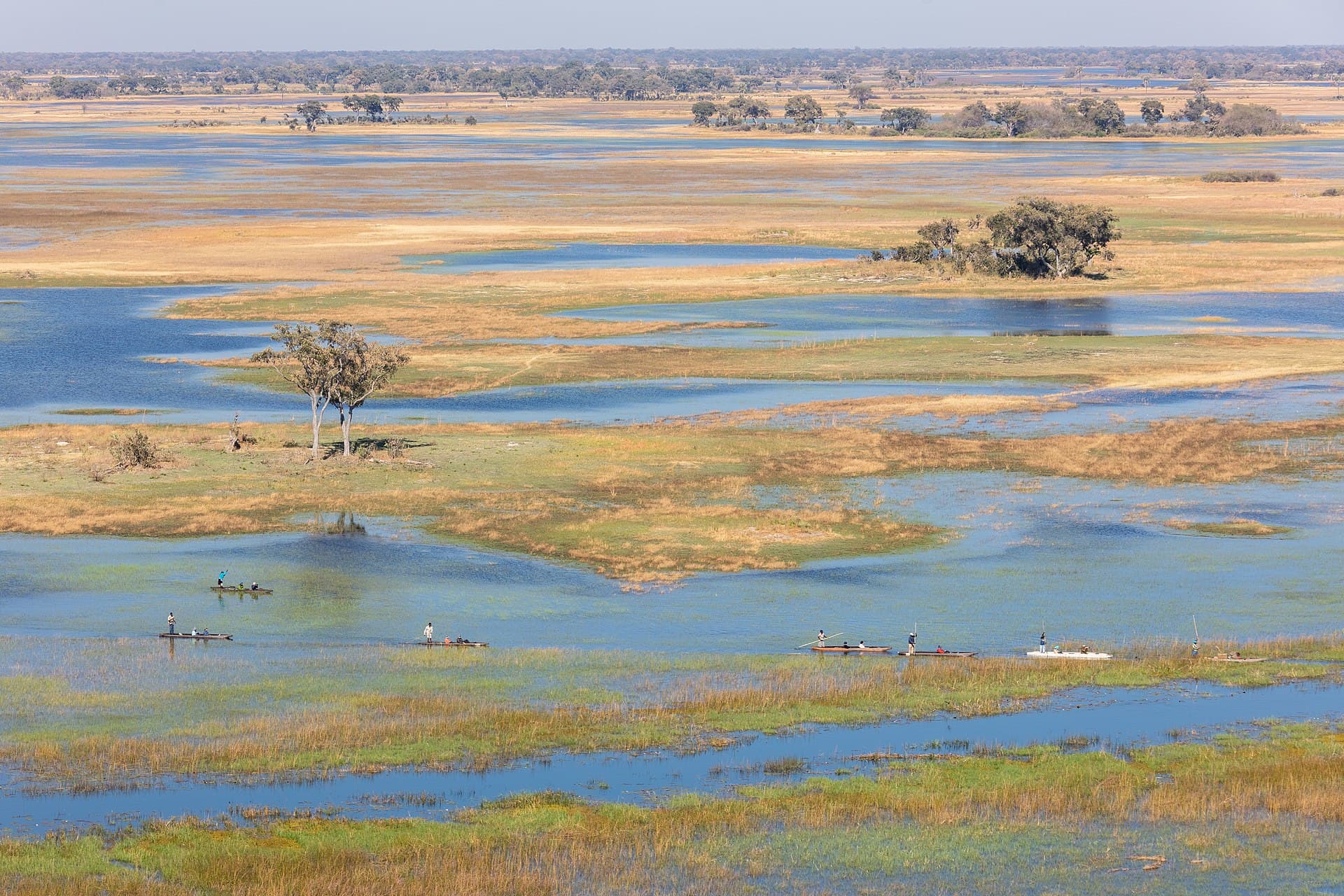
The dry season begins. Temperatures are comfortable, the flood spreads through the central Delta and mokoro trips return to the seasonal floodplains. Game starts to concentrate, and late May is one of the best-value weeks of the dry season.
June
Cool and clear. Dawn drives in open vehicles can be close to freezing, with frost possible in places, but days are sunny. The flood is usually high, the Delta at its most beautiful, and demand climbs sharply with the US school holidays.
July
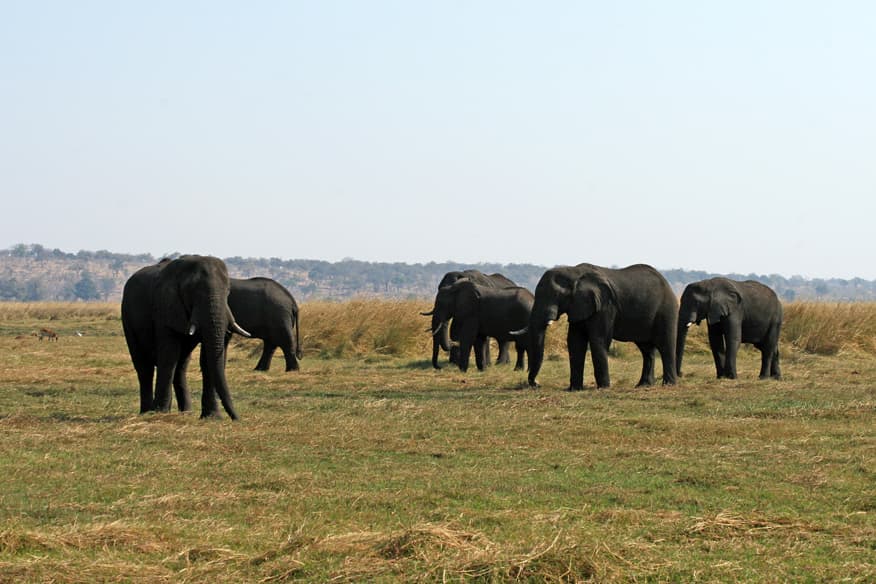
Peak season. High water in the Delta, elephants gathering on the Chobe and in Linyanti, clear skies and cold nights. Salt-pan sleep-outs, quad biking and visits to habituated meerkat colonies on the pans are in season. The smallest camps can be full a year or more ahead.
August
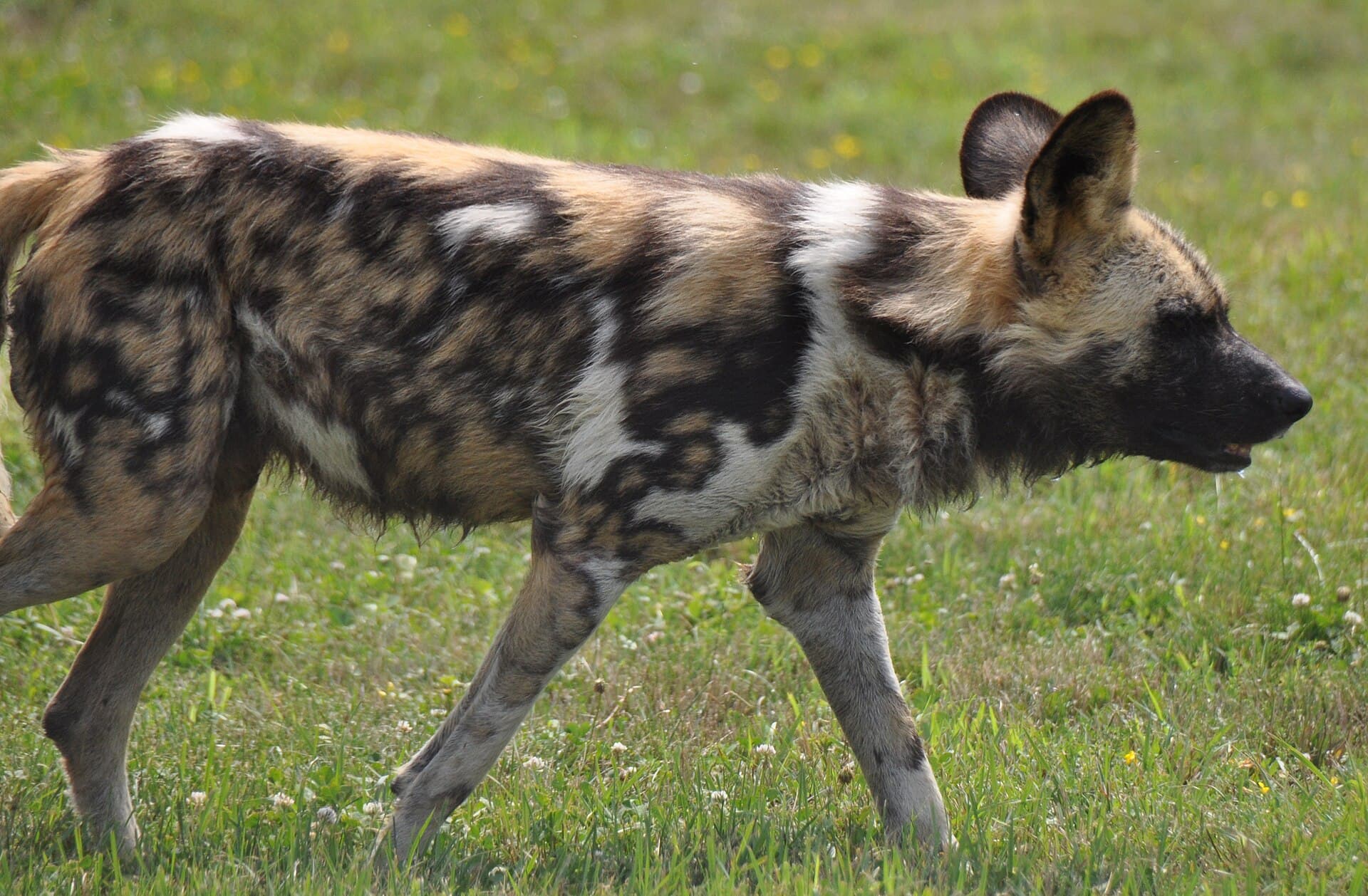
Dry, warming and busy. Game concentrates further, wild dog packs are often denning in the northern concessions around this time, and the flood holds in most areas. Excellent all round, and the most requested month at many camps.
September
Hot days, dust and golden light. The flood starts to drop in the seasonal areas while the permanent channels stay navigable. The Chobe riverfront and Linyanti are at their most dramatic as herds crowd the water, and demand stays high.
October
The hottest month, with afternoons at 38°C (100°F) and above. Game viewing around the remaining water is superb, but midday is for resting in the shade. Rates ease at some camps late in the month, and the first clouds build toward the end.
November
Transitional and underrated. The first rains break the heat, young antelope appear and migrant birds arrive, while game spreads as the pans fill. Shoulder rates apply at many camps, with some of the best storm skies of the year.
December
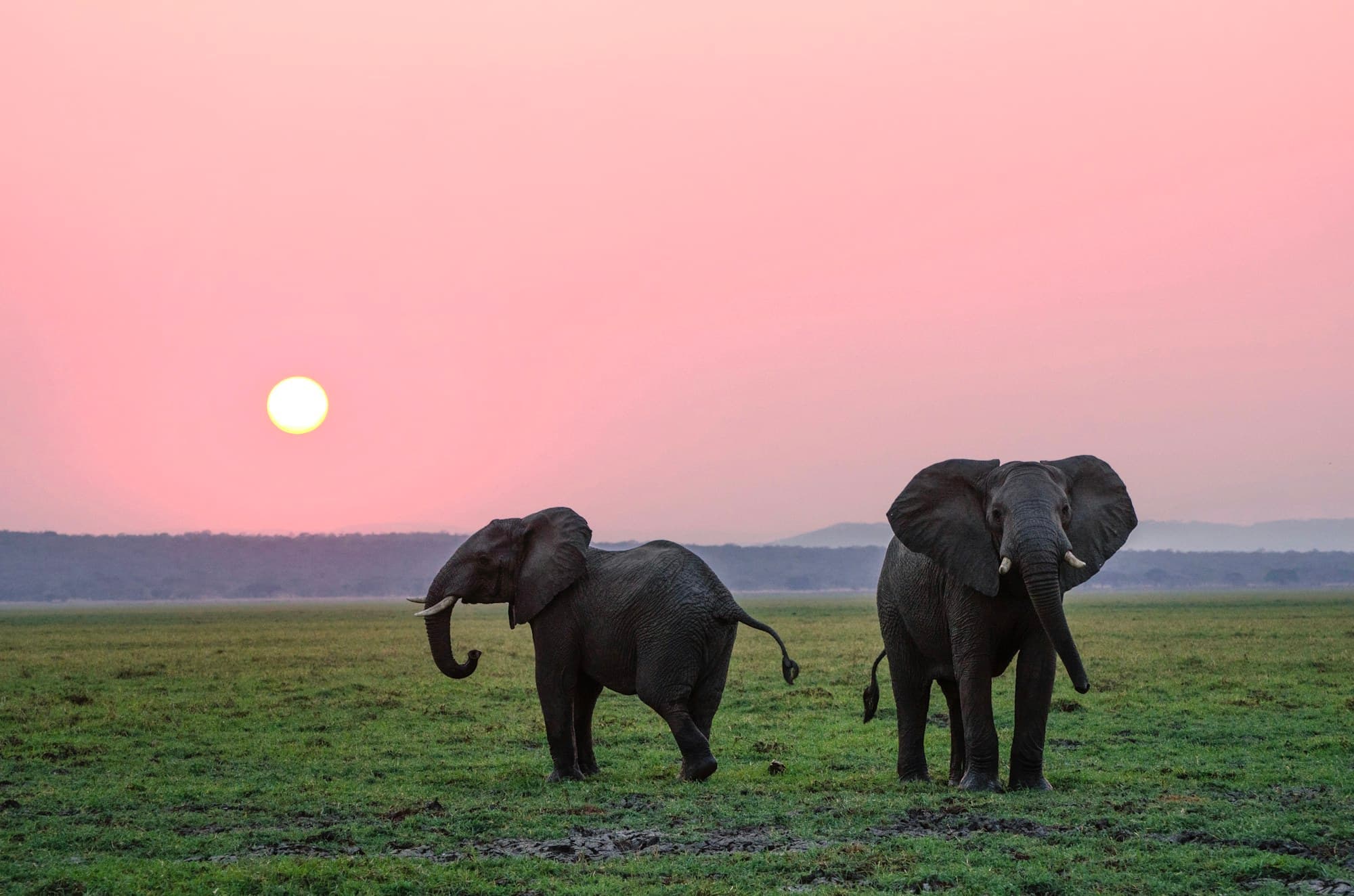
Green, hot and increasingly wet. The Kalahari and the pans come alive after good rains, zebra from the Chobe floodplains may head south toward Nxai Pan, the elephants that crowded the river in the dry months disperse inland to refilled pans, and birding peaks. Christmas and New Year carry festive supplements, and some camps scale back in the rains.